Fly fishing in rainforests combines technical angling, remote travel, and close contact with some of the most biologically rich waters on earth. In practical terms, rainforest fly fishing usually means targeting freshwater or estuarine species in tropical or temperate forest systems where dense canopy, heavy rainfall, high humidity, fast vegetation growth, and fluctuating river levels shape every decision an angler makes. I have planned and fished trips in these environments often enough to know that success depends less on perfect casting in ideal conditions and more on adapting to heat, insects, changing water clarity, and the simple fact that jungle rivers rarely give you much room to work.
As a hub within adventure fly fishing, this topic matters because rainforest fisheries demand a broader skill set than many classic trout destinations. You may be stalking peacock bass in Amazon backwaters, drifting a mouse pattern for giant snakehead near Southeast Asian forest margins, sight casting to jungle perch in Australian creeks, or swinging streamers for sea-run fish in temperate rainforest rivers. The common thread is not one species but one environment: water shaped by forest. Understanding that environment helps anglers choose the right destination, flies, tackle, safety systems, and daily strategies. If you want better hook-up rates, safer travel, and a more rewarding experience, rainforest fly fishing starts with reading the ecosystem before you ever tie on a fly.
What Makes Rainforest Fly Fishing Different
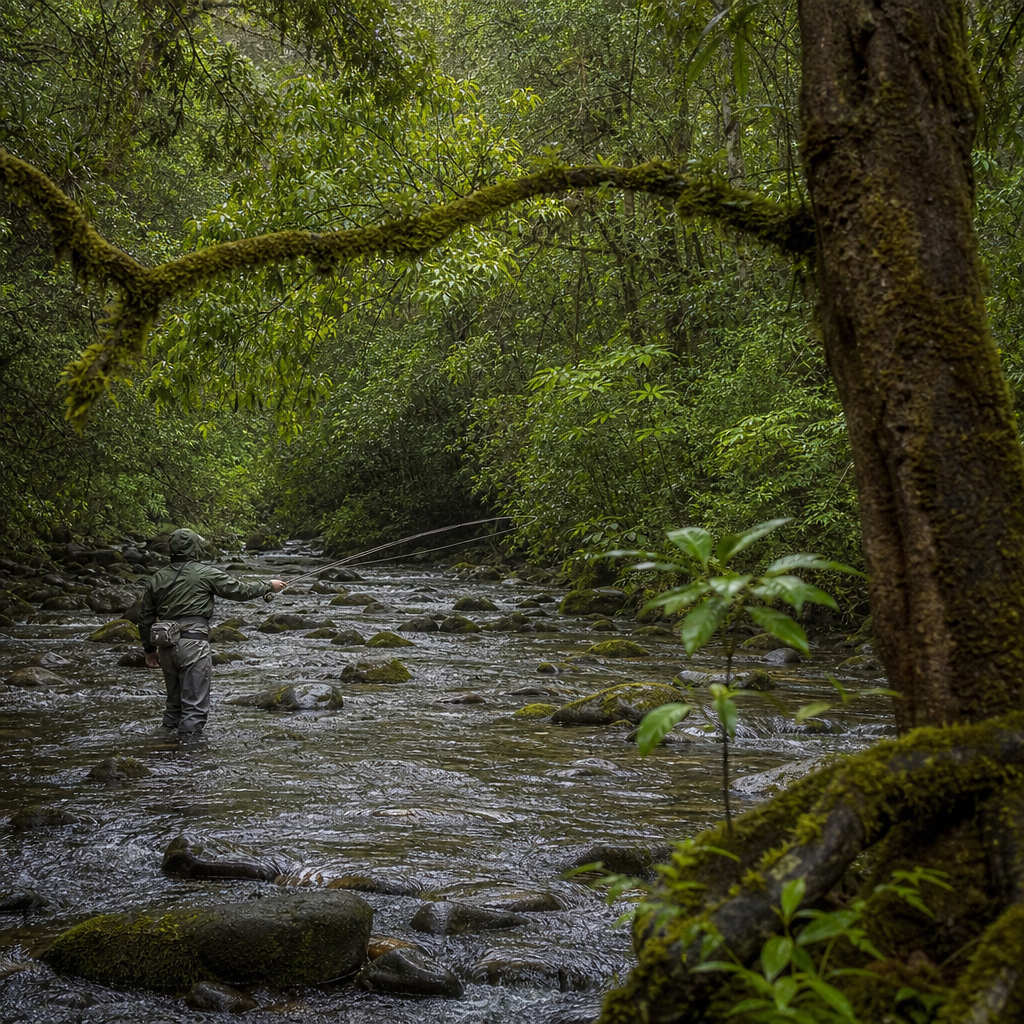
Rainforest rivers and lagoons are dynamic systems. Water levels can rise overnight after upstream storms, tannin-stained tributaries can suddenly clear, and fallen timber can redirect entire holding zones for predatory fish. Dense vegetation limits back casts, so anglers rely on roll casts, water-loading, sidearm deliveries, and short, accurate presentations. Humidity affects both angler endurance and gear performance. Knots can slip if not seated carefully, hooks rust faster, and fly lines need more frequent cleaning because organic film builds quickly in warm water.
Food sources are also different from those in open freestone systems. In rainforest environments, fish commonly feed on terrestrial insects, frogs, baitfish, crustaceans, and even small mammals pushed from the bank. That is why aggressive topwater patterns often excel. Poppers, divers, gurglers, deer-hair sliders, baitfish streamers, shrimp flies, and foam terrestrials all have a place. In my experience, anglers who arrive with only a trout mindset usually underperform. Rainforest fish are often structure-oriented ambush feeders. If you are not putting flies tight to timber, cut banks, root wads, overhanging branches, and shaded edges, you are missing the highest percentage water.
Another defining feature is access. Many rainforest fisheries are reached by skiff, dugout canoe, four-wheel drive, or multi-day hiking approach. That changes trip planning. Weight matters, waterproofing matters, and repairability matters. A spare fly line, extra leaders, corrosion-resistant pliers, and a simple field first-aid kit are not optional luxuries. They are part of the fishing system.
Best Rainforest Fly Fishing Destinations for Adventure Anglers
The best rainforest fly fishing destinations vary by species, logistics, and tolerance for remoteness. The Amazon Basin remains the benchmark for tropical adventure fly fishing. Brazil offers peacock bass, bicuda, payara in some systems, arapaima in specialized fisheries, and endless surface action in the right season. Success there depends heavily on timing around falling water, when fish concentrate in lagoons and channels. In Costa Rica and Panama, rainforest drainages and mangrove edges create mixed opportunities for machaca, snook, tarpon, and roosterfish-linked jungle coast programs. These trips blend freshwater and brackish tactics and often reward anglers who can cast accurately from small boats into narrow pockets.
In northern Australia, especially Queensland and the Top End, rainforest creeks and wet tropics systems hold jungle perch, sooty grunter, barramundi in connected habitats, and mangrove jack near lower reaches. These fisheries teach precision. One cast too far into the canopy and your fly is decorating a fig tree. One cast too far from the snag and the fish never moves. Across Malaysia and Thailand, forest reservoirs and river margins are known for giant snakehead and toman, where anglers watch for fry balls and present large surface patterns to territorial adults. Hookups are explosive, but so are refusals, making stealth and angle critical.
Temperate rainforest systems deserve equal attention. Patagonia’s western forest waters, British Columbia’s coastal rivers, and parts of New Zealand’s dense bush-fed catchments provide a different version of rainforest fly fishing, often for trout or salmonids rather than tropical predators. Here, the adventure lies in weather, river crossings, and technical presentations under cover. These destinations are ideal for anglers who want rainforest conditions without tropical heat.
| Destination | Primary Species | Best Tactics | Main Challenge |
|---|---|---|---|
| Brazilian Amazon | Peacock bass, bicuda | Poppers, baitfish streamers, lagoon edges | Water level timing |
| Costa Rica rainforest waters | Machaca, snook, tarpon | Accurate bank shots, fruit and baitfish patterns | Mixed fresh-salt conditions |
| Northern Australia | Jungle perch, sooty grunter, barramundi | Tight structure casts, small poppers, streamers | Limited casting room |
| Malaysia and Thailand | Giant snakehead | Large topwater flies near fry balls | Boat positioning and refusals |
| Temperate rainforest rivers | Trout, salmon, steelhead | Nymphs, streamers, swung flies | Rain-driven flow changes |
Essential Gear for Jungle and Rainforest Conditions
Gear selection for adventure fly fishing in rainforests should start with durability, then versatility. For most tropical freshwater predators, a fast-action 7- to 9-weight rod covers the broad middle ground. I prefer an 8-weight for peacock bass, snook in upper estuaries, and larger jungle species because it throws bulky flies, turns fish away from wood, and still remains fishable all day. For smaller rainforest streams, a 5- or 6-weight is often enough for jungle perch or smaller characins, but even then a short, powerful rod can outperform a delicate one simply because casting lanes are tight.
Fly lines should match the water column and heat. Tropical-rated floating lines resist softening in high temperatures, while intermediate lines help in lagoons, deeper cuts, and tannic channels where fish sit just below surface glare. Leaders are typically shorter and stronger than in spring creek trout fishing. In heavy cover, a 6- to 9-foot leader tapered to 16-, 20-, or even 30-pound tippet is normal. Shock tippet becomes important around abrasive jaws, gill plates, submerged timber, and species with raspy mouths. For toothy fish such as bicuda, short wire traces may be mandatory.
Clothing and accessories matter as much as rods. Quick-dry long sleeves, sun gloves, a ventilated but full-coverage hat, and non-cotton layers reduce dehydration and insect exposure. A waterproof backpack with internal dry bags beats a fashionable sling pack in rainforest weather every time. Good boots must grip mud, slick rock, and boat decks. Add polarized lenses with copper or amber bases for low-light canopy conditions, plus a second pair because humidity and travel damage ruin eyewear regularly. Corrosion-resistant hooks, pliers, and reels are worth the money. In wet heat, cheap metal fails fast.
Core Tactics: Casting, Presentation, and Reading Water
The core tactic in rainforest fly fishing is controlled aggression. Fish often hold close to cover and react to intrusion, but your presentation still needs precision. Short casts matter more than long casts. A thirty-foot cast that lands six inches from a root ball is usually better than a seventy-foot cast that lands in open water. I coach anglers to focus on one-strip eats, figure-eight follows, and immediate recasts. In warm water, many species decide quickly. If they do not eat in the first few feet, a new angle is often more productive than a long retrieve.
Reading water in rainforests means identifying shade, current breaks, oxygen, and ambush lanes. Fallen trees create dark pockets where predatory fish pin bait. Creek mouths entering larger rivers often provide temperature shifts and food wash. Undercut clay banks, flooded grasses, and back eddies all deserve attention. During high water, fish push tight to newly flooded edges. During falling water, they drop toward drains, channel mouths, and deeper timber lines. This is why local guides track hydrographs and recent rainfall so closely. A small trend in river height can completely change the day’s productive water.
Presentation should reflect prey type. For baitfish patterns, sharp strips with occasional pauses trigger reaction strikes. For frog or mouse imitations, slower blooping movements often work better, especially around dusk. For species like machaca that can be fruit-focused in certain seasons, dead-drift or subtle twitch presentations near overhanging trees can be remarkably effective. If fish are swiping and missing, downsizing the fly or reducing hook shank length frequently improves hookups. In jungle systems, missed eats are common because fish attack with speed in cluttered water.
Seasonality, Weather, and Safety in Remote Waters
Timing is one of the biggest predictors of success in rainforest fly fishing. In tropical systems, the transition between wet and dry seasons often determines access, clarity, and fish concentration. Falling water is usually the sweet spot because bait and predators compress into predictable areas, while still-flooded forests can spread fish across miles of inaccessible cover. In temperate rainforest regions, prolonged rain can blow out rivers with little warning, making flexibility essential. Always ask lodges or outfitters for recent water trends, not just average seasonal promises. Monthly averages hide the conditions that matter most.
Safety deserves equal attention. Rainforests introduce hazards that many anglers underestimate: heat stress, dehydration, insects, snakes, stingrays in lower estuaries, caimans or crocodilians in some regions, unstable banks, and medical delays after injuries. I treat hydration as a fishing tactic, not a comfort issue. Once concentration drops, casting accuracy and decision-making drop with it. Carry more water than you think you need, use electrolyte tablets, and protect cuts immediately because warm, wet environments increase infection risk. A satellite communicator is prudent in remote operations, especially where weather or river levels can delay extraction.
Travel preparation should include vaccinations or prophylaxis as recommended for the region, backup documents in dry storage, and clear communication about emergency plans. Reputable operations brief clients on boat safety, wildlife protocols, and extraction routes. If an outfitter cannot clearly explain those basics, keep looking. Adventure fly fishing should feel wild, not careless.
Conservation, Ethics, and Planning Your Next Adventure
Rainforest fisheries depend on intact habitat, and that makes angler behavior especially important. Forest cover regulates temperature, stabilizes banks, feeds insect life, and creates woody structure that supports fish populations. When rainforest waters are damaged by deforestation, mining runoff, overharvest, or poorly planned dams, the fishery usually declines fast. Responsible anglers support lodges and guides that practice catch and release where appropriate, use local employment, minimize fuel and waste impacts, and advocate for watershed protection. In places such as the Amazon and remote Australian catchments, tourism income tied to healthy fish populations can provide a real incentive to preserve habitat.
Ethics on the water are practical as well as philosophical. Fight fish hard enough to land them quickly, especially in warm water where oxygen levels can be lower. Use barbless or de-barbed hooks when regulations and target species allow. Keep fish wet during release, and avoid long hero shots in hot conditions. If you are targeting nesting or fry-guarding species such as giant snakehead, understand the local norms and conservation logic before fishing those situations. In some places it is accepted; in others it is controversial for good reason.
For trip planning, start by matching destination to your real goals. If you want explosive surface eats and remote mothership travel, the Amazon is the obvious starting point. If you want mixed-species jungle water with easier logistics, Central America offers strong options. If you prefer small-stream wading and technical casting, Australia and temperate rainforest rivers may fit better. Build a shortlist, study seasonal water patterns, ask outfitters detailed questions, and practice accurate casting before you go. Fly fishing in rainforests rewards anglers who prepare thoroughly, travel carefully, and fish with intent. Choose one destination, refine your gear, and start planning the adventure.
Frequently Asked Questions
What makes fly fishing in rainforests different from fly fishing in other environments?
Rainforest fly fishing is different because the environment affects almost every part of the day, from access and safety to tackle choice and presentation. In most rainforest systems, you are dealing with tight casting lanes, overhanging canopy, steep banks, tangled vegetation, slippery rocks, and water that can rise or color up very quickly after rain. That means the clean, open backcasts and long drifts that work on broad rivers are often replaced by short, controlled casts, roll casts, bow-and-arrow casts, and quick adjustments in close quarters. You are not just reading fish water; you are constantly reading weather, current changes, trail conditions, and how the forest itself limits movement.
Another major difference is how dynamic the water can be. Rainforest streams and rivers often fluctuate faster than anglers expect. A stretch that is clear and wadable in the morning can be pushy, stained, or completely unsafe after an upstream downpour you never saw. Water temperature, oxygen levels, visibility, and fish holding positions can shift in a matter of hours. In estuarine rainforest systems, you may also be balancing tides, salinity changes, and runoff at the same time, which adds another layer of complexity to fly selection and timing.
Fish behavior is also shaped by the abundance of food and cover. In these systems, fish may feed on aquatic insects, baitfish, crustaceans, frogs, and terrestrials that fall from dense streamside growth. Because there is so much structure, fish often sit tight to root wads, undercut banks, logjams, submerged timber, boulder seams, and shaded current breaks. Success usually comes from accurate, deliberate presentations placed close to cover rather than simply covering water quickly. In short, rainforest fly fishing rewards adaptability, compact technique, and sound judgment as much as traditional angling skill.
What gear and clothing should I bring for a rainforest fly fishing trip?
Your gear should be chosen with moisture, abrasion, and unpredictability in mind. For rods, a medium-fast to fast action setup is usually the most versatile because it helps deliver tight, accurate casts under canopy and turn over weighted flies or bulky leaders when conditions demand it. The exact rod weight depends on your target species, but many rainforest anglers carry a primary outfit for general stream work and a second setup for heavier flies, larger fish, or estuarine edges. A reliable reel with a smooth drag matters most if you may encounter hard-running fish in timber or current. Even when fish are not especially large, rugged gear is worth it because rainforest environments are tough on equipment.
Fly lines should match the water you are actually fishing, not the water you hope to find. A floating line covers most freshwater situations, especially when fishing dries, terrestrials, nymphs, or small streamers, but a sink-tip or intermediate line can be extremely useful in deeper runs, high water, or estuary margins. Leaders often need to be shorter and stronger than in open-country trout fishing because casting room is limited and fish are frequently hooked close to structure. Tippet material should account for abrasive rocks, wood, fish teeth if relevant, and reduced visibility in stained water. Fly boxes should include attractor dries, foam terrestrials, nymphs, small streamers, baitfish patterns, and region-specific prey imitations, with enough durable patterns to handle repeated abuse from cover and aggressive strikes.
Clothing is just as important as tackle. Quick-drying, lightweight layers are usually better than heavy garments that stay wet all day. Long sleeves and long pants help protect against insects, sun, thorny plants, and skin irritation from constant brush contact. Good rain gear is essential, but in humid rainforest conditions it should be breathable enough that you can keep moving without overheating. Footwear needs excellent grip and drainage; slick mud, algae-covered rocks, roots, and uneven banks are constant hazards. Many experienced anglers also carry a waterproof pack or dry bags, polarized glasses for spotting fish and reading structure, a wide-brim hat or cap, insect protection, a basic first-aid kit, forceps, line nippers, and a backup light source. In rainforest fishing, comfort and safety are not luxuries; they directly affect how effectively and how long you can fish.
How do I adjust my tactics when rainforest rivers are high, stained, or changing quickly?
The first adjustment is mental: accept that rainforest water conditions can change faster than your original plan. When levels rise or visibility drops, fish do not necessarily stop feeding, but they often reposition into softer water where they can conserve energy and intercept food washed toward them. Instead of focusing on the fastest main current, look for edges, backwaters, inside seams, flooded margins, side channels, eddies, and any pockets of reduced flow near structure. In many cases, the fishable water becomes smaller and more specific, and successful anglers slow down enough to identify those temporary feeding zones rather than forcing standard tactics into unsuitable conditions.
Your flies and presentations should become easier for fish to find. In stained water, this often means larger profiles, stronger silhouettes, darker colors, brighter trigger points, or patterns that push more water. Weighted nymphs, streamers, baitfish patterns, or terrestrials with foam can all be effective depending on species and water type. Shorter casts are usually more productive than heroic long ones because they let you maintain better line control in turbulent currents and put the fly where fish are actually holding. If the river is rising, fish may be tight to bankside cover, newly flooded edges, root systems, or submerged vegetation, where food is being funneled past at a manageable pace.
Safety and timing matter just as much as fly choice. If the river is climbing rapidly, carrying debris, or losing clarity by the minute, the correct strategy may be to leave and return when it stabilizes. Rainforest systems can become dangerous very quickly, and no fish is worth being trapped by rising water or crossing a channel that is no longer safe. Watch for debris lines, fresh bank erosion, changing current speed, and rain upstream even if your location seems calm. On many rainforest trips, the best anglers are not the ones who fish hardest in bad conditions, but the ones who recognize when to switch locations, wait out a pulse, target tributaries, move to estuarine water, or fish short windows when the river begins to drop and clear.
What casting and presentation techniques work best under dense canopy and in tight rainforest water?
In rainforest fishing, efficiency beats elegance. You often have very little room behind you, limited room above you, and only a narrow slot through which to deliver the fly. That is why compact casts are so valuable. Roll casts, single-hand spey-style water-loaded casts, sidearm deliveries, and bow-and-arrow casts can save the day when a traditional overhead cast is impossible. Learning to cast from different body angles is equally important. Sometimes the only viable presentation comes from dropping to a knee, casting off the opposite shoulder, or using a low sidearm stroke to sneak the fly beneath branches.
Presentation usually needs to be immediate and intentional. Because fish often hold tight to structure, your first cast into a pocket, seam, or shaded undercut may be your best chance. False casting too much tends to snag vegetation, spook fish, and waste opportunities. A better approach is to strip off a manageable amount of line, make one or two controlled motions, and deliver the fly with purpose. In pocket water and short runs, high-sticking or tight-line methods can be excellent for maintaining contact and reducing drag. In slower or clearer water, a gentle, accurate landing matters more, especially when fish are sitting in small windows under overhanging cover.
Mending and line management are often overlooked but critical in these rivers. Mixed current speeds, wood, rocks, and irregular banks can create drag almost instantly. Keep as little line on the water as practical, reposition quickly, and be ready to follow the drift with your rod tip. When fishing streamers or baitfish patterns, vary the retrieve until you understand how fish are reacting; in rainforest systems, a short strip-pause near cover can trigger aggressive strikes. Overall, the best rainforest presentations are controlled, quiet, and adaptable. You are rarely trying to impress anyone with distance. You are trying to solve a small, technical problem in front of you with precision.
How can I stay safe and protect the fishery while fly fishing in remote rainforest areas?
Safety starts before the first cast. Remote rainforest trips demand careful planning because weather, terrain, water levels, insects, and communication limitations can turn minor problems into serious ones. Tell someone your route and expected return time, and do not assume you will have reliable phone service. Carry navigation tools, emergency communication if possible, extra food and water treatment, and a first-aid kit that goes beyond the basics. In these environments, cuts can become problems quickly, dehydration can sneak up on you in high humidity, and a twisted ankle on a remote, muddy trail can end a trip fast. Move deliberately, especially when wading, climbing banks, or crossing slick logs and boulders.
On the water, the biggest safety mistake is underestimating changing conditions. Rivers in rainforest country can rise fast from rain you never experienced directly. Treat every crossing as temporary, and reevaluate it on the way back. Avoid wading if visibility