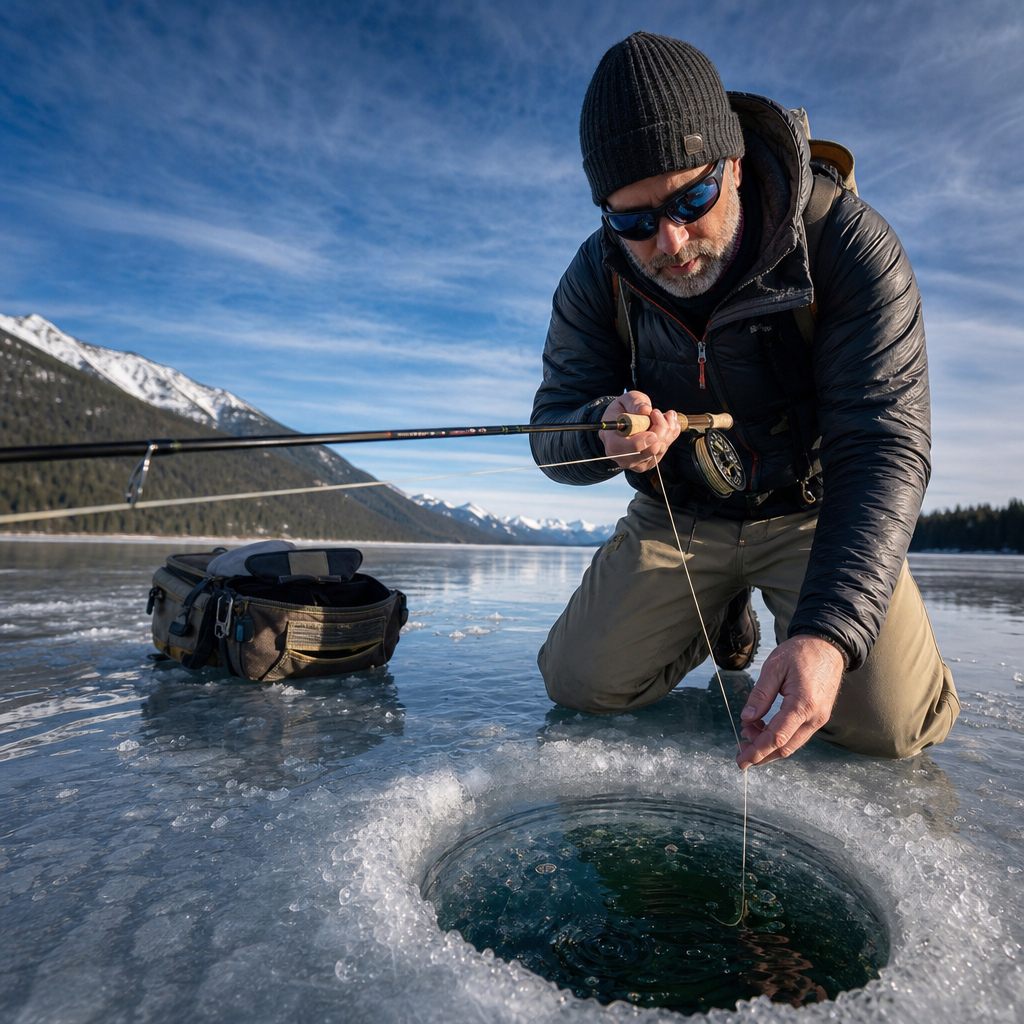
Fly fishing on ice sounds contradictory, yet anglers in northern climates know it describes one of the most demanding forms of winter fishing: presenting flies through frozen water, along ice edges, or in openings cut into safe ice where trout, char, grayling, and perch continue feeding. In practical terms, fly fishing on ice blends traditional fly presentation, ice safety, cold-weather entomology, and destination planning. I have guided winter trips on tailwaters, spring creeks, and high-latitude lakes, and the same lesson holds everywhere: success depends less on heroic casting and more on understanding how fish conserve energy under ice. That matters for any angler drawn to adventure fly fishing, because frozen-water fisheries reward preparation, precise technique, and destination knowledge. As a hub within fly fishing destinations, this guide explains where frozen-water fly fishing works, what gear performs reliably, how fish behavior changes in winter, which techniques produce consistent takes, and how to evaluate safety before stepping onto ice. It also connects the bigger picture of adventure fly fishing: remote access, changing weather, specialized tackle, and region-specific tactics. If you want to fish beyond the standard summer calendar, frozen waters open a season many anglers miss entirely, often with less pressure, clearer fish location patterns, and memorable landscapes that turn a normal trip into a genuine expedition.
What fly fishing on ice really means in different destinations
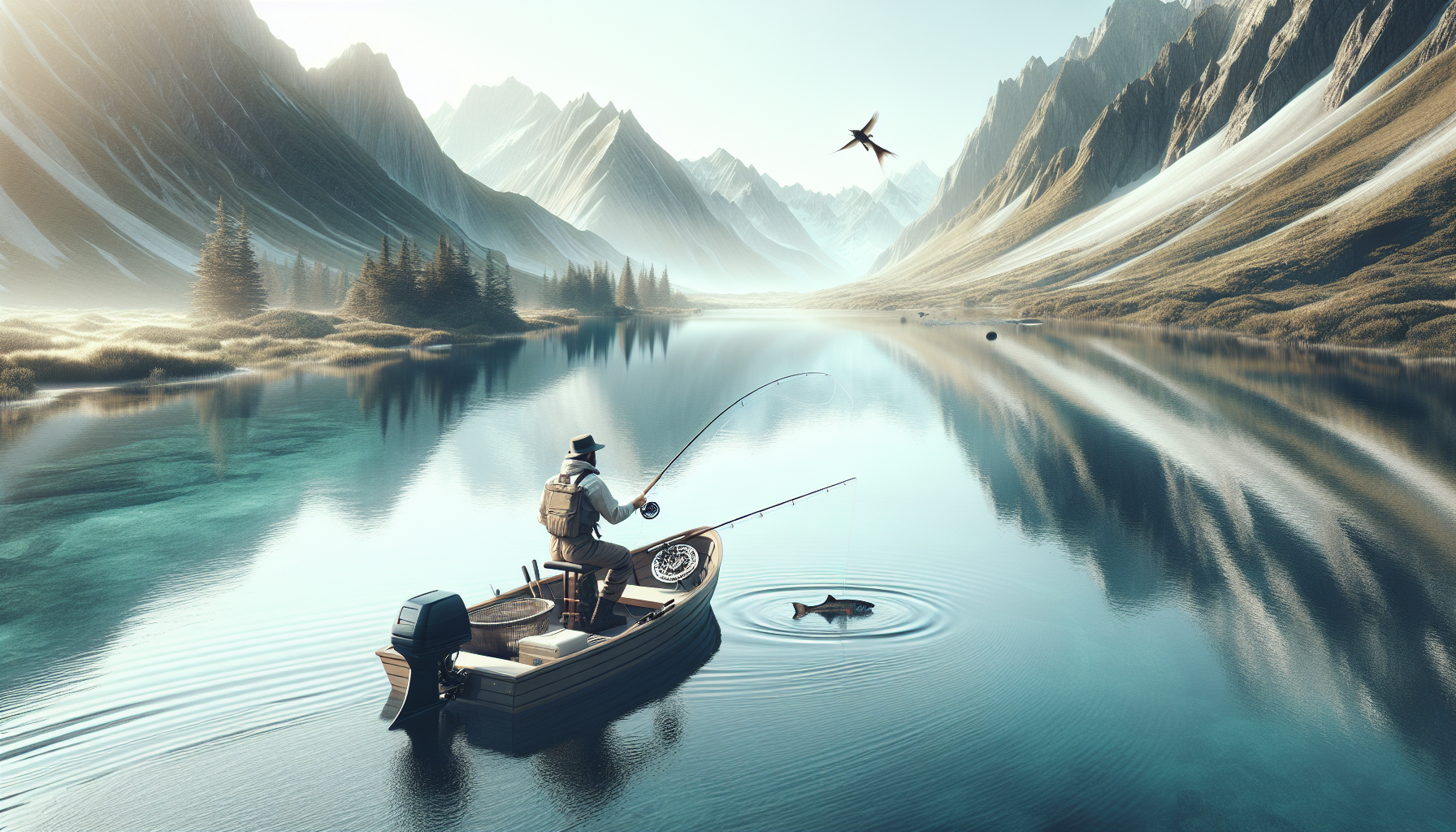
Frozen-water fly fishing is not one single method. On tailwaters below dams, it usually means indicator nymphing or tight-line presentations in shelf ice, slush edges, and slow winter seams where trout stack tightly. On stillwaters, it can mean fishing flies vertically through augered holes, retrieving under the ice sheet, or targeting open leads kept clear by springs, current, or wind. In the far north, anglers may cast streamers and egg patterns along pressure cracks and thaw lines for char or lake trout. In mountain regions, ice-off margins can fish best during short afternoon windows when sunlight raises nearshore temperatures by a degree or two. Those small temperature differences matter because coldwater fish are governed by metabolism. As water drops toward the low 30s Fahrenheit, trout feed less often, move shorter distances for food, and prefer presentations placed almost directly in front of them. That is why the best destinations for this style are not simply the coldest. They are waters with enough oxygen, stable winter forage, and legal access. Productive examples include Wyoming and Montana tailwaters, Icelandic spring-fed rivers, Patagonia’s winter lakes in select zones, Scandinavian Arctic char systems, and stocked stillwaters in the northern United States where chironomid and midge activity continues beneath the surface.
Gear selection for frozen conditions
Standard fly tackle works in winter, but frozen conditions punish weak gear choices immediately. For most river situations, a 9-foot 4- to 6-weight rod covers nymphing and small streamer work. On lakes or larger rivers where wind and vertical presentations are common, a 6-weight with a strong butt section handles indicator rigs, split shot, and fish landed beside ice. Reels matter less for drag and more for reliability. Large-arbor models shed line memory better and reduce ice buildup around the frame. Fly lines should match water type: a supple coldwater floating line for rivers, a clear intermediate or hover line for open edges on stillwaters, and short specialized leaders for vertical presentations through holes. I strongly prefer fluorocarbon tippet in winter because it sinks faster, resists abrasion against ice, and remains manageable in cold temperatures. Clothing is safety equipment, not comfort theater. Layered merino or synthetic bases, insulated gloves with fold-back fingers, eye protection, studs or cleats, and a flotation-assist outer garment make a tangible difference. Essential tools include forceps that work with gloves, a thermometer, hand warmers, a landing net with rubberized bag, and an ice scoop for clearing holes. Augers, spud bars, and ice picks belong on lake trips whenever walking on ice is part of the plan.
How fish behave under ice and why presentation changes
Fish under ice are not dormant, but they are selective in a different way than in summer. Their strike window narrows because cold water slows digestion and movement. Food availability also changes. Aquatic insects such as midges and chironomids remain important, while scuds, freshwater shrimp, small baitfish, eggs, and leeches can dominate depending on the fishery. In rivers, trout often seek moderate depth with soft current, where they can hold close to the bottom and intercept drifting food without expending much energy. In lakes, oxygen, light penetration, and structure become decisive. Weed edges, spring inflows, drop-offs, and basins near shoals often hold fish. One of the most useful winter observations is that fish may feed strongly during brief windows tied to light changes, barometric stability, or slight warming. I have seen dead afternoons become productive in twenty minutes when clouds break and a shelf edge brightens. Presentation must reflect this lethargic behavior. Short drifts, slower strips, pauses long enough to feel uncomfortable, and depth adjustments in six-inch increments produce more fish than aggressive movement. Hooksets also need restraint. In frigid water, many takes register as line weight, a slight stop, or a barely visible dip of the indicator rather than a sharp pull.
Core techniques that consistently work
The most reliable winter river tactic is high-percentage nymphing close to the bottom. Use a compact indicator rig or tight-line setup with enough weight to tick substrate occasionally, not drag constantly. Small tungsten midges, zebra midges, perdigons, sow bugs, scuds, and egg patterns are proven winter flies because they match the food sources fish actually encounter. On tailwaters, a size 18 to 22 midge below a slightly larger attractor often outperforms a single-fly setup. For stillwaters, suspend chironomid patterns just above the level where fish cruise, or fish balanced leeches and small baitfish imitations vertically through a hole with subtle lifts and long hangs. The key is controlled depth. Fish beneath ice frequently hold in a narrow band, and moving your fly one foot can be the difference between no action and repeated takes.
| Situation | Best technique | Typical flies | Main adjustment |
|---|---|---|---|
| Tailwater shelf ice | Indicator nymphing | Zebra midge, egg, sow bug | Add weight until flies drift near bottom |
| Slow winter creek | Tight-line nymphing | Perdigon, scud, midge pupa | Shorten leader for better contact |
| Frozen lake hole | Vertical presentation | Balanced leech, chironomid, ice damselfly | Hold flies nearly still between lifts |
| Open lake edge | Slow retrieve | Mini leech, baitfish, bugger | Extend pauses to five to ten seconds |
| Char or lake trout lead | Strip-pause streamer | White streamer, egg-sucking leech | Fish deeper than summer assumptions |
When fish refuse nymphs, streamers can still trigger opportunistic takes, especially from larger trout and char. Winter streamers should be smaller than many anglers expect. Sparse marabou, rabbit strips trimmed to slim profiles, and jigged baitfish patterns move with minimal line motion. Retrieve with one or two short strips, then pause. On vertical lake presentations, raise the fly six to twelve inches and let it settle on a tight line. Watch the leader for hesitation on the drop. If regulations permit multiple flies, combine a point fly with a lighter dropper to cover two levels. That strategy is especially effective on stillwaters where fish patrol just above the bottom but rise to inspect food. Precision matters more than creativity. Repeatable depth, steady cadence, and confidence in a small set of winter patterns consistently outperform constant fly changes.
Destination planning for adventure fly fishing in frozen waters
As a hub for adventure fly fishing, destination choice is where frozen-water success begins. Start with legality and access. Some fisheries prohibit fishing through the ice with fly tackle, while others close seasonally to protect spawning fish or wintering populations. Next, evaluate the water type. Tailwaters with stable discharge are generally the most forgiving winter destinations because they maintain fishable temperatures and dependable oxygen levels. Spring creeks can be exceptional but demand stealth, as clear water and slow current magnify mistakes. Natural lakes require the most planning because ice thickness, snow cover, access points, and oxygen conditions vary widely. Named resources matter here. State and provincial fish and game agencies publish winter regulations, stocking reports, and access notices. Stream gauges from the USGS, Environment Canada hydrometric data, and local weather stations help predict shelf ice, slush formation, and safe travel windows. Mapping tools such as onX, Gaia GPS, and local topographic layers reveal public access, contour changes, and inflows likely to hold fish. For remote trips, build a simple destination scorecard: legal season, travel time, emergency exit options, average winter wind, target species, and likelihood of open water or safe ice. That process prevents glamorous but poor choices. The best adventure destinations are not always the most remote; they are the ones where conditions, species behavior, and access align for a realistic chance of success.
Safety standards no winter angler should ignore
No fish is worth gambling on marginal ice. Clear new ice is stronger than cloudy or honeycombed ice, but thickness alone never tells the whole story. Current, springs, vegetation, pressure cracks, dock structures, and recent snow can create dangerous weak spots. A conservative rule many agencies use is at least 4 inches of clear ice for a single person on foot, with greater thickness required for groups or equipment, but local authorities always take precedence. Check conditions repeatedly with a spud bar as you move, wear ice picks around your neck, and never fish alone on uncertain ice. Cold shock and immersion are immediate hazards, which is why flotation-assisted outerwear, a throw rope, and dry clothes in the vehicle are nonnegotiable. On rivers, shelf ice creates a different risk profile. Edges collapse, anchor points fail, and fishable seams may hide undercut voids. I avoid standing on unsupported shelf lips entirely and approach from bank-side positions wherever possible. Frostbite and hypothermia also erode judgment long before a true emergency. Build warming breaks into the day, eat regularly, and monitor partners for slowed speech or clumsy movements. Adventure fly fishing should feel serious, not reckless. The anglers who keep doing it for years are the ones who cancel, turn around, or shorten the day without hesitation.
Building a year-round fly fishing destination strategy
Frozen-water fly fishing expands the destination calendar and deepens angling skill, because it forces sharper reading of water, better depth control, and more disciplined trip planning. The central lesson is simple: winter fish are catchable when you match their reduced energy budget with accurate presentations at the right depth in safe, legal locations. Choose destinations with stable winter conditions, carry gear that functions in freezing temperatures, and let fish behavior dictate tempo. On rivers, think bottom-oriented drifts and subtle takes. On lakes, think oxygen, structure, and narrow depth bands beneath the ice. Throughout the process, safety is part of technique, not a separate checklist. For anglers exploring adventure fly fishing as a broader category, frozen waters are one of the clearest examples of why destination knowledge matters as much as casting skill. A productive winter trip comes from combining maps, regulations, weather, species behavior, and realistic logistics into one plan. Use this page as your starting point, then build outward to specific rivers, lakes, and regional guides within the fly fishing destinations topic. Pick one winter-ready fishery, prepare carefully, and fish it with patience. Frozen water does not end fly season; for well-prepared anglers, it opens a specialized season worth pursuing.
Frequently Asked Questions
What does “fly fishing on ice” actually mean, and is it really possible?
Yes, it is absolutely possible, and the phrase makes more sense once you see how winter anglers adapt. “Fly fishing on ice” does not usually mean making long, elegant summer casts over a fully frozen lake. Instead, it refers to presenting flies in and around frozen water: along shelf ice on rivers, through open seams on tailwaters and spring creeks, at ice edges where current keeps channels open, or through carefully cut holes in safe ice where fish remain active below. In northern climates, trout, Arctic char, grayling, perch, and other cold-water species continue feeding all winter, but their behavior changes with water temperature, oxygen levels, current speed, and available food.
The challenge is less about whether fish eat flies in winter and more about how to put a fly in front of them effectively and safely. On rivers, anglers often fish tiny nymphs, midge imitations, egg patterns, and balanced flies in slow, deep lanes where fish conserve energy. On lakes, they may suspend flies under indicators or fish vertical presentations through ice openings to imitate chironomids, scuds, and small baitfish. Winter fish rarely move as far to take a fly as they do in warmer seasons, so precision, depth control, and subtle movement become far more important than distance.
It is demanding because every part of the process is amplified by the conditions. Lines stiffen, guides freeze, footing gets hazardous, fish hold tighter to structure, and hatches become more technical and sparse. But for anglers who understand cold-water behavior, fly fishing on ice can be highly productive. In many cases, fish are concentrated in predictable wintering areas, and a thoughtful presentation can outfish more aggressive warm-season tactics. So while the term sounds contradictory, it describes a very real niche of winter fly fishing that combines river craft, ice awareness, and a strong understanding of how aquatic life persists under frozen conditions.
What gear and fly selection work best for fly fishing in frozen waters?
Winter fly fishing rewards specialized, practical gear more than fancy gear. On rivers and open channels, a medium-action rod in the 9-foot 4- to 6-weight range covers most trout, grayling, and char situations because it handles indicators, split shot, and cold-stiff leaders well. For tighter spring creeks or delicate presentations, a 3- or 4-weight can be useful, while larger tailwaters or windy, partially iced lakes may call for a 6-weight. Reels matter less for drag performance than for reliability in freezing conditions, though a large-arbor reel can help with line pickup when your fingers are cold and less dexterous.
Your fly line should match the water you are fishing. Weight-forward floating lines remain the most versatile for nymphing under indicators, fishing edges, and controlling drifts in open current. In stillwater or through ice holes, some anglers prefer short leaders with intermediate or sink-tip systems, but many winter situations are handled effectively with a floating line and carefully adjusted leader depth. Leaders are usually shorter and stronger than in summer because turnover matters in cold air, and fish are often less leader-shy in dark winter water. Tippet generally ranges from 4X to 6X for trout and grayling, with stronger material for perch or larger char when fishing baitfish patterns.
As for flies, think small, natural, and depth-conscious. Midges are essential, especially larva and pupa patterns in black, red, cream, and olive. Zebra midges, thread midges, chironomid pupae, and tiny tungsten nymphs are winter staples. Scuds and sow bugs are crucial on tailwaters and spring creeks where those food sources remain available year-round. Egg patterns can be extremely effective where trout and char key on spawn-related protein. Small mayfly nymphs, caddis larvae, balanced leeches, and sparse streamers all have their place, but winter fish usually respond best to flies that drift slowly and stay in the strike zone for a long time.
Do not overlook practical accessories. Fingerless gloves, hand warmers, glasses that cut glare on snow and ice, a compact thermos, and a wading staff or ice picks can make the difference between a productive day and a miserable one. Carry de-icer alternatives such as lip balm or guide-safe treatments for frozen rod guides, and bring extra leaders because knots become more difficult to tie with numb hands. In true frozen-water conditions, efficient, dependable tackle always outperforms an overloaded setup.
What techniques are most effective for presenting flies around ice edges, openings, and under winter conditions?
The most effective winter technique is usually the one that keeps your fly moving naturally at the fish’s level with the least unnecessary motion. In rivers with shelf ice, that often means high-stick nymphing or tight-line presentations in short drifts along current seams, drop-offs, and softer buckets near the bank. Fish commonly stack in slower runs, tailouts with depth, and the edges of deeper pools where they can hold with minimal effort. Because they are conserving energy, your drifts need to be slower, cleaner, and deeper than many anglers expect. Add enough weight to touch the lower part of the column, but not so much that the fly drags unnaturally or hangs constantly in bottom ice and debris.
Indicator nymphing also works very well in open lanes between ice shelves or in tailwater slots that remain fishable all winter. The key is strike detection and depth adjustment. Winter takes are often subtle, just a hesitation, tiny dip, or sideways twitch. Set on anything suspicious. In many situations, running a two-fly rig with a small attractor or egg above a midge or scud below gives fish both visibility and realism. Long pauses and controlled drifts outperform aggressive mending and rapid recasting because repeated disturbance can put cold-water fish off quickly.
In lakes or on broad stillwaters with safe ice, vertical presentations become important. Suspended chironomid-style rigs, balanced leeches, and lightly animated nymphs can be fished through openings with a controlled up-and-down motion that mimics natural ascent or subtle life. This is where restraint matters. Winter fish often prefer a nearly motionless fly with occasional micro-twitches rather than a constantly jigged pattern. Watch for depth changes throughout the day, especially near inlets, weed edges, drop-offs, and areas with better oxygen circulation.
Streamer fishing can work, but it is usually more deliberate than in autumn. Small, sparse streamers or baitfish patterns fished slowly on sink tips or weighted leaders can trigger larger trout and char that are opportunistically feeding. Focus on short strips, dead drifts, and swing pauses rather than long, fast retrieves. In all cases, the winter formula is simple: get deep, stay natural, reduce wasted motion, and fish the most stable water available. That combination consistently produces in frozen conditions.
How do fish behave in winter, and what should anglers know about cold-weather entomology?
Fish in winter are not inactive, but they are more selective about where they spend energy. As water temperatures drop, metabolism slows, and many species shift into predictable holding patterns. Trout and grayling often seek moderate current, depth stability, and access to food without having to fight heavy flows. Char can remain surprisingly aggressive in cold water, especially where forage is concentrated, while perch and other stillwater species may school tightly around structure, depth transitions, or oxygen-rich basins. The common thread is efficiency: winter fish want the biggest feeding advantage at the lowest energy cost.
This behavior is directly tied to winter entomology. Even under ice, aquatic life does not stop. Midges are the dominant food source in many fisheries because they remain available when larger insect activity fades. Midge larvae and pupae drift steadily and can emerge during the coldest months, particularly in tailwaters and spring creeks with stable temperatures. Scuds, sow bugs, and other crustaceans remain important in fertile systems, while small mayfly nymphs and caddis larvae still contribute to the menu. In some rivers and lakes, fish also key heavily on eggs, tiny leeches, or juvenile baitfish depending on seasonal spawning cycles and forage density.
For anglers, this means two things. First, matching size often matters more than matching exact pattern style. A correctly sized #18 to #22 midge in the right depth zone can outproduce a beautifully tied but oversized fly all day. Second, drift and behavior are critical. Winter prey items move slowly, passively, or in short, subtle bursts. A fly that races, rises unnaturally, or swings too quickly often looks wrong. The best winter anglers think like biologists as much as casters: they ask what food is truly available now, how that food moves in near-freezing water, and where fish can intercept it with minimal effort.
Observation still matters in winter, even if hatches seem sparse. Check slush, shoreline ice, shallow edges, and the inside of landing nets for small insects or crustaceans. Watch for occasional surface dimples during midge activity on softer afternoons. If fish are present but not responding, the answer is frequently not a dramatic fly change but a smaller pattern, finer depth adjustment, or slower presentation. Winter is a season of details, and ent