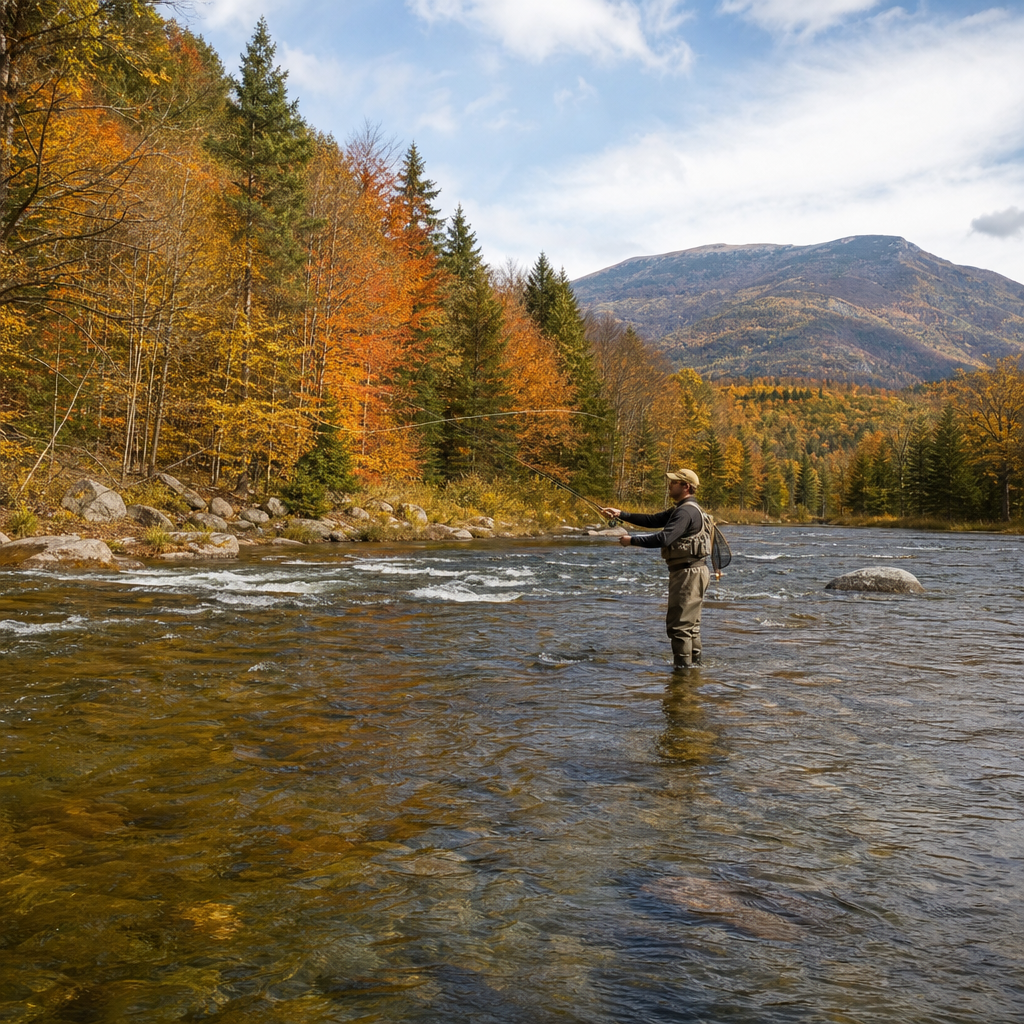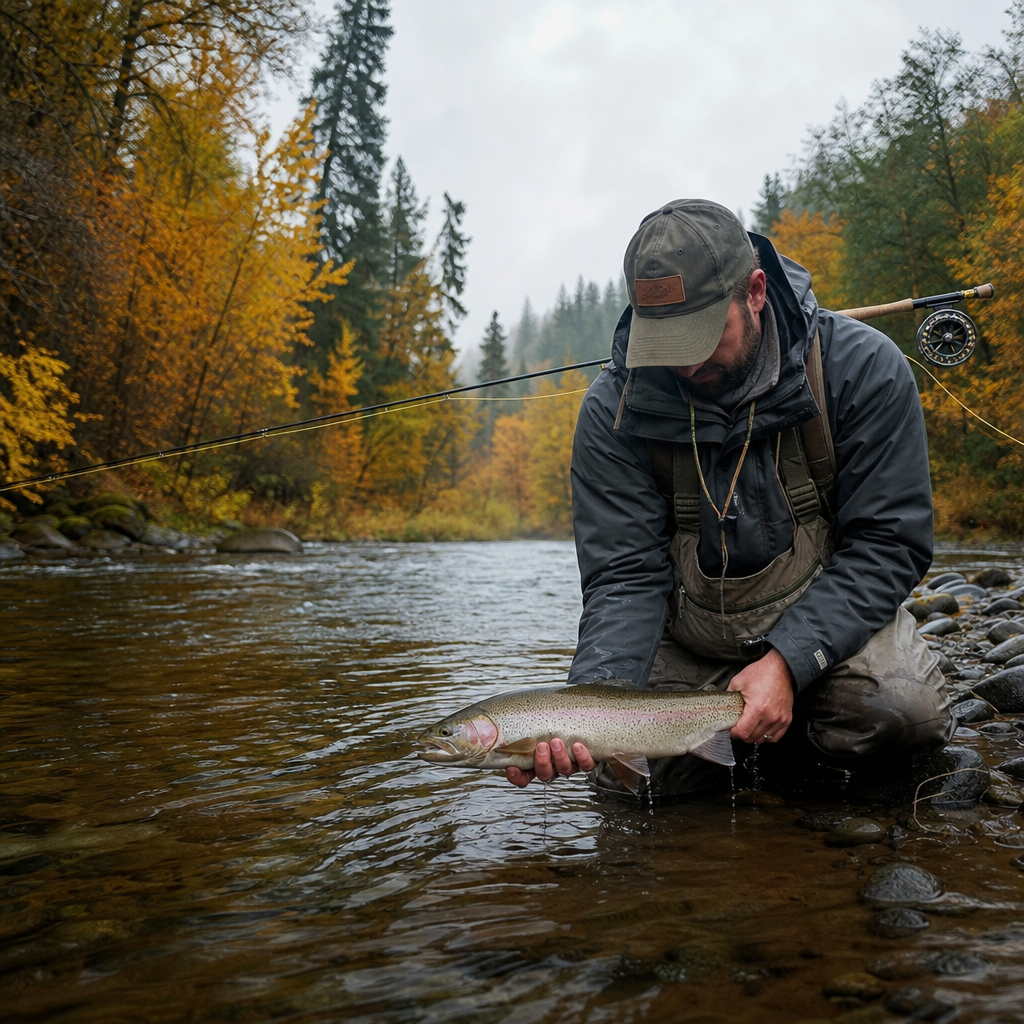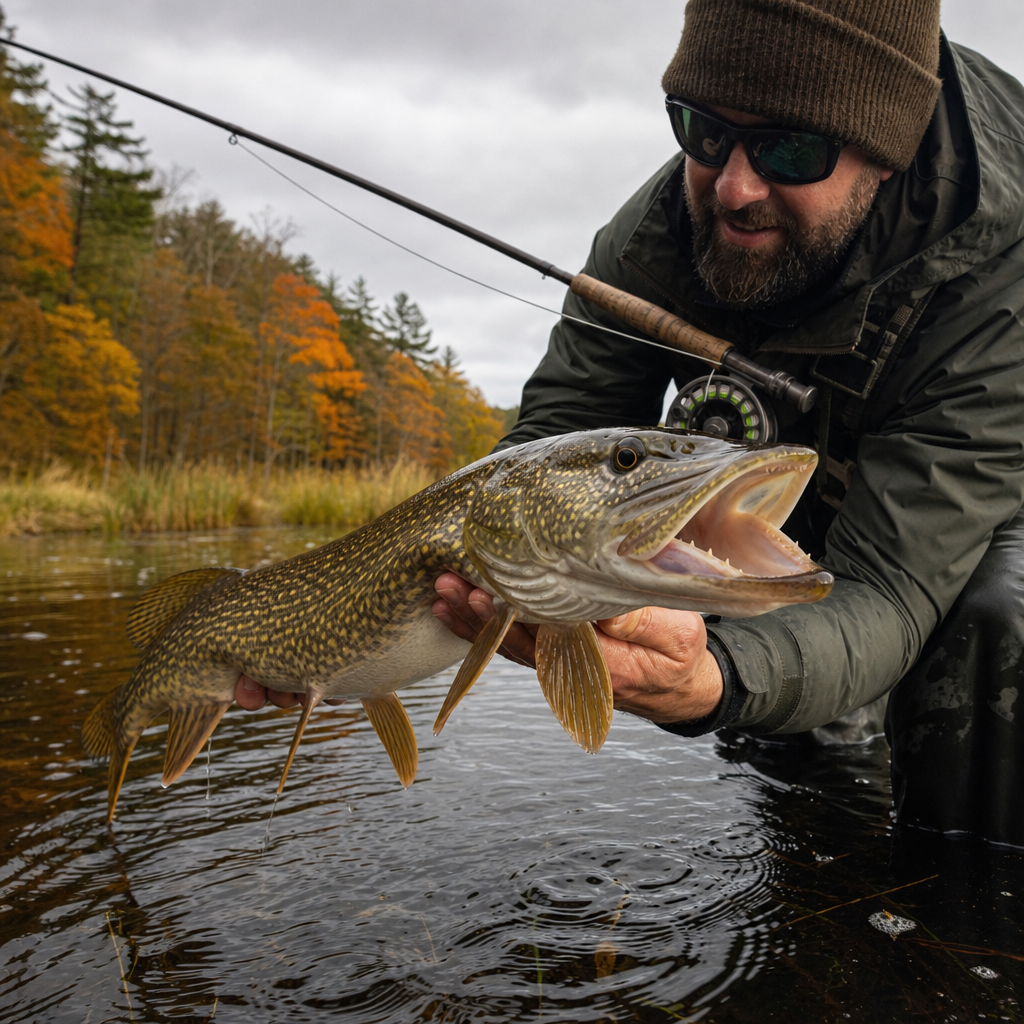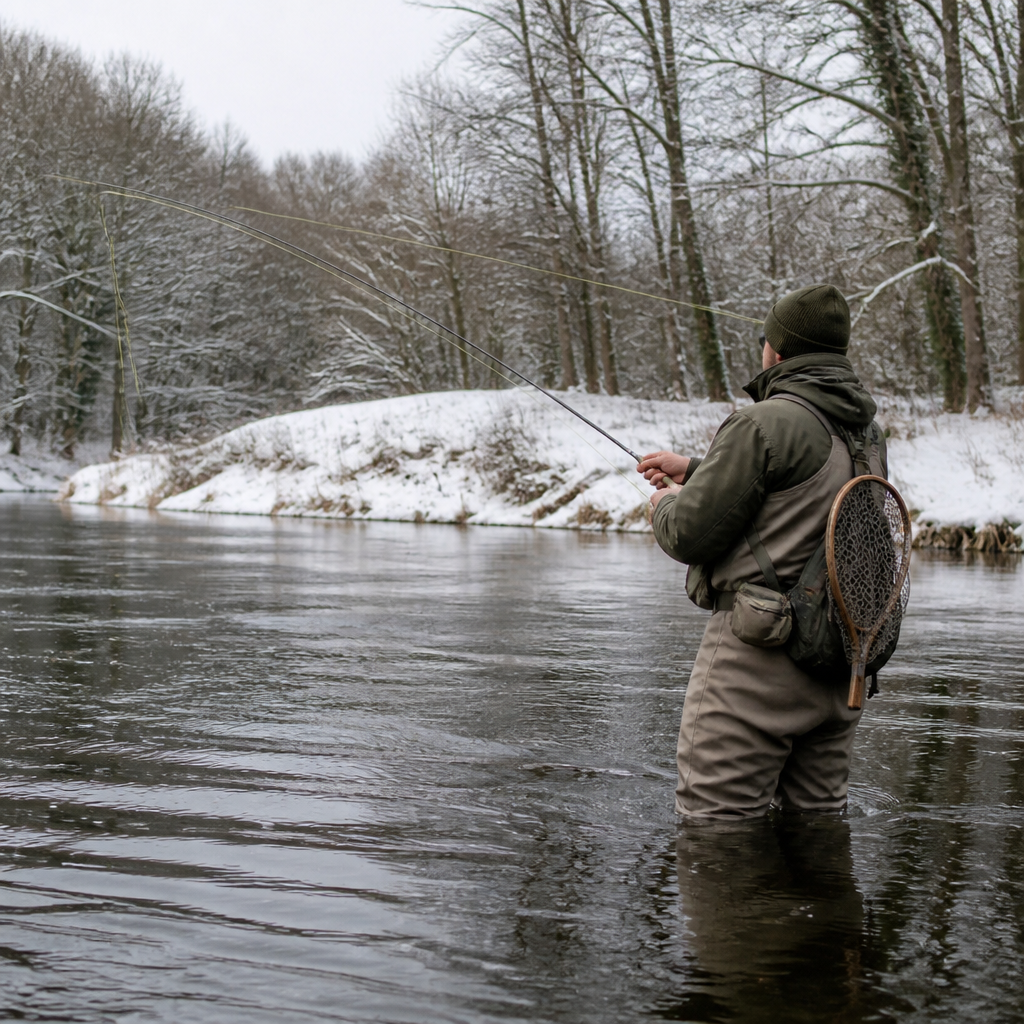
Winter fly fishing in lowland rivers rewards anglers who understand cold-water behavior, adapt presentation, and fish with patience. In this context, lowland rivers are the slower, lower-gradient systems that flow through valleys, farmland, and broad floodplains rather than steep mountain catchments. They often hold trout, grayling, chub, and occasional coarse species willing to take a fly, but winter changes everything: water temperatures drop, insect activity narrows, fish conserve energy, and successful methods become more deliberate. I have spent enough winter days on these rivers to know that the difference between a blank session and a memorable one usually comes down to reading soft current, controlling depth, and matching the river’s reduced pace.
Winter matters because many anglers stop when the first hard frosts arrive, leaving lowland rivers quieter and, at times, more predictable for those who stay engaged. Fish still need to feed, but they do so in shorter windows and from holding water that minimizes effort. That means the winter fly angler must think less about covering vast distances and more about identifying high-percentage lies: deeper glides, gentle seams, tailouts with steady oxygen, and slower pockets beside faster current. Water clarity also tends to increase between storms, making presentation and tippet choice more important than during colored autumn flows. In practical terms, winter fly fishing is not simply summer fishing in extra layers; it is a separate discipline with its own tactics, safety demands, and expectations.
This guide serves as a hub for winter fly fishing on lowland rivers by covering the essential decisions that shape success. You will learn where fish hold in cold conditions, which flies consistently produce, how to fish nymphs and streamers effectively, how to adjust tackle and wading systems for safety, and when weather shifts create brief feeding opportunities worth planning around. The goal is straightforward: help you make better choices before you leave home and smarter ones once you step into the river. When conditions are harsh and bites are scarce, clear fundamentals matter more than ever.
How Winter Changes Fish Behavior in Lowland Rivers
Cold water slows a fish’s metabolism, which reduces both movement and feeding frequency. In lowland rivers, where flows are often steadier than flashy upland streams, this behavior creates clear patterns. Trout and grayling usually shift toward water that offers security and easy access to food without demanding constant swimming. That commonly means deeper glides with moderate current, the inside edges of bends, slots below weirs, and the lower half of pools where drifting nymphs naturally collect. Chub, where present, often favor steadier winter lies under cover, near rafts of debris, undercut banks, and steadier runs with depth.
Temperature stability is often more important than absolute warmth. A lowland river sitting at 5°C for several days can fish better than one swinging between 3°C snowmelt and 7°C rainwater. Fish dislike abrupt change, especially sharp drops caused by freezing nights or sudden reservoir releases. I plan winter sessions around stable weather more than bright “nice” weather. Overcast conditions with mild air temperatures and no hard overnight frost often outperform bluebird days that look inviting but leave fish lethargic until late afternoon.
Food availability narrows too. Instead of broad summer hatches, winter often centers on midges, small olives during milder spells, freshwater shrimp in some systems, caddis larvae, and a range of nymphal drift dislodged by increased flow. This is why compact flies, sparse patterns, and accurate depth control are so reliable. Fish are not usually chasing aggressively through the water column. Most takes happen close to the riverbed, where the current is slower and calories are conserved.
Finding Productive Water: The Best Winter Holding Lies
The fastest way to improve winter fly fishing is to stop treating all “good-looking” water equally. In summer, riffles and broken runs may hold active fish across broad areas. In winter, only specific parts of those features remain productive. Focus first on depth combined with manageable current. A three- to six-foot glide with a smooth walking pace often outperforms a picture-perfect shallow riffle because fish can hold there comfortably while intercepting food. If the river is clear, position yourself low and approach from downstream to avoid pushing a wake over the lie.
Confluences deserve special attention. Where a smaller tributary joins a lowland river, you often get a seam with mixed current speeds, slight temperature moderation, and concentrated food. Likewise, the water below bridges, cattle drink areas, old mill structures, and outside weed beds can funnel drifting nymphs into defined lanes. Tailouts are another dependable winter feature, especially when the drop into the next pool creates a cushion of depth without heavy turbulence. Grayling in particular often pod up in these transitions, taking lightly weighted nymphs presented at the correct angle.
After rain, seek edges rather than main force. Winter fish rarely sit in the heaviest push unless a structure breaks current directly around them. Softer margins, back-eddies with clean circulation, and crease lines beside faster tongues become feeding lanes because food is delivered there at a manageable speed. The anglers I see struggle most are usually fishing too quickly through too much water. In winter, ten careful drifts through one prime lie are often better than fifty casts scattered across a long run.
Tackle, Clothing, and Safety for Cold Conditions
Most lowland winter fly fishing can be covered with a 9- to 10-foot rod in 3- to 5-weight for nymphing and small dries, plus a 5- or 6-weight if you intend to throw streamers. Longer rods help with line control, high-sticking, and protecting light tippet at close range. Floating lines do most of the work, though a Euro-nymphing setup or a very light indicator leader system can make depth control easier in mixed currents. I carry fluorocarbon tippet for subsurface work because it sinks quickly and offers abrasion resistance around winter debris, but I still use nylon when fishing dries in flat glides.
Layering is not optional. Start with a moisture-wicking base layer, add an insulating mid-layer like fleece or light synthetic fill, and finish with a waterproof shell. Breathable chest waders paired with quality socks usually outperform heavily insulated waders because you can regulate warmth by adding or removing layers. Studded boots are valuable on greasy clay banks and algae-slick gravel, while a wading staff becomes far more useful in winter than many anglers expect. Cold shock from an unexpected fall can end a trip immediately and turn a minor mistake into a genuine emergency.
Hand management matters. I prefer thin liner gloves for tying knots and a second waterproof or neoprene pair for moving between swims. Chemical hand warmers help, but dry cuffs and sleeves help more. Keep a spare hat and gloves in a waterproof bag. On short winter days, carry a headlamp even if you expect to finish early; lowland valleys lose light quickly. Finally, tell someone where you are fishing and avoid deep solo wading during high flows. Winter fly fishing is enjoyable when controlled and miserable when treated casually.
Winter Flies and Effective Presentations
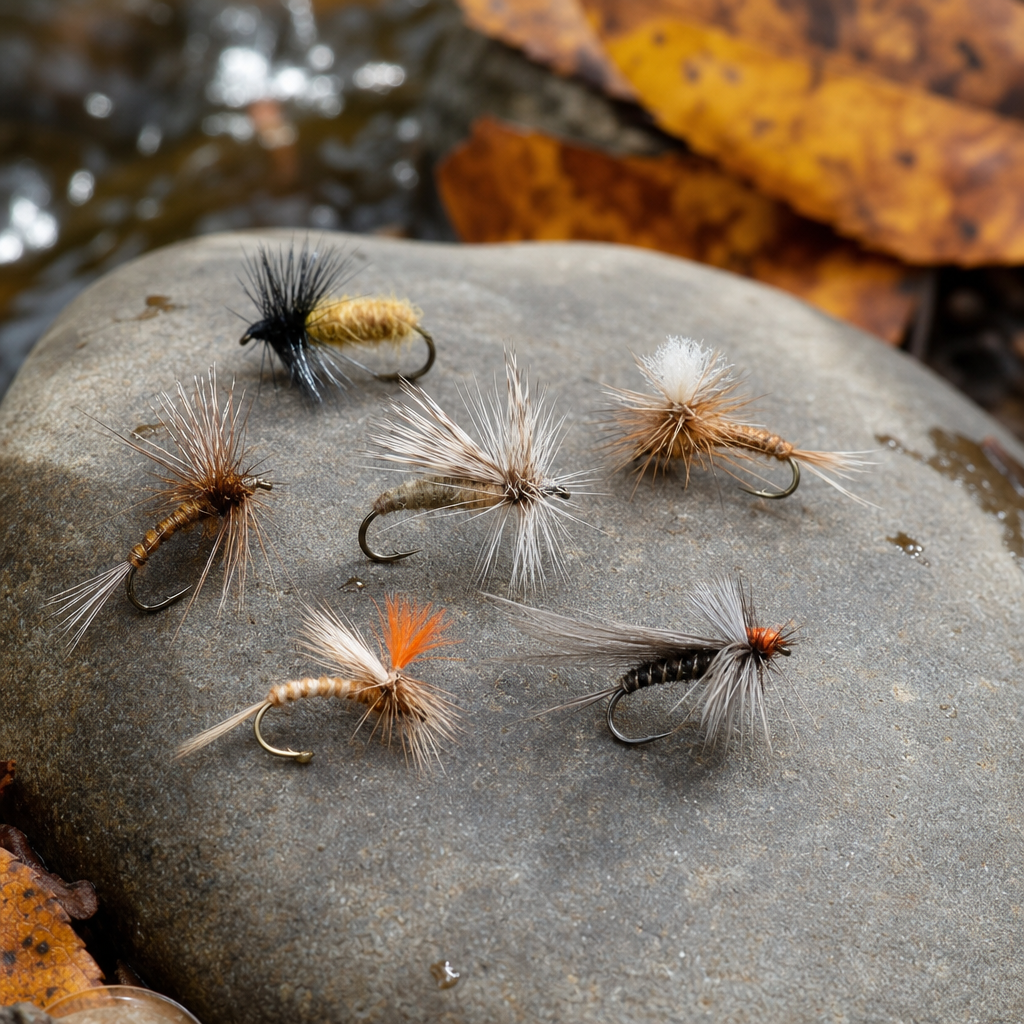
Successful winter fly selection is narrower than many tackle shops suggest. You need patterns that reach fish, imitate the available food forms, and remain visible enough for you to track or trust. In most lowland rivers, that means slim nymphs tied on strong hooks, small bugs for grayling, a handful of midge and olive dry flies for mild afternoons, and a few streamers to trigger larger fish when water carries some color. Heavy dressing and oversized profiles often work against you in clear winter conditions unless the river is up and stained.
| Winter situation | Best fly types | Why they work |
|---|---|---|
| Clear, cold, steady flow | Pheasant Tail, Hare’s Ear, Perdigon, pink bug | They sink quickly, match small nymphal drift, and stay in the feeding zone |
| Mild afternoon hatch | Griffith’s Gnat, small F-Fly, olive emerger | They imitate midges and winter olives with minimal drag |
| Colored water after rain | Hot-spot nymphs, squirmy patterns where legal, black streamer | Extra contrast helps fish locate the fly in reduced visibility |
| Targeting larger trout or chub | Woolly Bugger, zonker, small sculpin imitation | They offer a calorie-dense meal worth chasing a short distance |
Nymphing remains the core tactic because it keeps the fly near fish that are feeding close to the bottom. Whether you use a tight-line method or a small yarn or putty indicator, the principle is the same: achieve natural drift at the correct depth with minimal drag. Add just enough weight to tick the bottom occasionally without constant snagging. If you never touch bottom, you are probably too high; if you snag every cast, you are too deep or too slow. In clear lowland glides, I often begin with two nymphs: a heavier point fly such as a tungsten Perdigon and a smaller natural dropper above it.
Dry-fly opportunities exist, but they are usually brief and local. Watch for dimples in slack glides during the warmest part of the day, especially after several mild days. Midges can bring fish up even when no obvious hatch is visible from standing height, so kneel, scan the surface carefully, and look for subtle sips rather than splashy rises. Streamers earn their place after rain, during low light, or when targeting a larger resident fish that may ignore tiny nymphs but react to movement. Keep retrieves slow and controlled, with pauses. Winter fish seldom want a fast strip.
Timing, Weather Windows, and Session Planning
The best winter fly fishing often happens later than anglers expect. Early mornings after freezing nights are commonly slow because the water is at or near its coldest point. In many lowland rivers, activity improves from late morning into mid-afternoon as air temperatures rise slightly and light reaches the water. That does not mean noon is always best; rather, you should track patterns on your local system. Tailwater-influenced rivers can behave differently from purely rain-fed ones, and grayling fisheries often fish consistently through the middle of the day even when trout remain subdued.
Barometric pressure, rainfall, and wind all matter, but flow trend matters most. A river that has risen and just begun to steady can be excellent because food is moving and fish have repositioned into soft edges. A river still rising hard is usually difficult and potentially unsafe. Conversely, an extremely low, clear spell after multiple frosts can demand the finest tippet, smallest flies, and the most cautious approach of the season. Keep records. I log water temperature, weather, river height, time of first take, and successful fly size. After one winter, patterns emerge. After three winters, you start predicting them with confidence.
Plan shorter, sharper sessions rather than all-day slogs if conditions are brutal. Two focused hours in the prime window often outperform eight unfocused hours that include dead early-morning water and exhausted casting. Move only after properly fishing a lie at different depths and angles. If you connect with one fish, slow down; winter fish often group tightly, especially grayling and resident trout using the same current seam. A hub strategy for winter fly fishing is simple: fish when the river is most stable, fish the slow water thoroughly, and fish with enough concentration to detect the softest takes.
Common Mistakes and How to Correct Them
The most common winter mistake is fishing too fast. Anglers conditioned by spring and summer often cast, drift, and step downstream without giving prime lies enough attention. In cold water, fish may move only inches to inspect a fly, so repeated precise drifts are essential. The second mistake is poor depth control. Many unsuccessful days can be traced to flies traveling a foot above the feeding lane. Add weight, lengthen tippet, or change angle until your nymphs spend more time near the bottom third of the water column.
Another frequent error is ignoring subtle takes. Winter takes are often little more than a leader hesitation, a sighter twitch, or a dry fly pausing unnaturally. Strike on anything unusual. You will hook more fish and lose fewer to delayed reactions. Tackle imbalance also hurts performance. Rods that are too stiff, tippet that is too heavy for clear glides, and oversized indicators that drag all reduce natural presentation. Finally, many anglers overlook rivercraft. If birds flush from the bank and your boots send pressure waves across a flat glide, fish know you are there before the first cast lands.
Winter fly fishing in lowland rivers is at its best when approached as a precise, observant game rather than a test of endurance. Start with stable conditions, target deeper gentle current, and let fish location dictate pace. Build your day around nymphs, stay alert for short dry-fly windows, and use streamers selectively when color or bigger fish justify them. Dress properly, wade conservatively, and keep notes on temperature, flow, and timing so each trip sharpens the next one.
As the central guide within the Seasons and Conditions topic, this page gives you the framework for every winter session: understand the river’s cold-water structure, present flies at the right depth, and fish the most likely windows instead of chasing unlikely water. That approach produces more takes, safer days, and a clearer path to consistency through the toughest season. Use these principles on your next trip, then refine them on your home river one adjustment at a time.
Frequently Asked Questions
What makes winter fly fishing in lowland rivers different from fishing the same rivers in warmer months?
Winter changes both the river and the fish. In lowland rivers, colder water slows fish metabolism, which means trout, grayling, chub, and other likely species feed less often and move shorter distances to take food. Instead of roaming freely through faster runs or rising confidently to broad hatches, fish usually settle into steady, energy-efficient lies where they can hold with minimal effort and still intercept occasional food. On low-gradient rivers, that often means deeper glides, slower seams, gentle crease lines, sheltered bends, and the softer water below riffles rather than the fastest current itself.
Food availability also becomes more limited and more specific. Insect activity narrows in winter, so fish are often less interested in chasing and more focused on small, easy meals presented close to them. That shifts the emphasis away from covering lots of water quickly and toward careful observation, precise drifts, depth control, and repeated presentations through likely holding zones. Water clarity can also be a major factor. Many lowland rivers run clear during stable winter conditions, making fish more cautious, while rain can quickly add color, alter flow, and reposition feeding fish. Successful winter anglers adapt to these shorter feeding windows, slower fish responses, and more exacting presentation demands rather than expecting summer-style activity.
Where should I look for fish in winter on slower, lowland rivers?
The best winter lies are usually places where fish can conserve energy without giving up access to food. In lowland rivers, start by looking for moderate-depth water with a steady but not excessive pace: the tails of pools, inside bends, deeper glides, slow riffle edges, and the transition lines where quicker current meets softer holding water. Grayling often favor clean, well-oxygenated runs and deeper glides with a walking-pace current, while trout may slide into slower, deeper lies than they use in warmer conditions. Chub frequently hold near undercut banks, trailing weed beds, slacker margins, bridge cover, and steadier deeper sections where they can move only a short distance to inspect a fly.
One of the biggest mistakes in winter is overlooking water that seems too slow. Fish are trying to avoid burning energy, so the obvious fast, broken runs that fish well in spring or early summer may be less productive unless they offer a nearby soft pocket. Equally, the deepest hole is not always the best spot if it lacks current flow and food delivery. Think in terms of balance: enough movement to bring drifting nymphs and other natural food, but not so much pace that fish must work hard to hold position. If the river is slightly colored after rain, fish may also move into softer margins or slightly shallower feeding lanes because they feel more secure. Careful reading of current speed, depth, and shelter matters more than covering every yard of river.
What fly patterns and sizes tend to work best for winter fly fishing in lowland rivers?
In winter, simple, natural-looking patterns usually outperform overly flashy or bulky flies, especially in clear lowland water. Small to medium nymphs are the foundation of most winter fly fishing. Pheasant tail variations, hare’s ear nymphs, spider patterns, slim bug-style nymphs, and lightly dressed perdigon-style flies in restrained colors can all be effective. Sizes often trend smaller than in warmer months, commonly in the size 14 to 18 range, though the ideal size depends on water clarity, river pace, and what food is present. Grayling in particular often respond well to slim, tidy nymphs presented close to the riverbed, while trout may take the same flies if they are delivered naturally at the right depth.
That said, winter is not only about tiny flies. In slightly colored water, or where fish are holding deeper, a slightly larger point fly or a heavier anchor nymph can be useful to get the rig down quickly and create a clear target. Subtle flashes of silver, copper, or pink can help in murky conditions, but the key is moderation rather than excess. Dry-fly opportunities do exist during short midge or olive activity, especially on mild afternoons, so it is worth carrying small emergers, CDC dries, and sparse winter upwing imitations. Still, most winter success in lowland rivers comes from matching the general scale and behavior of available food rather than trying to trigger aggressive reactions. The more natural the profile, depth, and drift, the better your odds.
How should I adjust my presentation and technique to catch more fish in cold water?
The most important adjustment is to fish slower and more precisely. In cold water, fish are far less likely to move far for a fly, so your presentation needs to place the fly very near the fish and keep it there long enough to be taken. That usually means focusing on dead-drift nymphing with strong depth control. Whether you prefer euro-style nymphing, an indicator setup, or a tight-line approach adapted to local conditions, the goal is the same: achieve a natural drift at or near the fish’s level without excessive drag. If your flies are not getting down, they are often not in the game at all.
Approach each run methodically. Cover short lanes thoroughly before moving on, make repeat drifts at slightly different depths, and pay close attention to subtle takes. Winter takes are often hesitant: a tiny check in the line, a stall in the indicator, or a slight tightening that would be easy to miss in faster fishing. Strike positively but not wildly. Longer leaders, finer tippets, and a stealthier approach can help in clear conditions, while slightly more weight or a more visible sighter may be needed in deeper or colored water. It also pays to time your efforts well. The coldest early hours are often less productive than late morning through mid-afternoon, when water temperatures rise marginally and fish become more willing to feed. In winter, patience is not just a virtue; it is a technique.
What are the biggest mistakes anglers make when winter fly fishing lowland rivers?
The most common mistake is fishing as if it were another season. Many anglers move too quickly, target water that looks good in summer rather than water that makes sense for cold fish, or change spots before giving a likely lie enough attention. In winter, success often comes from slowing down, narrowing your focus, and making multiple high-quality drifts through key holding water. Another frequent error is fishing too high in the water column. If your nymphs are drifting above the fish, they may be ignored completely. Depth is critical, and small adjustments in weight, leader setup, or indicator placement can make a major difference.
Other mistakes include using flies that are too large or too gaudy for clear, pressured conditions, failing to adapt to river color after rain, and overlooking short feeding windows during the warmest part of the day. Some anglers also wade too aggressively in low, clear water, pushing fish off subtle lies before making a cast. Finally, many miss takes because they expect obvious aggression. Winter takes are often delicate, especially from grayling and cautious trout, so concentration matters on every drift. The anglers who do well are usually the ones who read the conditions honestly, stay flexible, and let the river dictate the method rather than forcing a favorite tactic. In winter fly fishing on lowland rivers, thoughtful adjustments consistently beat brute persistence.