The Rio Grande rewards anglers who arrive with a plan. Stretching from Colorado through New Mexico and along Texas, this river system offers everything from high-elevation trout water to warm desert reaches where current seams, seasonal flows, and insect life change mile by mile. For a fly fisher, “Iconic Waters” means stretches that consistently produce memorable fishing because they combine habitat quality, access, and a long history of angling culture. The Rio Grande belongs in that group, but it is not one river in practical terms. It is a sequence of fisheries shaped by snowmelt, dams, tributaries, irrigation demand, and geography.
I have fished the Rio Grande in pocket water near South Fork, drifted indicator rigs below the Taos Junction Bridge, and watched evening hatches fade into canyon shadows in northern New Mexico. What stands out is how strongly strategy matters. On famous rivers, fish see pressure, conditions shift quickly, and generic advice fails. Success usually comes from matching tactics to a specific reach: understanding whether fish are keyed on midges in winter, caddis in runoff transitions, or terrestrials along grassy summer banks.
For destination anglers, this matters because the Rio Grande can be approached in several ways. It can be a technical wade-fishing trip focused on trout, a float trip through canyon water, or a broader exploration of connected fisheries such as the Conejos, Rio Costilla, and tributaries that influence the main stem. As a hub within fly fishing destinations, this guide covers the river’s iconic trout-focused sections, the conditions that drive fish behavior, proven fly fishing strategies, and the planning details that make a trip more productive. If you want a practical answer to where to fish the Rio Grande and how to fish it effectively, start here.
What Makes the Rio Grande an Iconic Fly Fishing Water
The Rio Grande is iconic because it compresses multiple Western trout experiences into one destination. In southern Colorado, the upper river near Creede and South Fork is a classic freestone fishery with riffles, runs, undercut banks, and seasonal dry-fly opportunities. In northern New Mexico, the river below the Colorado line broadens and begins to show the influence of canyon structure, tailwater moderation in some stretches, and complex public access patterns. The Taos Box and nearby reaches add gradient, deep holding water, and dramatic scenery that define destination-level fishing.
Its reputation also comes from resilience and diversity. Unlike a single-purpose tailwater, the Rio Grande teaches anglers to adapt. During spring, snowmelt can color the water and push fish toward softer edges. In summer, lower clear flows can make trout selective, especially in heavily fished areas. In fall, streamer windows open as browns become aggressive. Winter narrows the menu and often turns the day into a midge-and-small-nymph game. That broad tactical range is why experienced anglers return.
The river’s historical role matters too. The Rio Grande has long been central to settlement, agriculture, and recreation across the Southwest. Communities such as Creede, South Fork, Questa, and Taos have built guiding, lodging, and access knowledge around it. For travelers researching fly fishing destinations, an iconic water is not just productive; it is interpretable. There are established access points, guide services, hatch patterns, and conservation conversations. That makes trip planning easier while still leaving enough complexity to reward skill.
Best Rio Grande Sections for Trout-Focused Fly Fishing
Not every mile of the Rio Grande fishes the same, so destination planning starts with the right reach. The upper Rio Grande in Colorado, especially from Creede downstream through South Fork, is often the best introduction. This water holds brown trout and rainbow trout, with Rio Grande cutthroat opportunities in connected regional fisheries rather than throughout the main stem. Anglers can expect riffle-run structure, pocket water, and accessible public stretches. In average summer flows, this section is ideal for dry-dropper rigs, hopper patterns, and short-line nymphing around boulders and banks.
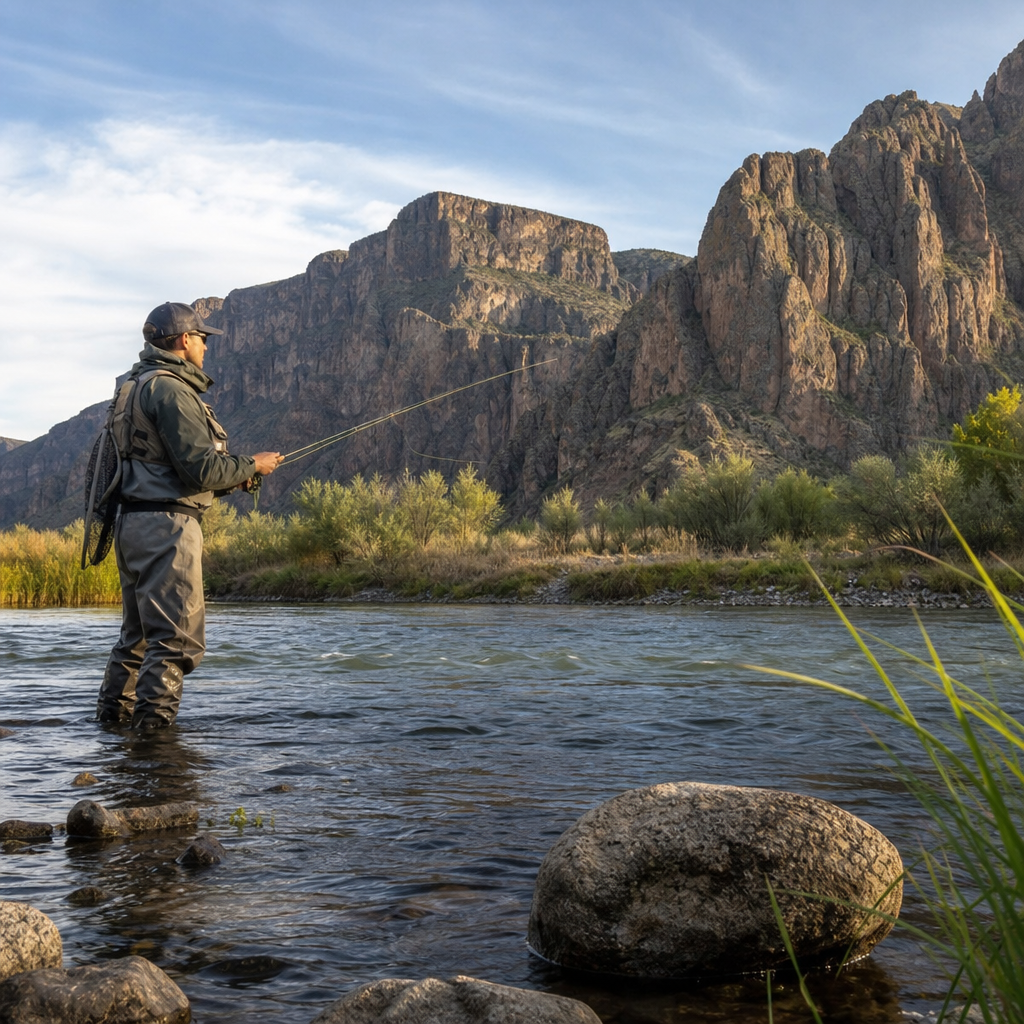
The reach through the Rio Grande Gorge in northern New Mexico is a different animal. Here, trout hold in stronger current tongues, ledges, tailouts, and depth changes created by canyon geology. Access can be physically demanding, but the reward is less roadside pressure and fish that behave more naturally when approached carefully. The Taos Junction Bridge area is the best-known entry point, and it serves as a practical base for wade anglers and float anglers targeting trout during stable flow windows.
Some anglers ask whether the Taos Box is worth the effort. The short answer is yes, if you understand that this is advanced water. The Taos Box combines whitewater, steep canyon walls, and sections where boat handling and reading holding structure matter as much as fly choice. Trout often sit behind large current breaks, along foam lines entering deeper slots, and at the heads of pools where oxygen and food converge. For anglers without oar experience, this is guide water, not experimental rental-boat water.
| Rio Grande Section | Primary Character | Best Tactics | Typical Challenge |
|---|---|---|---|
| Creede to South Fork | Freestone riffles, runs, pocket water | Dry-dropper, pocket-water nymphing, hoppers | Variable flows during runoff |
| Colorado line to Questa | Broader current seams, mixed access | Indicator nymphing, streamer edges, evening dries | Wind and selective fish in clear water |
| Taos Junction Bridge area | Canyon structure, deeper slots, classic destination water | Euro-style contact nymphing, indicators, streamers | Physical access and changing flows |
| Taos Box | Whitewater canyon, complex holding lies | Guided float nymphing, streamer fishing | Technical rowing and safety risk |
As a hub for iconic waters, it helps to frame the Rio Grande as a base camp destination. Anglers can fish the main stem and then branch into nearby waters depending on conditions. If runoff blows out the river, nearby tributaries or tailwater-influenced options may fish better. If the main stem drops into ideal late-summer shape, the Rio Grande becomes the priority because it offers the strongest blend of scenery, access, and tactical variety.
Seasonal Fly Fishing Strategies on the Rio Grande
Seasonality drives everything on the Rio Grande. In late winter and early spring, trout metabolism is lower, and the most consistent strategy is precise nymphing with small patterns. Midges, baetis nymphs, and small attractor nymphs under a light indicator or on a tight-line setup routinely outproduce larger presentations. Focus on slower walking-speed water adjacent to deeper winter holding lies. In cold months, six good drifts through a narrow seam are often worth more than covering a hundred yards quickly.
Runoff, usually peaking in late spring to early summer depending on snowpack, changes the game. Many anglers avoid the river entirely when flows rise and visibility collapses, but that is too simplistic. If clarity is at least marginal, trout slide toward softer banks, inside bends, flooded grass lines, and current breaks behind structure. Larger stonefly nymphs, worm patterns, and dark streamers become effective because fish have less time to inspect the fly. The key is fishing the edges, not the middle.
Summer is the Rio Grande’s broadest tactical window. On many upper stretches, mornings can favor nymphs, midday can bring caddis or attractor dry activity, and afternoons can shift toward hopper-dropper fishing along banks. I usually begin with a Chubby Chernobyl or a high-floating hopper carrying a perdigon, pheasant tail, or small stone below. If fish refuse the dry but hold in broken water, I shorten the dropper and fish closer. In shallow runs, that single adjustment often turns follows into eats.
Fall is streamer season for many experienced Rio Grande anglers, especially where brown trout become territorial. This does not mean stripping oversized articulated flies all day regardless of conditions. A better approach is to match streamer size to water clarity and fish mood. In clear autumn flows, smaller baitfish or sculpin profiles swung or stripped across depth transitions can be far more effective than giant patterns. Pair that with a nymph rod for midday stability, because not every fish is willing to chase.
Reading Water and Choosing Tactics That Fit the River
Reading Rio Grande water well starts with identifying how current speed, depth, and cover intersect. Trout rarely hold in the heaviest push when an adjacent softer lane delivers the same food with less energy cost. On freestone sections, look for pockets behind boulders, slots between converging currents, and bank-side depressions under cut grass or willow roots. In canyon sections, pay special attention to shelves dropping into green slots, tailouts with a defined walking-speed seam, and foam lines that indicate conveyor-belt feeding lanes.
Nymphing is the highest-percentage tactic on most Rio Grande trout water because the river offers so many short feeding windows near the bottom. Indicator rigs work well when depth changes are substantial or when you need mending range across broad seams. Tight-line methods shine in pocket water, along ledges, and in medium-depth runs where direct contact improves strike detection. I carry both because choosing one style for the whole day usually leaves fish on the table.
Dry-fly opportunities are real, but they are situational rather than guaranteed. Caddis, pale morning duns, baetis, and terrestrials all matter depending on season and elevation. The best dry-fly fishing often happens where structure gives fish confidence: foam lines next to rock walls, seams under overhanging grass, and slick tails below riffles during evening emergence. Presentation matters more than pattern variety. A drag-free drift over a fishable lane with a standard caddis often beats a perfect imitation skated or micro-dragged across the current.
Streamer fishing earns its place when flows are up, light is low, or browns become predatory. Focus on undercut banks, depth transitions below riffles, and slow water next to heavy current. Cast quartering downstream when you want a broad swing, or across and slightly upstream when you need the fly to sink before entering the strike zone. If fish follow but do not eat, change angle before changing fly. On the Rio Grande, travel path often matters more than color.
Essential Gear, Access Planning, and Trip Logistics
A versatile Rio Grande setup begins with a 9-foot 5-weight for dries and light nymphing, plus a 10-foot 3- or 4-weight for contact nymphing if that is your style. For streamer work, a 6-weight gives better line control and helps turn over weighted flies in canyon wind. Floating lines cover most situations, though a sink-tip can be useful in fall or during higher flows. Standard leaders from 9 to 12 feet, fluorocarbon tippet for subsurface work, split shot, and visible indicators belong in every kit.
Wading gear should match the river’s mixed personality. Felt is restricted in some regions, so rubber soles with studs are the safer default from a compliance and traction standpoint. A wading staff is worth carrying in New Mexico canyon sections where boulders are slick and current accelerates unexpectedly. Polarized glasses are not optional; they help read depth, identify submerged structure, and spot fish movement in softer edge water during runoff transitions.
Access requires research because public water exists alongside private land, tribal land, and stretches where entry is legal only at specific points. State wildlife agencies publish access maps, and on-the-ground confirmation matters because fences, parking rules, and easements can change. On destination trips, I always mark several backup access points in case runoff, wind, or crowding makes the first plan inefficient. Hiring a local guide for the first day can shorten the learning curve dramatically, especially in the Taos region where access and flow interpretation are nuanced.
Timing and safety are part of strategy, not administrative details. Monitor USGS gauges before and during the trip, especially in snowmelt season and after monsoon rain. Afternoon thunderstorms can color tributary inputs quickly. At elevation, weather shifts fast, and in canyon sections self-rescue is not simple. Tell someone where you are parking, carry more water than you think you need, and treat the Rio Grande with the same respect you would give any remote Western river with cold current and uneven access.
Common Mistakes and How to Fish the Rio Grande More Effectively
The most common mistake is fishing the river as if every famous stretch should produce immediately. Pressure changes trout behavior. On the Rio Grande, that usually means reducing wading, lengthening drifts, and covering less water more carefully. Another frequent error is standing too close. Many productive lies sit only a rod length off the bank, especially during runoff and summer terrestrial season. Start close, fish the edges first, and only then work toward the center.
Another mistake is overcommitting to hatch obsession when fish are feeding opportunistically below the surface. Matching insects matters, but on many Rio Grande days depth and drift matter more. If you are seeing occasional rises but not enough consistency to justify a full dry-fly switch, keep the nymph rig on and cover likely feeding lanes thoroughly. Conversely, do not ignore visible surface feeding simply because nymphing was productive in the morning. The best anglers on this river change with the evidence.
Finally, many destination anglers underestimate how valuable local information is. Fly shops in Creede, South Fork, and Taos often know not just what flies are working, but which access points are crowded, which runs are too pushy to wade safely, and whether afternoon wind is affecting casting in open sections. Use this hub article as your planning foundation, then refine it with current reports and local expertise. That combination is what turns the Rio Grande from a scenic stop into a truly productive fly fishing destination.
Exploring the Rio Grande for fly fishing means understanding that one river can contain several distinct fisheries. The upper Colorado reaches reward classic freestone tactics, northern New Mexico adds canyon complexity and destination scenery, and seasonal shifts constantly reshape what “best strategy” means. If you remember three essentials, make them these: choose the right section for current conditions, match your technique to how trout are holding, and let flows dictate your plan rather than forcing a preferred method.
The main benefit of approaching the Rio Grande this way is consistency. Instead of hoping a famous river simply gives up fish, you begin reading water more accurately, selecting better flies, and moving through a day with purpose. That is how iconic waters are meant to be fished: with enough preparation to respect their complexity and enough flexibility to adapt when conditions change.
Use this page as your hub for Rio Grande trip planning, then build outward into nearby access guides, hatch breakdowns, seasonal reports, and related fly fishing destinations. Pick a section, check flows, talk to a local shop, and fish the river with a specific plan. The Rio Grande usually rewards anglers who do exactly that.
Frequently Asked Questions
What makes the Rio Grande an iconic fly fishing river?
The Rio Grande earns its reputation because it offers remarkable variety across a huge geographic range while still delivering the core ingredients serious anglers look for: fishable habitat, dependable seasonal opportunities, public access in many stretches, and a strong angling tradition. In Colorado, the river begins as cold, high-elevation trout water where structure, oxygen, and insect activity create classic fly fishing conditions. As it moves through New Mexico, it develops into a more complex system shaped by canyon stretches, tailwater influence in some areas, runoff cycles, and changing food sources. Farther south, the character shifts again, with warmer reaches, different fish behavior, and a stronger emphasis on reading current seams, depth changes, and seasonal flow windows.
What also sets the Rio Grande apart is that success here depends on thoughtful strategy rather than a one-size-fits-all approach. Anglers must pay attention to snowmelt timing, summer monsoons, dam releases, water clarity, insect life, and local access conditions. That challenge is part of the appeal. The river can reward technical dry-fly presentations, precise nymphing, streamer fishing, and opportunistic tactics depending on the section and time of year. For fly fishers, “iconic” waters are not just scenic or historic; they are rivers that consistently create memorable days because they demand skill and offer legitimate chances at quality fish. The Rio Grande fits that definition extremely well.
How should I approach different sections of the Rio Grande when planning a fly fishing trip?
The smartest way to plan a Rio Grande trip is to break the river into distinct fisheries instead of thinking of it as one continuous destination. The upper river in Colorado generally calls for a trout-focused approach built around elevation, runoff timing, and insect hatches. Here, anglers should target riffles, pocket water, undercut banks, and softer edges near faster current, especially when water temperatures are favorable and flows are stable. Matching the seasonal hatch matters, but so does covering likely holding water efficiently. In these stretches, fish often respond well to dry-dropper rigs, beadhead nymphs, and smaller streamers when fish are aggressive or water is slightly off-color.
In New Mexico, planning becomes more nuanced because flows can vary dramatically by season and by stretch. Some sections fish best when runoff subsides and clarity improves, while others become productive during lower, manageable flows that concentrate fish and make reading structure easier. Look for tailouts, current seams along mid-river shelves, slower inside bends, and transitions where riffles drop into deeper holding water. If you are fishing a canyon stretch, pay particular attention to depth changes and protected lies that allow trout to feed without expending much energy. In lower, warmer sections farther south, strategy shifts toward timing and conditions. Early mornings and evenings often outperform midday, and anglers may need to focus more on opportunistic feeding windows, deeper runs, and structure that offers shade, oxygen, or relief from stronger current. The key across the entire system is localizing your plan: study flows, identify the dominant species and food sources in the section you intend to fish, and choose water types that match both season and fish behavior.
What fly fishing tactics work best on the Rio Grande throughout the year?
Effective Rio Grande tactics change with water temperature, flow volume, clarity, and insect activity, but a few principles hold up consistently. During spring runoff, high and off-color water often pushes fish toward softer edges, side channels, current breaks, and slower buckets behind structure. This is usually a good time to fish larger nymphs, attractor patterns, or streamers that create a strong profile and stay visible in stained water. Weight becomes important, and anglers who adjust split shot, leader length, and drift angle carefully usually outfish those who simply cast to obvious water without controlling depth.
Once flows begin to stabilize, nymphing often becomes the most reliable all-around tactic. On many Rio Grande stretches, trout feed consistently below the surface, and a well-drifted two-fly nymph rig can cover a wide range of forage. Focus on seams where fast and slow currents meet, the heads of runs, deeper riffles, and troughs along gravel bars. During hatch periods, however, dry-fly fishing can be excellent, especially when fish set up in predictable lanes and begin looking up with confidence. Keep an eye on mayflies, caddis, midges, and terrestrials depending on the season and elevation. Summer often rewards anglers who stay flexible: fish dries early and late, then switch to nymphs or small streamers as the light changes and fish drop deeper. In fall, streamer fishing can become especially productive in some trout sections as fish grow more territorial and willing to chase. The biggest tactical mistake on the Rio Grande is fishing one method too long. The river often tells you what to do if you pay attention to rise forms, drift speed, insect presence, and where fish are actually holding.
How important are flows, water temperature, and insect life on the Rio Grande?
They are absolutely central to success. On the Rio Grande, more than on many smaller or more uniform rivers, conditions can shape the entire day. Flow levels influence not only where fish hold, but also whether a section is even worth fishing at a given moment. High flows can spread fish into softer margins and flood side structure, while lower flows can compress fish into deeper runs, cutbanks, and defined channels. Water clarity matters just as much. Slightly stained water can improve streamer and nymph fishing, but very muddy conditions often reduce visibility and push anglers to either delay, relocate, or fish bigger, more noticeable patterns very close to sheltering lies.
Water temperature is another major factor, especially because the Rio Grande spans cold mountain water and warmer southern reaches. Trout in upper sections feed actively within a relatively narrow temperature range, and activity can slow dramatically when water is too cold or become stressful when temperatures climb too high. In warmer stretches, fishing windows may narrow to mornings and evenings, and responsible anglers should monitor temperatures closely and avoid targeting trout during heat stress. Insect life ties the whole picture together. Hatches determine whether fish are focused on the surface, suspended in the column, or feeding near the bottom. Even when no obvious hatch is occurring, the dominant subsurface food base often dictates fly size, color, and profile. Turning over rocks, watching the air above riffles, and checking back eddies for shucks or drifting bugs are practical habits that help anglers fish the river more intelligently. On the Rio Grande, conditions are not background details; they are the roadmap.
What are the biggest mistakes anglers make when fly fishing the Rio Grande?
One of the most common mistakes is underestimating how different one stretch can be from the next. Anglers often arrive with a favorite tactic or a general idea of “Rio Grande fishing,” only to discover that the section in front of them requires a different presentation, fly size, or water-reading approach. Another frequent error is failing to check current flow data, weather, access updates, and local reports before the trip. Because this river system is shaped by snowpack, runoff, irrigation demands, storms, and regional climate shifts, conditions can change quickly, and yesterday’s good water may fish very differently today.
A second major mistake is poor drift management. Many anglers identify the right water but do not control their line well enough to achieve a natural presentation through complex current seams. On the Rio Grande, fish often hold in precise feeding lanes, and even slight drag can ruin an otherwise perfect cast. Fishing too fast is another issue. Productive water here may look subtle rather than dramatic, and anglers who skip over inside seams, softer shelf edges, or transitional depth changes often miss fish. Finally, many people overlook timing. They fish the wrong hours in warm weather, ignore the importance of hatch windows, or stay committed to surface patterns when fish are clearly feeding subsurface. The best Rio Grande anglers are observant, adaptable, and willing to revise their plan based on what the river is doing in real time. That mindset usually matters more than any specific fly pattern.