Peru is one of South America’s most underrated fly fishing destinations, combining Amazon headwaters, high Andean lakes, Pacific-influenced river systems, and remote jungle tributaries that still feel largely unexplored. For anglers building a South America fly fishing plan, Peru matters because it offers unusual species diversity, dramatic elevation changes, and a wide range of fishing styles within one country. In practical terms, fly fishing in Peru can mean stalking golden dorado-like predators in lowland jungle rivers, casting streamers for peacock bass in the Amazon basin, targeting native trout and introduced rainbow trout in cold mountain water, or sight fishing for hard-fighting species in lagoons and oxbows. I have worked with traveling anglers who arrive expecting Peru to be a side trip after Machu Picchu and leave surprised that it deserves to be a primary destination. The defining feature is not only the fishing itself, but the contrast between ecosystems. In a single itinerary, anglers can move from Cusco’s high-altitude waters to the Amazon near Puerto Maldonado or Iquitos and experience entirely different fisheries. That makes Peru a true hub within South America fly fishing rather than a niche add-on.
Understanding Peru’s fly fishing destinations starts with geography. The Andes split the country into sharply different drainage systems. West of the mountains, many rivers are short, steep, and seasonally variable before meeting the Pacific. East of the Andes, enormous watersheds feed the Amazon, including tributaries such as the Madre de Dios, Ucayali, Marañón, and Putumayo systems. Elevation, rainfall, and access determine what species are available and when conditions are fishable. Regulations and conservation practices also vary by lodge area, indigenous territory, and protected reserve, so planning matters more here than in highly standardized fisheries such as Patagonia. Peru also sits at an important crossroads for anglers researching fly fishing in South America. It shares ecological themes with Bolivia’s jungle dorado waters, Colombia’s peacock bass fisheries, Ecuador’s mountain trout streams, and Chilean or Argentine trout destinations, yet it remains distinctly Peruvian in logistics, culture, and species mix. If you want one article to frame the Peru segment of a broader South America fly fishing strategy, this is it: where to go, what to target, when to visit, and how to choose the right trip based on terrain, species, and skill level.
Amazon Basin Fly Fishing in Peru
The Amazon basin is the strongest reason many serious anglers look at Peru. Most Peru jungle fishing happens in the east, where warmwater species dominate and access usually involves commercial flights followed by long boat transfers. The best-known Amazon fly fishing zones are reached through Puerto Maldonado, Iquitos, and occasionally Pucallpa, depending on river conditions and lodge operations. Species vary by watershed, but anglers commonly pursue peacock bass, payara in some broader regional systems, bicuda, wolf fish, piranha, pacu, and several hard-charging catfish and characin species on fly tackle. In Peru specifically, peacock bass are a major draw in oxbow lakes, blackwater lagoons, and slower tributaries connected to larger Amazonian rivers. These fish respond well to baitfish patterns, deer-hair divers, and articulated streamers stripped aggressively around timber, weed edges, and drop-offs.
What makes Peru stand out from other Amazon destinations is the mix of true jungle immersion and relative novelty. In Brazil, many peacock bass operations are well established on the Rio Negro system. In Peru, anglers often deal with less-publicized waters that can fish exceptionally well when timing aligns with falling or stable levels. Water level is the single biggest variable. In the Amazon, a “best month” means little without reference to the hydrograph. Falling water usually concentrates fish and improves clarity, while high floodwater spreads them into forests and makes sight-oriented or structure-based fishing much harder. For that reason, experienced Peru fly fishing outfitters monitor river stage constantly and may shift daily plans among lagoons, channels, and tributary mouths. Anglers who understand this are more successful and less frustrated.
Another major advantage is biodiversity. Even when a day is not dominated by one marquee species, the variety keeps fishing dynamic. I have seen trips where anglers landed double-digit species on fly tackle in a single week, including peacock bass, silver arowana, shovel-mouthed catfish, piranha, and aggressive smaller predators that would never appear on a standard trout itinerary. That variety matters for travelers who value exploration as much as trophy hunting. Peru’s Amazon fisheries are not as numbers-driven as some heavily managed warmwater lodges elsewhere, but they reward anglers who enjoy adapting flies, retrieves, and leader strength to changing conditions. Heavy rods in the 8- to 10-weight range, tropical lines, wire or bite tippets for certain species, and durable hooks are standard.
Andean Trout Waters Around Cusco, Puno, and Beyond
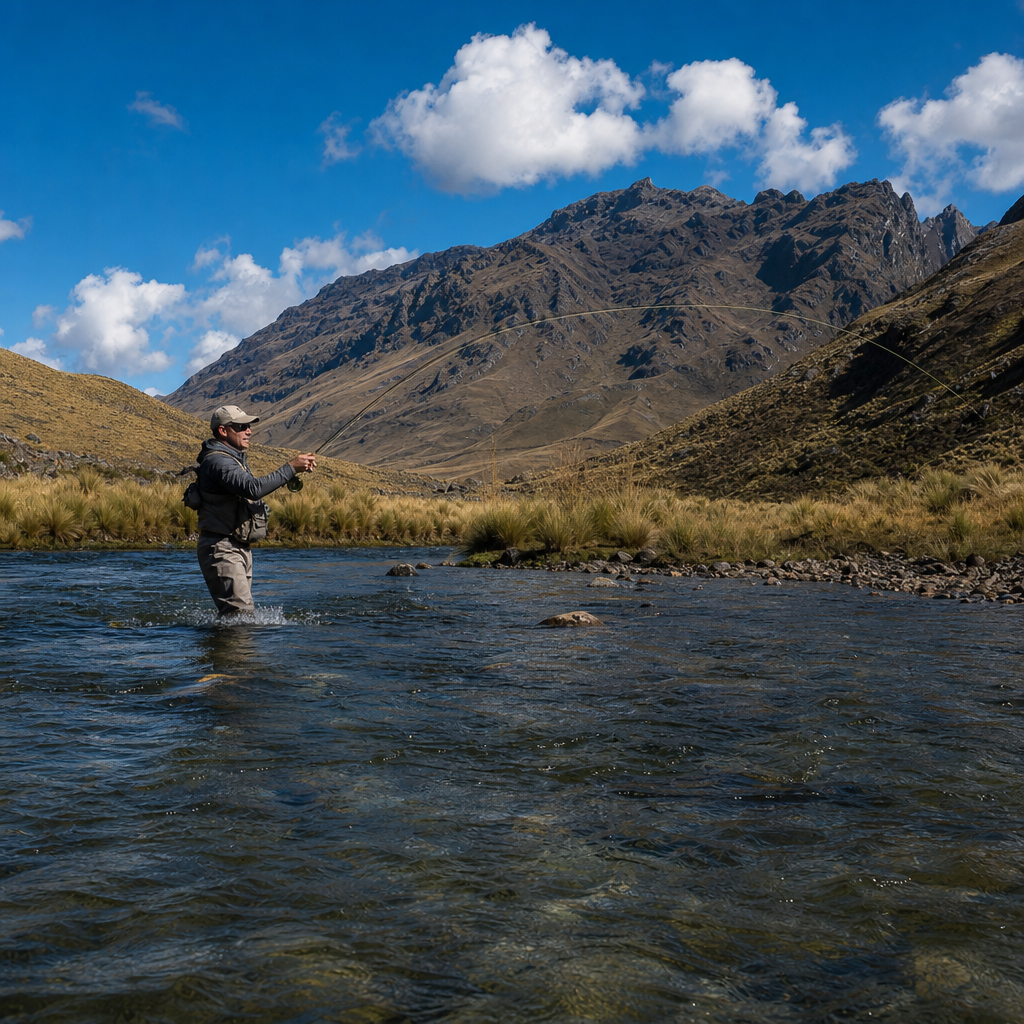
While Peru is not globally famous as a trout nation, its Andean waters offer a compelling alternative for anglers already visiting the mountains. Introduced rainbow trout and brown trout exist in selected rivers, reservoirs, and highland lakes, especially around Cusco, the Sacred Valley, and the Lake Titicaca region near Puno. There are also native species in some systems, though many are not traditional sport targets. The appeal here is less about giant fish and more about scenery, accessibility from cultural travel routes, and technical fishing at altitude. Small stream nymphing, dry-dropper rigs, and stripping woolly bugger-style streamers can all produce fish depending on water temperature and food availability.
In the Cusco region, anglers can arrange day trips to streams and stillwaters without committing to a full expedition. This is valuable for travelers combining tourism and fishing. Some waters are modest in size, demanding stealth and accurate presentations rather than long casts. Others are broad, windy lakes where sinking lines and balanced leeches work better. Lake Titicaca’s tributaries and nearby lakes have supported trout fisheries for years, though conditions can be inconsistent and local pressure varies. Because many waters lie above 11,000 feet, altitude is not a side note. It affects wading, hiking, hydration, and even how aggressively you can fish a full day. Anyone coming from sea level should plan acclimatization before attempting remote highland outings.
Peru’s trout fishing is best viewed honestly. It is not a replacement for Argentina’s Limay, Chile’s Petrohué, or Patagonia’s famous spring creeks. Fish size is generally more modest, infrastructure is less specialized, and access can be uneven. Yet these waters can be deeply rewarding for anglers who appreciate context. Casting a dry fly in an Andean valley with terraced hillsides and snow peaks behind you is a distinct experience. It also broadens the definition of South America fly fishing. Not every itinerary needs to chase only the most famous waters. Peru’s mountain fisheries fit anglers who want cultural travel, moderate fishing days, and the chance to explore lesser-known streams with local guides who understand land access, weather, and seasonal insect activity.
Where Peru Fits Within South America Fly Fishing
As the Peru hub for South America fly fishing content, it helps to compare Peru with neighboring destination types so anglers can decide whether it matches their priorities. Peru is strongest for exploratory variety, jungle species, and mixed travel itineraries. It is weaker than Chile and Argentina for classic destination trout infrastructure, and less predictable than some marquee operations in Brazil for trophy-focused peacock bass programs. But Peru competes extremely well for anglers who value diversity and who want one country to offer both jungle and mountain options.
| Destination style | Best Peru regions | Main species or focus | Best for |
|---|---|---|---|
| Amazon jungle expedition | Puerto Maldonado, Iquitos, remote tributaries | Peacock bass, piranha, arowana, mixed warmwater species | Adventure anglers and species collectors |
| High-altitude trout trip | Cusco, Sacred Valley, Puno highlands | Rainbow trout, brown trout, stillwater fishing | Travelers combining culture and fishing |
| Mixed-country itinerary | Andes plus Amazon extensions | Trout one segment, jungle species another | Anglers maximizing variety in one vacation |
| South America hub travel | Peru as entry point with Bolivia, Ecuador, or Colombia add-ons | Regional species diversity | Experienced anglers planning multi-country circuits |
This comparison matters because expectations determine satisfaction. If an angler wants highly polished drift-boat trout programs, Peru is usually not the top answer. If that same angler wants to fish an Amazon lagoon in the morning and then spend the next leg of the trip in the Andes near major archaeological sites, Peru becomes unusually compelling. In other words, Peru rewards flexibility more than rigid destination stereotypes.
Best Seasons, Water Conditions, and Travel Planning
The best time for fly fishing in Peru depends entirely on region. In the Amazon basin, lower or falling water often creates the most productive conditions, but the exact timing varies by watershed and annual rainfall patterns. Many jungle operations aim for windows between roughly June and November, though this is not universal. In some years, an early or delayed rainy season can shift the best fishing by weeks. In the Andes, the dry season from about May through September generally offers easier travel, clearer water, and more stable weather. However, cold nights and strong afternoon wind can affect lake fishing. Shoulder seasons may produce fewer crowds and active fish, but rainfall can increase turbidity and make remote roads difficult.
Travel logistics are a major part of any Peru fly fishing destination plan. International visitors usually enter through Lima, then connect to Cusco, Juliaca, Puerto Maldonado, or Iquitos. From there, lodge transfers may involve four-wheel-drive vehicles, long skiff rides, or small local boats with strict baggage limits. Gear planning should reflect that reality. Four-piece rods, waterproof duffels, quick-dry layers, sun protection, and a simple medical kit are essential. For jungle trips, heat, humidity, insects, and sudden storms are operational concerns, not minor inconveniences. For Andean trips, cold mornings, UV intensity, and altitude management are equally important. Travelers should also verify whether fishing licenses, protected-area permits, or community access fees are arranged by the outfitter or must be obtained separately.
One of the most common mistakes I see is anglers packing for a generic “South America fishing trip” instead of for Peru’s specific environments. A 5-weight trout setup and a handful of dries will not cover an Amazon itinerary. Likewise, arriving for a highland trip with only heavy jungle tackle makes little sense. Smart planning means matching rods, lines, clothing, and medications to exact destinations. It also means building buffer time into flights. Weather delays and regional schedule changes are not rare, especially when a trip includes multiple domestic connections and river transfers.
Choosing Lodges, Guides, and Conservation-Minded Operations
Because Peru’s fly fishing scene is still less standardized than older destination markets, choosing the right operator is critical. The best lodges and outfitters are transparent about target species, realistic fish size, transfer times, physical demands, and seasonal limitations. They can explain whether fishing is done from skiffs, dugout canoes, shorelines, or by wet wading, and they provide clear tackle recommendations down to leader strengths and fly categories. Good operators also discuss local conservation practices. In Amazon regions, this may include catch-and-release policies for sport species, restrictions inside protected reserves, and agreements with indigenous or river communities whose support is essential for long-term access.
Anglers should ask direct questions before booking. How many hours are spent in transit on arrival day? Are waters exclusive, rotational, or shared? What happens if water levels become unfishable? Are backup lagoons or tributaries available? How experienced are the guides with fly tackle specifically, not just conventional gear? These questions matter because Peru rewards strong local knowledge. A guide who understands bait movement, submerged timber, lagoon oxygen levels, and post-rain fish behavior can transform a difficult week into a productive one.
Conservation deserves special emphasis. Across South America, remote fisheries are increasingly vulnerable to mining, deforestation, overharvest, and poorly managed tourism. Peru is no exception. Responsible angling operations help create economic incentives to protect fish habitat and maintain catch-and-release culture in places where extractive pressure can otherwise dominate. If you are using this Peru page as a hub for broader South America fly fishing research, keep that principle in mind for every destination you compare. The best trip is not simply the one with the biggest fish photos. It is the one operating in a way that keeps the fishery viable for local communities and future anglers.
Exploring Peru’s fly fishing destinations means thinking beyond a single iconic river and instead seeing the country as a complete South America fly fishing hub. Peru offers Amazon warmwater variety, credible Andean trout opportunities, and rare chances to combine fishing with major cultural travel in one itinerary. Its strengths are diversity, adventure, and ecological contrast. Its tradeoffs are logistical complexity, variable infrastructure, and fisheries that demand flexible expectations. For anglers willing to plan carefully, those tradeoffs are more than fair. Start by choosing your primary goal: jungle species, mountain trout, or a mixed itinerary. Then match the season, operator, and tackle to that goal. If Peru is on your list, treat it seriously, not as an afterthought, and use it as a gateway to understanding the wider possibilities of fly fishing in South America.
Frequently Asked Questions
What makes Peru a unique fly fishing destination compared with other countries in South America?
Peru stands out because very few destinations in South America combine such dramatic geographic variety with such a broad mix of fishable water. In a single country, anglers can move from cold, high-elevation Andean lakes and trout streams to warm Amazon headwaters, jungle tributaries, and Pacific-influenced river systems. That means Peru is not just one kind of fly fishing trip. It can be a technical trout destination, an exploratory jungle destination, or a multi-species adventure that blends both.
Another major reason Peru matters is that much of its fishing still feels lightly pressured compared with more established destinations in Patagonia, Argentina, or southern Chile. For anglers who value exploration, that is a huge part of the appeal. There are waters where local knowledge, logistics, and access matter as much as pure casting skill. In practical terms, Peru offers a sense of discovery that is becoming harder to find in globally famous fisheries.
Species diversity also adds to its reputation. Depending on the region, anglers may target trout in highland environments, aggressive warmwater predators in jungle systems, and a range of native fish in remote tributaries. Combined with big elevation changes, rapidly changing landscapes, and highly varied fishing techniques, Peru offers a flexible and unusually adventurous fly fishing experience for anglers building a broader South America itinerary.
What species can you target while fly fishing in Peru?
Peru’s species mix is one of its most compelling advantages. In the Andes, many anglers focus on trout, particularly in high-altitude lakes, streams, and river systems where cold water supports productive fisheries. These waters often demand a more technical style of fly fishing, including nymphing, dry-dropper rigs, streamer presentations, and sight fishing in clear conditions. The exact trout opportunities vary by watershed, elevation, and seasonal water levels, but mountain fishing is a core part of Peru’s appeal.
In the Amazon basin and its connected tributaries, the focus shifts dramatically toward warmwater species and jungle predators. These fisheries can involve explosive surface takes, heavy tackle, larger flies, and fast, accurate casts around structure. Anglers often compare some of the aggressive predatory fish behavior to the kind of action associated with dorado-style fishing elsewhere in South America, though Peru’s jungle waters have their own distinct character. Remote tributaries may also hold species that are less familiar to international anglers, which adds both excitement and a true exploratory dimension.
What makes Peru especially interesting is not just the list of fish, but the change in tactics required to pursue them. One trip may involve delicate presentations in thin air at altitude, while another demands stripping large baitfish patterns through stained jungle current. That range makes Peru attractive to anglers who want more than a single-species destination and prefer a country where the fishing changes significantly from region to region.
Which regions of Peru are best known for fly fishing?
The best region depends on the kind of trip you want. For trout-focused fishing, the high Andes are the natural starting point. High-elevation lakes, mountain streams, and cold river systems provide scenic and often surprisingly productive options. These areas appeal to anglers who enjoy beautiful alpine-style settings, lighter tackle, and a more technical approach. The scenery alone is remarkable, with dramatic peaks, open plateaus, and remote water that can feel far removed from Peru’s better-known cultural travel routes.
For anglers looking for a more adventurous warmwater experience, the Amazon headwaters and remote jungle tributaries are the headline fisheries. These waters are often more logistically demanding to reach, but they offer the kind of exploratory fishing that defines Peru’s reputation among traveling fly anglers. Jungle systems can be highly diverse, visually striking, and still relatively underfished. Access may involve combinations of domestic flights, river travel, vehicle transfers, and lodge-based support, so planning is important.
Some anglers are also drawn to river systems influenced by Peru’s Pacific-facing geography and transitional watersheds, where hydrology, seasonality, and elevation create unusual fishing opportunities. While not every area is equally developed for visiting anglers, that is part of Peru’s identity as a destination: it rewards research, local guidance, and a willingness to go beyond the most obvious routes. In general, the Andes suit trout anglers, while Amazon-connected regions are the top choice for jungle species and big exploratory fishing.
When is the best time to go fly fishing in Peru?
The best time to fish in Peru depends heavily on elevation, drainage, and whether you are targeting trout or warmwater species. Peru is not a destination where one simple nationwide season tells the whole story. In the Andes, water temperatures, rainfall, snowmelt patterns, and lake conditions all influence fishing quality. In many mountain areas, the drier months are often preferred because access is easier, water clarity improves, and weather tends to be more stable. These conditions can make both wading and sight fishing more predictable.
In jungle and Amazon-influenced systems, river levels are often the key variable. High water can open up habitat but also spread fish out, while dropping or stable water often improves fly fishing conditions by concentrating fish and making structure easier to target. Some jungle species feed most aggressively during specific water windows rather than by calendar month alone. That is why anglers planning a serious Peru trip should pay close attention to local seasonal patterns instead of relying only on general travel advice.
The smartest approach is to choose your target region first and then build your travel dates around its ideal conditions. If your priority is high-altitude trout, focus on mountain weather and access. If your priority is jungle predators and remote tributaries, study rainfall cycles and river levels. Because Peru covers such a wide range of climates and elevations, there is usually somewhere worth fishing, but matching the right season to the right fishery is essential for success.
What should anglers know before planning a fly fishing trip to Peru?
Preparation matters in Peru more than in many easier-access destinations. The country’s greatest strength for fly anglers—its diversity of water and sense of exploration—is also what makes trip planning more complex. Travel logistics can be substantial, especially if you are combining regions or heading into remote jungle systems. Domestic flights, overland travel, boats, local outfitter coordination, and weather-related delays may all play a role. Building extra time into your itinerary is often wise, particularly if you are traveling to less developed fisheries.
Altitude is another major factor. Fishing in the Andes can place anglers at elevations high enough to affect stamina, hydration, and overall comfort, especially if arriving directly from sea level. It is important to acclimatize properly, pace physical effort, and understand that wading, hiking, and casting can feel more demanding at elevation. In the jungle, the challenges shift toward heat, humidity, insects, and gear management. Clothing, sun protection, waterproof packing, and appropriate line and fly selections become especially important.
Working with knowledgeable local guides or specialized outfitters can make a significant difference. Peru has immense potential, but not every fishery is straightforward for first-time visitors to navigate alone. The right guide helps with access, safety, seasonal timing, regional tactics, and realistic expectations about species, water conditions, and travel demands. Anglers should also pack for variety. Peru is one of those destinations where rod weights, fly patterns, lines, and clothing can change dramatically depending on whether you are fishing a cold Andean lake or a remote Amazon tributary. In short, Peru rewards anglers who plan carefully, stay flexible, and embrace the country’s adventurous, multi-environment nature.