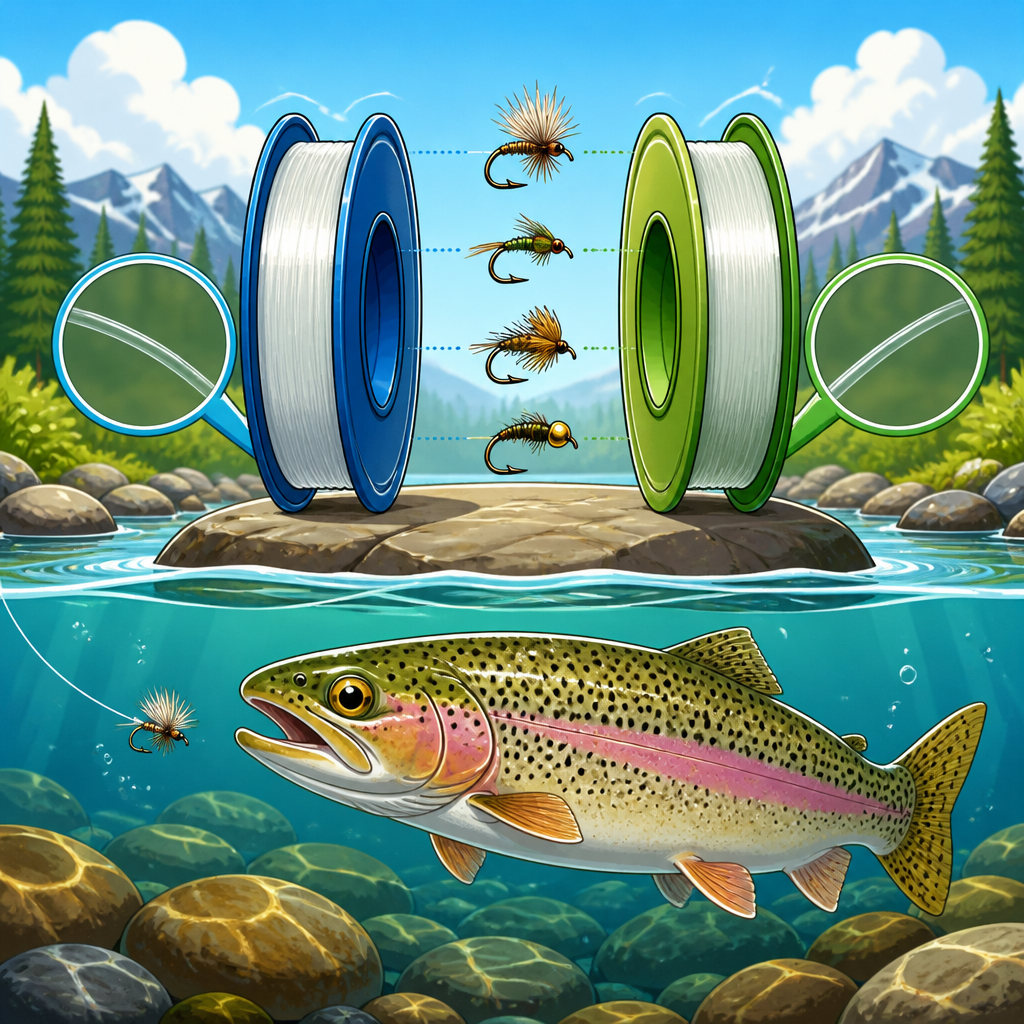
Choosing between 4X and 5X tippet for trout affects more than break strength; it changes fly presentation, drift quality, knot reliability, and how confidently you can fight fish in real water. In fly fishing, tippet is the final, narrow section of monofilament or fluorocarbon attached to the end of your leader, and the “X” rating describes diameter rather than a universal pound test. A lower number such as 4X means thicker material, while 5X is thinner and usually weaker. Trout anglers debate this choice because it sits at the center of gear and equipment decisions: matching fly size, water clarity, current speed, rod weight, and trout behavior. I have found that many missed fish, broken knots, and unnatural drifts blamed on poor technique are really tippet selection problems. As a hub topic within Fly Fishing Basics, this guide connects leader design, terminal tackle, fly choice, line control, and fish-fighting strategy. If you understand when 4X helps and when 5X is the better tool, you make every other piece of trout gear work better, from your reel drag to your fly box. That is why this comparison matters for beginners learning the system and for experienced anglers refining results on pressured trout water.
What 4X and 5X tippet actually mean
The most important fact is that tippet size refers primarily to diameter. In standard nylon and fluorocarbon systems used by brands such as Rio, Scientific Anglers, Orvis, and Umpqua, 4X typically measures about 0.007 inch, while 5X is about 0.006 inch. Breaking strength varies by manufacturer and material, but common nylon ratings are roughly 6-pound test for 4X and 4 to 5 pounds for 5X. Fluorocarbon can test slightly higher at a given diameter, though knot strength and abrasion resistance still depend on brand formulation and knot quality. Because diameter drives visibility, stiffness, and how a fly turns over, two spools with similar labeled strength can still fish very differently on the water.
That distinction matters because anglers often shop by pound test alone. With trout tippet, that is a mistake. Diameter determines whether a size 20 midge lands delicately or slaps the surface, whether a small nymph sinks quickly, and whether a drag-free drift lasts two feet or ten. I treat the X rating as a presentation control first and a strength rating second. The thinner 5X creates less drag in the water column and less visual profile in flat pools. The thicker 4X gives better turnover with bushier dries, indicators, and heavier tandem rigs. Both catch trout, but they solve different problems.
Strength, abrasion, and fish-fighting control
If your main concern is landing fish cleanly, 4X has clear advantages. It offers more tensile strength, more abrasion resistance against rocks and woody cover, and a larger margin for error on imperfect knots. In pocket water, freestone rivers, and runs with fast current, I prefer 4X because current pressure magnifies stress on the line. A sixteen-inch trout in heavy flow can pull harder than a larger trout in a calm spring creek. With 4X, you can pressure fish more directly, shorten the fight, and reduce exhaustion before release. That is a practical fish-care benefit, not just a convenience for the angler.
5X still lands strong trout, but it requires cleaner technique. Your drag setting needs to be appropriate, your rod angle smoother, and your knot testing more disciplined. Thinner material also nicks more easily. One brush across gravel, zebra mussels, or a trout’s teeth can reduce real-world strength far below the package label. When anglers say 5X “mysteriously” broke, I often find a damaged section near the knot or a knot that burned during tightening. On technical rivers with open water and moderate fish, that tradeoff is worth it. In structure-heavy water, it often is not.
Visibility, presentation, and trout behavior
Why choose 5X if 4X is stronger? Because trout do not eat strength; they respond to presentation. In clear, slow, heavily pressured water, thinner tippet can be the difference between refusals and confident takes. A narrower diameter reflects less light, creates less micro-drag, and allows small dry flies and emergers to move more naturally. On tailwaters and spring creeks where trout inspect food carefully, 5X often produces more eats than 4X, especially with size 18 to 22 flies. During sulfur hatches, blue-winged olive emergences, or midge fishing in glassy seams, I have repeatedly watched trout slide under a drifted fly on 4X and eat the same pattern on 5X.
That said, visibility is only one factor. Fly line shadow, leader splash, wading position, and drag usually matter more than whether the tippet is one X size thinner. Anglers sometimes overcorrect by dropping to 5X or even 6X when the real issue is poor approach angle or an overpowered cast. If trout are refusing in skinny water, first check your drift and distance. Then consider tippet diameter. Used correctly, 5X refines a good presentation; it does not rescue a bad one.
Matching tippet to fly size and rig style
A practical rule many anglers use is dividing fly size by three to estimate a starting tippet size. A size 12 fly pairs well with about 4X, a size 16 with 5X, and a size 18 with 6X. It is not absolute, but it is useful because hook gap, fly weight, and air resistance all affect turnover and drift. For trout, 4X is a strong all-around choice for size 10 to 16 dry flies, attractors, terrestrials, and many nymph setups. It turns over hopper-dropper rigs better, supports buoyant patterns like Chubby Chernobyls, and handles double-nymph rigs with split shot more reliably.
5X shines with smaller dry flies, light nymphs, and situations where subtlety matters. A Parachute Adams in size 18, a CDC emerger, or a small pheasant tail often fishes better on 5X because the fly lands softer and drifts more freely. Small streamers are an exception; although some can be cast on 5X, their weight and the aggressive takes they invite usually favor 4X or stronger. Tippet should match the total rig, not just the terminal fly. If the setup includes an indicator, split shot, or two flies, 4X often makes the whole system more stable even if the point fly itself is small.
When to use 4X and when to use 5X
The easiest way to decide is to combine water type, fly size, and expected trout behavior. Use 4X when water is broken, stained, fast, or obstructed; when flies are size 10 to 16; when you are fishing dry-dropper, indicator nymph rigs, or terrestrials; and when trout are strong enough that extra pressure helps. Use 5X when water is clear and slow, fish are selective, flies are size 16 to 20, and your top priority is a natural drift. In many trout fisheries, these two spools cover the majority of situations better than constantly second-guessing with every cast.
| Situation | Best Choice | Reason |
|---|---|---|
| Fast freestone pocket water with nymphs | 4X | Better abrasion resistance and more control in heavy current |
| Spring creek with size 18 dries | 5X | Lower visibility and softer presentation |
| Hopper-dropper in summer | 4X | Turns over wind-resistant flies and supports dropper rigs |
| Tailwater midge or BWO hatch | 5X | Improves drift and matches small-fly finesse |
| Small streamers for average trout | 4X | Handles weight and more forceful strikes better |
Material choice, knots, and leader system considerations
The 4X versus 5X decision is also a nylon versus fluorocarbon decision in many rigs. Nylon floats better, making it a common choice for dry flies and dry-dropper leaders. It is generally more supple, which helps delicate drifts. Fluorocarbon sinks faster, resists abrasion well, and refracts light differently, so many anglers prefer it for nymphing and subsurface presentations. In practice, 4X fluorocarbon can behave more confidently around rocks than 5X nylon, even when labels seem close. Material changes performance enough that you should not compare X size in isolation.
Knot choice matters just as much. An improved clinch knot, Orvis knot, Davy knot, or Eugene bend can all work, but each has different bulk, ease, and retained strength. Thinner 5X punishes rushed knots. Lubricate before tightening, seat the knot smoothly, and test every connection with a firm pull. On the leader side, many trout anglers run a 9-foot tapered leader and add 18 to 36 inches of matching tippet to extend life and fine-tune presentation. If you cut a 4X tapered leader back repeatedly, the terminal section may become too thick; adding true 5X tippet restores the intended diameter and drift.
How 4X and 5X fit into a complete trout gear setup
As a gear and equipment hub, tippet should be viewed as one link in a connected system. Rod weight influences how lightly you can protect fine tippet. A moderate-action 4-weight cushions 5X better than a fast 6-weight designed for heavier flies. Reel drag matters less on small trout than many think, but a smooth drag or disciplined palming helps protect 5X during sudden runs. Your fly line taper affects turnover as well; aggressive front tapers pair naturally with 4X and larger flies, while more delicate tapers complement 5X dry-fly work. Even strike indicators and split shot selection feed back into the tippet decision because added mass stresses knots and increases hinging during casts.
I advise most trout anglers to carry both sizes and treat them as core gear, not accessories. If you are building a basic trout kit, include 4X and 5X in nylon, plus 4X or 5X fluorocarbon if you nymph often. Add nippers, forceps, floatant, a leader wallet, and a simple spool holder so tippet changes happen quickly. Good organization matters because anglers make better decisions when gear is easy to reach. On rivers where conditions shift hourly from windy terrestrials to evening mayflies, being able to move from 4X to 5X without hesitation directly improves catch rates.
Common mistakes anglers make with trout tippet
The first mistake is using 5X everywhere because it sounds more technical. Thin tippet is not automatically better. It creates more casting complications, breaks more easily on bad hook sets, and can lengthen fights unnecessarily. The second mistake is staying on 4X in low, clear water with tiny flies and blaming trout for being “picky.” Often they are reacting to drag or an overly stiff connection. The third mistake is ignoring the true condition of the terminal section. Sun exposure, old spools, and repeated knot tying weaken tippet over time. Replace suspect material instead of trusting memory.
Another common error is failing to match tippet to hook wire and fly design. Tiny hooks can bend out under pressure even if 4X holds, while oversized foam flies may twist 5X and ruin presentation. Finally, anglers often neglect to retie after fish, weeds, or bottom contact. A twenty-second retie prevents most surprise breakoffs. Tippet is cheap compared with lost flies and lost trout.
For most trout anglers, the smartest answer to 4X versus 5X is not choosing one forever; it is learning what each size is designed to do. 4X offers more strength, abrasion resistance, and turnover power, making it the better tool for larger flies, faster water, wind-resistant rigs, and situations where fish must be pressured quickly. 5X offers finer presentation, lower visibility, and better drifts with smaller flies in clear, technical water where trout inspect everything. Because tippet diameter influences both how the fly behaves and how the fish is landed, this small gear choice has outsized consequences across the entire system.
If you are building confidence in Fly Fishing Basics, start by carrying both sizes and using a simple rule: 4X for size 10 to 16 flies and stronger, broken water; 5X for size 16 to 20 flies and clear, slower water. Then adjust based on current, cover, and trout selectivity. Keep fresh spools, tie clean knots, and think of tippet as an active presentation tool rather than an afterthought. Master that habit, and every part of your trout setup works better. On your next trip, fish the same run with both sizes and let the trout show you the difference.
Frequently Asked Questions
What is the real difference between 4X and 5X tippet for trout fishing?
The biggest difference between 4X and 5X tippet is diameter, and that single change affects several important parts of trout fishing at once. In the standard tippet sizing system, 4X is thicker than 5X. Because it is thicker, 4X is usually stronger, more abrasion resistant, and a bit easier to handle when tying knots. 5X, being thinner, is typically less visible in the water and allows smaller flies to move more naturally with less drag. That is why the choice is not simply about which one has the higher break strength. It is really about how much strength you need versus how delicate a presentation the fish and conditions demand.
On the water, 4X often gives anglers more control when fishing medium-sized dry flies, nymphs, and many streamer situations where turnover matters and trout may run into current, rocks, or submerged wood. It can also be a better confidence choice when fish are larger or when landing them quickly is important. By contrast, 5X shines when trout are pressured, water is clear and slow, or flies are small enough that a finer tippet noticeably improves drift and reduces the appearance of an unnatural connection to the fly. In practical terms, many anglers find that 4X is a strong all-around option, while 5X becomes the better tool when finesse matters more than brute strength.
Does 5X tippet really help with fly presentation and drift quality compared with 4X?
Yes, in many trout situations 5X can improve both presentation and drift, especially when you are fishing smaller flies or dealing with selective fish. A thinner tippet creates less surface disturbance, less micro-drag, and less resistance in the current. That matters because trout often refuse flies not because the pattern is wrong, but because the drift looks slightly unnatural. With a finer tippet like 5X, the fly tends to move more freely, sit more naturally, and respond more realistically to subtle current seams. This is especially noticeable with small dry flies, emergers, and lightly weighted nymphs in calm pools, spring creeks, tailwaters, and other clear-water environments.
That said, the benefit is not universal. In rough pocket water, stained flows, or faster current where trout have less time to inspect a fly, the practical difference between 4X and 5X may be much smaller than anglers expect. In those conditions, the added strength and easier handling of 4X may outweigh the finesse advantage of 5X. Presentation is always a system, not just a tippet choice. Leader length, fly weight, current speed, casting angle, and line control all affect drift. So while 5X can absolutely help create a better presentation, it works best when paired with the right leader setup and when the fish are actually demanding that extra refinement.
How should fly size influence whether I choose 4X or 5X tippet?
Fly size is one of the most practical ways to decide between 4X and 5X. As a general rule, larger flies pair better with thicker tippet, while smaller flies often perform better on thinner tippet. With 4X, anglers commonly fish medium-sized dries, terrestrials, hopper patterns, larger nymphs, and some small streamers because the thicker material helps turn those flies over during the cast and provides a stronger connection when trout eat aggressively. It also prevents the tippet from overpowering the fly less often than many beginners assume when the fly itself has enough mass or profile to carry the setup naturally.
With 5X, smaller dry flies, midge patterns, delicate mayfly imitations, and light nymph rigs often fish better because the thinner material complements the scale of the fly. It lets tiny patterns land softer and drift with less interference. Many anglers use a simple rule of thumb that fly size and tippet diameter should be reasonably matched, but that is only a starting point, not a law. Water clarity, fish pressure, and trout size may push you toward finer or heavier tippet regardless of fly size. For example, a size 16 dry in broken riffles may fish perfectly on 4X, while the same fly in a flat pool with wary trout may require 5X. The key is to treat fly size as a strong clue, then adjust for actual fishing conditions.
Is 4X better for fighting and landing trout, or can 5X handle bigger fish than anglers think?
4X is generally the better choice when fighting and landing trout quickly and confidently is a priority. Because it is thicker, it usually has greater break strength and better abrasion resistance, which becomes important when fish run through heavy current, brush past rocks, or make sudden surges close to the net. It also gives anglers more room for error when applying pressure. That can reduce fight time, which is good not only for landing percentage but also for trout health, especially in warm water or stressful conditions.
At the same time, 5X is often more capable than people assume. A well-tied knot in fresh 5X tippet can land surprisingly strong trout if the angler plays the fish smoothly, uses the rod correctly, and avoids sharp shock loads. Problems arise when anglers clamp down too hard, trout are hooked in fast current, or the tippet is compromised by wind knots, abrasion, or poor knot seating. So the decision is less about whether 5X can land good fish and more about how much margin of safety you want. If fish are large, current is strong, or structure is present, 4X is usually the smarter and more forgiving option. If conditions call for stealth and finesse, 5X can still do the job, but it demands cleaner technique and more patience.
What matters more when choosing between 4X and 5X: visibility, knot strength, or water conditions?
Water conditions usually decide the issue, because they determine how much visibility matters and how much strength you need. In clear, slow water with pressured trout, tippet visibility can matter quite a bit. Under those conditions, 5X often earns its place because the thinner diameter is less likely to alert fish and more likely to let a small fly behave naturally. In contrast, in broken current, slightly stained water, or places where trout have only a split second to inspect the fly, the visibility difference between 4X and 5X may not be the factor that determines success. There, strength, abrasion resistance, and turnover can be more important than going one size finer.
Knot reliability also deserves serious attention. Thicker 4X is usually easier to tie cleanly and tends to be a bit more forgiving if your knot technique is not perfect. With 5X, small flaws become more costly, and the tippet can be more sensitive to friction damage, poorly seated knots, or tiny abrasions. That means the “best” tippet is not only the one that matches the fish and water, but the one you can tie, inspect, and fish confidently. If you are unsure, start by reading the water first: use 4X when current, structure, or trout size call for control and durability; step down to 5X when fish are selective, flies are small, and a cleaner drift is likely to make the difference.