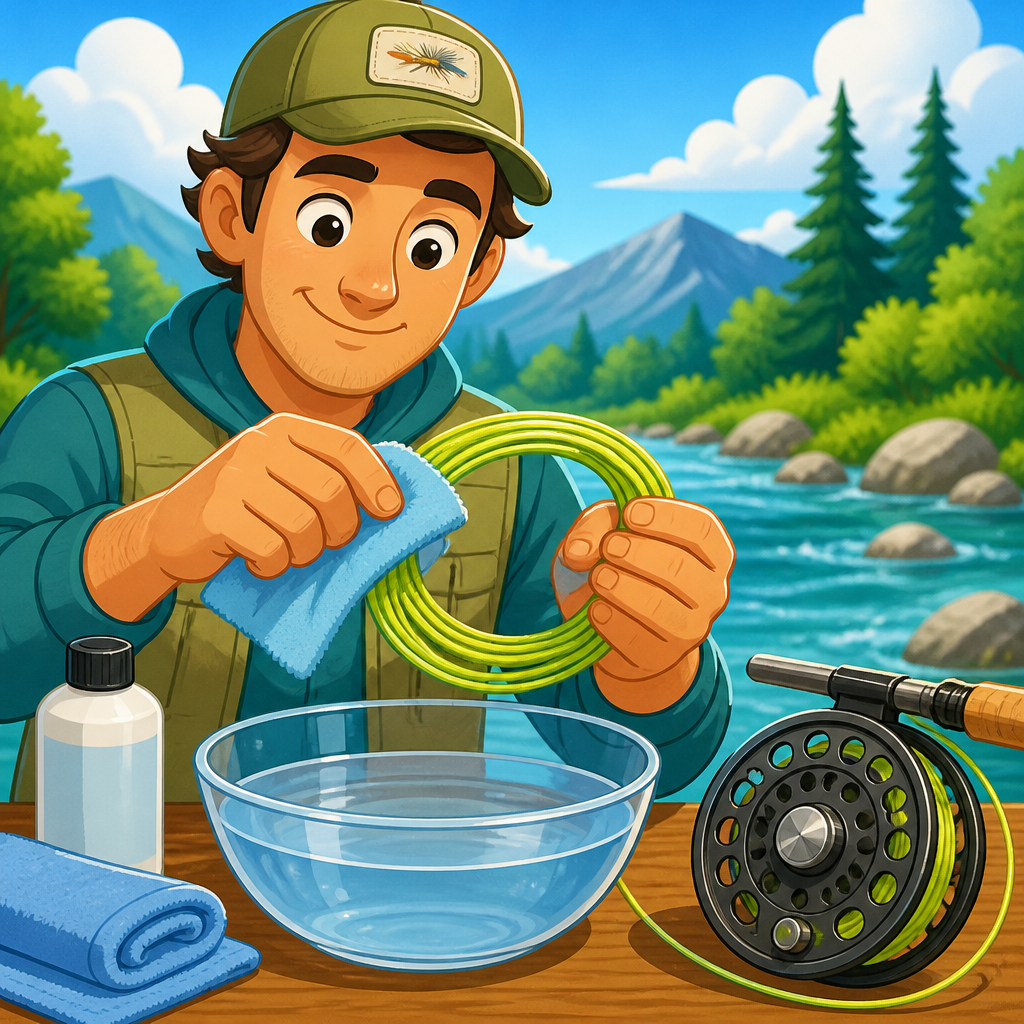
A floating fly line performs best when its coating is clean, slick, and free of embedded grit. If you want longer casts, better line floatation, fewer tangles, and less wear on guides and reels, learning how to clean a floating fly line without damaging its coating is one of the most useful maintenance skills in fly fishing. Within Fly Fishing Basics, Gear and Equipment starts here because the line is the direct connection between rod, reel, leader, fly, and fish. When that connection gets dirty, every part of your setup feels worse. I have seen anglers replace perfectly good lines because they mistook grime, sunscreen residue, algae film, and hard-water deposits for permanent damage. In many cases, careful cleaning restored performance in minutes.
A floating fly line is typically built around a braided or monofilament core covered by a polymer coating, usually PVC or a similar proprietary blend, often with additives that help the line float, stay supple, and shoot through guides. The coating matters because it determines surface slickness, buoyancy, and durability. Dirt matters because the line constantly drags through water, silt, plant matter, boat dust, sand, and streamside mud. Tiny abrasive particles get pushed into the coating, especially around the tip and the first thirty feet that you cast most often. As buildup increases, the line rides lower, sticks in guides, and can even create a faint grinding sensation on the retrieve.
Cleaning a floating fly line sounds simple, but the important part is doing it safely. Harsh solvents, aggressive scrubbing pads, petroleum-based dressings, and random household cleaners can strip lubricants, haze the finish, stiffen the coating, or accelerate cracking. Proper care relies on mild soap, clean water, soft cloths, and manufacturer-approved dressings used sparingly. It also requires a quick inspection for nicks, hinge points, memory, and loop wear so you know whether the line needs maintenance or replacement. This hub article covers the complete process, then broadens into the core gear and equipment decisions that affect line performance: reels, backing, leaders, tippet, storage, line accessories, and field care. If you understand how these pieces work together, you will fish more efficiently and protect expensive gear for much longer.
Why floating fly lines get dirty and how dirt changes performance
Floating fly lines attract contamination faster than many anglers realize. The line passes through fingers coated with insect repellent, fish slime, split-shot residue, and sunscreen. It lands on sandy banks, molded boat carpet, cooler lids, stripping baskets, and dusty truck tailgates. Warmwater anglers often pull lines through algae, pollen, and organic film, while trout anglers see fine glacial silt and mineral-rich water leave deposits that feel chalky. Salt carried on gear after coastal trips can also cross-contaminate freshwater lines if equipment is stored wet in the same bag. None of this is cosmetic. It changes how the line behaves.
A clean floating line should glide with low friction, mend crisply, and sit high on the surface because the coating can do its job. Once grime builds up, the line gets tacky, loses shootability, and may start sinking in patches. The first sign is often reduced distance with the same casting stroke. The second is poor pickup: instead of lifting cleanly, the line clings to the water. The third is increased tangling because rough, dirty line coils more readily and slides less predictably through the guides. Dirt also acts like ultra-fine sandpaper. Over time it wears guide inserts, scuffs rod finishes near the stripping guide, and shortens line life.
The lesson from years of cleaning clients’ and friends’ lines is straightforward: regular light maintenance beats occasional aggressive cleaning. A line wiped down after two or three outings usually needs only mild soap and water. A line ignored for a season often tempts anglers to over-scrub, and that is when coating damage happens. Preventive care preserves both performance and warranty protection.
The safest way to clean a floating fly line step by step
The safest method uses lukewarm water, a few drops of mild dish soap, two soft microfiber cloths or lint-free pads, and a clean area where the line can be stretched loosely without kinking. Start by stripping the line off the reel into large coils or onto a clean towel. Check the manufacturer’s care instructions first. Rio, Scientific Anglers, Airflo, and Cortland all provide guidance, and if a line-specific cleaning pad or dressing is recommended, use that rather than improvising with automotive or household products.
Mix a very mild soap solution. You do not need foam or degreasing power; you need lubrication that lifts dirt. Soak one cloth, wring it until damp rather than dripping, and pinch the line gently between thumb and forefinger through the cloth. Pull the line through steadily from front taper to running line. On especially dirty sections, pause and repeat rather than squeezing harder. Then use a second cloth dampened with plain water to remove soap residue. If the cloth comes away dark, make another pass. Once the line looks clean, dry it with a fresh soft cloth and let it air dry briefly before winding it back onto the reel under light tension.
If the line still feels rough after cleaning, apply a manufacturer-approved dressing sparingly. A little goes a long way. Let it haze or set according to instructions, then buff lightly with a dry cloth. The goal is a smooth, clean finish, not a greasy surface that attracts more dirt. Never use bleach, abrasive sponges, acetone, alcohol, furniture polish, WD-40, or silicone sprays not designed for fly lines. Those products can plasticize or dehydrate the coating, soften welded loops, and create deceptive short-term slickness followed by long-term deterioration.
| Item | Safe to Use | Why | Avoid |
|---|---|---|---|
| Lukewarm water | Yes | Lifts dirt without stressing the coating | Hot water |
| Mild dish soap | Yes, in small amounts | Breaks surface grime and skin oils | Strong degreasers |
| Microfiber or lint-free cloth | Yes | Cleans without abrasion | Scouring pads or stiff brushes |
| Line dressing approved by the maker | Yes | Restores slickness safely | Automotive waxes and solvent sprays |
| Gentle hand pressure | Yes | Removes debris without flattening the line | Hard pinching or scraping with fingernails |
How often to clean, what to inspect, and when a line is beyond saving
Most anglers should clean a floating fly line every three to five trips, or immediately after fishing muddy water, warmwater lakes with algae, or any salt environment. Guides and frequent casters often do a quick wipe-down after every day on the water because a sixty-second routine prevents deeper buildup. During cleaning, inspect the first thirty feet most carefully. That section takes the most abuse because it is repeatedly false cast, hauled, stepped on, and pinched during retrieves.
Look for surface cracks, flattened spots, whitening at sharp bends, frayed loops, and tiny cuts caused by split shot or rough guide frames. Run the line slowly through your fingers. A healthy coating feels uniformly smooth. A damaged coating may feel raspy, lumpy, or notched. If dirt returns immediately after cleaning or the line sinks in isolated segments despite proper treatment, the coating may be compromised. Another red flag is memory that persists after stretching and warming to normal ambient temperature. Excessive coil set can indicate age, heat damage, or a core issue rather than simple dirt.
There is a practical limit to maintenance. If a line has multiple cracks, a broken welded loop, severe hinge points, or coating separation from the core, cleaning will not restore reliable performance. In those cases replacement is cheaper than lost fishing time and easier than troubleshooting every cast. As a rule, a premium line that is cleaned and stored properly can fish very well for several seasons, while a neglected line may feel worn out in one heavy year.
How line care fits into the broader Gear and Equipment system
As the hub page for Gear and Equipment, this topic reaches beyond line cleaning because fly tackle works as a system. A floating line cannot perform well if the reel drags unevenly, the guides are grooved, the leader is mismatched, or the line is stored under heat in a truck bed. Start with the rod and reel pairing. A line matched to the rod’s grain window loads correctly; an overweight or radically underweight line can make even a clean line feel sticky or unstable. Modern fast-action trout rods often tolerate half-size-heavy tapers, but overloading beyond design intent reduces loop control and pickup efficiency.
Reel arbor size and retrieve rate matter too. Large-arbor reels reduce line memory because the coils are broader, and they speed line pickup when fish run toward you. Backing choice affects storage and balance. Gel-spun backing offers high strength in less diameter, but on some reels it can cut into lower wraps under pressure if packed poorly. Dacron remains forgiving and easy to handle for most freshwater setups. Leaders and tippet also influence how a floating line behaves. A leader that is too short or too stiff can crash over and make anglers blame the line, while the real issue is energy transfer at turnover.
Line accessories deserve mention because many anglers unknowingly damage coatings with convenience tools. Some line straighteners use abrasive internal surfaces. Some zingers and clipping points encourage tight wraps that crease the tip. Strike indicators treated with sticky adhesives can leave residue, and putty indicators often carry grit into the line if stored loosely in a pocket. The best equipment choices are boringly reliable: smooth guides, clean reel frames, sensible storage spools, and accessories that do not pinch or contaminate the coating.
Storage, travel, and on-the-water habits that extend line life
Good cleaning helps, but good habits keep the line clean longer. The biggest enemy is heat. A floating fly line left on a dashboard, raft frame, dark boat deck, or inside a sealed vehicle in summer can soften and deform. Once that happens, memory, stickiness, and coating distortion often follow. Store reels in a cool, dry place away from ozone sources such as electric motors and away from direct sunlight. If a line is wet after fishing, allow it to dry before long-term storage to reduce mildew odors, corrosion around the reel foot, and contamination transfer to backing.
On the water, keep stripped line off muddy ground whenever possible. A stripping basket is not only for surf casters; it can save a line from sand and weeds in boats, on grassy banks, and around docks. Wading anglers can use a small clean mat or simply build the habit of controlling coils by hand instead of dropping all of them into shoreline sludge. Before reeling up, especially after warmwater or salt trips, run the line through a damp cloth. That tiny routine eliminates much of the debris that would otherwise dry onto the coating overnight.
Travel adds another layer. Reels packed with tight line under extreme temperature swings can develop stubborn memory. If you carry spare spools, label each line by taper and grain weight and store them in breathable reel pouches. That organization prevents unnecessary handling, accidental cross-use, and rough field changes. Small systems like this matter because gear lasts longer when every item has a place and a purpose.
Common mistakes anglers make when cleaning floating fly lines
The most common mistake is assuming more force equals better cleaning. It does not. Scrubbing hard only embeds grit more deeply or scratches the finish. The second mistake is using whatever cleaner is under the sink. Degreasers, glass cleaners, citrus solvents, and antibacterial soaps may leave the line looking clean while stripping the surface chemistry that keeps it supple and slick. The third mistake is over-dressing. Heavy applications feel smooth at first, then collect dust and scum faster than a bare clean line.
Another frequent error is ignoring the rest of the setup. Dirty guides redeposit grime onto a freshly cleaned line. A cracked tip-top can scar the coating in a single outing. Even the angler’s hands matter. Sunscreen, fish attractant, and bug spray transfer directly to the running line during retrieves. I tell beginners to think of line care the same way they think about keeping camera lenses clean: use soft materials, remove contamination gently, and avoid chemicals that are stronger than the problem.
Finally, many anglers wait too long because they believe line maintenance is tedious. In practice, a proper cleaning session takes less time than changing a leader and pays off immediately in casting ease, floatation, and confidence.
Cleaning a floating fly line without damaging its coating comes down to restraint, consistency, and system thinking. Use lukewarm water, a mild soap solution, soft cloths, and only dressings approved by the line maker. Clean every few trips, inspect the first thirty feet for wear, and replace the line when cracks or core problems make maintenance pointless. Just as important, protect the line through smart gear choices, cool storage, clean guides, and disciplined habits on the water.
As the central Gear and Equipment hub within Fly Fishing Basics, this subject connects directly to rods, reels, backing, leaders, tippet, storage, and accessories. When those pieces are matched and maintained properly, a floating line casts farther, mends better, floats higher, and lasts longer. Start with your most-used reel today: strip the line, clean it gently, inspect it closely, and build a maintenance routine you can repeat all season.
Frequently Asked Questions
How often should you clean a floating fly line?
Most anglers should clean a floating fly line whenever they notice reduced casting performance, poor floatation, extra memory, or a rough, squeaky feel passing through the guides. For many people, that means a light cleaning every few trips and a more careful inspection after fishing dirty water, warm weather, algae-heavy ponds, or silty rivers. A line used frequently in summer conditions often collects sunscreen, insect repellent, mud, and microscopic grit much faster than expected, and that buildup can drag down performance long before the line looks obviously dirty.
A good rule is to wipe the line down regularly and do a full clean before the dirt becomes embedded in the coating. Preventive maintenance is better than aggressive scrubbing later. If you wait until the line feels sticky or starts sinking at the tip, contamination may already be affecting the slick outer finish. Cleaning on a consistent schedule helps preserve the coating, improves shooting distance, reduces friction in the guides, and lowers wear on the reel and rod hardware. In practical terms, a little attention often keeps the line floating higher, mending easier, and lasting significantly longer.
What is the safest way to clean a floating fly line without damaging its coating?
The safest method is simple, gentle, and controlled. Strip the fly line off the reel in loose coils or run it through a clean towel as you work. Use lukewarm water, never hot, and a soft cloth or microfiber rag. If the line is especially dirty, add a small amount of mild soap made for delicate cleaning, or use a manufacturer-approved fly line cleaner. Then wipe the line with light pressure from one end to the other, removing dirt rather than grinding it into the finish. After that, wipe again with a clean damp cloth to remove any residue, and dry the line completely before rewinding it onto the reel.
The key is to protect the outer coating, because that slick finish is what helps a floating fly line cast smoothly and stay buoyant. Avoid abrasive pads, stiff brushes, harsh detergents, solvents, degreasers, and any cleaner not intended for fly line materials. Even if a strong cleaner makes the line look bright at first, it can strip conditioners, dry the surface, or weaken the coating over time. A gentle cleaning routine preserves suppleness and slickness while removing the grit that causes the real long-term damage. If you want to be extra careful, follow the line manufacturer’s maintenance instructions, since different coatings and finishes can respond differently to cleaners and dressings.
Can you use soap, household cleaners, or line dressing on a floating fly line?
Mild soap can be safe in small amounts, but household cleaners are generally a bad idea. A tiny amount of gentle dish soap diluted in water is often enough to lift grime if the line is dirty, but it should be used sparingly and rinsed off thoroughly with a clean damp cloth. Strong multi-surface sprays, bleach-based products, alcohol, ammonia cleaners, and petroleum-based chemicals should be avoided because they may break down the coating, remove factory slickness, or leave behind residues that attract even more dirt.
Line dressing is a separate issue and should only be used if it is specifically designed for modern floating fly lines and recommended by the line maker. A proper dressing can improve slickness, reduce friction, and help the line shed water and contaminants, but more is not always better. Overapplying dressing or using the wrong product can create buildup, make the line feel gummy, or interfere with the coating rather than protect it. If you choose to use one, apply it after the line is clean and dry, and follow the instructions exactly. In general, safe maintenance comes down to three things: use gentle products, use very little of them, and avoid anything that was not made with fly line coatings in mind.
What are the signs that a floating fly line is dirty versus actually worn out?
A dirty floating fly line usually feels rough, sticky, or noisy in the guides, but it often improves noticeably after a proper cleaning. You may see discoloration, dark streaks, algae film, or a chalky layer of grime on the surface. The line may stop shooting efficiently, start floating lower than normal, or coil more than usual, yet still look structurally intact. In many cases, those symptoms come from surface contamination rather than permanent damage. Once the dirt is removed, the line often regains much of its original slickness and handling.
A worn-out line shows more serious issues that cleaning will not fix. Look for cracks in the coating, flat spots, nicks, splitting near the tip, exposed core, severe stiffness, or places where the finish feels permanently tacky or uneven. If the line continues to sink in sections, catches badly in the guides, or sheds flakes after cleaning, the coating may be breaking down. In that case, continued use can accelerate wear on guides and reduce fishing efficiency. Cleaning is essential maintenance, but it is not a cure for a line that has reached the end of its service life. Knowing the difference helps anglers avoid replacing a line too early while also preventing frustration from trying to revive gear that is already failing.
What mistakes should anglers avoid when cleaning and storing a floating fly line?
The biggest mistake is being too aggressive. Scrubbing hard, using hot water, soaking the line in chemicals, or dragging it across rough surfaces can damage the coating faster than normal fishing use. Another common mistake is cleaning the line only when it becomes obviously filthy. By that stage, fine grit may already be embedded in the finish, increasing friction and acting like sandpaper inside the guides. Letting dirt remain on the line after fishing sandy banks, glacial rivers, or weedy stillwaters is one of the easiest ways to shorten its lifespan.
Storage errors matter too. Reeling up a wet, dirty line traps moisture and debris against the coating and can encourage mildew, odor, and premature breakdown. It is better to let the line dry after cleaning before storing it. Avoid leaving reels and lines in hot vehicles, direct sun for extended periods, or freezing conditions that can harden and stress the material. Long-term heat is especially harmful because it can warp memory into the line and degrade the coating. For best results, keep the line clean, dry, loosely tensioned on the reel, and stored in a cool, shaded place. That combination of gentle cleaning and smart storage preserves casting performance, protects the coating, and helps a floating fly line stay smooth, buoyant, and dependable season after season.