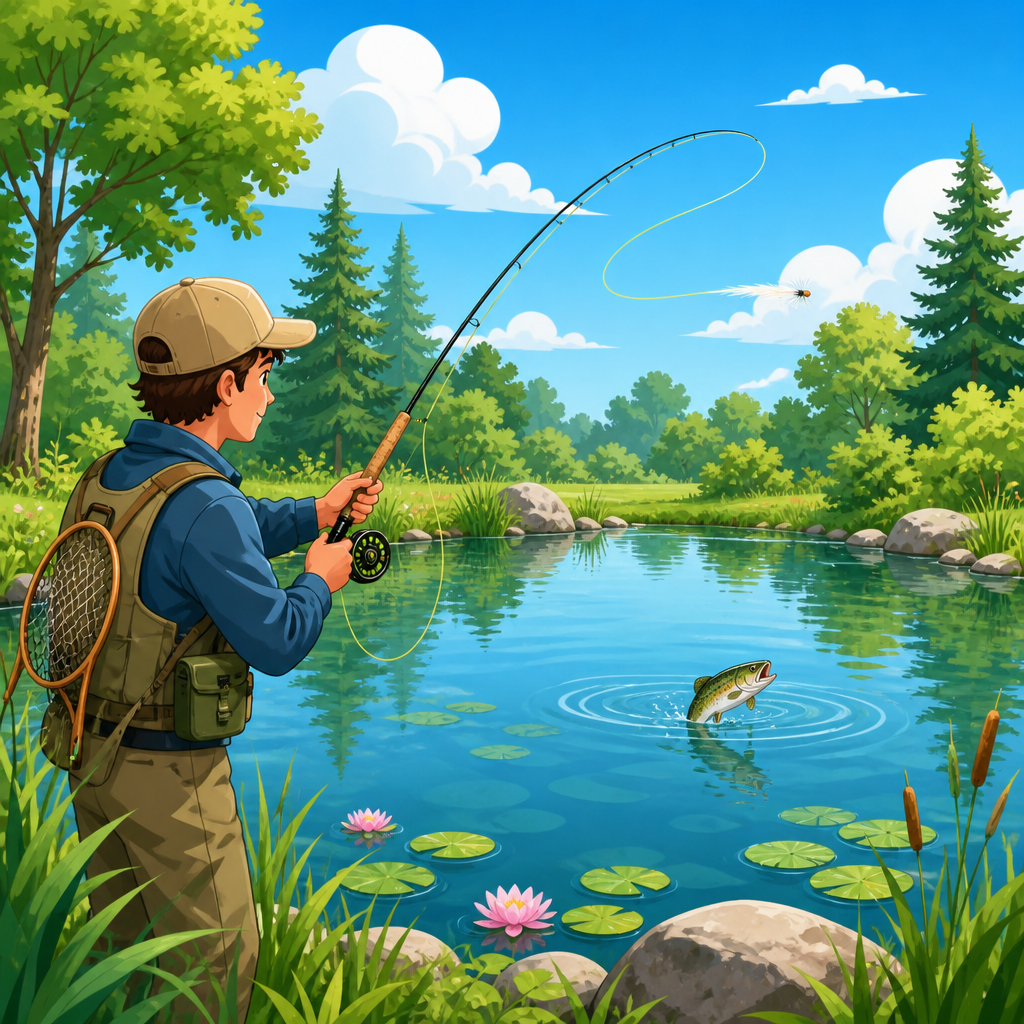
Fly fishing in a small pond is not only possible, it is often the best place for a beginner to learn the fundamentals without the pressure of current, boat traffic, or long technical casts. In practical terms, a small pond usually means a compact stillwater fishery, from a farm pond to a neighborhood retention lake, where fish-holding structure is easy to identify and the water can be covered methodically from shore. Fly fishing means presenting a nearly weightless artificial fly with the weight of the line rather than the lure, which changes everything about tackle, casting, and fish behavior. As a starting point within Fly Fishing Basics, this guide explains what first-timers need to know before they buy gear, tie on a fly, and step onto the bank.
I recommend small ponds to beginners because they compress the learning curve. On rivers, new anglers must solve current seams, drift management, wading safety, and trout positioning all at once. On ponds, the essential lessons stand out clearly: how to match rod, reel, line, leader, and tippet; how to form basic casts; how to retrieve flies at useful speeds; and how to find bluegill, bass, trout, or panfish around edges, weeds, drop-offs, and shade. Most beginners also discover that fish in ponds are often forgiving. A bluegill near lily pads will eat a foam popper with far less scrutiny than a selective river trout during a hatch. That early feedback matters because visible strikes build confidence and help anglers connect cause and effect.
Introduction to fly fishing begins with a few key terms. The rod loads, or bends, from the momentum of the fly line during the casting stroke. The reel mainly stores line and provides light drag on smaller species, though it becomes more important for larger fish. The fly line is the casting engine; a weight-forward floating line is the standard recommendation for beginners because it turns over common flies and handles well from shore. The leader is the tapered clear section connecting line to fly, and tippet is the final, thinner material at the end. Flies are grouped broadly into dry flies, nymphs, streamers, and poppers or terrestrials. In small ponds, beginners usually succeed fastest with floating bugs, small woolly buggers, soft hackles, and basic nymphs because these patterns suggest many food sources without requiring perfect imitation.
Why does this matter? Because learning fly fishing through a small pond creates a controlled environment where every core concept can be practiced cheaply, safely, and repeatedly. You can stand on open grass to rehearse a cast, then take two steps to the shoreline and apply the same motion to a real fish. You can observe weed beds, wind lanes, insect activity, and cruising fish without needing a drift boat or chest-deep wading. You can also develop habits that transfer directly to larger water: reading structure, managing slack, setting the hook with appropriate force, and releasing fish carefully. A beginner’s first trip plan should therefore focus on simplicity, not variety. Start with a proven setup, a short list of flies, a manageable location, and a few repeatable tactics. That approach is how most competent fly anglers are built.
What gear a beginner actually needs for a small pond
The best beginner outfit for a small pond is a 5-weight or 6-weight rod between 8 feet 6 inches and 9 feet long, matched with a simple reel and a weight-forward floating line. I have watched many first-time anglers do well with a 9-foot 5-weight because it is versatile enough for bluegill, small bass, stocked trout, and light practice casting in a park. A 6-weight becomes useful when wind is common or when bass and larger poppers are part of the plan. There is no need to start with specialized lines, expensive large-arbor reels, or ultra-fast rods that punish timing mistakes. A moderate to medium-fast rod helps beginners feel the rod load and maintain smoother loops.
Leaders and tippet should also stay simple. For most pond situations, a 7.5-foot or 9-foot tapered leader ending in 3X, 4X, or 5X will cover nearly everything. Use thicker tippet, such as 3X or 4X, for small bass bugs and streamers; use 5X for lighter nymphs or small dries when fish are cautious. Polarized glasses are essential, not optional. They cut glare, help you see cruising fish and underwater cover, and protect your eyes from errant hooks. Add basic forceps, nippers, a small fly box, sunscreen, drinking water, and a landing net if the bank allows easy handling. Chest waders are rarely required for a first pond trip; sturdy shoes with good traction are usually enough.
Fly selection is where beginners often overbuy. For a first trip, a dozen patterns is plenty. I would carry size 8 to 12 foam spiders or poppers for bluegill and bass, size 8 to 10 woolly buggers in black and olive, a few unweighted or lightly weighted nymphs such as pheasant tails and hare’s ears in size 12 to 16, and perhaps a soft hackle or chironomid if trout are present. These flies work because they represent broad categories of food rather than one narrow hatch. In ponds, fish often key on movement, silhouette, and location more than exact species matching. The goal is to fish patterns you can cast confidently and retrieve consistently, not to imitate every insect in the water.
How to choose the right small pond
The ideal first pond is accessible, lightly pressured, and known to hold willing fish. Public park ponds, community lakes with panfish, farm ponds with permission, and stocked municipal waters are all strong options. Look for visible shoreline access, clean back-cast space, and simple habitat such as cattails, overhanging trees, docks, weed lines, and points. In my experience, ponds with abundant bluegill are excellent classrooms because they feed aggressively in warm months and reveal whether your presentation is in the right zone. Bass add excitement, but they are less reliable than panfish for constant action. Stocked trout ponds can be outstanding during cool seasons, especially where aeration or spring influence keeps water temperatures moderate.
Avoid making your first trip to a pond with steep brushy banks, heavy algae mats, or crowded shorelines where casting is dangerous. Water clarity matters too. Slightly stained water is fine, but a pond with severe turbidity makes fish location difficult. If you can scout ahead, note where wind is pushing surface food into a bank, where insects are active, and whether fish are dimpling, cruising, or holding tight to cover. Check local regulations carefully. Some ponds have seasonal closures, bait restrictions, catch-and-release rules, or stocked species with possession limits. A successful beginner day starts before the first cast, with a legal plan and a realistic expectation of what lives there.
| Decision area | Best beginner choice | Why it works |
|---|---|---|
| Rod | 9-foot 5-weight | Versatile for panfish, trout, and small bass |
| Line | Weight-forward floating | Easiest line to cast and fish from shore |
| Leader | 7.5 to 9 feet, 4X | Balanced turnover for common pond flies |
| Primary fly | Black or olive woolly bugger | Imitates leeches, baitfish, and large aquatic food |
| Topwater fly | Foam popper or spider | High-visibility takes help beginners learn |
| Best target species | Bluegill | Frequent bites reinforce casting and retrieve skills |
| Best time | Early morning or evening | Cooler water and active feeding near shore |
Basic casting and presentation for a first trip
Most beginners think fly casting is about power, but it is really about timing, straight-line rod paths, and controlled stops. On a pond bank, the simplest useful cast is an overhead cast with a short amount of line outside the rod tip, usually 20 to 30 feet. Start with the line straight on the water, lift smoothly, accelerate to a crisp back stop, wait for the line to unroll behind you, then drive forward to a firm stop. False casting should be limited. Too many extra strokes create tailing loops, spook fish, and tangle leaders in bankside grass. For a first trip, accuracy and fishable line control matter much more than distance.
Presentation changes with fly type. If you are fishing a popper for bluegill, cast near weed edges, logs, docks, or shaded pockets, then let the fly sit until the rings fade. Give it one or two short pops, then pause again. Many takes happen on the pause. With a woolly bugger, allow the fly to sink a few seconds, then retrieve with slow hand-twists or short strips. If trout are present, vary depth before changing flies; depth solves more problems than pattern swapping. With nymphs under a small indicator, cast parallel to the bank or just beyond visible structure and watch for any twitch, stall, or dip. In stillwater, subtle takes are common.
Wind deserves special attention because it shapes pond fishing every day. A light breeze concentrates insects and plankton, which attracts baitfish and then predators. Fish the wind-blown bank when it is safe and manageable, especially during low light. Casting into strong wind is difficult, so angle your position to cast across it or with it whenever possible. Keep loops tight and shorten leader length if turnover suffers. If trees block your back cast, switch to a roll cast or move a few yards rather than forcing bad mechanics. Effective beginners adapt their angle and target size instead of trying to overpower conditions.
Reading pond water and finding fish
Fish in ponds are rarely scattered randomly. They relate to oxygen, temperature, food, and cover, and those needs create patterns that even a beginner can identify. In spring, sun-warmed shallows often attract bluegill and bass, while stocked trout may cruise cooler edges or deeper basins. In summer, early morning and late evening are usually best because shallow water cools, insects move, and fish feed closer to shore. Midday can still produce around shade lines, inflows, aerators, deeper weed edges, and drop-offs. In fall, cooling water often increases feeding activity, and fish may patrol flats longer through the day.
Look first for transitions. A clean bank that turns into weeds, a shallow shelf that drops into darker water, a point extending into the pond, or a patch of overhanging brush can all hold fish. Bluegill often stack around beds, weed pockets, and woody cover. Largemouth bass use ambush points such as lily pad edges, dock shadows, and submerged timber. Trout in small stillwaters commonly cruise predictable routes, especially where wind gathers food. Spend your first fifteen minutes observing before casting everywhere. Watch for swirls, dimples, dragonflies, minnows flicking, frogs at the edge, or birds working an area. Those signs narrow your search faster than blind casting.
Retrieve depth is one of the most important beginner lessons. If fish are not eating a streamer, count it down longer before stripping. A bugger fished three feet down beside a weed wall is fishing a different world from the same bugger waked just under the surface. On warm days, panfish may move surprisingly shallow beneath overhanging grass, while bass may slide under the thickest shade available. When fish follow but do not eat, change speed or pause length before changing the fly. I have seen a two-second pause turn inspection into a take more often than a complete fly swap.
Your beginner first trip plan from arrival to last cast
Keep the first outing to two or three hours. Arrive early or late, rig one rod with a floating line and 4X leader, and begin with the easiest confidence fly for visible feedback: a small popper or foam spider if bluegill are present, or a woolly bugger if the pond is deeper or trout-oriented. Make ten casts to high-percentage water within comfortable range rather than walking the entire shoreline immediately. Cover the nearest weed edge, a shaded bank, a dock corner, and any wind lane. If there is no response, change location first, then depth, then retrieve, and only then consider a fly change.
Bring a simple checklist. Practice five controlled overhead casts before targeting fish. Keep only enough line out to cast well. Pause after the back cast. Watch the fly at all times on topwater presentations. Strip-set streamers with a firm line pull instead of lifting the rod wildly. Wet your hands before touching fish, support them gently, and release them quickly. If you hook trees more than fish during the first half hour, shorten the cast and open your loop. Good first trips are measured by clean repetitions and observation, not by numbers alone.
Small ponds are where many anglers fall in love with fly fishing because the feedback is immediate and the lessons transfer everywhere. Start simple, fish the best water carefully, and treat each cast as a chance to learn what line control, depth, and presentation really do. If you want a strong foundation in Introduction to Fly Fishing, a small pond gives you exactly that: manageable water, reachable fish, and repeatable practice. Pick one local pond, assemble a basic 5-weight setup, and make your first trip this week. The fastest way to understand fly fishing is to watch a fish rise to a fly you presented well.
Frequently Asked Questions
Can you really fly fish successfully in a small pond, or is it better to start on a river?
Yes, you can absolutely fly fish successfully in a small pond, and for many beginners it is actually the best place to start. A small pond removes many of the variables that make rivers harder to learn, such as current speed, line mending, slippery wading, changing depth seams, and the need to make precise drifts. In pond fishing, the water is still, so you can focus on the core mechanics of fly casting, line control, leader setup, fly presentation, and fish behavior without feeling rushed. You also have time to watch what happens after each cast, which helps you understand how your fly lands, sinks, or moves through the water.
Another advantage is that small ponds often concentrate fish around easy-to-recognize structure. You can look for weed edges, downed branches, cattails, shaded banks, inflow pipes, docks, overhanging trees, or drop-offs near shore. Instead of trying to read a complex moving river, you can work around the shoreline in a methodical way and learn where fish are likely to hold. That makes each cast more purposeful. It also builds confidence quickly, because beginners can cover water efficiently from shore and get feedback faster. In short, if your goal is to learn the fundamentals and catch fish while doing it, a small pond is not a compromise. It is often the smartest first classroom in fly fishing.
What gear should a beginner bring for a first fly fishing trip to a small pond?
A simple, versatile setup is usually all you need. For most small pond situations, a 5-weight or 6-weight fly rod between 8 1/2 and 9 feet is ideal. That size is forgiving for new casters, handles small to medium fish well, and gives you enough power to cast poppers, woolly buggers, nymphs, and basic dry flies. Pair it with a matching reel and a weight-forward floating fly line, which is the most beginner-friendly line for learning and the most adaptable for pond fishing from shore. A 7 1/2- to 9-foot tapered leader in the 3X to 5X range will cover many situations, depending on the size of the flies and the fish you expect.
For flies, keep it simple rather than trying to bring dozens of patterns. A small selection of woolly buggers, foam poppers, basic nymphs, soft hackles, and a few dry flies is enough for most beginner pond trips. Dark and olive streamer patterns often work well because they imitate leeches, baitfish, or small pond forage. Poppers are especially fun in warm months when fish feed near the surface. You should also bring nippers, forceps or hemostats, polarized sunglasses, a hat, and a small fly box. If local rules require licenses or specific tackle restrictions, take care of that before you arrive. The best beginner kit is not the most expensive one. It is the one that keeps your decisions simple so you can focus on casting, observing, and fishing effectively.
Where should you cast in a small pond if you are trying to catch fish from shore?
In a small pond, the best places to cast are usually not the middle of open water but the areas that provide food, shade, cover, or a change in depth. Fish use structure in ponds much the same way they use current breaks in rivers. Start by targeting the shoreline edges with purpose. Cast parallel to weed lines, along cattails, beside fallen trees, near dock posts, under overhanging branches, and around any corner where wind pushes insects or small food items. If there is an inflow ditch, culvert, fountain, or runoff area, fish there too, because even slight water movement can attract bait and oxygenate the area.
A smart beginner strategy is to divide the shoreline into small sections and cover each one methodically. Make a few casts close to shore first, then medium distance, then farther out if space allows. Many beginners make the mistake of immediately casting as far as possible, but fish in ponds often cruise surprisingly close to the bank, especially early and late in the day. Watch for signs such as surface swirls, dimples from feeding fish, movement along weed edges, or birds working over the water. If one area looks especially alive, slow down and fish it thoroughly. Small ponds reward observation and consistency much more than constant wandering or random long casts.
What is the easiest way to fish a fly in a pond if you are new and still learning to cast?
The easiest and most reliable method is to use a floating line and fish a simple fly with a basic retrieve. For beginners, that often means tying on a woolly bugger, small streamer, or popper and keeping the presentation uncomplicated. Cast out, let the fly settle if needed, and retrieve it with short, controlled strips while staying in contact with the line. Pause occasionally. Those pauses are important because many pond fish strike when the fly stops or starts moving again. This approach is easier than trying to execute a perfect drag-free dry fly drift, and it works well for bluegill, bass, and other common pond species.
If fish are feeding on top, a popper or floating bug can be especially beginner-friendly and exciting. Cast near structure, let the rings disappear, then give the fly a small twitch and pause. If fish are deeper or less active, use a subsurface pattern and count the fly down for a few seconds before starting a slow retrieve. The goal is not to retrieve fast. It is to make the fly look alive. Keep your rod tip low, strip line neatly, and be ready to lift or strip-set when you feel resistance. As your skills improve, you can experiment with depth, retrieve speed, and fly type, but on a first trip, simple presentations catch plenty of fish and teach you the most.
What does a good beginner’s first trip plan look like for fly fishing a small pond?
A good first trip plan is built around low pressure, simple decisions, and enough time to learn. Start by choosing an accessible pond with open casting room, a manageable shoreline, and a reputation for common warmwater species such as bluegill or bass. Aim to fish during a favorable window, usually early morning or late afternoon into evening, when fish are often more active and the light is softer. Before you even make a cast, spend a few minutes walking part of the bank and looking for structure, signs of fish activity, and the direction of the wind. That short scouting period often makes the rest of the trip far more productive.
For the actual session, begin with one rod, one leader setup, and one confidence fly. Focus on making clean, controlled casts rather than long casts. Fish a few high-percentage spots thoroughly, then move gradually. If you are not getting interest, change only one thing at a time, such as retrieve speed, casting angle, or fly depth. That keeps the learning process clear. Build in time to practice too. A beginner’s first trip does not need to be nonstop catching to be successful. If you learn how to identify structure, avoid tangles, place your fly better, and recognize a strike, the trip is already a win. End the day by noting what worked, where fish were holding, what time you saw the most activity, and which flies got attention. That small review turns one outing into a strong foundation for the next one.