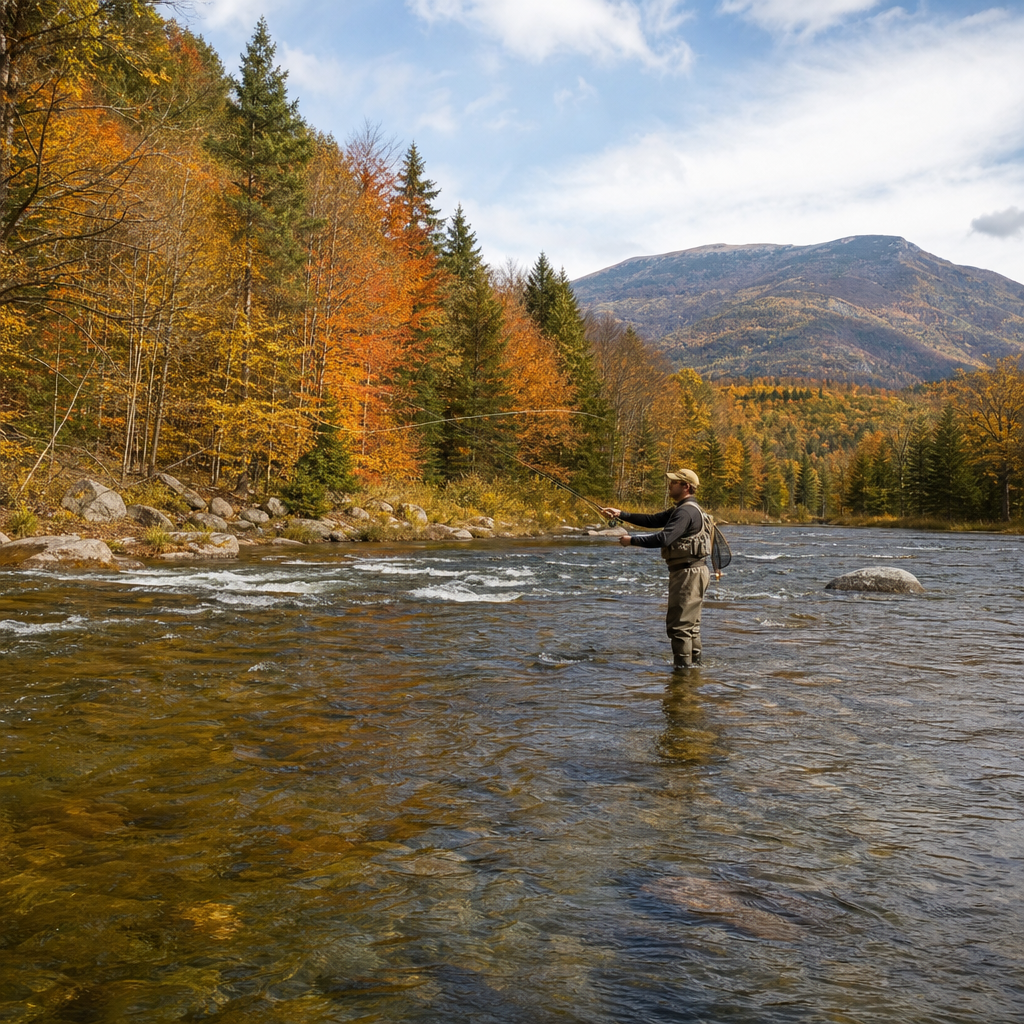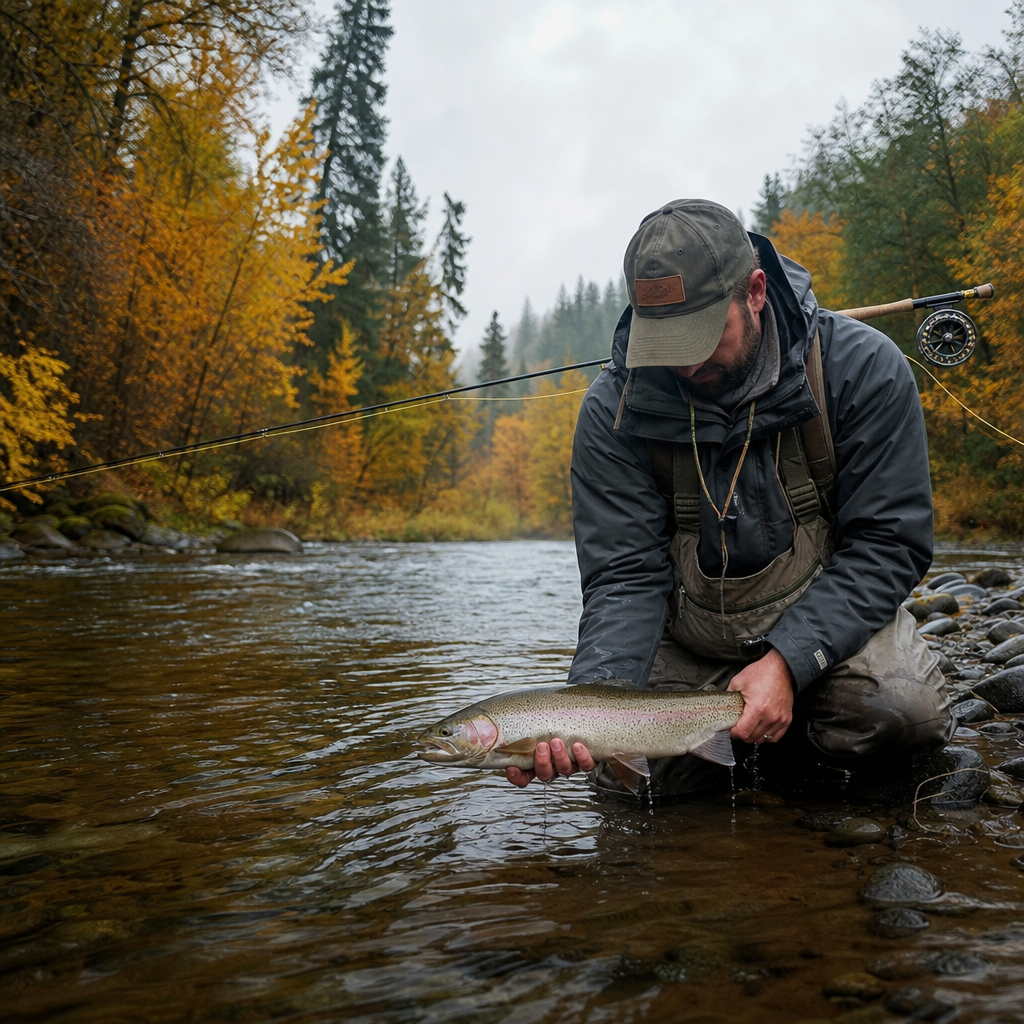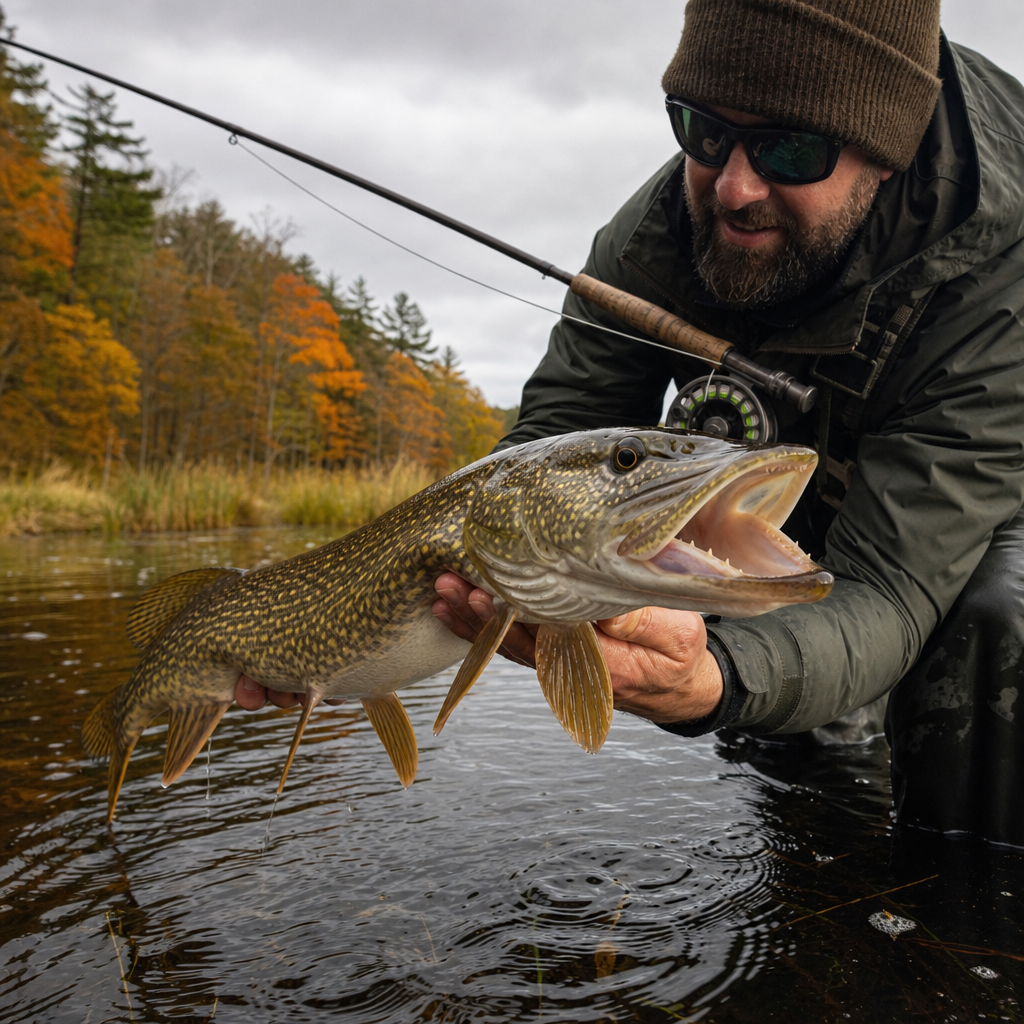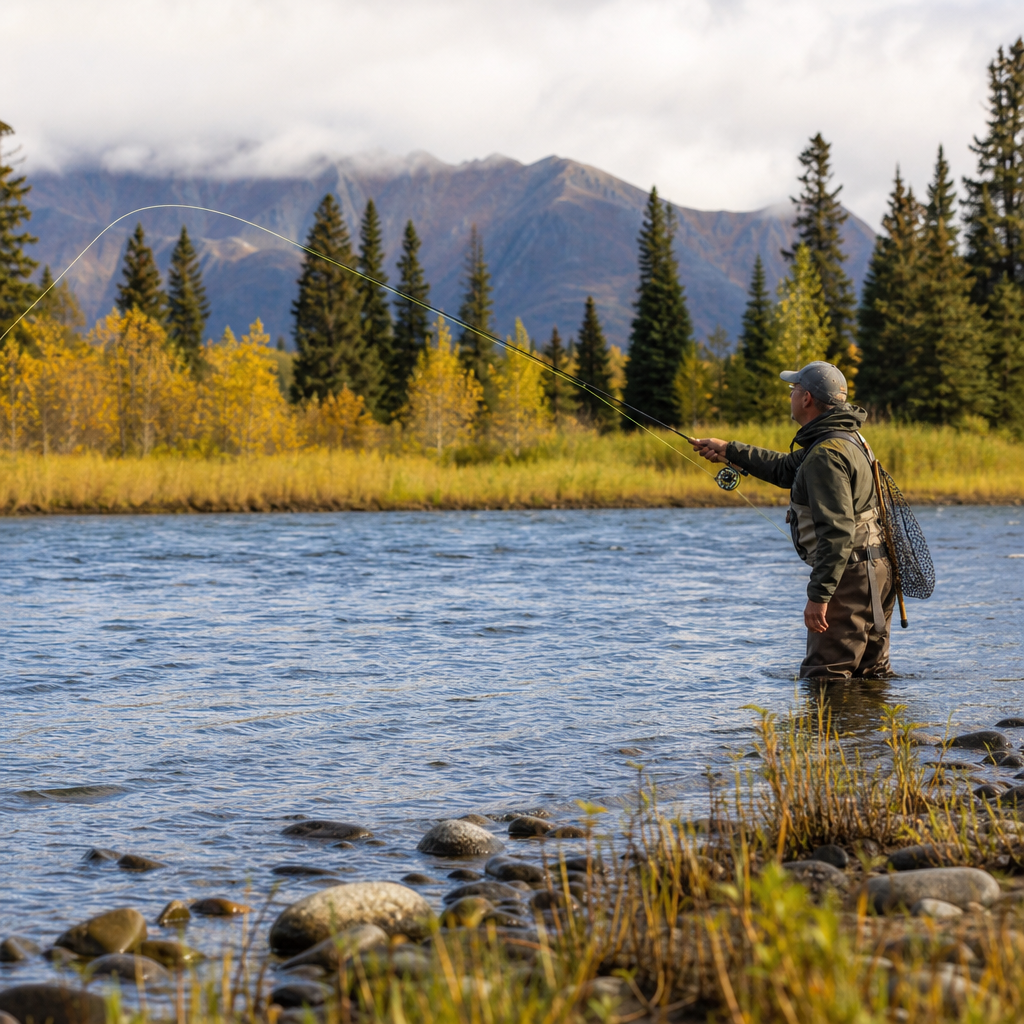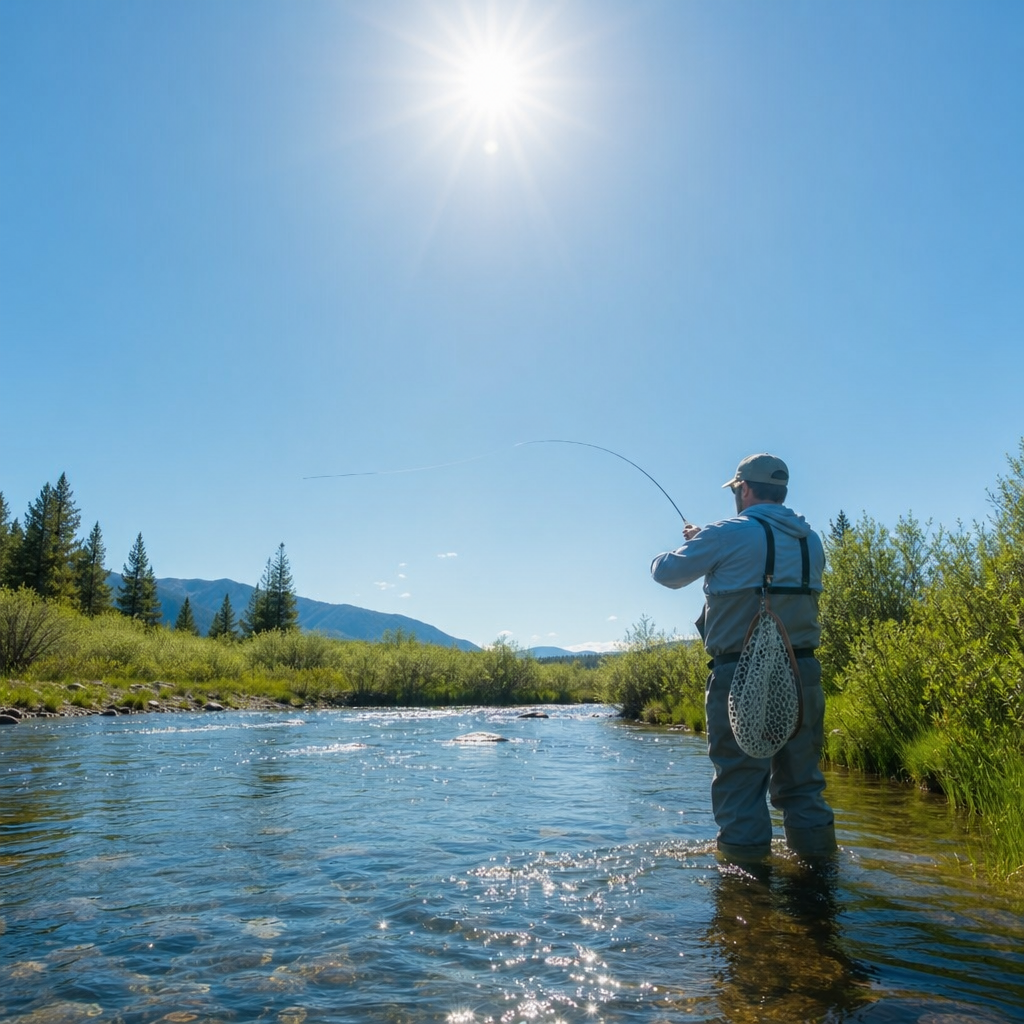
Fly fishing during high noon challenges many anglers because bright light, warm surface temperatures, and increased visibility change how trout, bass, and panfish feed. In practical terms, high noon usually means the late-morning to midafternoon window when the sun is highest and shadows are shortest. For a time-of-day hub within seasons and conditions, this period matters because it behaves differently from dawn, dusk, or overnight fishing. Fish often slide deeper, tighten to cover, shorten feeding windows, or switch prey. Anglers who treat noon like an extension of the morning hatch usually struggle. Anglers who adjust depth, presentation speed, fly choice, and positioning consistently keep catching fish.
I learned this the hard way guiding freestone rivers and warmwater ponds where clients expected the same surface action they saw at sunrise. By noon, rising fish vanished, glare increased, and refusals multiplied. The fix was rarely mysterious. We moved to shaded banks, changed from dry flies to nymphs, streamers, or terrestrials, lengthened leaders selectively, and paid closer attention to water temperature and dissolved oxygen. High-noon fly fishing is not a dead period; it is a period of compressed opportunity. Fish still eat, but they do it where food is available with the least risk and energy cost.
This hub covers the full time-of-day question through the specific lens of midday fishing. It explains where fish reposition, which techniques remain dependable, how light affects line control and strike detection, and how to decide whether to fish deeper, faster, or closer to structure. It also helps you connect this page to related time-of-day decisions: when midday terrestrials outperform morning mayflies, when nymphing beats stripping, and when the smartest move is to pause until evening. If you want to fish confidently when the sun is overhead, start with the physics of light, temperature, current, and fish behavior rather than old assumptions about “bad” hours.
Why fish behavior changes at midday
At noon, the biggest variables are solar angle, water temperature, visibility, and predation risk. In clear rivers, direct sunlight penetrates deeper and makes fish more cautious, especially wild trout in low summer flows. They can inspect a drift longer, see leader flash more easily, and detect movement on the bank. In lakes and ponds, high sun often pushes fish off shallow flats and into weed edges, drop-offs, inflow seams, or shaded cover. In warmwater species such as largemouth bass, bright overhead light can actually simplify the search: docks, timber, lily pad edges, and undercut banks become prime targets because they create shade and ambush lanes.
Temperature matters just as much as light. Trout are most comfortable in cool, oxygen-rich water; once temperatures climb into the upper 60s Fahrenheit, feeding often becomes more selective and stress increases. Small changes matter. A two-degree difference between a sunlit run and a spring-fed side channel can concentrate fish. On Western tailwaters, I have seen fish abandon knee-deep shelves by 11 a.m. and stack in deeper buckets where current delivers midges and caddis pupae with less exposure. On small Appalachian streams, brook trout may disappear from open plunge pools and hold under rhododendron shade where canopy cover cuts light and keeps water cooler.
Current also changes the midday equation. Strong riffles aerate water and break up visibility, giving fish cover even when the sun is harsh. That is why many successful noon sessions happen in pocket water, heavy seams, or broken runs rather than slick glides. The rougher surface masks your silhouette and reduces the fish’s decision time. If there is one midday principle worth remembering, it is this: fish are not evenly distributed. They condense into microhabitats that offer shade, oxygen, depth, or a predictable conveyor belt of food.
Best places to target during high noon
Midday location choices should be deliberate. On rivers, start with undercut banks, plunge pools, boulder gardens, tailouts with depth, and riffle-to-run transitions where fish can hold below the brightest zone and slide up briefly to feed. On spring creeks and technical tailwaters, look for aquatic vegetation lines, depressions, and shadow lanes cast by high banks or bridge structure. In many trout streams, the deepest part of a run is not the best part at noon; the best part is often the depth adjacent to current speed, where fish can hold comfortably and intercept food without moving far.
On lakes and ponds, think in three dimensions. Bluegill and crappie often suspend under docks or over brush, while bass pin bait against weed edges or patrol shaded lanes created by overhanging trees. Trout in stillwater commonly drop to the thermocline band if the lake stratifies seasonally, especially in summer. A floating line with a long leader may work at dawn, but at noon an intermediate or type III sinking line can become far more efficient. Sight-fishing also changes. Bright overhead light can improve your ability to see into the water if glare is controlled with quality polarized lenses, but it can simultaneously make fish see you sooner.
| Water type | High-noon holding water | Effective approach |
|---|---|---|
| Freestone river | Pocket water, plunge pools, undercut banks | Short-line nymphing, dry-dropper, tight drifts |
| Tailwater | Deep seams, weed edges, shade lines | Indicator rigs, small nymphs, long leaders |
| Warmwater pond | Docks, pads, timber, drop-offs | Bass bugs in shade, craw patterns, streamers |
| Stillwater trout lake | Thermocline zone, inflows, submerged structure | Intermediate or sinking line, leeches, chironomids |
Do not ignore man-made shade. Bridges, culverts, marina slips, and retaining walls often collect fish in the brightest part of the day. On pressured urban waters, I have watched carp, trout, and bass hold inches inside shadow lines because the contrast gives security and funnels drifting food. Fish edges thoroughly before moving. High noon rewards precision over coverage.
Fly selection and presentation that work at midday
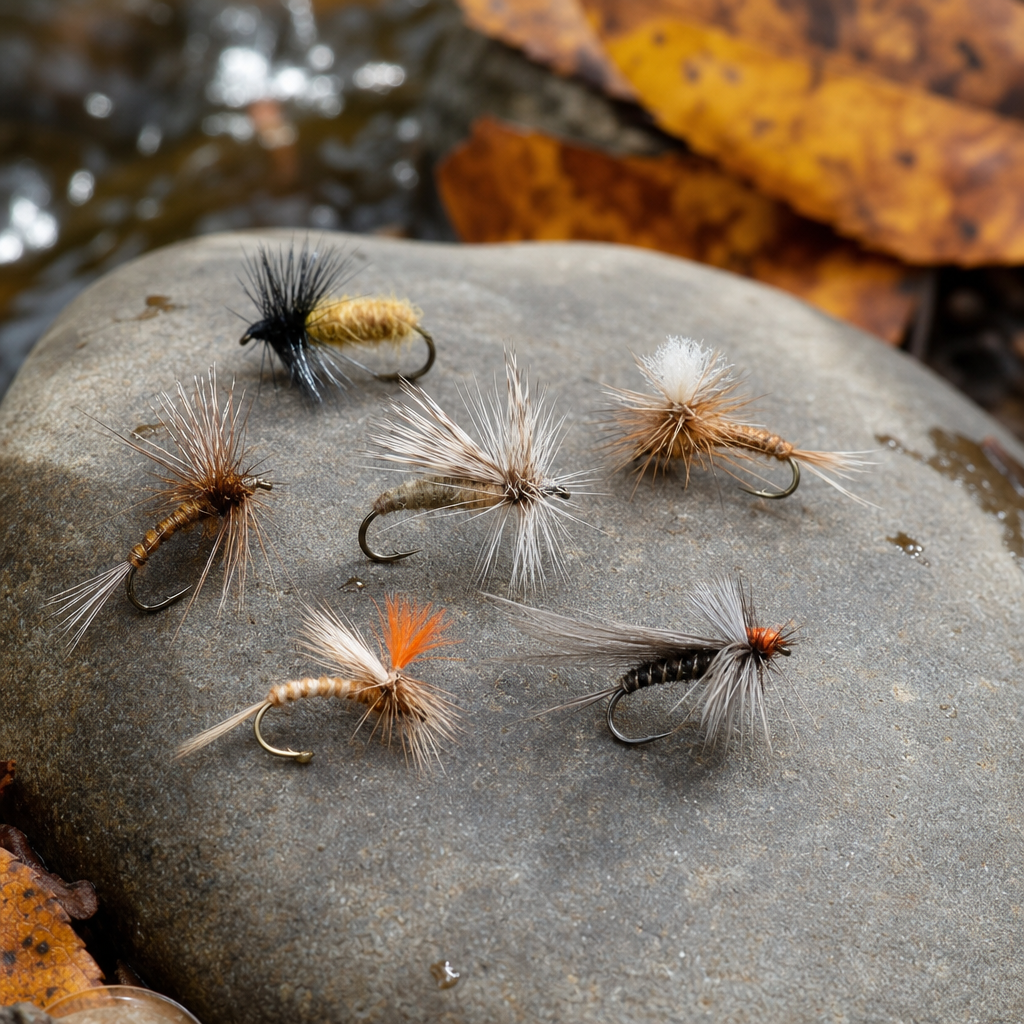
The best midday flies match what fish can eat efficiently with minimal exposure. For trout, that usually means subsurface patterns first: pheasant tails, hare’s ears, perdigons, zebra midges, caddis pupae, scuds, sow bugs, and small stonefly nymphs. In freestone rivers, a dry-dropper with a buoyant attractor and a tungsten nymph remains one of the most reliable noon systems because it covers broken water and provides an obvious sighter. Terrestrials become especially important in summer. Foam ants, beetles, and hoppers can outfish classic mayfly dries from late morning through afternoon because wind and heat knock land insects into the water when aquatic hatches are sparse.
For bass and panfish, midday fly selection should emphasize profile and placement around cover. Deer-hair divers, foam poppers skipped deep under docks, baitfish streamers, and crayfish patterns all produce when delivered tight to structure. The key is not constant aggressive stripping. Often the best move is to let the fly sit in shade, twitch once, then strip it out. Fish tucked under cover need time to commit. In clear stillwater for trout, balanced leeches, chironomids under an indicator, damsel nymphs, and bugger variations are staple midday tools because they stay in the feeding band longer than a fast-moving retrieve.
Presentation usually matters more than pattern. In bright conditions, drag is easier for fish to spot. That means longer drifts, finer tippet where appropriate, and better angle control. I often shorten my cast in pocket water at noon to improve line control and depth, while on flat tailwater slicks I may lengthen leader and reduce false casting to avoid lining fish. Weighting decisions are equally important. If your nymph does not tick bottom occasionally in the first few drifts, it is probably too high. Conversely, in weedy stillwater, hanging up means your retrieve lane is wrong even if the fly is good. Midday success comes from putting the fly where fish feel safe enough to eat.
Tactics for trout, bass, and panfish in bright sun
Trout demand stealth first. Approach from downstream when possible, use bank cover, keep a low profile, and avoid wading through the head of a pool. Euro-nymphing excels at noon in many rivers because it maintains direct contact, reaches depth quickly, and limits surface disturbance. In hatch-driven fisheries, watch for short midday emergence windows of caddis, PMDs, or midges, but do not wait passively for rises. Fish the likely holding lies with nymphs before and after any visible activity. If trout refuse repeatedly, change one variable at a time: depth, fly size, drift angle, then tippet diameter.
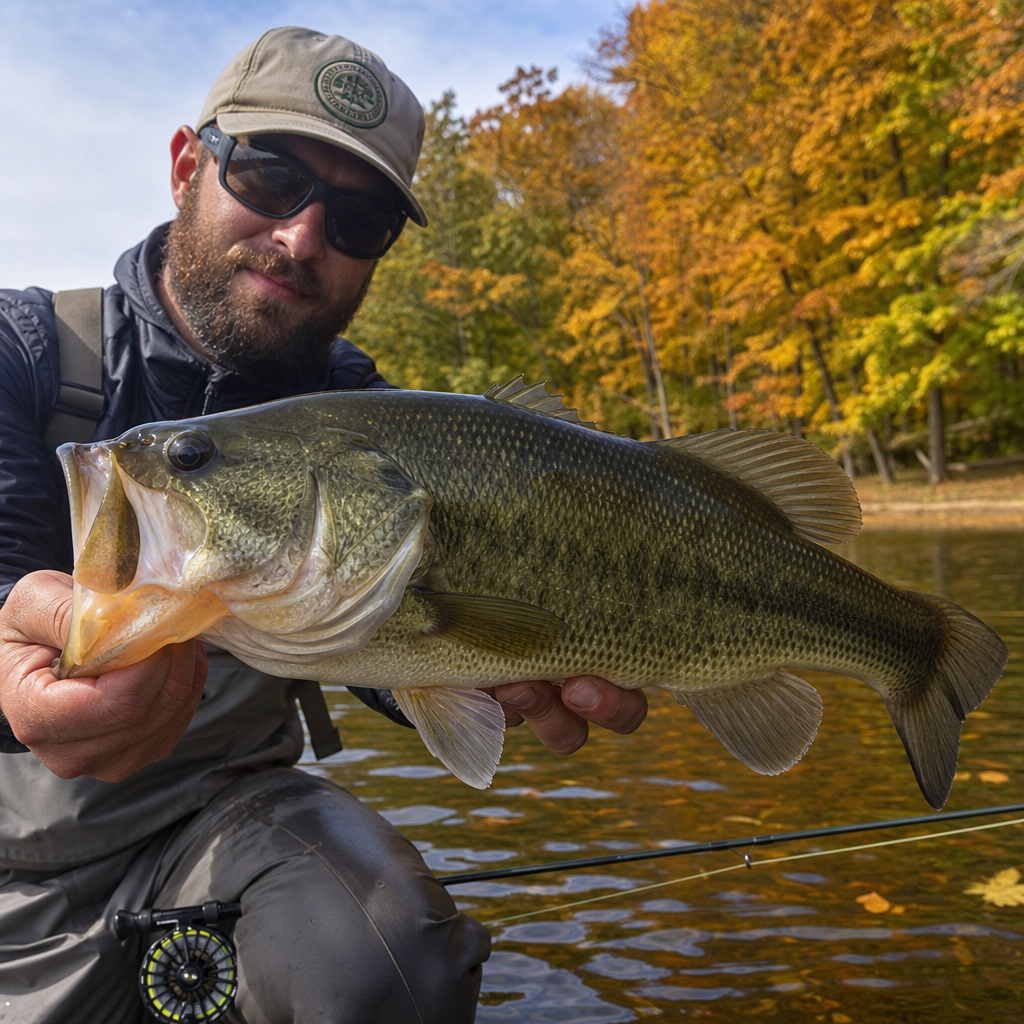
Bass often become easier to pattern than trout because they relate so strongly to hard shade. Skip flies under docks, pitch along pontoon edges, and target the darkest part of laydowns. In rivers, smallmouth commonly hold behind boulders, in ledge shade, or at the base of riffles where bait is swept to them. A weighted crayfish pattern crawled slowly across rock can be deadly at noon because crayfish remain available even when topwater fades. If fish follow but do not eat, pause longer. Bright-light bass frequently inspect before striking.
Panfish are ideal high-noon targets because they often remain active around weeds, brush, and man-made cover. Bluegill bedding colonies can be visible in late spring and early summer, though ethical pressure should be light and selective. More generally, fish small spiders, ants, and nymphs beside reed edges or beneath floats in deeper pockets. If you are introducing someone to fly fishing during midday, panfish provide steady action and teach line control, hook-setting discipline, and accurate casting to shade.
Gear, safety, and decision-making for midday sessions
High noon is as much about managing conditions as choosing flies. Polarized sunglasses are mandatory, not optional; amber and copper lenses often improve contrast in freshwater, while gray lenses reduce brightness on open lakes. A wide-brim hat cuts glare and helps you read seams and structure. For trout, carry split shot, tungsten flies, and leader material from 6X to 3X so you can adjust depth and turnover quickly. For warmwater fishing, a stout leader and weed guard can be more valuable than delicate presentation because the strike zone is buried in cover.
Heat safety belongs in every serious midday plan. Water temperature should guide whether you target trout at all. Many fisheries managers recommend avoiding trout fishing once temperatures reach 68 degrees Fahrenheit, and ending entirely around 70 degrees to reduce post-release mortality. Carry a stream thermometer. If the water is too warm, switch species, move upstream, or wait for evening. Hydration, sun protection, and wading caution also matter because fatigue and glare increase mistakes. I have ended productive noon trips early simply because client reaction time dropped in heat and footing became unsafe on slick rocks.
Decision-making improves when you use midday as a diagnostic period rather than a stubborn continuation of morning tactics. Ask direct questions. Is the water warming? Are fish visible but inactive? Is there shade, depth, or current nearby? Are terrestrials present along the bank? Can I fish a shorter, more controlled drift? Should I rest this run and return at dusk? Good anglers do not force the same method through every hour. They read the conditions, protect the fish, and adapt.
Fly fishing during high noon is productive when you stop chasing the water that looked good at sunrise and start targeting the water that offers security, oxygen, and food under bright sun. The central lessons are consistent across rivers, lakes, and ponds: fish deeper or tighter to cover, emphasize subsurface presentations, use shade and broken water as visual concealment, and let temperature determine how hard you press a trout fishery. Midday does not erase feeding opportunities; it concentrates them into smaller windows and smaller locations.
As a hub for time-of-day strategy within seasons and conditions, this topic connects naturally to early-morning hatches, evening spinner falls, overnight predator behavior, and seasonal temperature swings. Yet noon deserves its own discipline because the margin for error narrows. Better positioning, better depth control, and better fish-care decisions matter more than extra casts. When anglers struggle at midday, the problem is usually not that fish stopped eating. The problem is that fish changed lanes and the angler did not.
Use this page as your baseline approach whenever the sun climbs high: locate shade, current breaks, and depth; choose flies that stay in the feeding zone; present them with stealth and control; and monitor water temperature before targeting trout. Then apply those principles to the related time-of-day articles in your broader fishing plan. If you build your midday system now, the hours most anglers write off can become some of your most dependable windows on the water.
Frequently Asked Questions
What makes fly fishing during high noon so different from fishing at dawn or dusk?
High noon changes the entire feeding environment for fish. When the sun is high, light penetrates deeper into the water, surface temperatures can rise quickly, and fish become more cautious because visibility improves for both predator and prey. Trout, bass, and panfish often react by sliding into deeper water, holding tighter to structure, or reducing the distance they are willing to move for a fly. That means the broad, aggressive feeding windows many anglers enjoy in low light usually shrink during late morning through midafternoon.
At dawn and dusk, fish commonly patrol shallower water and feed with more confidence because shadows are longer and light levels are lower. During high noon, the opposite is often true. Trout may tuck beneath undercut banks, seams, boulders, and shaded runs. Bass may position under docks, along weed edges, or beside submerged timber. Panfish frequently suspend around brush, drop-offs, and weed lines rather than roaming openly. In all cases, fish tend to become more selective and more protective of their energy.
For fly anglers, this means success depends less on covering lots of shallow water and more on precise presentation, depth control, and careful target selection. High noon is not automatically bad fishing, but it does reward a different approach. Instead of expecting surface activity or fast action everywhere, focus on micro-habitat, shade, depth, oxygen-rich current, and any feature that offers security. When you adapt to those midday patterns, high noon can still produce excellent fish.
Where should I look for fish during the middle of the day?
The best high-noon locations are the places that offer fish a combination of comfort, protection, and feeding opportunity. In rivers and streams, start by looking for depth, current breaks, shade, and cover. Trout often hold in deeper pools, the heads and tails of runs, beneath overhanging vegetation, next to large rocks, along cut banks, and in slots where fast and slow water meet. These spots give them access to drifting food while reducing the energy they expend in strong current and limiting their exposure to bright light.
In lakes and ponds, bass and panfish commonly gather near weed edges, drop-offs, submerged wood, docks, bridge pilings, and brush piles. Shade is especially valuable at midday, even when it only covers a narrow strip of water. A dock line, a matted bank edge, a shaded reed pocket, or the dark side of a laydown can concentrate fish because it lowers light exposure and offers ambush cover. Bass in particular are classic midday cover-oriented fish, and fly anglers who can place a fly tight to structure often do far better than those casting randomly across open water.
Also pay attention to water quality clues. Cooler inflows, spring seeps, riffled oxygenated sections, and wind-blown banks can all improve the midday bite. If the surface is warming rapidly, fish may not be far away horizontally, but they may be dramatically different vertically. Sometimes moving just a few feet deeper is enough to find more active fish. The key is to stop thinking in terms of “where fish were early” and instead ask, “Where can fish stay comfortable and feed efficiently right now?”
What flies and presentations work best when the sun is high?
Midday usually favors flies that can be delivered accurately, fished at the right depth, and kept in the strike zone longer. For trout, nymphs are often among the most consistent high-noon options because many fish remain willing to feed subsurface even when they stop rising. Pheasant tails, hare’s ears, perdigons, midge patterns, caddis larvae, and small stonefly imitations are all solid choices, especially when matched to local food sources. In deeper or faster water, adding split shot or using euro-style tactics can help keep the fly where trout are actually holding rather than drifting overhead.
For bass and panfish, streamers, small baitfish patterns, woolly buggers, leeches, and compact poppers or foam terrestrials can all work, but presentation matters more than simple fly selection. During high noon, fish often prefer a fly that lands close to cover and stays there long enough to trigger a reaction. A short strip, pause, slow hand-twist retrieve, or controlled sink can outperform a fast, aggressive retrieve. If fish are tucked under structure, make repeated casts from different angles before moving on.
Terrestrials can also shine in summer high-noon conditions, particularly near grassy banks, overhanging trees, and meadow streams. Ants, beetles, hoppers, and small foam bugs are realistic midday options because many land insects become active in bright, warm conditions. However, even when fishing dries, target likely holding water rather than blind-casting open flats. In general, midday success comes from matching depth, reducing drag, and presenting the fly close enough to cover that a fish does not need to expose itself or travel far to eat.
How should I adjust my technique and approach to catch more fish at high noon?
Start by slowing down and becoming more deliberate. At midday, fish are often concentrated in smaller feeding lanes or tighter pieces of cover, so random casting usually wastes time. Break water down carefully. In a trout stream, that might mean dissecting one undercut bank, one boulder seam, or one shaded slot with multiple drifts instead of wading quickly through an entire run. In warmwater settings, it means pitching close to docks, weed pockets, timber edges, and other high-probability targets with better accuracy and less commotion.
Depth control is one of the biggest differences between average and productive high-noon fishing. If you are nymphing for trout, get your flies deeper until they are drifting where the fish are holding. If you are fishing streamers or bug patterns for bass and panfish, let them sink longer and vary retrieve speed before deciding fish are inactive. Many midday refusals are really presentation failures: the fly is too high, too fast, or too far from the cover line.
Stealth also matters more in bright light. Fish can see better, and anglers are easier to detect. Wear neutral clothing, avoid unnecessary false casting, keep a lower profile when approaching clear water, and cast from farther away when possible. On streams, watch your shadow and avoid stepping into fish-holding lanes. On lakes and ponds, minimize hull slap, heavy footfalls on docks, or line flashes over shallow fish. High noon often rewards clean execution over flashy tactics. If you fish methodically, manage depth well, and stay quiet, your odds improve dramatically.
Can high noon still produce topwater or visible eats, or should I focus only on subsurface fishing?
High noon does not automatically eliminate surface fishing, but it usually narrows the situations where it shines. If fish are feeding on terrestrials, cicadas, beetles, ants, hoppers, or damselflies, midday surface action can be excellent. Shaded banks, under overhanging trees, grassy shorelines, and bankside structure are especially good places to try topwater flies because they combine food input with cover. In lakes and ponds, bass may still blast a bug fished tight to shade lines, under docks, or beside reeds. Panfish also remain willing to eat small surface flies when they are grouped in cover and actively feeding.
That said, subsurface methods are generally more consistent during the brightest part of the day. Even when fish will look up, they often do so only in specific windows or in very defined locations. Instead of working open water broadly with surface patterns, treat topwater as a targeted tactic. Put the fly where fish feel secure, make the first cast count, and give the fly time to sit or move subtly. A quiet landing followed by a pause is often more effective than constant stripping.
The best strategy is to let conditions guide you. If you see insects, bank-side terrestrial activity, shade concentration, or occasional rises, absolutely test a dry or bug pattern. But if there is no visible surface life and fish seem buried, switch confidently to nymphs, streamers, or other subsurface flies. The most successful midday anglers are flexible. They do not force a favorite method just because it is exciting; they read the light, temperature, cover, and fish behavior, then choose the presentation that fits the moment.