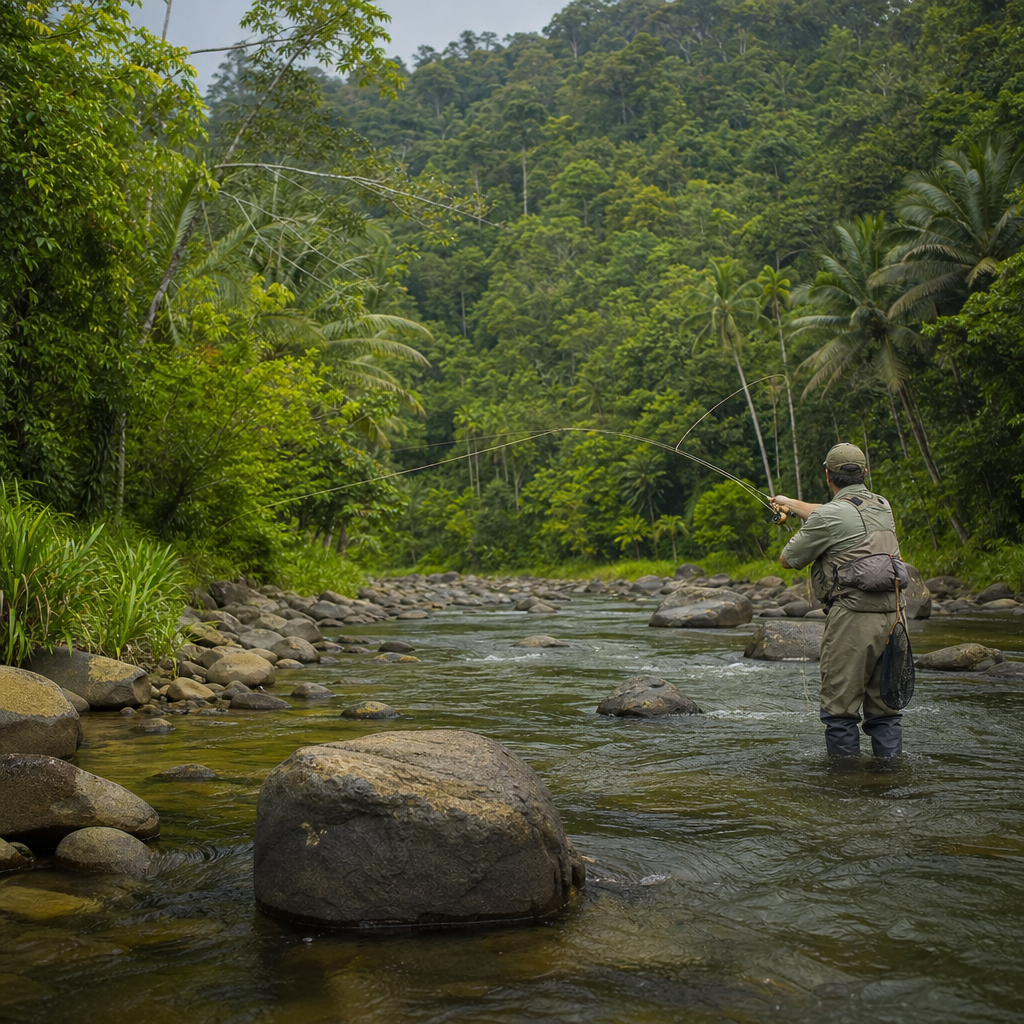
Fly fishing in Indonesia rewards anglers who want variety, challenge, and genuine exploration across one of the world’s largest archipelagos. Indonesia spans more than seventeen thousand islands between the Indian and Pacific oceans, and that geography creates an unusually broad fly fishing destination portfolio. In practical terms, fly fishing here can mean stalking giant trevally on a coral flat, teasing sailfish with a teaser-and-switch spread offshore, or prospecting mountain streams for introduced trout. For anglers building an Asia-focused travel plan, Indonesia matters because it offers tropical saltwater opportunities equal to famous Indian Ocean destinations while also connecting naturally to the wider regional circuit that includes Christmas Island, Malaysia, Thailand, Japan, and Mongolia. I have planned trips, worked with guides, and evaluated lodges across this region, and Indonesia consistently stands out for diversity rather than one single flagship species.
That diversity is the first key term to understand. Indonesian fly fishing is usually divided into three categories: saltwater flats fishing, bluewater fly fishing, and freshwater upland fishing. Flats fishing targets species that feed over shallow coral, sand, mangrove edges, and lagoon systems, often while wading or poling skiffs. Bluewater fly fishing happens offshore around bait schools, current lines, reefs, and FADs, using heavier tackle and techniques adapted from conventional teaser fishing. Freshwater fishing is more limited and less globally known, but in volcanic highlands and stocked lakes there are pockets of trout and other species worth considering when weather or logistics push anglers inland. A second key term is seasonality. Monsoon patterns, wind direction, tidal range, moon phase, and water clarity all affect the quality of a trip more than a simple national “best month” label ever could.
Indonesia also matters because access is improving without becoming simple. Airports in Bali, Labuan Bajo, Sorong, Ambon, and other gateways now support more efficient domestic transfers, yet many prime fisheries still require liveaboards, charter boats, or lodge logistics. That combination keeps pressure lower than in many heavily marketed destinations. For this Asia hub article, the goal is to identify the best Indonesian fly fishing spots, explain the realistic strategies that work there, and help anglers understand where each destination fits within a broader Asian itinerary. If you are comparing this page with other Asia destination guides, use Indonesia as the benchmark for tropical species variety, expedition-style travel, and the chance to fish productive water that still feels lightly touched. The best trip is the one matched to species, season, and your tolerance for travel complexity.
Why Indonesia anchors an Asia fly fishing itinerary
Indonesia anchors the Asia fly fishing conversation because few countries in the region combine bluewater, flats, reef, estuary, and mountain options at this scale. In the Indian Ocean portion of Southeast Asia, the nation sits close to major current systems that move bait, predators, and nutrient-rich water through island chains. In the east, the Coral Triangle delivers world-class marine biodiversity, which translates directly into species richness for fly anglers. That is not marketing language; it is a biological fact recognized by marine scientists and visible on the water every day. On a single trip, anglers may encounter giant trevally, bluefin trevally, barracuda, triggerfish, milkfish, queenfish, sailfish, tuna, mackerel, and reef species, with freshwater possibilities before or after the main saltwater program.
From a planning perspective, Indonesia is especially useful as a sub-pillar hub within Asia because it teaches the main regional decision points. Do you want technical flats fishing like the Seychelles model, pelagic action similar to the Maldives, or mixed exploratory fishing where every day brings different targets? Indonesia is strongest in the third category, though some zones now offer refined, species-specific programs. The country also introduces anglers to the practical realities of Asian destination travel: domestic flight baggage limits, variable weather windows, marine park regulations, and the importance of booking operations with skiffs, spare tackle, and experienced local crews rather than simply choosing the cheapest package. Those details often determine success more than any advertised species list.
Best fly fishing spots in Indonesia
The best fly fishing spots in Indonesia are not all equal; each excels for a different style of angling. Raja Ampat in West Papua is the headline destination for many experienced saltwater fly fishers because of its extraordinary reef systems, clear water, and species diversity. It is not a simple beginner fishery, but for anglers willing to cast accurately in wind and move quickly from shot to shot, it can be exceptional. Expect giant trevally on reef edges, bluefin trevally on current seams, barracuda over drop-offs, triggerfish on flats, and occasional shots at milkfish or reef-associated surprise species. The visual quality of the fishing is part of the attraction: fish often appear suddenly and decisively in water clear enough to expose every mistake.
Komodo National Park and the wider Flores region are another premier choice. These waters are famous for strong tidal flow, moving bait, and productive structure. The fishery suits anglers who like a hybrid approach: mornings on coral flats or beaches, afternoons teasing pelagics or probing reef points. Giant trevally are the marquee species, but dogtooth tuna, Spanish mackerel, queenfish, and sailfish can all enter the picture depending on season and weather. Because current is so important here, the best guides time drifts and boat positioning precisely. In my experience, anglers who arrive expecting random casting struggle, while those who fish with discipline around tide changes usually generate the best shots.
Alor and the Lesser Sunda Islands remain less publicized but very attractive for exploratory anglers. The area offers steep drop-offs close to shore, healthy reef systems, and lower boat traffic. It is a strong option for anglers who value adventure over polished lodge infrastructure. Meanwhile, Bali and nearby islands can produce bluewater opportunities for sailfish, mahi-mahi, tuna, and trevally, especially for travelers combining family tourism with fishing days. Bali is not the purest destination fishery in Indonesia, but it is the easiest point of entry and a practical place to schedule a day charter before moving east.
For freshwater, Java and highland areas around volcanic lakes or stocked streams have niche appeal. Introduced rainbow trout and other species are not Indonesia’s defining fly fishing draw, yet these inland waters can still matter for mixed itineraries and weather backup. They also broaden this Asia hub by showing that Indonesian fly fishing is not exclusively tropical saltwater. Freshwater anglers should manage expectations: access, stocking quality, and guide specialization vary greatly, and many of the country’s true world-class opportunities remain salt-focused.
Species, seasons, and location strategy
Choosing where to fish in Indonesia starts with matching species goals to habitat. Giant trevally prefer structure, current, and ambush opportunities, so reef edges, channels, pressure points, and bait-rich flats are prime. Triggerfish need calmer, wadable flats and patient sight-fishing. Sailfish and tuna require offshore bait concentrations and competent boat handling. Milkfish are an entirely different challenge, often demanding specialized algae or chum-oriented approaches that very few operations execute consistently. If your main target is giant trevally, prioritize eastern Indonesia and operations with proven skiff support around reefs and flats. If you want a broad species list, choose mixed reef and bluewater destinations like Komodo or Raja Ampat.
Seasonality varies by region, but there are practical patterns. Indonesia’s dry seasons often bring more favorable visibility and logistics, though local wind can still be a major limiting factor. In Raja Ampat, many operators focus on periods with calmer seas and reliable boat access rather than a simplistic annual “peak.” In Komodo, transition months can fish extremely well if currents are right and wind is manageable. Moon phase matters because large tidal swings can intensify feeding windows while also making some flats too turbulent to fish effectively. Anglers should ask operators for month-by-month notes on wind, water clarity, target species, and historical cancellation rates, not just generic assurances that fishing is good year-round.
| Region | Best For | Primary Species | Trip Style |
|---|---|---|---|
| Raja Ampat | Technical flats and reef sight-fishing | GT, bluefin trevally, triggerfish, barracuda | Liveaboard or lodge with skiffs |
| Komodo/Flores | Mixed reef and bluewater action | GT, queenfish, mackerel, sailfish, tuna | Lodge or mobile boat-based program |
| Alor/Lesser Sundas | Exploratory adventure fishing | Trevally, tuna, reef species, barracuda | Charter boat or expedition setup |
| Bali area | Accessible bluewater add-on fishing | Sailfish, mahi-mahi, tuna, trevally | Day charter |
| Java highlands | Niche freshwater option | Trout and stocked freshwater species | Guide-based inland trip |
Tackle and techniques that work
The most effective Indonesia fly fishing setup is a disciplined quiver, not an oversized tackle bag. For flats and reef work, a 10-weight is the workhorse rod, with a 12-weight reserved for heavy giant trevally and rough conditions. An 8-weight can be useful for lighter trevally, smaller reef species, and calmer presentations, but many anglers undergun themselves by bringing too much light tackle and not enough lifting power. Reels must have strong sealed drags and at least 250 yards of appropriate backing. Tropical lines are non-negotiable; standard temperate lines wilt in equatorial heat. Carry floating, intermediate, and fast-sinking options because Indonesian fish often shift vertically through the day as light, current, and bait movement change.
Leader construction matters more than many visiting anglers expect. For giant trevally, abrasion resistance and turnover are critical, so short, heavy leaders in the 80- to 130-pound class are common depending on fly size and structure. For triggerfish, stealth and accurate placement matter more, and fluorocarbon in the 16- to 30-pound class may be appropriate. Bluewater sailfish programs often use specialized hookless teasers to raise fish, then switch quickly to a rigged fly on heavy tippet. This is not random offshore casting. It is a coordinated method requiring clear communication between captain, teaser angler, and fly angler, and success rates improve sharply with crews who do it regularly.
Fly selection should be practical and durable. Brush flies, baitfish patterns tied on heavy-gauge hooks, poppers, gurglers, and large Deceivers all have a place. Color matters less than profile, sink rate, and hook strength, though black-purple, olive-white, tan, and pink combinations consistently produce. For triggerfish, crab patterns with strong hooks and weed guards are essential. For sailfish and tuna, slim synthetic baitfish patterns that cast well on a 12-weight outperform bulky designs in wind. The common tactical mistake in Indonesia is stripping at one speed all day. The best anglers vary cadence aggressively, pause deliberately near structure, and stay ready for a take boatside, where many follows finally convert.
Logistics, guides, and responsible travel
Good Indonesian fly fishing trips are built on logistics. Domestic airlines often enforce strict baggage limits, so pack rods in travel tubes, split tackle between carry-on and checked bags when possible, and confirm excess baggage policies before departure. Saltwater corrosion is relentless in the tropics; carry spare pliers, hooks, fly lines, and boot laces. On remote liveaboards, a failed line or broken stripping basket can cost multiple fishing sessions. Guides matter even more. The best operations combine local boat knowledge with dedicated fly fishing experience, and that combination is still uneven in parts of Indonesia. Ask whether guides understand boat positioning for backhand shots, species identification, line management, and fish handling protocols. If they cannot answer specifically, keep looking.
Responsible travel is not optional in Indonesia’s marine environments. Many prime fisheries sit inside protected zones or near reefs under growing tourism pressure. Anglers should support operators that use barbless or de-barbed hooks where appropriate, minimize fish time out of water, and avoid anchoring on coral. Sunscreen choice matters on shallow flats; reef-safe formulations reduce local impact. Waste management matters too, especially on expedition boats. I have seen excellent fishing degraded quickly around high-traffic islands when operators cut corners. The strongest long-term fisheries usually have clear local relationships, respect customary access, and contribute economically to surrounding communities through employment, provisioning, and park fees. Those factors deserve weight when comparing prices.
Indonesia is one of Asia’s most rewarding fly fishing destinations because it compresses extraordinary species diversity into an adventure framework that still feels authentic. The best spots are Raja Ampat for technical reef and flats fishing, Komodo and Flores for mixed saltwater action, Alor and the Lesser Sundas for exploratory trips, Bali for accessible offshore charters, and selected Java highlands for niche freshwater sessions. Success comes from matching destination to target species, timing travel around local wind and tide patterns, and bringing tackle designed for tropical abuse rather than generic travel fishing.
For anglers using this page as an Asia hub, Indonesia should sit near the top of the shortlist when the goal is variety, visual fishing, and genuine expedition value. It is not the easiest destination in Asia, but difficulty is part of the reward. Plan around proven guides, ask sharper seasonal questions, and build your itinerary with realistic species priorities. Do that, and Indonesia will deliver some of the most memorable fly fishing in Asia. Start by narrowing your target species and travel window, then compare regions before you book.
Frequently Asked Questions
What makes Indonesia such a unique destination for fly fishing?
Indonesia stands out because very few countries offer this much range in a single destination. With more than 17,000 islands spread between the Indian and Pacific oceans, anglers can move from tropical saltwater flats to offshore bluewater grounds and then to cool upland rivers and lakes, often within the same broader region. That diversity creates opportunities for everything from giant trevally, bluefin trevally, milkfish, queenfish, triggerfish, barracuda, and reef species in the salt to freshwater targets in volcanic highlands and remote interior systems. For fly fishers, that means Indonesia is not just one fishery but a collection of highly varied fisheries that reward different skills, presentations, and tackle choices.
It is also unique because many of its best opportunities still feel exploratory. Some established destinations exist, especially in areas known for flats and bluewater gamefish, but much of Indonesia still appeals to anglers who enjoy problem-solving, reading new water, and adapting on the fly. Tides, reef structure, monsoon patterns, current lines, bait movement, and seasonal weather all play major roles, so success often comes from flexibility rather than rigid expectations. In short, Indonesia offers the rare combination of species diversity, dramatic scenery, technical challenge, and genuine adventure, which is why it has become increasingly attractive to serious fly anglers looking for more than a standard tropical trip.
Where are the best spots to fly fish in Indonesia?
The best spots depend on the style of fishing you want to do. For saltwater flats and reef-edge sight fishing, eastern Indonesia is often the headline region. Areas around remote island chains, coral lagoons, and reef systems can produce giant trevally, bluefin trevally, bumphead parrotfish, triggerfish, and other classic Indo-Pacific species. These fisheries are especially attractive to anglers who enjoy poling skiffs, wading hard flats, and making quick, accurate casts to powerful fish in shallow water. In certain coastal zones and channels, you may also encounter queenfish, barracuda, and other aggressive predators that respond well to fast-moving baitfish flies.
For offshore fly opportunities, some Indonesian waters are excellent for teaser-and-switch techniques targeting sailfish and other pelagic species. These trips usually involve larger boats, coordinated crews, and a very deliberate program in which conventional teaser gear raises fish and the fly angler makes the final presentation. It is a highly visual, fast-paced style of fishing and can be one of the most exciting ways to experience Indonesia’s offshore potential. Meanwhile, freshwater anglers should not overlook mountain streams, crater lakes, and highland rivers in volcanic regions, where trout-like fishing experiences and introduced or local freshwater species can offer a completely different rhythm. Because infrastructure and access vary dramatically from island to island, many of the best “spots” are best approached as regions rather than single named locations, ideally with the help of a guide, outfitter, or lodge that understands local tides, transport, permits, and seasonal timing.
What gear and fly patterns should I bring for a fly fishing trip to Indonesia?
A smart Indonesia setup starts with matching gear to the specific fishery, because this is not a one-rod destination unless you are focusing on a very narrow target. For tropical saltwater flats, 9- to 12-weight rods are common, with 10- and 12-weights especially important for giant trevally and other brutally strong reef fish. Strong large-arbor reels with smooth drags and plenty of backing are essential, as fish often run fast and hard around coral structure. Tropical fly lines designed for heat are a must; standard temperate lines can become limp and unmanageable in equatorial conditions. Floating lines cover much of the flats work, but intermediate and sink-tip options can be valuable around channels, drop-offs, and deeper reef edges.
Fly selection should include a solid range of baitfish imitations, brush flies, streamers, poppers, and crustacean patterns. For giant trevally, durable baitfish flies tied on heavy hooks are critical. For triggerfish and other flats species, shrimp and crab patterns with good sink rates and realistic profiles can be far more important than oversized attractors. For offshore fly fishing, larger baitfish patterns in durable synthetic materials tend to perform well, especially when used in teaser-and-switch scenarios. If you are also planning freshwater sessions, bring lighter rods appropriate to the species and water size, along with nymphs, small streamers, terrestrials, and general attractor patterns. Just as important as rods and flies are practical essentials: stripping guards, quality flats boots, sun gloves, technical clothing for intense UV exposure, waterproof packs, polarized glasses with multiple lens colors, and a well-organized leader system with abrasion-resistant tippet. Indonesia can punish weak knots and underbuilt terminal tackle, so preparation matters.
What strategies work best for fly fishing in Indonesia’s saltwater and freshwater environments?
In saltwater, the most effective strategy is usually to stay adaptable and fish the conditions in front of you rather than forcing a preconceived plan. On flats, success often comes down to quiet movement, accurate casting, and immediate line control after the fly lands. Many target species in Indonesia, especially giant trevally, demand fast reactions and assertive retrieves. You may get only a brief window to place the fly ahead of a moving fish, strip hard to trigger the eat, and then clear line cleanly before the fish reaches coral or structure. For species like triggerfish, the opposite approach can be more effective: a precise cast, a natural sink, and subtle movement that keeps the fly in the strike zone without spooking the fish. Reading tide stages is especially important, since many productive areas only “turn on” during specific portions of the incoming or outgoing tide.
Offshore, strategy becomes much more team-oriented. Teaser-and-switch fly fishing for sailfish or other pelagics requires coordination between captain, crew, and angler. The boat raises fish on hookless teasers, then the fly is presented at exactly the right moment as the teaser is pulled away. Good timing, short accurate deliveries, and disciplined strip speed all matter more than long casting. In freshwater, strategy shifts again. Mountain streams and upland waters often reward a more classic approach built around stealth, careful wading, and presentation control. Matching local forage, covering likely holding lies, and adjusting depth and drift are often more important than covering water quickly. Across all Indonesian fisheries, one universal strategy stands out: work with local knowledge. Conditions can change rapidly with weather, current, and access, and local guides often know when a flat is best, when a channel is too dirty, or when a remote river is fishing well. That insight can make the difference between a scenic trip and a productive one.
When is the best time to go fly fishing in Indonesia, and what should anglers plan for?
There is no single nationwide “best season” because Indonesia is enormous and conditions vary by region, island group, and fishery type. In general, the dry season is often preferred for travel logistics, visibility on flats, and more predictable weather, but local monsoon patterns can shift depending on whether you are in western, central, or eastern Indonesia. Some areas fish best during calmer windows with clearer water and lighter winds, while others can produce well around transitional periods when bait is concentrated and currents are favorable. If you are planning a specialist trip for giant trevally, sailfish, or another marquee species, it is best to choose your destination first and then build dates around that region’s prime weather and tide cycle rather than relying on a countrywide rule of thumb.
Beyond timing, anglers should plan for heat, sun exposure, travel complexity, and a degree of unpredictability. Remote fisheries may involve multiple flights, boat transfers, changing schedules, and limited access to replacement tackle or specialty gear, so self-sufficiency is important. Good travel insurance, backup fly lines, extra leaders, spare hooks, and duplicate essentials are all wise. It is also worth preparing physically for long days of casting in humid tropical conditions, often while wading uneven flats or standing on a skiff deck in bright sun. The anglers who do best in Indonesia usually arrive with flexible expectations, species priorities rather than a single obsession, and a willingness to adjust each day based on weather, water clarity, and guide recommendations. That mindset fits the country perfectly and often leads to a richer, more successful trip.