Kenya is rarely the first country anglers name when planning a fly fishing trip, yet it deserves a serious place on any list of African fly fishing destinations because it combines Indian Ocean flats, highland trout rivers, Rift Valley lakes, and rugged warmwater systems within one country. In practical terms, fly fishing in Kenya means targeting species with artificial flies rather than bait, using specialized rods, lines, and presentations tailored to saltwater, river, or lake conditions. As a hub for Africa-focused travel planning, Kenya matters because it offers unusual diversity, strong safari infrastructure, and access to fisheries that can be combined with wildlife viewing, hiking, and coastal travel in a single itinerary. I have planned East African fishing trips where the hardest part was not finding water, but narrowing down which region to prioritize, because the country’s ecosystems change dramatically over relatively short distances.
For travelers researching Africa, Kenya also serves as a useful gateway for understanding the continent’s fly fishing range. You can cast to bonefish and giant trevally on tropical flats, drift nymphs and streamers for introduced trout in cool upland streams, and explore lakes and rivers holding tilapia, catfish, black bass, and other species suited to freshwater fly tactics. The best Kenya fly fishing destinations are shaped by altitude, rainfall, and access. Coastal fisheries around Watamu, Malindi, Lamu, and the southern reefs favor sight fishing and boat-based saltwater fly work. Central highlands waters near Nyeri, Nanyuki, and Mount Kenya support trout where temperatures stay low enough year round. Rift Valley systems add stillwater and mixed-species opportunities, though productivity varies with water levels, invasive species pressure, and local management. Understanding those differences is what turns a broad travel idea into a realistic, productive fishing plan.
Kenya’s coast is the country’s signature fly fishery
If one region defines Kenya as an African fly fishing destination, it is the coast. The protected lagoons, reef edges, channels, and tidal flats along the Indian Ocean offer the classic visual appeal many saltwater fly anglers want: clear water, coral structure, cruising fish, and technical presentation. Watamu is the best-known center because it combines professional skippers, established marine tourism, and quick access to multiple habitats. On the inside flats and sandy channels, bonefish are the headline species. Around deeper edges and pressure points, anglers can encounter giant trevally, bluefin trevally, triggerfish, queenfish, barracuda, milkfish, and various snapper species. Seasonal billfish are more commonly associated with conventional tackle, but fly anglers with bluewater experience occasionally target sailfish when conditions and crews align.
Success on the Kenyan coast depends on matching technique to habitat. Bonefish are usually hunted with eight-weight rods, tropical floating lines, and lightly weighted shrimp or baitfish patterns in tan, pink, and olive. Trevally require heavier tackle, often ten- to twelve-weight outfits with aggressive stripping flies, wire or heavy fluorocarbon when toothy fish are present, and constant attention to boat positioning. Triggerfish, when tailing on coral flats, demand precise casts and patient retrieves; poor fly placement or heavy footsteps can end the shot instantly. I have seen visiting anglers underestimate tidal timing here, but tide stage is central. Incoming water opens fresh feeding lanes, while dropping tides can concentrate fish along drains and reef margins. A strong guide who reads current, sun angle, and bottom type is not a luxury on this coast; it is the difference between random casting and deliberate fishing.
Highland trout waters bring a very different Kenya fly fishing experience
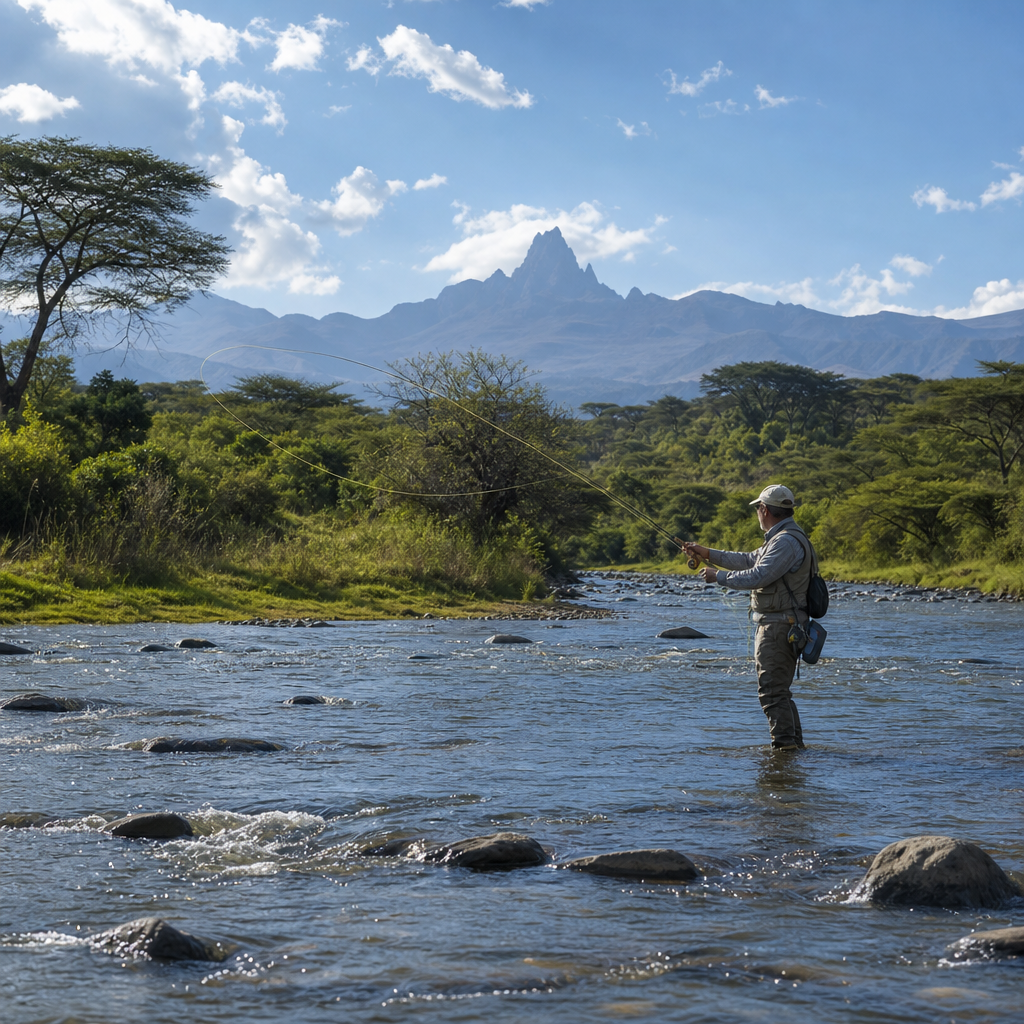
Many travelers are surprised to learn that Kenya also has legitimate trout fishing. In the cooler central highlands, especially around the Mount Kenya region and Aberdare-fed systems, rainbow and brown trout were introduced during the colonial period and established fisheries in suitable streams and impoundments. These are not vast Western-style tailwaters, and they should not be marketed as substitutes for New Zealand or Patagonia. Their appeal is different. Kenyan trout streams run through dramatic upland landscapes, often near tea country, forest reserves, and agricultural valleys, giving anglers an uncommon East African mix of equatorial latitude and temperate-feeling water. Depending on rainfall and local management, trout can be found in small freestone rivers, estate waters, and some dams where cooler conditions persist.
Tactics in these areas are much closer to classic river fly fishing. A four- to six-weight rod covers most situations. Dry-dropper rigs, bead-head nymphs, Woolly Buggers, and small streamers are standard choices, with terrestrial patterns becoming important where bankside grasses and beetle fall influence feeding. Water clarity can change quickly during rains, so flexibility matters more than strict hatch matching. In my experience, Kenyan trout often respond well to attractor nymphs and stripped lures because flows fluctuate and insect abundance is not always as concentrated or predictable as on famous Northern Hemisphere rivers. Access also requires planning. Some productive stretches sit on private land or conservancies, so anglers need permission, a lodge arrangement, or a guide with local relationships. That extra coordination is worthwhile because lightly pressured water can fish far better than publicly visible roadside sections.
Rift Valley lakes and inland waters expand species options
Kenya’s inland fisheries are less internationally marketed than the coast, but they widen the country’s fly fishing profile considerably. Lakes Naivasha, Baringo, and Turkana, along with connected rivers, dams, and marsh systems, create opportunities for warmwater fly fishing. Species vary by waterbody and change over time because of stocking, fluctuating lake levels, commercial pressure, and ecological shifts. Lake Naivasha has long been known for black bass and tilapia, with structure-oriented fishing around papyrus edges, submerged timber, and weed lines. Baringo has offered tilapia and catfish prospects, while larger remote waters in the north can appeal to exploratory anglers willing to trade convenience for adventure. These destinations are rarely about high catch numbers alone. They are about range, scenery, and combining fishing with birding, boating, and overland travel through the Rift Valley.
Warmwater fly fishing in Kenya works best when approached with realistic expectations and mobile tactics. Seven- to nine-weight rods cover most inland work. Weighted baitfish patterns, poppers, crayfish imitations, and robust nymphs account for bass, tilapia, and opportunistic predators. Early mornings and late afternoons are usually most productive, especially where wind affects boat control and pushes food into shorelines. Guides familiar with local seasonal patterns are important because inland fisheries can fish brilliantly for short windows and then become difficult when levels rise, algae blooms intensify, or pressure shifts fish off obvious cover. Anglers focused strictly on trophy consistency may prefer the coast, but travelers building a broader Africa itinerary should not ignore Kenya’s lakes. They add an accessible freshwater chapter that complements rather than competes with the nation’s saltwater reputation.
| Region | Main species | Typical tackle | Best fit for anglers |
|---|---|---|---|
| Indian Ocean coast | Bonefish, giant trevally, triggerfish, queenfish, barracuda | 8–12 weight saltwater setups | Experienced sight fishers and saltwater travelers |
| Central highlands | Rainbow trout, brown trout | 4–6 weight river outfits | Anglers wanting technical river fishing in cool scenery |
| Rift Valley lakes | Black bass, tilapia, catfish | 7–9 weight warmwater outfits | Travelers seeking variety and easier mixed-activity trips |
| Northern remote waters | Mixed warmwater species, exploratory targets | 8–10 weight versatile setups | Adventure-focused anglers comfortable with uncertainty |
When to go, how to plan, and what conditions matter most
The best time for fly fishing in Kenya depends on the region, but broad weather patterns provide a starting point. The country generally experiences long rains from roughly March to May and short rains around October to December, though timing has become less predictable. On the coast, clearer water, manageable wind, and fish movement around tides matter more than one simple “best month.” Many anglers favor periods outside the heaviest rains, when visibility improves and travel logistics are easier. Offshore and reef conditions also shift with monsoon influence, so local operators are the best source for current-season expectations. In the highlands, moderate flows and stable clarity are key. After heavy rain, streams can color up quickly and become difficult to fish. Inland lakes are highly sensitive to water level, weed growth, and wind.
Trip structure is where Kenya stands out against many other African fly fishing destinations. Nairobi acts as a practical hub, with domestic flights and road links to the coast, the central highlands, and major safari circuits. That makes combination itineraries straightforward. An angler can spend several days on saltwater flats near Watamu, then transition to safari in Tsavo or the Maasai Mara, or move inland for trout and lake fishing. Lodges range from luxury beach properties to working ranches and fishing camps. Planning should account for transport time, rod allowances on internal flights, and the need for region-specific gear. Polarized glasses, tropical lines, stripping guards, and sun protection are mandatory on the coast; waders are usually unnecessary there but can help in highland streams during cool mornings. For international visitors, using a specialist outfitter reduces friction because permits, access permissions, and day-to-day timing are less standardized than in heavily commercialized fisheries.
How Kenya compares with other Africa fly fishing destinations
As a hub page for Africa, Kenya is best understood in comparison with nearby and competing destinations. South Africa offers the continent’s most developed trout and stillwater infrastructure, plus extensive warmwater options and stronger self-drive access. Tanzania shares some East African saltwater character and has exceptional wilderness appeal, but logistics are often more remote and expensive. The Seychelles remains Africa’s benchmark for luxury tropical flats fishing, especially for giant trevally, but it sits in a different budget category and usually involves more specialized saltwater focus. Namibia and Botswana excel in very different ways, particularly for tigerfish in certain systems, while Uganda has Nile perch and trout niches but a smaller international fly fishing profile.
Kenya’s advantage is balance. Few African countries let an angler combine a credible saltwater flats trip, genuine trout fishing, inland warmwater exploration, and iconic wildlife tourism as efficiently. Its limitation is consistency. Some fisheries are less intensively managed, less documented, or more variable year to year than marquee destinations elsewhere. That means Kenya is best for anglers who value diversity and discovery rather than a single highly standardized product. In destination planning terms, it functions exceptionally well as both an entry point to African fly fishing and a multi-species trip for experienced anglers who are comfortable adapting. For a sub-pillar cluster, related pages should naturally branch to East African saltwater flats, Mount Kenya trout fishing, Rift Valley warmwater lakes, and broader Africa fly fishing comparisons, because those are the decision paths travelers actually follow.
Conservation, access, and responsible angling in Kenya
Any serious discussion of fly fishing in Kenya must include conservation and access realities. Coastal habitats depend on healthy seagrass, coral systems, and baitfish populations, all of which are affected by warming seas, destructive harvest, sedimentation, and tourism pressure. Inland fisheries face water abstraction, pollution, catch pressure, invasive species, and land-use change. Trout waters in particular can be vulnerable because introduced fish require suitable temperatures and flow stability, both of which are sensitive to watershed disturbance. Responsible anglers should practice careful catch and release where appropriate, use barbless hooks when guides recommend them, minimize fish handling, and respect marine park or conservancy rules. Hiring local guides and lodges that support habitat protection also matters because it ties fishing value to long-term stewardship.
Kenya rewards anglers who arrive informed. The country is not a one-note fishery, and that is exactly why it belongs near the top of any discussion of Africa fly fishing destinations. Its coast offers some of the continent’s most compelling sight fishing, its highlands provide an unexpected trout chapter, and its lakes add exploratory freshwater variety. The main benefit of choosing Kenya is not just the chance to catch fish; it is the ability to experience multiple fisheries and landscapes in one well-structured trip. Start by deciding whether your priority is saltwater action, trout, or mixed-species exploration, then build an itinerary around the right season and local guide network. If you are mapping an Africa fly fishing journey, Kenya should be one of the first destinations on your shortlist.
Frequently Asked Questions
What makes Kenya a unique fly fishing destination compared with other African countries?
Kenya stands out because it offers unusual variety within a single destination. Many anglers associate African fly fishing with one specific environment, such as tropical flats, big warmwater rivers, or highland trout streams, but Kenya brings several of these worlds together. In one country, you can explore Indian Ocean flats and estuaries for saltwater species, fish cool high-altitude rivers for trout, work Rift Valley lakes for a range of freshwater opportunities, and target aggressive warmwater fish in rugged inland systems. That diversity gives traveling anglers the rare chance to build a multi-species, multi-environment trip without crossing multiple borders.
Another reason Kenya is compelling is the contrast between landscapes and fishing styles. A morning on coastal flats may involve careful sight-fishing, long casts, and precise presentations to cruising fish in shallow water. A few days later, you could be drifting nymphs or casting streamers in cooler upland rivers where trout demand a very different approach. This constant shift in tactics, gear, and water reading is a major part of Kenya’s appeal for experienced fly fishers who enjoy technical fishing rather than a one-dimensional trip.
Kenya also has an exploratory feel that is increasingly rare in well-known global fisheries. It is not yet discussed as often as some established fly fishing destinations, which means parts of its angling potential still feel fresh and underappreciated. For anglers who value adventure, local knowledge, and the satisfaction of learning new water types, Kenya offers a memorable combination of challenge, scenery, and species diversity. It is not simply a place to catch fish; it is a place to experience several distinct fly fishing cultures and ecosystems in one journey.
What kinds of fish can you target on a fly fishing trip in Kenya?
The answer depends on where in Kenya you fish, because the country supports both freshwater and saltwater opportunities. Along the Indian Ocean coast, fly anglers may target species commonly associated with tropical flats and inshore saltwater fishing. Depending on season, tides, access, and local conditions, this can include hard-fighting shallow-water species that respond to baitfish, shrimp, and crab patterns. These fish often demand accurate casting, quick line control, and strip-setting discipline, making the coastal fishery especially attractive to anglers who enjoy visual, high-adrenaline fishing.
In Kenya’s highland rivers and cooler upland waters, trout are an important part of the fly fishing picture. These fisheries call for more classic river methods such as dry-fly fishing, nymphing, and streamer presentations. Water temperature, clarity, insect activity, and river structure all influence success, so anglers should expect a more technical freshwater approach than they might use on the coast. Trout fishing in Kenya can be particularly rewarding for anglers who appreciate reading currents, matching likely food sources, and adapting presentations to changing conditions throughout the day.
Beyond trout and saltwater targets, Kenya’s lakes and warmwater systems can provide opportunities for other predatory or opportunistic fish that will take flies when approached correctly. These fisheries may favor larger streamers, surface bugs, or subsurface patterns fished around structure, drop-offs, weed lines, or inflows. Because local conditions vary widely, the best source of species-specific guidance is always an up-to-date local outfitter or guide. The key point is that Kenya is not limited to one signature fish. It is a destination where anglers can pursue very different species using very different fly fishing techniques, often within the same trip.
What gear and fly patterns are best for fly fishing in Kenya?
Kenya rewards anglers who pack for variety. If your trip includes both coast and inland waters, you should think in terms of separate setups rather than one do-everything rod. For coastal saltwater fly fishing, 8- to 10-weight rods are often the practical range, depending on target species, wind strength, and fly size. A reliable saltwater reel with a smooth drag is essential, along with tropical fly lines designed to perform in heat. Leaders should match both the fish and the presentation, with stronger fluorocarbon or monofilament tippets for abrasive mouths, rough terrain, or more powerful species.
For trout and upland river fishing, lighter tackle is usually more appropriate. Rods in the 4- to 6-weight range cover many river situations, though the exact choice depends on stream size, casting distance, and whether you expect to fish dries, nymphs, or streamers most often. A floating line is the standard starting point for river trout fishing, while sink tips or full sinking lines may be useful in certain lakes or deeper runs. Waders, boots, and layered clothing can be important in highland regions, especially when early mornings are cool or weather changes quickly with elevation.
Fly selection should reflect Kenya’s broad mix of habitats. On the coast, productive patterns often include shrimp flies, small baitfish imitations, crab patterns, and other saltwater flies tied with durable materials that handle repeated takes and abrasive conditions. Inland trout waters call for a more traditional selection: nymphs, streamers, terrestrial patterns, and a range of dries suited to local insect life and opportunistic feeding behavior. For lakes and warmwater systems, leech patterns, baitfish flies, woolly buggers, and surface offerings can all be useful. Because Kenya’s fishing can be highly location-specific, it is wise to finalize your fly box only after checking current conditions with a knowledgeable guide. In a destination this varied, the best gear strategy is flexibility, durability, and preparation for several distinct fisheries rather than a single specialized style.
When is the best time to go fly fishing in Kenya?
The best time depends on the region you want to fish and the species you want to target. Kenya’s geography creates meaningful differences between coastal, highland, and inland systems, so there is no single universal “best month” for every fishery. On the Indian Ocean coast, tides, prevailing weather, water clarity, and seasonal fish movements all shape the quality of the fishing. In these environments, a guide’s understanding of current conditions can matter just as much as the calendar, because the right tidal window may make the difference between seeing active fish and struggling through unproductive water.
For highland trout rivers, rainfall patterns are especially important. Water levels, clarity, and insect activity can change quickly with the seasons, and these factors strongly influence both fish behavior and effective fly choice. Moderate flows and stable conditions are generally easier to fish than swollen or heavily discolored water, so many anglers plan around drier or more settled periods. That said, trout can still be caught in a wide range of conditions if the angler adjusts tactics, weight, depth, and presentation. The key is understanding that timing in Kenya is not just about temperature; it is about how weather affects access, visibility, and fish feeding behavior.
If you want to combine multiple fisheries in one trip, shoulder periods can be particularly appealing because they may allow decent conditions across more than one region. However, this is where expert local planning becomes extremely valuable. Instead of asking only for the “best time for Kenya,” it is smarter to ask for the best window for your specific itinerary: coast only, trout only, or a mixed trip. Kenya can provide productive fly fishing at different times of year, but success improves significantly when travel dates are matched carefully to location, species, and current environmental conditions.
Do you need a guide for fly fishing in Kenya, and how should you plan a trip?
While independent anglers can research waters and logistics, hiring a guide is strongly recommended for most visitors, especially if it is your first fishing trip to Kenya. The country’s greatest strength—its diversity—is also what makes planning more complex. Saltwater flats, rivers, lakes, and warmwater systems all require different local knowledge, and productive access points are not always obvious to someone arriving from abroad. A good guide helps with far more than boat positioning or choosing flies. They interpret tides, weather, fish movement, seasonal changes, access permissions, safety considerations, and the small local details that can transform a difficult learning curve into a rewarding fishing experience.
Guides are particularly important on the coast, where success often depends on reading water movement, finding fish on specific tides, and approaching them correctly in wind, glare, and changing depth. In trout rivers and inland waters, they can advise on current hatches, productive stretches, and the most effective methods for the season. They may also help navigate practical matters such as transport, accommodation, tackle planning, and travel timing between regions if you are building a multi-stop itinerary. For visiting anglers with limited time, this support is often the difference between sampling Kenya’s potential and truly experiencing it.
When planning a trip, start by deciding whether you want a specialized experience or a mixed itinerary. If your goal is technical saltwater sight-fishing, you may want to focus on the coast and schedule around tides and seasonal species presence. If classic freshwater fly fishing is the priority, build the trip around highland rivers and cooler inland systems. If you want the full Kenya experience, allow enough days to move between regions without rushing. It is also wise to confirm licensing, access arrangements, conservation rules, and any local regulations well in advance. The most successful Kenya fly fishing trips are planned with clear goals, realistic travel time, proper tackle for each environment, and strong local expertise from