Fly fishing in South Africa offers some of the most varied freshwater angling on the continent, combining wild mountain streams, productive stillwaters, warmwater rivers, and saltwater estuaries within a single destination. For anglers planning a trip under the broader Africa fly fishing category, South Africa is the natural hub because it has the continent’s strongest infrastructure, the widest guide network, and the greatest range of species available on fly. In practical terms, that means you can fish for trout in the Drakensberg, yellowfish in clear inland rivers, bass in farm dams, tigerfish in neighboring regional circuits, and estuary species along the coast, often within one itinerary. I have planned and fished South African routes with exactly that goal: building a trip that balances reliable action, scenic value, and seasonal timing. Understanding the country’s premier fly fishing locations matters because conditions differ sharply by province, altitude, rainfall pattern, and target species. A stream that fishes beautifully in the winter low flows may be unfishable after summer thunderstorms, while a stillwater that produces trophy rainbow trout in early morning can shut down completely under midday heat. South Africa also rewards anglers who understand local access rules, catch-and-release culture, and fishery management. Many top waters are on private land or controlled clubs, and the best days usually come from matching the destination to the species, season, and fishing style rather than simply choosing the most famous name on the map.
Why South Africa leads fly fishing in Africa
South Africa leads fly fishing in Africa because it combines accessibility with technical variety. Johannesburg, Durban, and Cape Town are major air gateways, roads are generally good by regional standards, and outfitters operate in every major fishing province. That makes logistics easier than in many African destinations where remote travel dominates the experience. More importantly, South Africa supports a mature fly fishing culture. Local clubs, stillwater syndicates, conservation groups, and specialist shops have shaped fisheries for decades, especially in KwaZulu-Natal, Mpumalanga, the Eastern Cape, and the Western Cape.
The country’s premier fly fishing locations fall into three broad categories. First are cold-water trout fisheries, most productive in upland areas with cool temperatures and stable flows. Second are warmwater freshwater systems, particularly those holding yellowfish, South Africa’s signature indigenous fly rod species. Third are coastal and estuarine venues where saltwater fly anglers target species such as leerfish, grunter, and kob. If you are building an Africa fly fishing itinerary, South Africa works as the foundational stop because it offers year-round options and lets anglers choose between beginner-friendly venues and technically demanding water.
Another reason South Africa stands out is the quality of accommodation attached to fishing. In the Midlands, Dullstroom region, and selected Eastern Cape estates, purpose-built lodges cater directly to fly anglers, with beat maps, float tubes, stocked fly bins, and guides who understand entomology, water temperature, and hatch timing. That level of specialization is rare elsewhere on the continent. It also means traveling anglers can fish effectively without spending days figuring out local patterns from scratch.
Dullstroom and the Mpumalanga Highlands
Dullstroom is the best-known trout destination in South Africa and the easiest place to recommend for anglers wanting reliable stillwater fly fishing. Situated in the Mpumalanga Highlands, the region sits at altitude and has a cool climate that supports rainbow and brown trout. Most fisheries here are dams rather than freestone streams, and that shapes the tactics. Intermediate lines, long leaders, balanced leeches, chironomid patterns, dragonfly nymphs, damsel nymphs, and small black or olive woolly buggers consistently produce. During low-light periods, larger lure patterns can draw aggressive takes from better fish.
The real strength of Dullstroom is concentration. Within a manageable radius, anglers can access multiple private waters with different profiles: shallow weed-rich dams, deeper clear impoundments, and small streams that fish best under stable conditions. Beginners do well because casting space is generous and guides can teach line control, retrieve speed, and strike detection from float tubes or shore. Experienced anglers appreciate the technical side, especially when trout key on bloodworm, midges, or callibaetis-style mayfly activity in flat calm conditions.
From direct experience, the biggest mistake visitors make in Dullstroom is fishing too fast. Productive stillwater fly fishing here often depends on disciplined depth control. Count the fly down, track the take on a static hang, and vary retrieve pace deliberately. A slow figure-eight can outfish aggressive strips by a wide margin when fish are cruising just above weed beds. The area also supports a strong hospitality scene, making it ideal for mixed groups where not everyone fishes every day.
KwaZulu-Natal Midlands and the Drakensberg
The KwaZulu-Natal Midlands and nearby Drakensberg foothills offer South Africa’s classic combination of stocked stillwaters and intimate trout streams. This is where many domestic fly anglers learned to fish, and the region remains one of the country’s premier locations because it rewards both relaxed lodge-based fishing and technical wading. In the Midlands, private dams can produce heavy rainbows and browns, often on buzzer imitations, olive nymphs, and attractor lures during overcast weather. The surrounding streams and rivers, where conditions allow, demand more precise presentation.
Drakensberg trout fishing is scenic and often challenging. Pocket water, undercut banks, and clear flows favor short accurate casts, high-stick nymphing, and small dry flies during insect activity. Wind can be a major factor in exposed valleys, and afternoon storms in warmer months can change a river quickly. The best sessions usually come from early starts, careful approach, and attention to current seams rather than blind casting. Small pheasant tails, caddis larvae, soft hackles, and parachute dries all have a place depending on water clarity and flow.
What sets this region apart is atmosphere. Historic farm stays, misty hills, and cooler weather create a destination that feels purpose-built for fly fishing. It is also family-friendly and easy to combine with hiking or game viewing. For an Africa fly fishing hub page, KwaZulu-Natal matters because it shows how South Africa differs from the common assumption that African fishing is only about warmwater or remote expeditions. Here, the experience can feel closer to traditional highland trout country while still retaining a distinctly local character.
Eastern Cape highlands and frontier waters
The Eastern Cape is often underrated, yet it contains some of the most rewarding fly fishing in South Africa. Around Rhodes, Barkly East, Maclear, and the broader highland belt, anglers find cold clear streams, mountain scenery, and lower fishing pressure than more famous trout regions. Brown trout in these rivers can be selective, especially in late low-water periods when fish hold in defined lies and inspect a fly closely. Accurate drifts, light tippet, and stealth matter. In stronger flows, weighted nymphs and small streamers become more effective, particularly after rain freshens the river.
The province also offers stillwater opportunities on private estates and farm dams. These fisheries can produce excellent trout and, in some venues, stronger average sizes than heavily fished publicized waters elsewhere. Access usually requires advance booking, and that is a recurring theme in South Africa’s best fisheries: planning beats improvisation. If you simply arrive hoping to fish wherever you see water, you will miss the premier locations.
The Eastern Cape deserves hub-page emphasis because it broadens the definition of South African fly fishing. It is not only about established resort areas; it is also about rugged districts where weather, road conditions, and river levels shape the trip. Anglers willing to adapt are often rewarded with memorable sight fishing and uncrowded beats. During terrestrial season, beetle and hopper patterns can be extremely effective along grassy banks, particularly on warm windy afternoons.
Yellowfish country: Vaal, Orange, and Sterkfontein systems
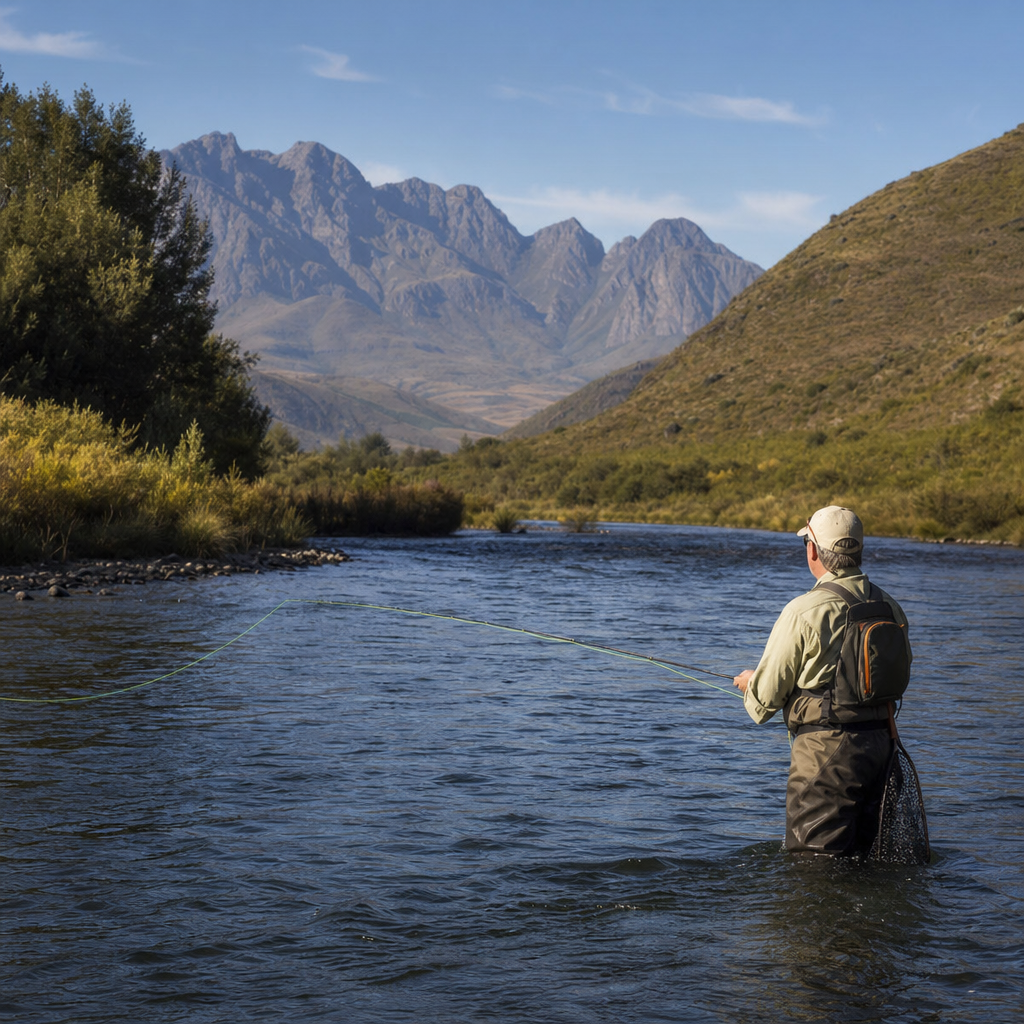
If trout are the imported headline species, yellowfish are the indigenous soul of South African fly fishing. Smallmouth yellowfish and largemouth yellowfish have become essential targets for serious anglers, and the best-known systems include sections of the Vaal River, the Orange River, and connected impoundments such as Sterkfontein Dam. Smallmouth yellowfish are powerful, current-loving fish that often feed on aquatic invertebrates in clear riffles and runs. On fly, they reward drag-free drifts, compact indicator rigs, Euro-style nymphing, and well-presented dry-dropper combinations.
Largemouth yellowfish are a different proposition. They are apex predators, less abundant, and usually targeted with streamers near structure, drop-offs, or current transitions. Landing one on fly is a major achievement. For most visiting anglers, however, the Vaal’s smallmouth fishery is the best entry point. It offers wadable sections, drift-boat options in some areas, and guides with highly refined approaches to local flows. Productive flies include caddis pupa, small mayfly nymphs, rock worm imitations, and neutrally toned patterns that match the river’s natural food base.
| Region | Primary species | Best season | Typical methods |
|---|---|---|---|
| Dullstroom, Mpumalanga | Rainbow and brown trout | Autumn to spring | Stillwater nymphs, buzzers, lures, float tube tactics |
| KZN Midlands and Drakensberg | Trout | Cool months, stable flows | Dry flies, nymphing, small stream methods |
| Eastern Cape Highlands | Brown and rainbow trout | Spring to autumn | Stealthy river fishing, terrestrials, streamers after rain |
| Vaal and Orange systems | Smallmouth and largemouth yellowfish | Late spring to autumn | Nymphing, dry-dropper rigs, streamer fishing |
| Western Cape estuaries | Grunter, leerfish, kob | Warm months, tidal windows | Sight fishing, baitfish patterns, shrimp imitations |
Yellowfish also matter from a conservation standpoint. They are native, ecologically important, and central to South Africa’s movement toward valuing indigenous species on fly. Good guides emphasize careful handling, strong but appropriate tackle, and seasonal awareness around spawning. For anglers researching fly fishing in Africa, this is one of South Africa’s clearest advantages: few places offer such accessible freshwater sight fishing for strong native fish.
Western Cape estuaries and saltwater fly options
South Africa’s premier fly fishing locations are not limited to freshwater. The Western Cape, along with parts of the Eastern Cape and KwaZulu-Natal coast, offers excellent estuary and inshore fly fishing. Western Cape estuaries are especially appealing for technical anglers because success often depends on reading tides, light angles, water temperature, and fish movement rather than covering maximum water. Grunter are the classic challenge fish: wary, shallow-water feeders often targeted with subtle shrimp patterns on long leaders. Accurate placement ahead of a tailing or cruising fish is critical, and a poor first cast usually ends the opportunity.
Leervis, also called garrick or leerfish, are more aggressive and often take baitfish patterns stripped quickly near channels, drop-offs, or bait schools. Kob can be targeted in lower light or deeper channels with larger flies. These fisheries are tide-dependent, and local knowledge makes a major difference. A guide who knows when a system starts pushing clean water over a bank can save an entire day of trial and error.
For a South Africa hub article under Africa fly fishing destinations, the coastal category is important because it shows the country’s unusual range. An angler can spend several days on trout and then finish the trip chasing estuary predators with the same travel infrastructure. Few destinations on the continent provide that level of contrast with such manageable logistics.
Planning seasons, access, and a multi-stop itinerary
The best time for fly fishing in South Africa depends on species and region. Trout generally fish best in cooler conditions, though local hatches and water levels matter more than a simple national calendar. Yellowfish peak when water temperatures are favorable and flows are fishable, usually from spring into autumn. Estuaries are often best in warmer months around specific tidal windows. Because South Africa spans multiple climatic zones, there is almost always a productive option somewhere in the country.
Access is the factor international anglers underestimate most. Many prime trout dams and streams lie on private property, and some yellowfish beats are guide-managed or controlled through clubs and lodges. Secure permission in advance, confirm whether wading, kick boats, or motors are allowed, and ask about catch limits even if you intend to release fish. Regulations and norms vary by fishery. Good outfitters handle this efficiently and can package accommodation, access, and guiding in one plan.
A practical first itinerary is straightforward: start in Johannesburg, fish Dullstroom for two or three days, move to the Vaal for yellowfish, then continue either to KwaZulu-Natal for trout and scenery or to the Western Cape for estuary fishing. That route demonstrates why South Africa is the premier hub within African fly fishing. It offers diversity, dependable services, and enough high-quality water to match almost any angling preference. If you are exploring Africa fly fishing destinations, begin with South Africa, choose your target species carefully, and build the trip around season, access, and local guidance. Do that, and you will fish not just famous names, but the right water at the right time.
Frequently Asked Questions
What makes South Africa one of the best fly fishing destinations in Africa?
South Africa stands out because it combines exceptional fishing variety with the kind of travel infrastructure that makes a serious fly fishing trip far easier to plan and execute. In one country, anglers can target trout in cool mountain streams and highland stillwaters, yellowfish in warm inland rivers, bass in impoundments, and even saltwater species in estuaries and along the coast. That breadth is unusual anywhere in the world, and it is especially important within the broader Africa fly fishing category, where logistics can often be more challenging and destination options more specialized.
Another major advantage is accessibility. South Africa has strong domestic transport links, established tourism services, quality accommodations, and a deep network of professional guides, lodges, outfitters, and fly shops. For traveling anglers, that translates into more reliable trip planning, better local knowledge, easier gear support, and the ability to structure anything from a self-drive trout circuit to a fully guided multi-species itinerary. Whether you are a beginner looking for a comfortable introduction or an experienced angler wanting technical sight-fishing and species diversity, South Africa offers a practical and rewarding base for a world-class fly fishing trip.
What are the premier fly fishing locations in South Africa?
Several regions consistently rank among the top fly fishing areas in South Africa, and each offers a distinct style of angling. The Eastern Cape Highlands are widely regarded as a premier trout destination, known for scenic mountain streams, well-managed stillwaters, and a strong lodge culture centered around fly fishing. This region appeals to anglers who enjoy classic trout water, dry-fly opportunities, and peaceful high-country landscapes. KwaZulu-Natal also has an established trout scene, particularly in the Midlands and Drakensberg foothills, where rivers and dams provide both moving-water and stillwater options.
For indigenous freshwater species, the Vaal River is one of the most respected yellowfish fisheries in the country. Smallmouth yellowfish in particular have earned an international reputation as outstanding fly rod targets because they are hard-fighting, often visible, and well suited to nymphing, dry-dropper techniques, and sight-fishing approaches. The Orange River system also provides important yellowfish opportunities in larger, more powerful water. Anglers interested in warmwater species often look to dams and river systems that hold bass, while estuarine and coastal areas create opportunities for saltwater fly fishing. Places such as the Breede system, certain Eastern Cape estuaries, and other productive tidal waters can offer exciting sessions for species that feed aggressively in shallow water. The best location ultimately depends on whether your priority is trout, yellowfish, bass, or mixed-species fishing across multiple environments.
Which fish species can you target on fly in South Africa?
South Africa offers one of the broadest species lists available to fly anglers on the continent. Trout, including rainbow and brown trout, remain a major draw in cooler highland areas, especially in streams and stillwaters managed for quality fishing. These fisheries can provide everything from delicate dry-fly presentations on small rivers to deep stillwater tactics with nymphs, streamers, and lures. For many visiting anglers, however, the real signature species are yellowfish. Smallmouth yellowfish are especially prized because they combine strong runs with technical freshwater fly fishing, while largemouth yellowfish can offer a more specialized and often trophy-focused experience in certain systems.
Beyond trout and yellowfish, South Africa also supports bass fisheries, both largemouth and smallmouth in some waters, along with carp and barbel in selected systems for anglers who enjoy unconventional or powerful freshwater targets. In estuarine and saltwater settings, the species list expands even further depending on season and location. Anglers may encounter aggressive baitfish predators and estuary species that respond well to baitfish patterns, shrimp imitations, and stripping techniques. This multi-species potential is one of South Africa’s strongest advantages: you can build a trip around one quarry or structure a broader itinerary that samples several fisheries and techniques in a relatively compact timeframe.
When is the best time of year to go fly fishing in South Africa?
The best time depends on the region, elevation, target species, and the specific style of fishing you want to prioritize. Trout fishing is often at its most appealing during the cooler months or shoulder seasons in the highlands, when water temperatures are favorable and insect activity can support excellent dry-fly fishing. Spring and autumn are especially popular in many trout areas because they balance comfortable weather with good fish activity, although some stillwaters can fish very well across a wider seasonal window. Summer can produce strong fishing in mountain streams, but rainfall patterns and localized weather need to be considered, especially in areas susceptible to changing river levels.
Yellowfish fisheries are generally best when water temperatures rise and fish feed actively, which often makes the warmer months productive. Clear water conditions are particularly important for sight-fishing, so river flow and seasonal weather trends matter as much as the calendar. Estuary and saltwater fly fishing can also be highly seasonal, with certain periods favoring specific species movements and feeding patterns. Because South Africa spans multiple climatic zones, there is no single nationwide “best month.” A smart approach is to choose your target species first, then match your itinerary to the region and season that historically fish best for that species. If you want a mixed trip, a local guide or specialist outfitter can help you sequence destinations to take advantage of the strongest windows.
Do you need a guide for fly fishing in South Africa, or can you plan a trip independently?
You can absolutely plan parts of a South African fly fishing trip independently, especially if you are comfortable researching access rules, driving between destinations, and adapting to unfamiliar water. One of the country’s strengths is that independent travel is far more feasible here than in many other African fishing destinations. Roads, accommodations, rental vehicles, and support services are generally strong, and in established fishing regions there is enough local infrastructure to make self-guided travel realistic for experienced anglers.
That said, hiring a guide is often the fastest way to improve both efficiency and success, particularly if you are targeting yellowfish, exploring private trout waters, or trying to combine multiple fisheries in one trip. Guides help with access, licensing where required, local etiquette, seasonal tactics, water selection, fly choice, and reading conditions that may not be obvious to visitors. They can also save you valuable time by steering you away from unproductive water and toward stretches or stillwaters that are fishing well at that moment. For first-time visitors, a hybrid approach works extremely well: use guides for technically demanding or unfamiliar fisheries, then add a few self-guided days in regions where access and logistics are straightforward. This gives you both local expertise and the freedom to explore at your own pace.