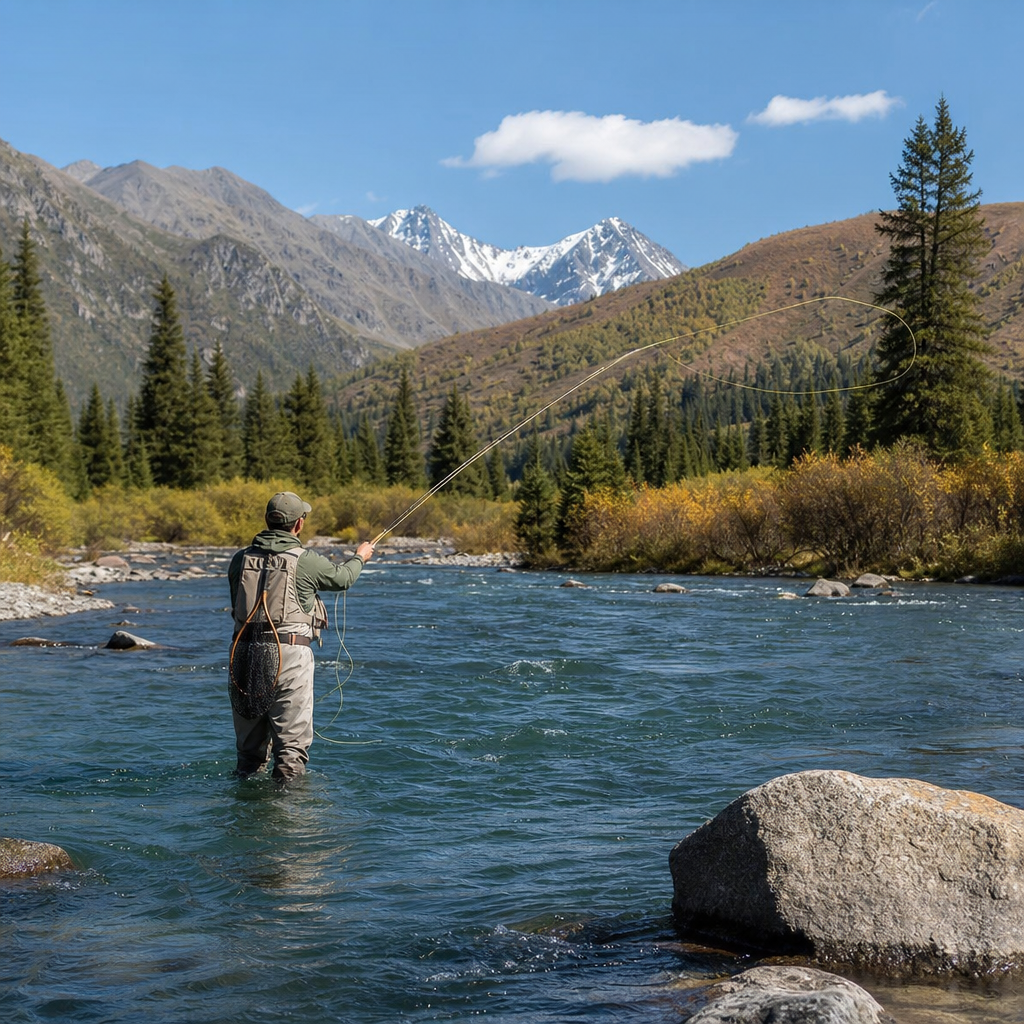
Fly fishing in Kazakhstan combines vast mountain waters, lightly pressured trout habitat, and a travel experience that still feels exploratory even for anglers who have fished marquee rivers in Europe or North America. For anyone building a serious list of fly fishing destinations in Asia, Kazakhstan deserves a central place because it offers glacial freestone rivers, high-altitude lakes, tailwater-style stretches below reservoirs, and remote tributaries where presentation matters more than pattern hype. In practical terms, fly fishing means casting an artificial fly with a weighted line, matching food sources such as mayflies, caddis, stoneflies, baitfish, or terrestrials, and managing drift, depth, and angle so the fly behaves naturally. Kazakhstan matters because it sits at the crossroads of Central Asian mountain systems, especially the Tian Shan and Altai regions, creating cold-water fisheries that are dramatically different from tropical or monsoon-driven Asian destinations.
When anglers ask what species define Kazakhstan, the conversation usually starts with wild trout and grayling, but the answer depends heavily on drainage, elevation, and season. Rainbow trout appear in some managed or stocked waters, while native and naturalized salmonids in remote rivers often reward stealth, accurate mending, and wading judgment more than distance casting. Water levels are shaped by snowpack and glacier melt, so the best strategy in June may fail in September. That variability is exactly why this hub matters within a broader Asia fly fishing plan. Kazakhstan can anchor a multi-country itinerary, connect naturally to trips focused on Mongolia, Kyrgyzstan, or Russia’s Asian side, and serve both adventurous DIY anglers and travelers who prefer local guides for access, permits, and safety. I have found that the biggest mistake visitors make is assuming the country fishes like one uniform destination. It does not. Success comes from understanding regional differences, planning around runoff, and treating each river system as its own technical puzzle.
Why Kazakhstan stands out within Asia fly fishing
Across Asia, fly anglers often think first of taimen in Mongolia, mahseer in India, or salmonids in Japan. Kazakhstan belongs in that same conversation because it offers a rare balance of scale, biodiversity, and relative solitude. The country’s southeastern rivers near Almaty can be reached with less logistical complexity than many remote Asian fisheries, yet they still provide pocket water, riffles, plunge pools, and meadow sections ideal for dry-dropper rigs, Euro nymphing, and small streamer tactics. In the east, waters influenced by the Altai region hold cold, oxygen-rich flows that support trout and grayling in classic freestone environments.
Another reason Kazakhstan stands out is fishing pressure. On many rivers, trout are not conditioned to seeing endless drift boats or hundreds of artificial flies each week. That does not make them easy; it makes them honest. A poor approach still spooks fish, especially in clear summer water, but a careful upstream presentation often gets a cleaner response than on famous, heavily trafficked destinations. This is valuable for intermediate anglers refining line control and for experienced anglers who want technical fishing without crowds. As an Asia hub, Kazakhstan also demonstrates the continent’s diversity: not all Asian fly fishing is jungle rivers, giant predators, or urban managed beats. Central Asia offers high-country trout fishing with alpine scenery and distinct Soviet, nomadic, and modern travel influences.
Best fly fishing regions and rivers in Kazakhstan
The most productive fly fishing in Kazakhstan is concentrated in mountain and foothill waters. The Almaty region is the usual starting point because of its access to the Ile Alatau and nearby river systems. Small to medium rivers there provide trout water that rewards short casts, high sticking, and dry flies during insect activity. Early season flows can be strong with snowmelt, but by late summer many sections become wadable and visually readable. Tributaries with broken pocket water are especially useful when main stems run high or off-color.
Eastern Kazakhstan deserves equal attention for anglers willing to travel farther. Rivers tied to the Altai landscape often feel more remote and can produce memorable grayling fishing. Grayling are frequently underrated by traveling anglers, yet on a fly rod they are ideal quarry: surface-oriented, willing to hold in seams and tailouts, and sensitive to drag. High mountain lakes also offer opportunities when rivers are blown out. In stillwaters, a balanced leech, chironomid setup, or stripped baitfish imitation can outperform standard river patterns. Reservoir outflows and controlled sections can fish like tailwaters, with more stable temperatures and extended feeding windows.
| Region | Typical Water Type | Primary Species | Best Window | Most Effective Tactics |
|---|---|---|---|---|
| Almaty southeast | Freestone rivers, tributary streams | Trout | July to September | Dry-dropper, indicator nymphing, small streamers |
| Eastern Kazakhstan | Remote mountain rivers, alpine lakes | Grayling, trout | June to early October | Dry flies, tight-line nymphing, lake leeches |
| Reservoir outflows | Controlled cold-water sections | Trout | Spring and autumn | Small nymphs, midge imitations, streamer swings |
| High-altitude lakes | Stillwater margins and drop-offs | Trout | Ice-out through late summer | Chironomids, damsel nymphs, slow retrieves |
If you are structuring a broader Asia destination plan, Kazakhstan works well as the trout-and-grayling cornerstone. It contrasts sharply with warmwater Asia destinations and pairs especially well with articles on Mongolia, Kyrgyzstan, and Japan because each country demands different presentations, flies, and travel logistics.
Species, seasonal timing, and reading conditions
The question “when is the best time for fly fishing in Kazakhstan?” has a direct answer: most visiting anglers should target mid-summer through early autumn, usually July to September, when runoff moderates, roads are more reliable, and insect life is consistent. However, local variation matters. In years with heavy snowpack or rapid warming, June can bring difficult flows on freestone systems. In drought years, late summer can mean lower, clearer water and more selective fish. If your priority is aggressive fish rather than ideal weather, shoulder-season periods in spring or early autumn can be excellent, especially below reservoirs or on larger rivers with more stable flow.
Species behavior drives tactical choices. Trout in clear mountain streams often sit behind boulders, along undercut banks, and at the heads of pools where oxygen and food intersect. Grayling commonly pod in softer seams and glide water and rise confidently during mayfly or caddis activity. During bright midday periods, nymphs typically outfish dries unless terrestrials are active. After summer storms, a streamer can be the most efficient search tool because slight color in the water lets larger fish move without exposing themselves. I have repeatedly found that visitors overcomplicate fly selection and underemphasize depth. In Kazakhstan, as in most trout systems, a correctly sized nymph at the right depth beats an exact hatch match drifting too high in the column.
Reading conditions starts with temperature and clarity. Cold morning water in high-country streams may delay surface feeding, so starting with a perdigon, pheasant tail, or small stonefly nymph is sensible. As the sun lifts and insects hatch, elk hair caddis, parachute Adams styles, and foam attractors begin to matter. Wind can help on lakes by concentrating food along shorelines, but on rivers it complicates drag and leader turnover, making heavier dry-dropper rigs more practical than delicate single dries. Always adjust weight incrementally. Too much split shot snags the bottom and ruins drift; too little weight sends flies over feeding lanes.
Proven strategies, tackle, and local planning
A versatile setup for fly fishing in Kazakhstan is a 9-foot 5-weight rod for most river work, paired with a floating line and leaders from 9 to 12 feet. Add a 3-weight or 4-weight for smaller tributaries if you enjoy lighter presentations, and a 6-weight if you expect wind, larger streamers, or lake fishing. Waders are useful even in summer because snow-fed rivers stay cold, and felt-free sticky rubber soles with studs are safer on slick rock in jurisdictions where felt is discouraged. Pack polarized glasses, a staff for strong current, and layered clothing because mountain weather can shift from sun to sleet in one afternoon.
For flies, keep the base system simple and adaptable. Bring caddis dries, Adams variants, small stimulators, black and olive woolly buggers, perdigons, hare’s ear nymphs, pheasant tails, copper johns, midge patterns, and a few jig-style stonefly nymphs. On lakes, leeches, chironomids, and small baitfish patterns matter. Technique should match water type. In pocket water, use short-line control and keep as much fly line off the surface as possible. In runs and seams, an indicator rig helps maintain depth over mixed current speeds. On calmer glides, lengthen the leader, reduce false casting, and approach from below with low profile movements.
Planning is the other half of success. Some rivers require local knowledge for access, border awareness, or private permissions. A guide is valuable not because Kazakhstan is impossible to fish independently, but because distances are large, roads can be rough, and translation issues affect permits, lodging, and emergency response. Responsible anglers should confirm regulations, catch limits, and protected-area rules before fishing. Pinch barbs, minimize fish handling, and avoid overplaying trout in warm conditions. If you are building internal destination research, Kazakhstan should lead readers onward to deeper country pages on Central Asia, mountain trout tactics, and region-specific packing lists. Start with one accessible watershed, fish it thoroughly, take notes on flow and insect timing, then expand. That measured approach turns Kazakhstan from an intimidating map into one of Asia’s most rewarding fly fishing destinations.
Kazakhstan rewards anglers who prepare for variety instead of chasing a single famous river. The country’s real strength is its range: alpine streams near major access points, remote eastern grayling water, productive lakes, and controlled cold-water sections that extend opportunity beyond peak summer. For Asia-focused travelers, that makes Kazakhstan more than a side trip. It is a foundational destination that shows how diverse fly fishing across the continent can be.
The key lessons are straightforward. Time your trip around runoff, usually aiming for July through September unless you have a specific shoulder-season plan. Match tactics to water type rather than forcing one method everywhere. Prioritize depth control, stealth, and local access knowledge over obsessing about obscure fly patterns. Carry a practical trout kit, expect fast-changing mountain weather, and treat conservation rules seriously. Those habits consistently produce better fishing and a safer trip.
If you want a destination that still offers discovery, technical trout water, and a strong place within a broader Asia fly fishing circuit, Kazakhstan belongs on your list. Use this hub as your starting point, narrow your target region, and begin planning around season, species, and access. The anglers who do that homework usually leave with more than fish photos; they leave with a new benchmark for what fly fishing in Asia can be.
Frequently Asked Questions
What makes Kazakhstan such a compelling fly fishing destination compared with better-known fisheries in Europe or North America?
Kazakhstan stands out because it offers a rare combination of scale, variety, and relatively light angling pressure. In one trip, anglers can move between glacial freestone rivers, high-elevation lakes, reservoir-influenced tailwater-style sections, and remote tributaries that feel genuinely exploratory. That diversity matters because it creates options for different skill levels, seasons, and tactics. Some waters reward classic dry-fly presentations, while others are better suited to nymphing, streamers, or careful sight-fishing in clear mountain flows.
Another major advantage is that many fisheries still retain a sense of discovery. Unlike famous rivers in Western Europe or the Rocky Mountain West, Kazakhstan’s better trout waters are not universally cataloged, crowded, or over-fished. That does not mean the fishing is easy; in fact, less-pressured fish can still be selective in clear water, especially in smaller tributaries. But it does mean anglers often encounter stretches where fish behavior is shaped more by natural conditions than by constant human traffic. For experienced fly fishers, that is a huge part of the appeal.
The country’s geography also plays a central role. Mountain systems in southeastern and eastern Kazakhstan create cold, oxygen-rich habitat that supports trout and other salmonids in waters that can range from pocket water and plunge pools to meadow runs and broad riffles. The result is a destination that offers both technical fishing and visual drama. For anglers looking beyond the usual global shortlist, Kazakhstan deserves serious attention not as a novelty, but as a legitimate, high-quality fly fishing destination in Asia.
Where are the best types of fly fishing water to target in Kazakhstan?
The best water depends on the experience you want, but several categories consistently deserve attention. First are the glacial freestone rivers in the mountain regions. These are often the most exciting places for anglers who enjoy reading moving water, covering structure, and adapting quickly. Expect broken pocket water, boulder gardens, seams, undercut banks, and fast oxygenated runs where trout hold in feeding lanes that shift with flow and light. These rivers can fish exceptionally well with dry-dropper rigs, tight-line nymphing setups, and small streamers during lower light periods.
Second, high-altitude lakes can be outstanding, particularly for anglers who appreciate visual fishing and more deliberate presentations. In these systems, trout often cruise shorelines, drop-offs, inlets, and shoals, feeding on midges, leeches, scuds, and seasonal terrestrials. Wind direction, water clarity, and the timing of insect activity become especially important. Early and late in the day are often productive, but cloud cover can extend feeding windows. A lake that appears empty at midday can suddenly come alive when light angles change and fish move shallow.
Third, tailwater-style sections below reservoirs or dams can provide more stable temperatures and flows than nearby freestones. These stretches often reward precise nymphing, careful dead drifts, and attention to subtle current changes. Because food availability can be more consistent, fish may hold predictably, but they can also become selective. Finally, do not overlook small remote tributaries. These may not hold the largest fish, but they often offer the purest technical fishing. In tiny clear streams, long leaders, accurate casts, stealthy movement, and first-drift success matter far more than aggressive false casting or constantly changing flies.
What fly fishing strategies work best in Kazakhstan’s mountain rivers and remote tributaries?
The most effective strategy is to match your approach to water type rather than relying on one favorite technique all day. In larger mountain freestones, start by identifying feeding structure: current seams, cushion water in front of rocks, plunge pools, foam lines, and soft edges beside heavier current. Trout in these systems often have short feeding windows and limited lanes, so success depends on getting the fly into productive water quickly and naturally. A dry-dropper rig is an excellent searching method because it covers surface and subsurface zones while allowing you to fish efficiently through mixed pocket water.
In deeper runs and cooler conditions, nymphing is often the most consistent producer. Weighted nymphs or two-fly rigs can be very effective when drifted close to the bottom through slots, drop-offs, and tailouts. Strike detection is critical because takes are frequently subtle in clear, cold water. If fish are holding deeper or if flows are higher from snowmelt, adding weight or changing angle and depth usually matters more than making dramatic fly changes. Many anglers fail not because they chose the wrong pattern, but because they never reached the trout’s level.
On smaller tributaries, stealth becomes the primary strategy. These fish may be less pressured, but they are often extremely alert because the water is shallow and clear. Approach from downstream whenever possible, keep a low profile, and make the first cast count. Short accurate casts with high-quality drifts outperform long flashy presentations. In these streams, small attractor dries, compact nymphs, and lightly weighted droppers often work better than oversized patterns. Presentation matters more than pattern selection in many of Kazakhstan’s small waters, especially when fish have only a brief moment to inspect the fly before deciding.
Streamer fishing can also be productive, particularly in larger rivers, deeper pools, or under overcast conditions when bigger fish become more territorial. Fish streamers across current seams, through undercut structure, and along transitions between fast and soft water. Vary retrieve speed until you find the mood of the fish. Overall, the most successful anglers in Kazakhstan tend to stay flexible, fish methodically, and let water character dictate tactics.
When is the best time to go fly fishing in Kazakhstan, and how do seasonal conditions affect tactics?
The best timing usually depends on elevation, snowpack, and the type of water you plan to fish. In general, the most reliable fly fishing windows are from late spring through early autumn, but within that broad period conditions can change dramatically. Early season can be productive on lower and more stable waters, especially tailwater-style stretches and lakes that warm before the highest mountain rivers settle down. However, runoff from snowmelt may make glacial freestones cold, high, and difficult to fish effectively. During this period, anglers often do better by targeting softer edges, slower seams, side channels, and any water with improved clarity.
Summer is typically the prime season for mountain fishing. As flows drop and water clears, more river structure becomes fishable and trout spread into classic holding lies. This is the time when dry-dropper rigs, terrestrial patterns, and technical sight-fishing can all come into play. High-altitude lakes also become far more accessible in summer, and insect activity tends to be more consistent. That said, midday fishing can slow under bright sun, especially in very clear tributaries, so mornings, evenings, and overcast windows are often your most productive periods.
Late summer into early autumn is often outstanding, particularly for anglers who prefer stable water and more deliberate fishing. Lower flows make fish easier to locate, though also easier to spook. Smaller flies, longer leaders, and more precise drifts may be necessary. Cooler nights and shortening days can improve trout activity, and streamer fishing may become more effective as fish respond to changing seasonal behavior. Wind can become an important factor on lakes and open valleys, so planning flexible daily sessions is wise.
No matter the month, anglers should prepare for rapid weather shifts in mountain regions. A productive day can change quickly with rain, melt, or temperature swings. The best strategy is to build adaptability into the trip: carry dry-fly, nymph, and streamer options; be ready to change waters based on clarity and flow; and avoid committing to a single tactic or location when the country offers multiple fishable environments.
What gear, flies, and trip planning considerations are most important for a successful fly fishing trip in Kazakhstan?
A versatile setup is the smartest choice because Kazakhstan’s fisheries are so varied. For most river fishing, a 9-foot 4- or 5-weight rod handles a wide range of conditions, from dry flies on tributaries to nymphing on medium-sized freestones. If you expect larger rivers, heavier wind, or more streamer fishing, a 6-weight is a valuable secondary rod. For lakes, especially at altitude where wind can be a constant factor, a 5- or 6-weight often gives better line control and casting stability. A reliable reel with a smooth drag is useful, particularly if you may encounter stronger fish in bigger water or stillwater environments.
Your fly box should cover attractor dries, mayfly and caddis imitations, terrestrials, beadhead nymphs, slim natural nymphs, small leeches, and a compact range of streamers. In many of Kazakhstan’s clear waters, natural drifts and sensible sizing matter more than carrying huge numbers of hyper-specific patterns. Bring enough variation in weight and profile to adjust depth and visibility. Long leaders and fluorocarbon tippet are especially helpful in low, clear tributaries and lake edges where fish inspect flies carefully.
From a clothing and wading standpoint, think in layers. Mountain weather can shift from warm sun to cold wind or rain in a matter of hours. Breathable waders, quality boots with strong support, and a wading staff are worth serious consideration because riverbeds can