Catch and release is a fisheries conservation practice built on a simple idea: return fish alive so they can continue growing, spawning, and supporting healthy waters. In practical terms, it means minimizing the stress and physical injury caused during capture, handling, and release. I have spent enough dawns on trout streams, bass lakes, and tidal flats to know that good intentions are not enough; technique determines whether a released fish swims away strong or drifts off exhausted. For anglers, guides, and fishery managers, minimal-impact catch and release matters because many popular fisheries depend on released fish surviving at high rates, especially where harvest limits are tight, native stocks are pressured, or water temperatures are rising.
The phrase “minimal impact” has a specific meaning. It does not mean merely letting a fish go. It means reducing fight time, avoiding damage to the gills and protective slime coat, limiting air exposure, choosing gear that shortens handling, and releasing fish only when conditions give them a realistic chance of survival. Research from agencies such as NOAA Fisheries, state wildlife departments, and peer-reviewed sportfish studies consistently shows that survival is highest when fish are landed quickly, kept in the water, and handled with wet hands or rubber nets. In other words, ethics and evidence point in the same direction.
Why does this topic deserve serious attention now? Because catch and release is no longer a niche practice. It is the default approach in many bass tournaments, fly-fishing destinations, saltwater flats fisheries, and wild trout regulations. At the same time, hotter summers, low dissolved oxygen, and heavy angling pressure make poor handling more costly. A fish released in ideal spring conditions may survive easily, while the same fish caught during an August heat wave faces stacked stressors. Understanding the right techniques is one of the few conservation actions anglers can apply instantly on every trip.
Minimal-impact catch and release also improves angling quality over time. Larger, older fish contribute disproportionately to reproduction in many species, and they create the memorable fisheries people travel for. Protecting those fish through better release practices helps sustain recruitment, age structure, and local economies tied to guiding, tackle, lodging, and access. If you want stronger fisheries, better future fishing, and methods respected by biologists and seasoned anglers alike, start by treating release as a technical skill, not an afterthought.
Choose Gear That Reduces Injury
The least harmful release begins before the cast. Tackle should match the fish and conditions closely enough to land fish efficiently. Using ultralight gear for oversized fish may feel sporting, but prolonged fights elevate blood lactate, increase exhaustion, and lower post-release survival. For trout in current, I prefer rods and tippet stout enough to guide fish to hand decisively. For bass around weeds or docks, heavier line prevents drawn-out struggles that leave fish spent. In saltwater, reel drag and rod power matter even more because species such as redfish, striped bass, and bonefish can accumulate damaging stress quickly when overplayed.
Hooks are equally important. Circle hooks are a proven best practice for many natural-bait applications because they are designed to catch in the corner of the jaw rather than deep in the throat or gut. That is why they are mandated or strongly encouraged in parts of the striped bass, billfish, and reef-fish world. For lures and flies, barbless hooks or pinched barbs speed unhooking and reduce tissue tearing. Barbless does not mean careless; it means maintaining steady pressure and fighting fish with intent. Rubber or knotless landing nets are another major upgrade because they support the fish without scraping off slime or fraying fins the way coarse nylon can.
Carry release tools where you can reach them without fumbling. Long-nose pliers, hemostats, line cutters, and dehookers should be standard. If you fish for toothy species, add jaw spreaders only when specifically appropriate and used carefully, since misuse can injure fish. The best release kit is boringly practical: net, pliers, cutters, thermometer, and a camera ready in advance. That preparation shortens the most dangerous part of catch and release, the handling window.
Landing and Handling Fish the Right Way
Once the fish is hooked, the goal is control without chaos. Keep steady pressure, avoid beaching fish on dry rocks or hot sand, and guide them into quieter water if possible. If a net is needed, net the fish headfirst and leave it in the water while you prepare to remove the hook. This single habit prevents many common mistakes. Fish breathe by moving water over their gills; prolonged air exposure interrupts that process and compounds the oxygen debt created during the fight. A useful rule repeated by many guides is “keep them wet,” but in practice that means planning every step before the fish leaves the water, if it needs to leave the water at all.
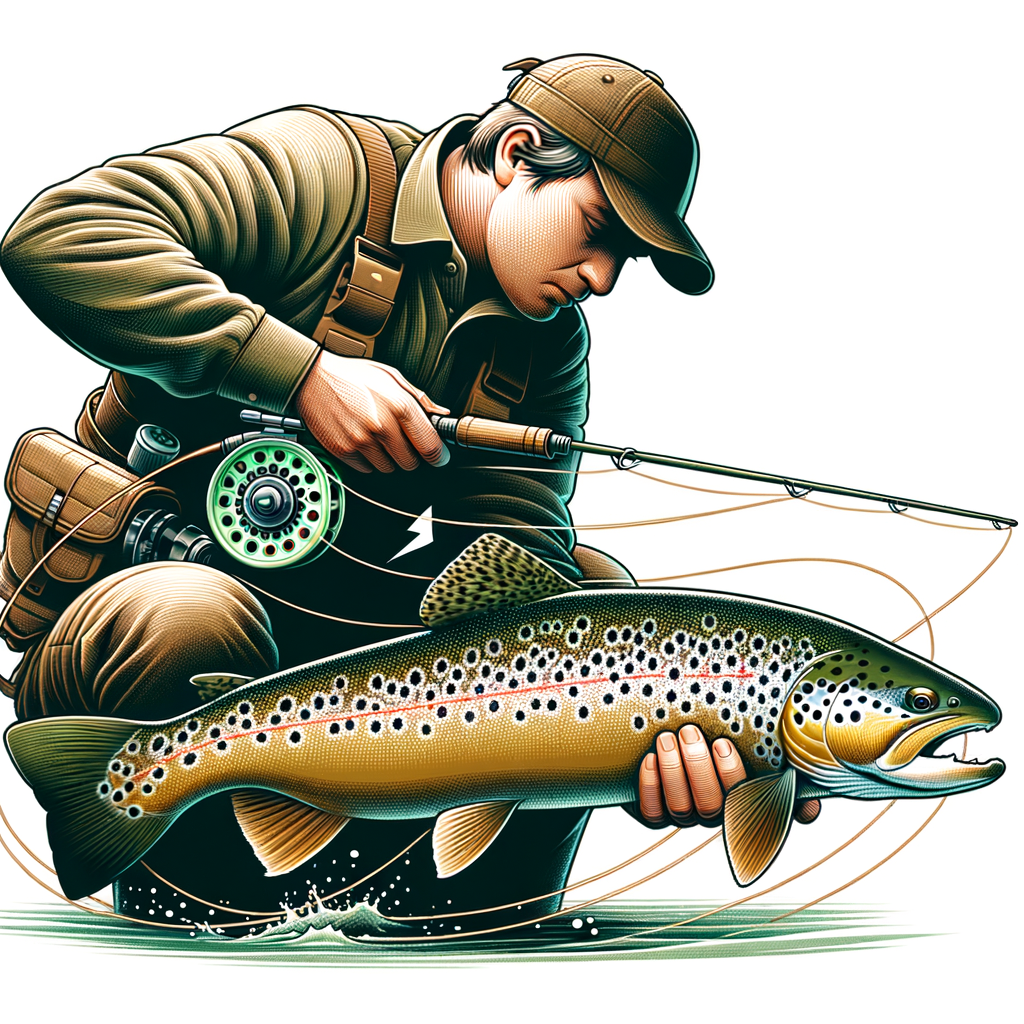
Handling technique must be species aware. Trout, salmon, and char are especially vulnerable because of delicate slime coats and sensitivity to warm water. Grip them gently, with wet hands, supporting the belly rather than squeezing the ribs. Bass are tougher, but lip-gripping large fish vertically for long periods can stress the jaw and connective tissue. Support heavy fish horizontally with a second hand under the body. Saltwater species add other complications: snook and tarpon should not be hauled onto hard decks; redfish and bonefish should stay in the water for photos whenever possible; and sharks or rays require specialized handling that keeps both the fish and angler safe.
Embedded hooks require judgment. If the hook is visible and easy to back out quickly, remove it cleanly. If the fish is deeply hooked, especially in the throat or stomach, cutting the line close to the hook is often safer than aggressive extraction. Multiple studies on freshwater and saltwater species have found that many fish can shed or encapsulate hooks over time, while forceful removal can cause immediate fatal bleeding. Blood from the gills is particularly serious. When I see bright red gill bleeding, I release the fish immediately rather than extending handling for a photo that may cost it any chance of recovery.
High-Risk Conditions and When Not to Fish
One of the most overlooked catch-and-release techniques is choosing not to fish under harmful conditions. Warm water holds less dissolved oxygen, and fish already operate near their physiological limits during summer heat. Trout are the classic example. Many anglers use 68 degrees Fahrenheit as a caution threshold and 70 degrees as a practical stop point for trout catch and release, though exact risk varies by species, elevation, and flow. Smallmouth bass, pike, and muskellunge can also experience elevated mortality in hot, stagnant water. In estuaries, low oxygen events and algae blooms increase danger even when surface temperatures appear manageable.
I rely on a stream thermometer as much as any fly box. If temperatures climb through the morning, I stop early. The same goes for unusually long release times caused by crowds, tournament pressure, or rough surf where fish are repeatedly tumbled. Cold conditions can create different issues. Ice crystals on gloves, frozen nets, or placing fish on snow can damage eyes, skin, and fins. Minimal impact means adapting your methods to the season rather than assuming release works the same way year-round.
| Situation | Main Risk | Lower-Impact Response |
|---|---|---|
| Trout stream above 68°F | Low oxygen and heat stress | Fish at dawn, shorten fights, or stop entirely if temperatures keep rising |
| Deep-water bass or reef fish | Barotrauma from pressure change | Use descending devices or venting only where trained and legal |
| Surf or rocky shoreline | Fish abrasion and delayed release | Use a net in calmer water and avoid dragging fish onto dry ground |
| Winter freezing conditions | Eye and skin damage | Keep fish submerged and avoid contact with ice, snow, or frozen gloves |
Depth-related stress deserves special attention. Reef fish, walleye, and some bass caught from significant depth can suffer barotrauma, where expanding gases affect buoyancy and internal organs. In those cases, simply tossing a fish back is not best practice. Descending devices, increasingly recommended by NOAA and Gulf reef-fish programs, return fish to depth so pressure normalizes. That is a concrete example of why “release” is not one-size-fits-all; species biology and capture depth directly shape the correct method.
Release Methods That Improve Survival
A proper release is calm, quick, and deliberate. If the fish is upright and breathing, hold it gently in the water facing into a light current or move the boat slowly forward so water passes naturally over the gills. Do not pump the fish back and forth aggressively; that can force water the wrong way across the gills and adds unnecessary stress. The aim is to let the fish regain equilibrium and swim off under its own power. If it rolls repeatedly, continue support only as long as needed, staying alert for predators in clear shallow water.
Photography is where many releases go wrong. Set the camera before landing the fish, agree on one or two quick shots, and keep total air exposure as low as possible. Some biologists and guides use a practical benchmark of under ten seconds at a time, with the fish re-submerged between shots if more time is needed. I have found that anglers who kneel at the water’s edge and frame the image first consistently get better fish photos and better releases. If conditions are harsh, skip the hero shot. A healthy release is the better trophy.
Boats create opportunities and hazards. On a bass boat, wet the measuring board and work efficiently. On a flats skiff, keep fish over the side, not flopping on a deck hot enough to burn your hand. On kayaks, use compact tools tethered in reach so you do not juggle a fish while searching compartments. For fly anglers, pre-crushing barbs and using single-hook patterns where legal can make in-water releases nearly effortless. For bait anglers, choosing circle hooks and avoiding gut-hooking species during stressful conditions may matter more than any post-capture trick.
If you fish tournaments or document catches for records, know the tradeoff. Livewells, weigh bags, and repeated transfers add stress despite modern aeration systems. Tournament organizations increasingly use immediate-release formats, penalties for dead fish, and fish care protocols because they recognize that handling standards affect both public credibility and fish survival. Recreational anglers should borrow that discipline. The fish does not care whether the delay comes from competition, social media, or indecision; the physiological cost is the same.
Species-Specific Best Practices and Common Mistakes
The best catch-and-release advice is always species specific. Wild trout benefit from barbless hooks, short fights, cold water timing, and in-water handling. Largemouth bass usually tolerate brief handling better, yet large females before and after spawning deserve careful horizontal support and fast release. Pike and muskellunge require long pliers, heavy leaders, and often large rubber nets because their teeth and rolling behavior can turn an easy release into a dangerous tangle. Bonefish and permit should never be dragged onto beaches for photos; their slime coat and internal stress response make that a textbook avoidable error. Tarpon present a special case, since very large fish are often released without removing them from the water at all.
Among the most common mistakes I see are dry hands, fish laid on boat carpet, delayed hook removal while someone searches for pliers, and the assumption that a fish that swims away is automatically fine. Delayed mortality is real. A fish may leave strongly and still die hours later from acidosis, infection, predator vulnerability, or organ stress. That is why evidence-based methods matter more than appearances. Another frequent error is using treble-hook lures in situations where fish are likely to engulf them deeply. Swapping to single hooks on some hard baits can reduce injury dramatically without ruining catch rates.
Regulations also matter. Some waters require artificial lures, barbless hooks, or mandatory release for specific species and seasons. Those rules are not arbitrary obstacles; they usually reflect known vulnerabilities in local stocks. Follow them carefully, and treat them as minimum standards rather than the ceiling of good practice. If you manage a club, guide service, or lodge, build fish handling into training, not just etiquette. Fisheries improve when technique becomes culture. For more on sustainable angling and fish habitat protection, connect this guidance with best practices on responsible wading, invasive species prevention, and local conservation regulations. Minimal-impact catch and release works best as part of a larger stewardship mindset.
Catch and release done well is one of the most practical conservation tools available to everyday anglers. The core principles are clear: use gear that lands fish quickly, choose hooks and nets that limit injury, keep fish in the water as much as possible, avoid risky temperatures and depth-related problems, and release fish only after they recover enough to swim away on their own. None of these steps is complicated, but together they make a measurable difference in survival. That difference is what protects wild trout streams, sustains bass lakes, and preserves high-value saltwater fisheries under increasing pressure.
The most important benefit is not abstract. Better release technique keeps more fish alive to spawn, grow larger, and be caught again. It also makes you a more competent angler because it forces preparation, efficient boat or bank management, and species-specific judgment. In my experience, anglers who take fish care seriously also notice more about water temperature, current, hook placement, and seasonal stress, which improves both success and stewardship. Conservation is rarely one dramatic act; it is usually a series of disciplined small choices repeated over years.
If you want immediate results, start with five habits on your next outing: carry proper pliers, pinch your barbs where appropriate, wet your hands before touching fish, monitor water temperature, and keep every release as short and calm as possible. Teach those habits to fishing partners and younger anglers, because fisheries are shaped collectively. Minimal-impact catch and release is not about denying the excitement of fishing. It is about earning it responsibly. Make these techniques standard practice every time you fish, and the waters you love will have a better chance to stay productive, resilient, and worth returning to.
Frequently Asked Questions
What does catch and release actually mean, and why does technique matter so much?
Catch and release is the practice of returning fish to the water alive so they can keep feeding, growing, and reproducing. The goal sounds simple, but the outcome depends heavily on how the fish is hooked, fought, handled, and released. A fish that swims away is not always a fish that survives. Stress builds quickly during capture, especially when the fish is played too long, handled with dry hands, exposed to air, or released before it has fully recovered. Good catch-and-release technique reduces physical injury to the mouth, gills, eyes, and protective slime coat while also limiting exhaustion and delayed mortality.
In real-world angling, minimal impact starts well before the hookset. It includes choosing the right tackle to land fish efficiently, using hooks that are easier to remove, keeping fish in the water as much as possible, and avoiding situations where water temperature or low oxygen make survival less likely. The central idea is that conservation is not just about letting a fish go; it is about giving that fish the best possible chance to survive after release. When anglers improve technique, catch and release becomes a meaningful fisheries tool rather than just a ritual.
What gear choices help reduce harm to fish during catch and release?
The best gear for catch and release is gear that lets you land fish quickly and handle them safely. Tackle that is too light often prolongs the fight, which can leave fish severely stressed and depleted. Matching rod, reel, line, and leader strength to the species and conditions helps bring fish in efficiently without unnecessary exhaustion. For many anglers, this is one of the most overlooked conservation decisions they make. A balanced setup protects both the fish and the angler’s ability to control the landing process.
Hooks also matter a great deal. Barbless hooks or hooks with pinched barbs are widely favored because they are easier to remove and typically cause less tissue damage. Circle hooks can be especially helpful when fishing natural bait because they tend to reduce deep hooking when used properly. Artificial-lure anglers often replace oversized or extra treble hooks with fewer or smaller hooks to simplify unhooking. Nets should be fish-friendly as well. Rubber or knotless landing nets are much gentler than traditional abrasive mesh, which can remove slime and damage fins. Basic tools such as forceps, hemostats, needle-nose pliers, and line cutters should always be within reach so hook removal can be done quickly and calmly.
Even small adjustments make a difference. Crimping barbs, organizing tools before the first cast, and avoiding overly long photo sessions all support a lower-impact approach. The right gear does not guarantee safe release, but it removes many of the common obstacles that lead to rough handling and delayed fish mortality.
How should you handle a fish properly to minimize stress and injury?
Proper handling begins with one rule: keep the fish in the water whenever possible. Water supports the fish’s body, protects its organs from unnecessary pressure, and allows it to keep moving water across its gills. If you need to touch the fish, wet your hands first. Dry hands, gloves, and rough surfaces can strip away the protective slime layer that helps shield fish from infection and disease. That slime coat is not a minor detail; it is one of the fish’s first defenses after release.
When lifting is necessary, support the fish gently and securely. Avoid squeezing the body or holding larger fish vertically by the jaw alone, especially species that are prone to jaw or internal injury. Instead, support the belly with the other hand so the fish remains level. Never put fingers into the gills or lift fish by the gill cover. Sensitive areas such as the eyes and gills should be treated as strictly off-limits. If the hook is easy to reach, remove it quickly with the fish partially submerged. If the fish is deeply hooked, cutting the line close to the hook is often safer than trying to force the hook out and causing major damage.
Air exposure should be kept as short as possible. A helpful benchmark many experienced anglers use is to think of air exposure as a brief exception, not part of the normal process. If you want a photo, prepare the camera first, lift the fish only when everything is ready, and return it to the water immediately. The less time a fish spends out of water, the better its chances of recovering strongly.
What is the best way to release a fish so it can recover and swim away strong?
A good release is controlled, patient, and based on the fish’s condition. After unhooking, hold the fish upright in the water and allow it time to regain balance and strength. In moving water, face the fish into the current so water can pass naturally over its gills. In still water, gently support it without pushing it back and forth aggressively. Contrary to what some anglers believe, forceful forward-and-back movement can do more harm than good. The objective is to let the fish ventilate normally and recover on its own terms.
Watch for signs of readiness. A fish that is prepared for release will usually hold itself upright, show steady gill movement, and begin making purposeful tail kicks. If it rolls, sinks, or seems disoriented, continue supporting it calmly. Recovery time varies by species, water temperature, fight length, and overall handling. Fish caught in warm water often need extra care because low oxygen and high temperatures increase stress dramatically. In those situations, even a careful release may not be enough, which is why many skilled anglers avoid targeting vulnerable species during heat waves or seasonal stress periods.
The final step is to let the fish leave under its own power. Do not toss it, drop it, or push it away before it is ready. A strong, self-directed departure is the best sign that your catch-and-release process worked as intended. While no release method can guarantee survival every time, patient recovery and a gentle release greatly improve the odds.
When should anglers avoid catch and release because conditions are too risky for fish survival?
Catch and release is not equally safe under all conditions. There are times when environmental stress is so high that even well-handled fish face poor survival odds. Warm water is one of the biggest concerns because it holds less dissolved oxygen while also increasing the fish’s metabolic stress. Trout, salmon, and other coldwater species are especially vulnerable when stream or lake temperatures rise beyond their comfort range. During summer heat, low flows, drought conditions, and prolonged calm weather, fish may already be near their physiological limits before they are ever hooked.
Deep-water capture can also create serious release problems. Fish brought up rapidly from depth may suffer barotrauma, which can affect buoyancy and internal organs. In saltwater and some freshwater fisheries, this requires species-specific knowledge and specialized handling practices. Spawning periods are another time for extra caution. Fish guarding nests or actively reproducing can be more vulnerable to stress, and repeated disturbance may reduce reproductive success even if the individual survives. Local regulations, seasonal closures, and best-practice advisories exist for a reason, and responsible anglers pay close attention to them.
If fish are showing signs of severe stress, if water temperatures are unsafe, or if repeated catches are clearly taking a toll on a fishery, the best conservation decision may be not to fish for that species at that time. Ethical angling includes knowing when to stop. Catch and release works best when anglers combine good technique with sound judgment about conditions, seasons, and the overall health of the water they enjoy.