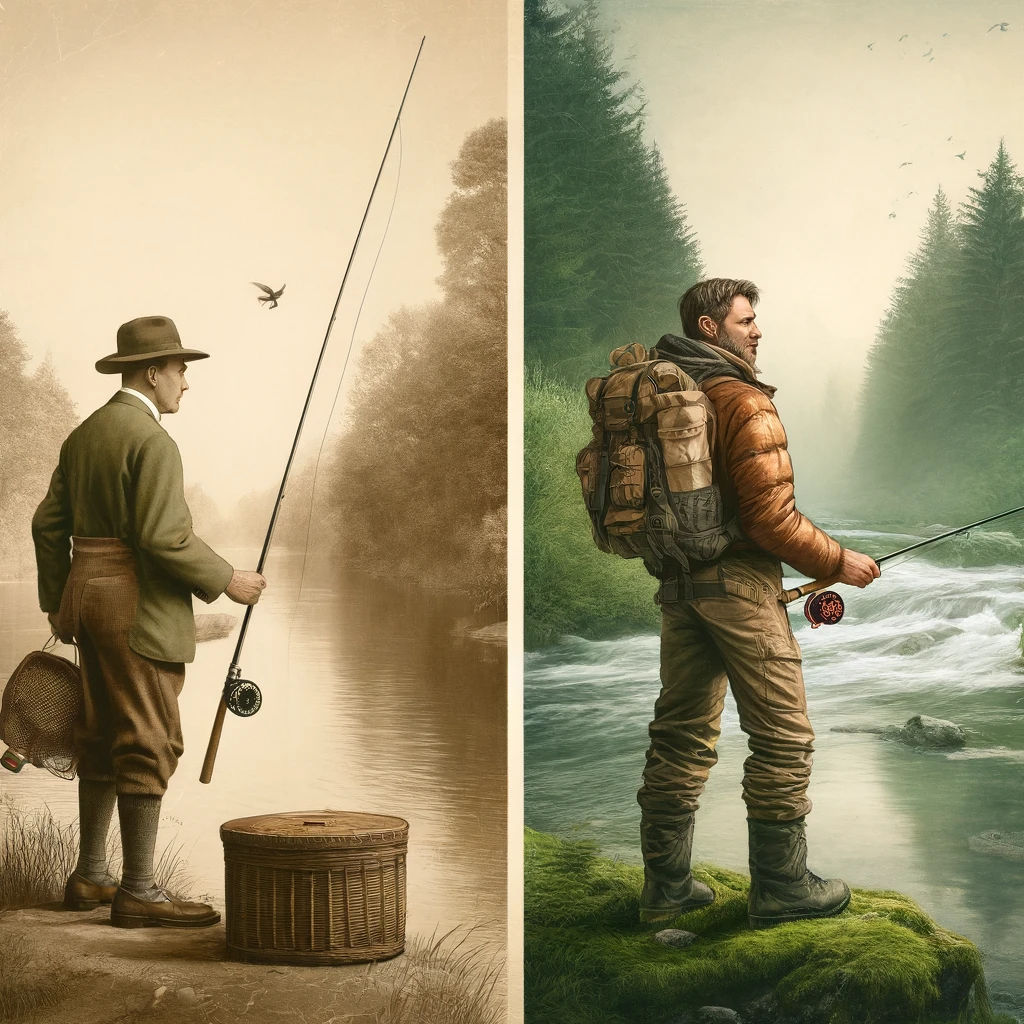
Fly fishing, like any specialized activity, has its own language. This guide will help you become familiar with the essential terms and phrases used in the fly fishing community, ensuring you’re well-prepared to communicate and understand the nuances of this captivating sport.
Basic Terms
1. Fly Rod
The fly rod is a crucial tool in fly fishing. It’s longer and more flexible than regular fishing rods, allowing for the unique casting technique needed to present the fly gently on the water.
2. Fly Reel
The fly reel is used to store the line and help with casting and retrieving the fly. It’s designed differently from spinning reels, emphasizing balance and ease of line control.
3. Fly Line
Fly lines are thicker and heavier than regular fishing lines, designed to carry the lightweight fly to the target. They come in various types, such as floating, sinking, and sink-tip lines.
4. Leader
The leader is a length of monofilament or fluorocarbon line that connects the fly line to the fly. It tapers from a thicker diameter to a thinner one, aiding in the natural presentation of the fly.
5. Tippet
The tippet is the thinnest part of the leader where the fly is tied. It’s crucial for a delicate and natural presentation, often needing replacement as it gets worn out or broken.
Essential Gear
6. Flies
Flies are artificial lures made to imitate insects or other food sources for fish. They come in various patterns, including dry flies (floating), wet flies (subsurface), nymphs (imitate immature insects), and streamers (imitate baitfish).
7. Waders
Waders are waterproof pants that keep you dry while standing in the water. They come in hip, waist, and chest varieties, made from materials like neoprene or breathable fabrics.
8. Wading Boots
Specialized boots worn with waders, providing traction and protection while walking in rivers or streams. They often feature felt or rubber soles.
9. Vest or Pack
A fly fishing vest or pack is used to carry gear, including flies, tools, and other essentials. Vests offer numerous pockets, while packs provide an alternative carrying method.
Casting Techniques
10. Backcast
The backcast is the part of the fly casting motion where the line is extended behind the angler before being propelled forward. It’s crucial for building line speed and achieving distance.
11. Forward Cast
The forward cast is the motion that propels the line forward, delivering the fly to the target. A smooth, controlled forward cast ensures accuracy and a gentle presentation.
12. False Cast
A false cast is when the angler keeps the line in the air without letting it touch the water. It’s used to change direction, lengthen the line, or dry a fly.
13. Roll Cast
The roll cast is a technique where the line is rolled out onto the water without a backcast. It’s useful in tight spaces or when there’s no room for a full backcast.
Fishing Techniques
14. Drift
Drift refers to the natural movement of the fly in the water, imitating the behavior of real insects. Achieving a drag-free drift is essential for convincing fish to strike.
15. Mend
Mending involves manipulating the fly line on the water to reduce drag and maintain a natural drift. It’s a crucial skill for effective fly presentation.
16. Set the Hook
Setting the hook is the motion made to secure the hook in the fish’s mouth when it bites. It’s a quick, upward lift of the rod tip.
17. Strip
Stripping is the act of retrieving the fly line by pulling it in with the hand. It’s used to impart action to streamers or attract fish with nymphs.
Fish and Insects
18. Hatch
A hatch refers to the emergence of aquatic insects from the water. Understanding hatches helps anglers match their flies to the natural food sources fish are targeting.
19. Riffle
A riffle is a shallow, fast-moving section of water with a rocky bottom. It’s often rich in oxygen and insect life, making it a prime spot for fishing.
20. Pool
A pool is a deeper, slower-moving section of water. Fish often rest in pools, making them good places to target.
Fly Patterns and Types
21. Dry Fly
Dry flies float on the water’s surface, imitating adult insects. They are often used when fish are seen feeding on the surface.
22. Wet Fly
Wet flies sink below the surface, imitating drowned insects or emerging larvae. They are effective when fish are feeding subsurface.
23. Nymph
Nymphs imitate immature aquatic insects living below the surface. They are often used with an indicator to detect strikes.
24. Streamer
Streamers mimic baitfish or larger prey items. They are retrieved with a stripping motion and are effective for larger fish.
Common Fly Fishing Knots
25. Clinch Knot
The clinch knot is used to tie the fly to the tippet. It’s simple, strong, and reliable.
26. Surgeon’s Knot
The surgeon’s knot is used to join two pieces of monofilament or fluorocarbon, such as connecting the leader to the tippet.
27. Loop Knot
A loop knot creates a loop at the end of the line, allowing the fly to move freely. It’s useful for streamers and nymphs.
Other Useful Terms
28. Strike Indicator
A strike indicator is a small, buoyant object attached to the leader, signaling when a fish strikes the fly. It’s commonly used in nymph fishing.
29. Leader Straightener
A tool used to remove kinks and curls from the leader, ensuring a smooth presentation.
30. Fly Box
A fly box is used to store and organize flies. It keeps them dry, secure, and easy to access.
31. Drag
Drag refers to the unnatural movement of the fly caused by tension in the line. Minimizing drag is crucial for an effective presentation.
32. Hatch Match
Matching the hatch means selecting a fly that closely resembles the insects currently emerging in the area. It increases the chances of fooling fish.
33. Tailwater
Tailwater refers to the section of a river below a dam. These areas often have consistent water temperatures and insect life, making them prime fishing spots.
34. Pocket Water
Pocket water is characterized by small, turbulent sections within a larger flow. These pockets often hold fish seeking refuge from stronger currents.
35. Spey Casting
A casting technique originating from Scotland, spey casting involves a roll cast with a longer, two-handed rod. It’s useful for casting in tight spaces and covering large distances.
Practical Tips
36. Practice Casting
Regular practice helps improve casting accuracy and distance. Set up targets in your yard or use a practice rod to refine your technique.
37. Observe Nature
Spend time watching the water and observing insect activity. Understanding the ecosystem enhances your fly selection and presentation.
38. Learn from Others
Join a local fly fishing club or take lessons from experienced anglers. Sharing knowledge and experiences accelerates learning.
39. Respect the Environment
Practice catch and release, minimize your footprint, and follow local regulations to preserve the fishing environment for future generations.
40. Have Patience
Fly fishing requires patience and persistence. Enjoy the process, and don’t get discouraged by early challenges.
Understanding fly fishing lingo is essential for beginners looking to immerse themselves in the sport. By familiarizing yourself with these terms and techniques, you’ll be better equipped to communicate with other anglers and enhance your overall fly fishing experience.

Advanced Techniques and Concepts
41. Double Haul
The double haul is an advanced casting technique that involves pulling on the fly line with the non-casting hand during both the backcast and forward cast. This increases line speed and distance, allowing for more accurate and powerful casts.
42. Presentation
Presentation refers to how the fly is delivered to the fish. A good presentation mimics the natural behavior of insects or prey, increasing the likelihood of a strike.
43. Drift Boat
A drift boat is a specialized fishing boat designed for river fishing. It allows anglers to cover large sections of water while maintaining a stable platform for casting.
44. Euro Nymphing
Euro nymphing is a technique that uses long rods, light lines, and heavily weighted nymphs to catch fish in fast-moving water. It’s highly effective for targeting fish in deep runs and riffles.
45. Fly Tying
Fly tying is the art of creating artificial flies by wrapping materials like feathers, fur, and thread around a hook. Many anglers tie their own flies to match specific hatches or conditions.
Fly Fishing Ethics
46. Catch and Release
Catch and release is a practice where fish are caught and then carefully released back into the water. It helps preserve fish populations and maintain the health of fisheries.
47. Leave No Trace
The Leave No Trace principle encourages anglers to minimize their environmental impact by packing out all trash, avoiding damage to vegetation, and respecting wildlife.
48. Barbless Hooks
Using barbless hooks makes it easier to release fish without causing significant injury. It’s a common practice among conservation-minded anglers.
Popular Fly Fishing Destinations
49. Montana
Montana is renowned for its pristine rivers and abundant trout. Popular spots include the Madison, Yellowstone, and Missouri rivers.
50. Colorado
Colorado offers diverse fishing opportunities in its many rivers and streams. The Gunnison, South Platte, and Colorado rivers are top destinations.
51. New Zealand
New Zealand is famous for its crystal-clear waters and large wild trout. The South Island, in particular, offers world-class fly fishing experiences.
52. Patagonia
Patagonia, located in Argentina and Chile, provides remote and scenic fishing adventures. Its rivers and lakes are home to trophy-sized trout and salmon.
Fly Fishing Legends
53. Izaak Walton
Izaak Walton, author of “The Compleat Angler,” is considered the father of modern fly fishing. His book, published in 1653, is a classic in angling literature.
54. Lee Wulff
Lee Wulff was a pioneering fly fisherman known for his conservation efforts and innovations in fly design. He advocated for catch and release and developed the Wulff series of dry flies.
55. Joan Wulff
Joan Wulff, a celebrated angler and author, is renowned for her expertise in fly casting. She has contributed significantly to the sport through her teaching and writing.
Tips for Success
56. Read the Water
Understanding how to read the water is crucial for locating fish. Look for features like seams, eddies, and structure where fish are likely to hold.
57. Match the Hatch
Matching the hatch means selecting flies that imitate the insects currently present on the water. Observing insect activity and choosing the right fly increases your chances of success.
58. Stay Stealthy
Fish are sensitive to noise and movement. Approach the water quietly, wear neutral colors, and minimize disturbance to avoid spooking fish.
59. Experiment with Flies
Don’t be afraid to experiment with different fly patterns and sizes. Fish can be unpredictable, and sometimes a change in fly can make all the difference.
60. Keep Learning
Fly fishing is a lifelong learning process. Stay curious, seek new knowledge, and be open to trying new techniques and methods.
Resources for Further Learning
61. Books and Magazines
Numerous books and magazines offer in-depth information on fly fishing techniques, fly tying, and destination guides. “The Orvis Fly-Fishing Guide” and “Fly Fisherman” magazine are excellent resources.
62. Online Forums and Communities
Join online forums and communities like The Fly Fishing Forum or Reddit’s r/flyfishing to connect with other anglers, share experiences, and ask questions.
63. YouTube Channels
Many YouTube channels provide tutorials and tips on fly fishing. Channels like Mad River Outfitters and Orvis Fly Fishing offer valuable insights and visual demonstrations.
64. Fly Fishing Schools
Consider enrolling in a fly fishing school or workshop. Hands-on instruction from experienced guides can accelerate your learning and improve your skills.
Conclusion
Fly fishing is more than just a sport; it’s a journey into the natural world, requiring patience, skill, and a deep appreciation for the environment. By familiarizing yourself with the lingo and techniques outlined in this guide, you’ll be well on your way to becoming a proficient fly angler. Remember, the most important part of fly fishing is to enjoy the experience, whether you’re catching fish or simply soaking in the beauty of nature.
Happy fishing, and tight lines!