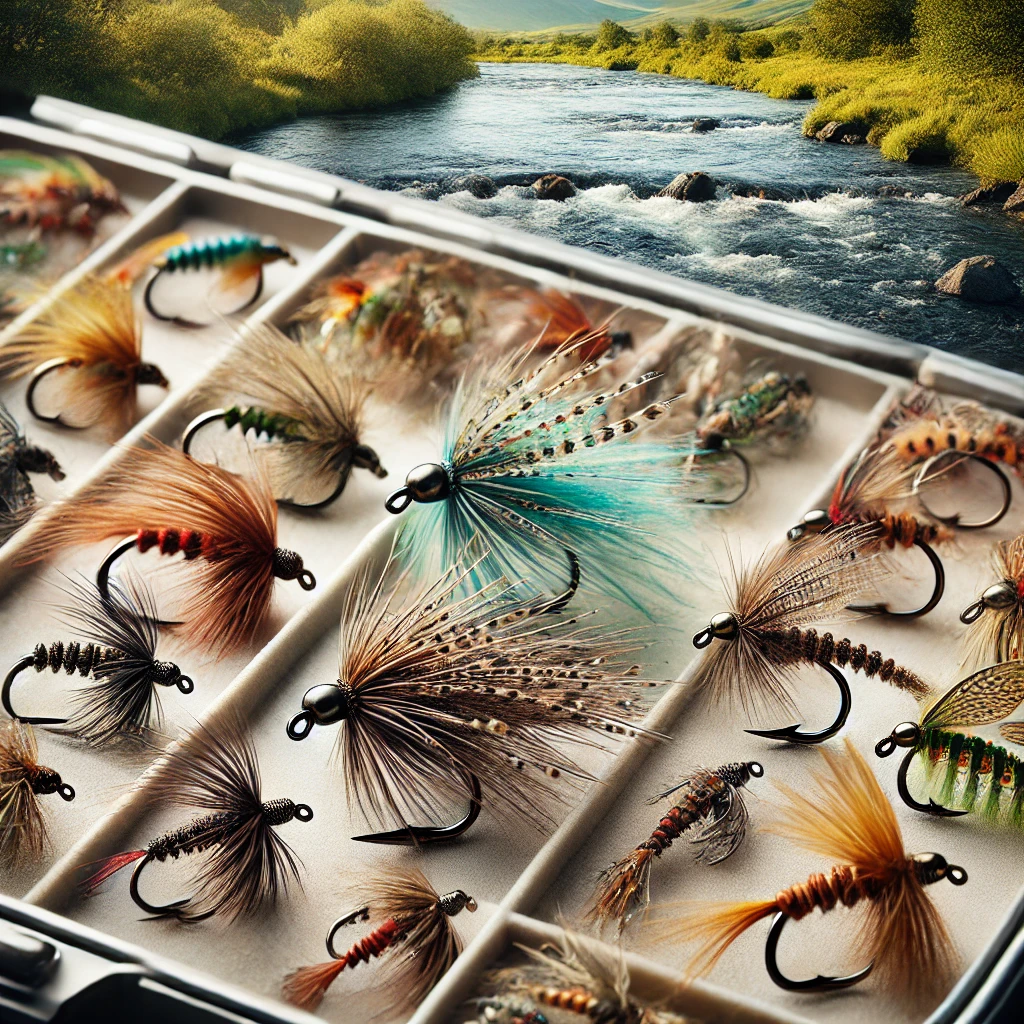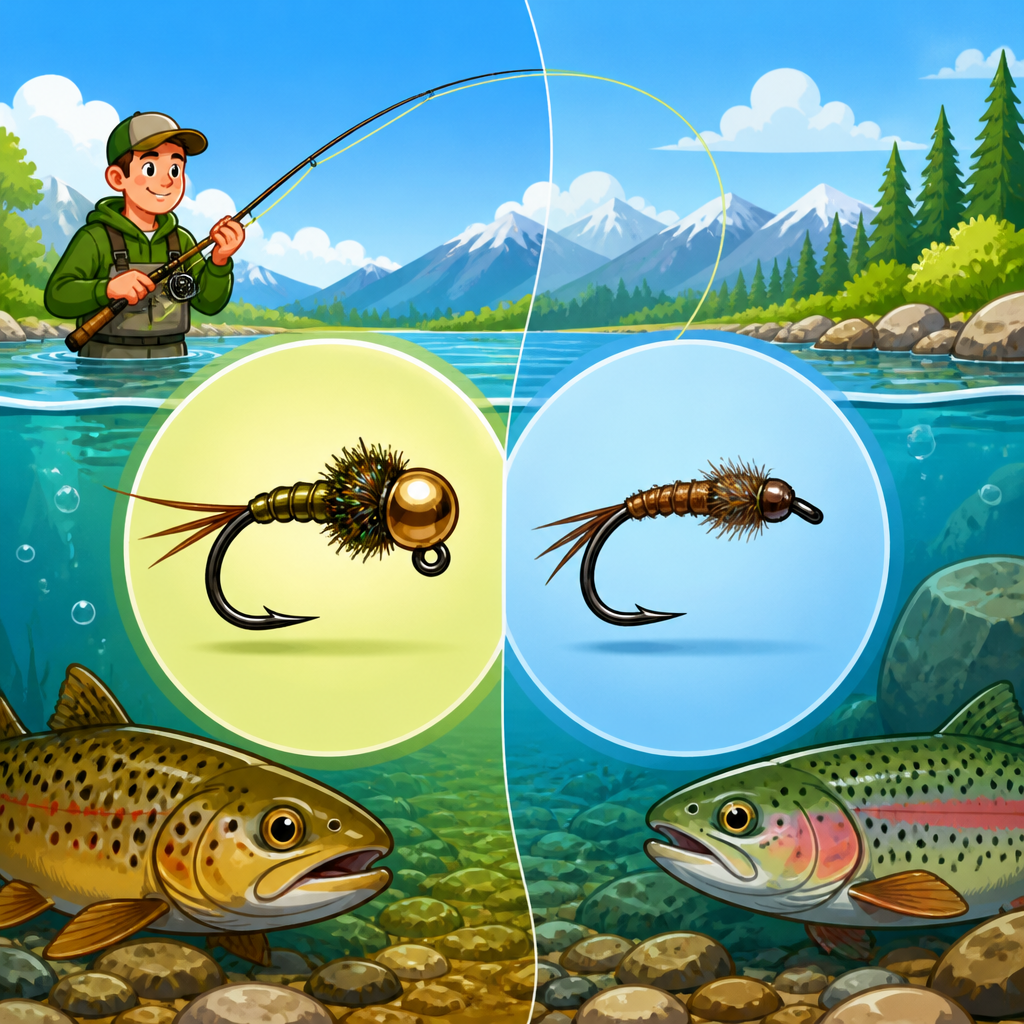
A jig nymph is a weighted subsurface fly tied on a jig-style hook so the point rides upward, reducing snags and changing how the fly drifts, sinks, and hooks fish. Within fly patterns and tying, jig nymphs have moved from niche competition tools to mainstream staples because they solve practical problems anglers face every day: hanging bottom in pocket water, getting small flies down quickly, and maintaining sharp hook exposure during short-line presentations. A standard hook, by contrast, carries the point in a more conventional orientation and supports countless classic patterns, from Pheasant Tails to Hare’s Ears, that still catch trout everywhere. The question is not whether one is universally better. The real question is when the jig format creates a measurable advantage in sink rate, contact, hook-up ratio, and drift control.
In my own boxes, I treat jig nymphs as a distinct category rather than a trendy variation. After years of tying and fishing both styles on freestone rivers, tailwaters, and small technical streams, I have found that hook orientation, bead choice, and overall profile materially affect performance. A jig nymph usually pairs a slotted tungsten bead with a 60-degree or 90-degree jig hook. That combination shifts mass toward the front, inverts the fly, and helps it track hook-point-up near the substrate where mayfly nymphs, caddis larvae, scuds, sowbugs, and midge larvae often live. Standard hook nymphs may use brass or tungsten beads too, but their geometry produces a different center of gravity and a different angle of drift.
This matters because trout feed by energy economics. They want food delivered in a lane and depth they can intercept with minimal effort. If your fly rides too high, snags constantly, or tumbles unnaturally, fewer fish commit. If your rig reaches the strike zone quickly and stays there, catch rates improve. As a hub for types of flies under fly patterns and tying, this article explains what a jig nymph is, how it differs from a standard hook nymph, when it shines, where it underperforms, and how to choose patterns intelligently. That foundation also helps you navigate related fly categories, including beadhead nymphs, euro nymphs, perdigons, scuds, caddis larvae, mayfly imitations, and soft hackles. Understanding the jig nymph is therefore not just about one pattern style. It is about matching design to water, presentation, and fish behavior.
What defines a jig nymph
A jig nymph is defined by hook geometry first, not by color, body material, or species imitation. The hallmark is a jig hook with an angled eye, typically 60 degrees, though 90-degree versions exist for specialized tying. The hook is designed to work with a slotted bead that seats against the eye bend and allows the hook to ride inverted. In practical terms, the point faces upward as the fly drifts. Most modern jig nymphs are compact, sparse, and weighted heavily for their size, often with tungsten beads because tungsten is denser than brass and reaches depth faster in a smaller profile.
That compactness is not cosmetic. Slim bodies cut through current with less drag, which improves sink speed and contact. This is why patterns such as the Frenchie jig, jig Pheasant Tail, perdigon, and jig Hare’s Ear have become foundational in tight-line systems. The fly enters the water, penetrates quickly, and tracks near the bottom without requiring excessive split shot. Because the hook point rides up, the pattern also glances off rocks better than many standard nymphs. Better does not mean snag-proof, but it does mean fewer lost flies in riffles, seams, and cobbled runs.
Jig nymphs can imitate many food forms. A flashy perdigon suggests streamlined aquatic insects and triggers reaction takes. A buggy jig Hare’s Ear covers mayflies, caddis, and general nymph life. A pink-tag jig or hotspot Frenchie adds a visual trigger in pressured water. As a fly type, then, the jig nymph overlaps several subcategories at once: weighted nymphs, attractor nymphs, euro nymphs, and species-specific imitations. That versatility is one reason this pattern family deserves a central place in any discussion of types of flies.
How jig nymphs differ from standard hook nymphs
The biggest difference between a jig nymph and a standard hook nymph is not simply snag resistance. It is the combined effect of hook orientation, bead placement, and drift posture. A standard nymph tied on a straight or curved shank hook often rides point-down or point-neutral depending on weight distribution. It can still fish effectively near bottom, especially under an indicator, but it tends to contact structure differently. Jig patterns slide and deflect; standard patterns often tick and wedge. On boulder-strewn streams, that distinction is significant.
Hooking mechanics differ too. When fish eat on a tight line, a jig hook with an exposed point-up orientation often sticks cleanly in the upper or corner tissues of the mouth. Competitive anglers have favored this for years, especially with barbless patterns, because penetration can be immediate on short drifts. Standard hooks also hook fish well, of course, and some tiers prefer their gape and silhouette for larger or more traditional dressings. But when I compare otherwise similar flies in fast pocket water, jig hooks generally give me more clean conversions from detected take to landed fish.
Standard hook nymphs still offer advantages. They preserve classic proportions for flies developed long before slotted beads and modern jig hardware became common. A classic beadhead Pheasant Tail, Copper John, Prince Nymph, or Zug Bug on a standard hook can present a more familiar shape and may balance softer materials better. They are also easier to source in every shop, often cheaper to tie, and available in wider hook models for larger stonefly or swimming nymph patterns. In slower currents, lakes, or suspended presentations, the jig orientation may matter less than profile, movement, and exact depth.
When a jig nymph is better than a standard hook
A jig nymph is usually better than a standard hook when you need fast sink rate, near-bottom contact, and reduced snagging in broken current. This is why jig flies dominate many euro nymphing setups. On a short line, with little slack and direct connection, the angler controls depth by leader angle and fly weight. A compact tungsten jig nymph gets down immediately, tracks naturally, and lets you feel or see subtle hesitation. In pocket water where drift windows are short, that speed is a major advantage. If the fly spends the first half of the drift sinking, you have already lost feeding time.
Jig nymphs are also better in runs with uneven rocky bottom. Instead of burying the hook point into crevices as readily as standard patterns can, they tend to skip and glance. That means more productive drifts and fewer re-ties. On pressured trout streams, this matters beyond convenience. Repeatedly disturbing fish by snagging and ripping free can put them down. A cleaner drift through the lane gives you multiple shots without excessive commotion.
Another area where jig nymphs excel is small-fly efficiency. Sizes 14 through 20 tied slim on jig hooks with 2.5 to 3.8 millimeter tungsten beads can represent a huge share of real trout food while still reaching depth. Midges, Baetis nymphs, and generic dark bugs often need that combination of compact mass and direct contact to fish well. Standard hooks in the same size may require more material, a different bead fit, or extra weight elsewhere, which can alter silhouette and sink behavior.
| Situation | Jig Nymph Advantage | Standard Hook Advantage |
|---|---|---|
| Fast pocket water | Faster sink, fewer snags, cleaner contact | Works, but often hangs more and reaches depth slower |
| Euro nymphing | Excellent point-up tracking and direct take detection | Useful as a dropper or anchor, but less optimized |
| Indicator nymphing deep runs | Gets down quickly with compact profile | Broader pattern choices and classic silhouettes |
| Slow pools or stillwaters | Less critical unless bottom contact is the goal | Often better for horizontal movement and traditional forms |
| Large buggy patterns | Can work, though some become too front-heavy | Often better balance and more natural profile |
When a standard hook is the better tool
Standard hooks are better when the pattern depends on a classic profile, broader gap, or more level attitude in the water. Not every nymph should be tied as a jig. Swimming nymphs, larger stonefly imitations, and soft, mobile dressings can lose some intended action when excessively weighted at the front. In lakes and slow eddies, where fish inspect flies longer and movement matters, a standard hook can let marabou, partridge, rubber legs, or soft hackle breathe more naturally.
There is also a practical tying consideration. Some materials sit awkwardly behind slotted beads on short jig shanks, especially on very small hooks. If you crowd the eye or mis-size the bead, you reduce gape and hooking efficiency. Standard hooks tolerate a wider range of proportions and are more forgiving for beginners. Many foundational tying patterns were developed around them for good reason. Their shapes are proven, widely available, and compatible with nearly every nymph recipe in fly-fishing history.
I also reach for standard hooks when I want a fly to function as a searching pattern under an indicator at moderate depth rather than as a bottom-tracking contact fly. A classic beadhead Hare’s Ear or Prince Nymph can drift and pulse in a way fish readily recognize. If snagging is minimal, there may be no reason to force a jig solution onto water that does not demand it. The best anglers avoid absolutism. They choose a hook style based on presentation first and fashion last.
How to choose the right jig nymph pattern
Choose jig nymphs by matching weight, size, profile, and trigger level to the water you are fishing. In deep, cold runs, start with a dense anchor fly such as a tungsten perdigon or jig stonefly. In medium riffles, a Frenchie, jig Pheasant Tail, or jig Hare’s Ear often covers the majority of mayfly and caddis forage. In tailwaters rich with sowbugs or scuds, pink, tan, gray, and olive jig patterns are especially effective because they stay near the bottom where those food items drift naturally.
Color should be grounded in water clarity and insect base. Natural olives, browns, and dark pheasant tones are reliable in clear conditions. Black is underrated because it creates a strong silhouette in broken light. Hotspots in orange, pink, or chartreuse are effective when trout need a trigger or when flows are stained. Use them deliberately rather than automatically. On heavily pressured spring creeks, too much flash can reduce confidence eats, while on freestones after rain it may be exactly what gets noticed.
Finally, think of jig nymphs as one branch within the broader types of flies you carry. Dry flies match surface hatches. Emergers bridge the film. Streamers suggest baitfish, leeches, and large prey. Standard nymphs offer tradition, breadth, and versatile silhouettes. Jig nymphs specialize in depth, contact, and efficiency. Build your boxes around roles, not labels, and include links in your own planning between related patterns: perdigons for fast sinks, scuds for tailwaters, caddis larvae for pocket water, and classic standard-hook nymphs for all-purpose searching. That integrated approach catches more fish than loyalty to any single style.
A jig nymph is not a replacement for every standard hook fly, but it is one of the most useful modern subsurface designs because it solves real presentation problems. By placing weight forward on a jig hook and inverting the point, it sinks quickly, tracks near the bottom, and reduces snagging in exactly the kinds of water where trout feed hardest. That makes it especially effective for euro nymphing, pocket water, technical riffles, and compact small-fly rigs where every second in the strike zone matters.
Standard hook nymphs remain essential because they preserve classic proportions, support a wider range of dressings, and often perform better when profile and movement outweigh the need for bottom contact. If you fish indicators in moderate currents, lakes, soft seams, or larger buggy imitations, a standard hook may be the better tool. The smart comparison is therefore situational, not ideological. Fish the hook style that best matches current speed, depth, bottom structure, and the way trout are feeding.
For anyone building a comprehensive understanding of fly patterns and tying, jig nymphs belong at the center of the types-of-flies conversation. Learn the mechanics, carry both jig and standard versions of proven patterns, and test them on the same water. You will quickly see where each one earns its place. Start with a jig Frenchie, a jig Hare’s Ear, a perdigon, and their standard-hook counterparts, then refine from there. Your fly box will become more purposeful, your drifts more efficient, and your nymph fishing more consistent across seasons.
Frequently Asked Questions
What exactly is a jig nymph?
A jig nymph is a subsurface fly pattern tied on a jig-style hook, usually paired with a slotted bead that helps the fly ride hook point up in the water. That hook orientation is the defining feature. Instead of drifting with the point down or level like many standard-hook nymphs, a jig nymph tends to invert so the point faces upward. In practical fishing terms, that changes several things at once: it helps the fly snag less often on rocks and wood, it keeps the hook point more exposed during the drift, and it often allows the fly to sink efficiently without requiring an oversized profile.
Jig nymphs became especially popular in competition-style and tight-line nymphing because they solve common day-to-day problems. Anglers often need a small fly that still gets down quickly, tracks naturally near the bottom, and survives repeated drifts through rough structure. A jig nymph does that very well. The design is not magic, and it does not replace every standard nymph, but it is one of the most practical hook styles for modern subsurface fishing. In short, a jig nymph is less about trend and more about function: faster depth, fewer hang-ups, and a drift that performs well in broken current.
When is a jig nymph better than a standard hook nymph?
A jig nymph is usually better when you need to fish close to the bottom without donating flies to the river every few casts. Pocket water, rocky riffles, plunge pools, and broken runs are classic situations where jig patterns shine. Because the fly rides point up, it tends to glance off the bottom more cleanly than a standard-hook nymph. That means you can fish the strike zone more aggressively, which is important because trout and other river fish often feed inches from the streambed.
It is also a strong choice when you need fast sink rate from a compact pattern. A slotted tungsten bead on a jig hook gets small flies down quickly, which matters in faster flows and short drifts where there is not much time for the fly to reach depth. This is one reason jig nymphs are so effective for euro nymphing and other short-line methods: they enter the water, sink fast, and maintain contact efficiently. Another advantage appears during close-range presentations, where the exposed, upward-facing point can help with hookups on subtle takes. If you are fishing snaggy structure, fast current, short drifts, or technical presentations where depth and control matter most, a jig nymph often outperforms a standard hook nymph.
Are jig nymphs always better for avoiding snags?
No, but they often reduce the type of snag most anglers deal with when fishing deep. The point-up orientation can help the fly slide over rocks and along the bottom with fewer direct point-first hang-ups. That benefit is real, but it has limits. A jig nymph can still wedge between stones, catch in submerged branches, foul in weeds, or snag if it is simply too heavy for the water depth and drift speed. In other words, the design reduces many bottom contacts from becoming full snags, but it does not make the fly snag-proof.
Presentation still matters just as much as hook style. If your leader setup is too long, your weight too heavy, or your drift angle too steep, even the best jig nymph will hang up. The real advantage is that jig hooks give you a bit more forgiveness when fishing near structure, letting you stay in the productive zone with slightly less risk. Many anglers find that this confidence changes how they fish: they stop holding the fly too high out of fear and begin drifting it where fish are actually feeding. So while jig nymphs are not a guarantee against snags, they are often better tools for fishing deep, tight, and close to the bottom.
How does a jig nymph fish differently from a standard-hook nymph?
The main differences are drift posture, sink behavior, and hook orientation. A standard-hook nymph typically rides in a more conventional posture, depending on its materials, bead, and weight distribution. A jig nymph, by contrast, is built so the bead and hook shape encourage inversion, keeping the point riding upward. That affects how the fly tracks through current seams, how it contacts the bottom, and how readily it maintains a clean hook point presentation during the drift.
In many cases, a jig nymph also sinks quickly for its size because it is commonly tied with dense tungsten beads and sparse bodies. That combination is useful when fish want a small natural profile but the current demands added weight. The result is a fly that gets down fast without looking oversized. During short-line nymphing, many anglers also notice that jig nymphs feel direct and responsive because they are designed to fish with controlled contact rather than excessive slack. Standard-hook nymphs can still be excellent choices, especially for more traditional dead drifts, softer currents, or imitative patterns where profile and silhouette matter more than bottom-bouncing efficiency. But if the goal is maximum depth, clean tracking, and reduced bottom fouling in fast water, a jig nymph often behaves more purposefully.
Should every angler replace standard-hook nymphs with jig nymphs?
No. Jig nymphs are extremely useful, but they are best thought of as complementary tools rather than universal replacements. Standard-hook nymphs still have important strengths. Many classic patterns were designed around standard hooks and retain their intended shape, balance, and movement because of that platform. In some situations, especially slower water, suspended presentations, or traditional indicator nymphing, the specific benefits of a jig hook may be less important than profile, color, size, or natural drift. There are also times when anglers simply prefer the way a standard pattern fishes, especially when matching familiar insects or using established confidence flies.
The smartest approach is to understand what each hook style does best. Use jig nymphs when bottom contact, quick sink rate, and snag reduction are top priorities. Use standard-hook nymphs when you want classic proportions, specific pattern designs, or a more traditional subsurface presentation. Most experienced anglers carry both because rivers rarely ask for only one solution all day. If you build your fly box around function instead of loyalty to one style, you will be better prepared for changing currents, depths, and feeding behavior. Jig nymphs are not better in every scenario, but in the right water they are among the most efficient and practical nymphs you can fish.