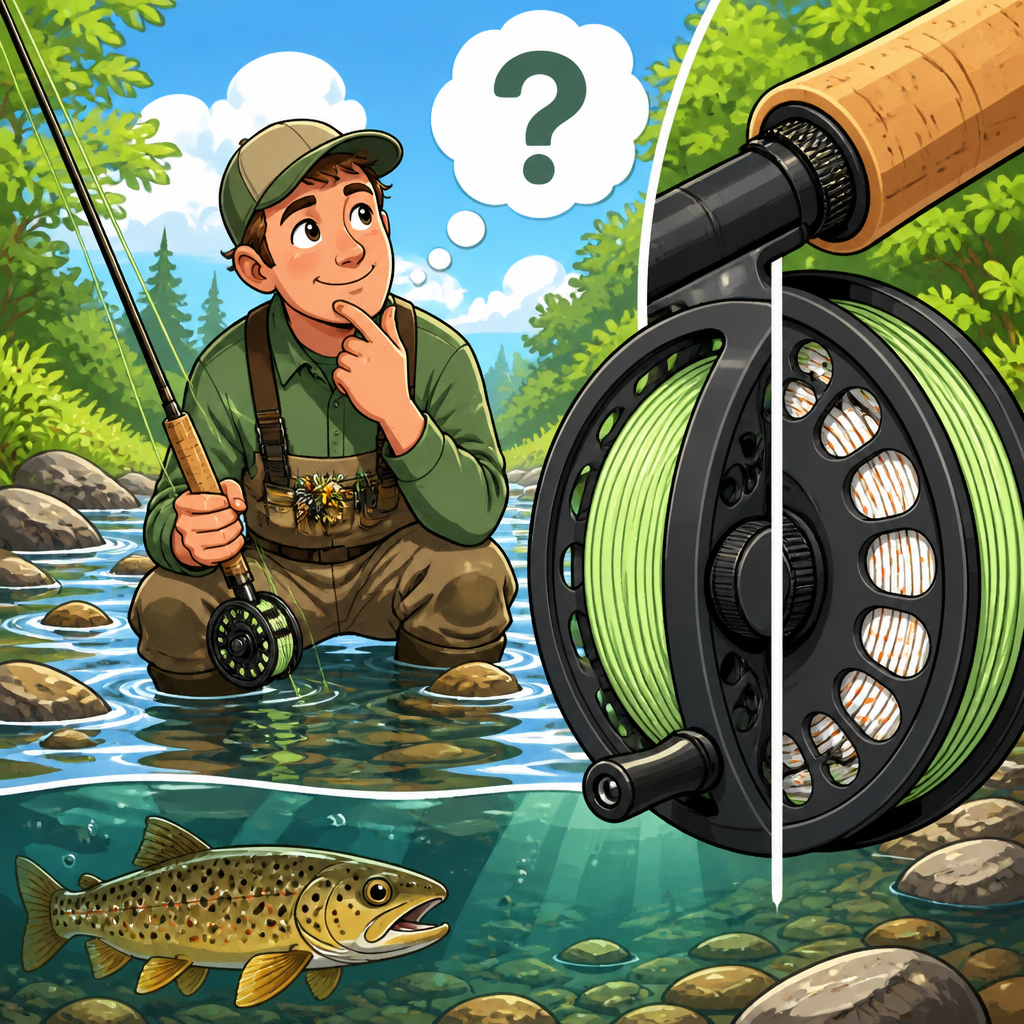
Do you need reel backing for small-stream fly fishing? Usually, no—but the complete answer depends on fish size, reel capacity, line weight, and how you build a practical fly fishing setup for tight water. In fly fishing, backing is the thin braided line attached to the reel arbor underneath the fly line. Its first job is to add reserve length when a fish runs farther than your fly line. Its second job is to increase arbor diameter so the fly line coils less tightly and retrieves more smoothly. On large rivers, saltwater flats, and lakes where trout, steelhead, salmon, carp, or bass can make long runs, backing is standard. On brushy mountain creeks and pocketwater streams where casts are short and fish are typically six to twelve inches, backing often seems unnecessary. Still, small-stream anglers should understand when skipping backing makes sense and when it creates avoidable problems.
I have rigged plenty of small-stream outfits for brook trout, wild browns, and panfish, and I have learned that backing decisions are less about rules than about system design. A two-weight rod with a click-and-pawl reel, a double-taper line, and ten- to twenty-foot casts has different needs than a five-weight carrying a weight-forward line on a mid-arbor reel for mixed trout water. Gear and equipment choices also cascade: backing affects reel fill, line memory, retrieve rate, balance, and even whether your line slips on the spool. Because this article serves as a hub for Fly Fishing Basics gear and equipment, it covers the backing question in context with reels, fly lines, leaders, rod weights, and practical rigging. By the end, you will know when backing is optional, when it is helpful, and how to rig a small-stream reel correctly.
What reel backing does and why anglers use it
Backing is commonly made from Dacron, gel-spun polyethylene, or other thin, strong material rated by breaking strength, often twenty pounds for trout reels. On standard trout setups, the backing is attached to the reel arbor with an arbor knot and to the fly line with a loop-to-loop connection or a nail-knot-style junction. The obvious reason for using backing is insurance. If a fish takes all of your fly line, the backing keeps you connected. That matters on big rivers and stillwaters where fish can run fifty to one hundred yards or more. It matters far less in small streams full of plunge pools, short seams, and root wads where most fish are landed quickly by hand stripping rather than by putting them on the reel.
The less obvious reason is spool fill. Fly reels perform best when the line sits near the outside diameter of the spool. A fuller spool increases retrieval speed with each turn and reduces sharp coils in the fly line. This can improve handling, especially in cold weather when line memory becomes more noticeable. On many classic trout reels, a weight-forward three-weight or four-weight line alone will not fill the spool enough. Adding twenty to fifty yards of backing brings the line up to the intended diameter. That means backing can be useful on a small-stream reel even if you never expect a fish to see it.
There is also a drag and line management angle. Small-stream fly fishing often uses simple click-and-pawl reels with light drag systems because the rod, line hand, and tippet protect fish effectively at close range. In that scenario, backing is almost never part of the fight. Yet backing can still prevent fly line from spinning around a slick arbor if the line is attached poorly, and it can provide a better foundation for neat winding. In other words, backing is not only about distance; it is part of the reel system.
When small-stream anglers can skip backing
If you fish headwater creeks, rhododendron tunnels, beaver trickles, and mountain brook trout streams, you can often fish without backing and never notice a performance issue. Most casts on these waters are fifteen to thirty feet. Many fish are under ten inches. Current complexity and streamside cover limit long runs. In these conditions, the reel mainly stores line between spots; it is not a fish-fighting winch. A level or double-taper line on a simple reel may be stripped off, cast, and stripped back by hand all day. Backing becomes optional because its primary purpose is rarely used.
There are three common cases where skipping backing is sensible. First, some modern small-arbor or narrow-spool reels sized for one- to three-weight rods become overfilled easily. If the reel already holds your fly line properly, adding backing can crowd the spool and cause line to spill or bind against the frame. Second, many ultralight creek anglers use inexpensive reels simply for balance and storage. On those outfits, simplicity matters more than maximizing capacity. Third, certain fiberglass and bamboo setups are intentionally minimalist, especially for tenkara-adjacent or close-range dry-fly fishing where the reel is rarely engaged. In those cases, direct arbor-to-fly-line rigging can be perfectly functional if the connection is secure.
The caution is that skipping backing is a choice, not a shortcut. If you omit backing, test the fit with the actual fly line you will fish, not a guess based on the box. Different line tapers and coatings vary in diameter. A double-taper line generally occupies more space than a weight-forward line of the same line weight because more of the line has full-diameter belly. That detail alone changes whether backing is useful, unnecessary, or impossible on a given reel.
When backing is still smart on a small stream
Even on modest water, backing becomes worthwhile in several situations. The first is spool fill. If your reel feels empty with only fly line, add enough backing to bring the line to a practical working diameter. In my own small-stream setups, twenty to thirty yards of twenty-pound Dacron often solves that problem without pretending the fish will ever use it. The second is mixed-use fishing. Many anglers buy one three- or four-weight outfit and use it on creeks one weekend, spring creeks or meadow streams the next, and ponds in summer. Once larger trout or warmwater fish enter the picture, a short run can turn into a long one quickly.
Another reason is unexpected fish. Small streams occasionally connect to larger rivers, hold stocked fish, or produce an unusually strong wild brown. A sixteen-inch trout in fast current can expose weak assumptions. So can creek smallmouth, fallfish, or accidental carp in lowland streams. Backing is cheap insurance compared with the cost of quality fly line. It also helps if you need to cut back and reattach a fly line later; the reel remains properly filled. Anglers who use sealed-drag reels, large-arbor designs, or premium textured lines often prefer backing simply because it lets the reel work the way it was engineered to work.
The final reason is line protection. Tight coils around a tiny arbor increase memory, particularly in cold water. If backing creates a larger effective arbor, your line lays in broader loops. That can reduce tangles and improve pickup. The gain is subtle but real, especially with stiffer lines designed for warm conditions. If your small-stream outfit doubles as a travel setup across seasons, backing helps maintain consistency.
How much backing is enough for small-stream fly fishing
There is no universal number, because reel dimensions, arbor size, and fly line profile vary widely. For most one- to four-weight small-stream outfits, twenty to fifty yards of twenty-pound Dacron is a practical range. The lower end is often enough when you mainly want spool fill. The higher end makes sense when the outfit might cross over into general trout fishing. Gel-spun backing packs more strength into less space, but for small-stream trout it is usually unnecessary and can be harder on hands and knots. Dacron remains the standard because it is inexpensive, easy to work with, and fully adequate for trout applications.
The best method is empirical. Mount the reel, run the backing onto the spool, attach the fly line, and wind everything under light tension. Stop when the line sits roughly one-eighth inch below the spool rim. That clearance matters. Too little fill reduces retrieve speed and increases line memory; too much fill causes line to jump the frame and snarl. Reel manufacturers publish capacity charts, but those charts are only estimates. One brand’s true-to-weight three-weight line can take noticeably more space than another’s half-size-heavy creek line. Treat published capacities as starting points, not exact instructions.
| Setup | Typical fly line | Backing recommendation | Why it works |
|---|---|---|---|
| 1-2 wt headwater creek outfit | DT or WF floating line | 0-25 yards of 20 lb Dacron | Short casts and tiny fish mean backing is mostly for spool fill |
| 3 wt dedicated small-stream trout | WF floating creek line | 20-35 yards of 20 lb Dacron | Balances line handling, reel fill, and occasional larger fish |
| 4 wt crossover trout setup | WF floating or DT line | 30-50 yards of 20 lb Dacron | Useful for small streams plus meadow streams, ponds, and larger trout |
| 5 wt used on small streams sometimes | WF all-around trout line | 50+ yards of 20 lb Dacron | Capacity matters more because the outfit likely sees broader use |
If you inherit a reel with unknown backing, inspect it before trusting it. Old backing can mildew, flatten, or weaken, especially if stored wet. I have stripped old reels and found sun-faded Dacron that looked serviceable until it broke under a steady pull. Backing is cheap; replacing it is often the right call.
Matching backing decisions to the rest of your gear and equipment
Backing should never be considered in isolation. Small-stream fly fishing gear works best when rod, reel, fly line, leader, and tippet are chosen as a matched system. A short fiberglass three-weight used under overhanging branches may fish best with a double-taper line because DT lines roll cast nicely, mend delicately at short range, and present dry flies softly. But DT lines occupy more spool volume, so you may need less backing or none at all. A modern creek-specific weight-forward line with an aggressive front taper loads quickly at ten to twenty feet, but its thinner running line may leave excess empty space on the spool. In that case, backing is more helpful.
Reel design matters too. Large-arbor reels reduce line memory and retrieve line quickly, but many are built with enough spool diameter that only modest backing is needed to achieve proper fill. Traditional small-arbor reels may need more backing despite being used on tiny water. Drag system also matters less than many beginners think. For small-stream trout, a smooth startup is nice, but palm pressure, rod angle, and tippet discipline matter more than maximum drag numbers. That is why compact click-and-pawl reels remain popular on creeks. They are light, durable, and mechanically simple. Whether such a reel carries twenty yards of backing or none, the line management implications can still be significant.
Leaders and tippets complete the picture. Small-stream anglers often fish shorter leaders, sometimes seven and a half feet, with 4X to 6X tippet depending on fly size and water clarity. Because presentations are close and controlled, fish are often landed without ever touching the reel handle. That fact pushes backing lower on the priority list than line taper, leader design, and wading-safe footwear. If you are building a first small-stream outfit, spend money on a quality floating line before worrying about exotic backing materials.
Practical rigging advice and common mistakes
The most common backing mistake is adding too much. Beginners often assume more is always better, then discover the spool is overfilled and line springs off in loose coils. Another frequent error is failing to secure the backing to the arbor properly, which can let the entire line stack spin under tension. Use an arbor knot, cinch it firmly, and many anglers add a short wrap of electrical tape around the arbor first to reduce slippage on slick anodized spools. Wind backing evenly under tension, connect the fly line cleanly, and check that the line enters the reel in the correct direction for your retrieve.
A second mistake is choosing backing strength based on fish size alone. On small-stream trout reels, twenty-pound Dacron is not about stopping a twenty-pound fish; it is about standard diameter, easy handling, and compatibility with trout reel capacity. Heavier backing can waste space, while thinner gel-spun can cut into lower wraps if wound poorly. Another mistake is ignoring line age. Old fly lines become stiff and develop memory; anglers sometimes blame the lack of backing when the real issue is a worn line coating. Clean the line, stretch it before fishing, and replace it when it cracks or loses floatation.
Finally, avoid treating every gear discussion as universal. Small-stream fly fishing ranges from Appalachian brookie tributaries to Western meadow creeks to limestone spring runs. A seven-foot six-inch two-weight used for bow-and-arrow casts under alders has different reel needs than an eight-foot nine-inch four-weight fishing terrestrials on open banks. The right backing choice is the one that fits your actual water, not the one that wins online debates.
How this question fits into Fly Fishing Basics gear and equipment
As a hub topic within Fly Fishing Basics, reel backing connects to almost every other gear and equipment decision a new angler makes. Start with the rod: small-stream rods are often shorter, lighter, and optimized for close casts. Pair that rod with a reel sized to balance it physically and hold the right line without crowding the spool. Then choose the fly line, which is usually the most important performance component in the system. Next come leader length, tippet diameter, and fly selection. Backing sits beneath all of that, literally and conceptually. It is not the first item to obsess over, but understanding it helps you rig intelligently and avoid preventable issues.
This broader view matters because many beginners buy equipment in pieces. They inherit a reel, purchase a discounted line, then wonder why the setup feels awkward. A hub-level understanding lets you troubleshoot systematically. If line memory is bad, ask whether the spool diameter is too small or the line too old. If the reel feels empty, backing may help. If fish never reach the reel, backing is lower priority than improving casting accuracy, drift control, and knot strength. That is how experienced anglers evaluate gear: by function on the water, not by checklist alone.
For most small-stream fly fishing, you do not strictly need reel backing to land fish. Short casts, small trout, and hand-stripping make it optional on many creeks. But optional does not mean irrelevant. Backing can improve spool fill, reduce line memory, support mixed-use outfits, and provide cheap insurance for larger or unexpected fish. The right answer depends on your reel size, fly line profile, and whether the outfit is dedicated to tiny water or expected to handle broader trout fishing as well.
If you want the simplest rule, use this one: if your reel is properly filled with your fly line alone and the outfit will stay on true small streams, you can fish confidently without backing. If the spool feels underfilled, the setup will see multiple types of water, or you simply want a more versatile rig, add twenty to fifty yards of twenty-pound Dacron and tune the fill carefully. Build your gear as a system, test it before the season, and adjust based on how it performs on your home water. That practical approach will do more for your fly fishing than any blanket rule about backing ever could.
Frequently Asked Questions
Do you really need reel backing for small-stream fly fishing?
In most small-stream situations, no, you do not strictly need reel backing to catch fish effectively. On tight creeks, brook trout streams, and many overgrown freestone tributaries, fish are usually smaller, casting distances are short, and there is rarely enough open water for a trout to make a long, uninterrupted run into your backing. In those conditions, the fly line alone often provides more than enough usable line for both casting and fighting fish. That is why many practical small-stream anglers view backing as optional rather than essential.
That said, “not necessary” is not the same as “never useful.” Backing still serves two legitimate purposes even on small water. First, it gives you reserve line in the unlikely event you hook an unusually strong or large fish. Second, it helps fill the reel arbor so the fly line sits on a larger diameter spool, which can reduce tight memory coils and slightly improve retrieval feel. If your reel is very shallow and your fly line already fits properly, those benefits may be minimal. If your reel has a deeper spool, a small amount of backing can make the setup work better overall.
The most accurate answer is that backing is usually optional for small-stream fly fishing, but whether you should use it depends on the fish you expect, the reel you own, and how you want your system to perform. If you are targeting modest trout in confined water with a lightweight outfit, you can fish confidently without much concern about backing. If you want better spool fill, more versatility, or a little insurance for larger fish, adding some backing is still a smart and inexpensive choice.
What does backing actually do on a fly reel, and why might it still matter on tight water?
Backing is the thin, braided line tied directly to the reel arbor underneath the fly line. Its primary job is to provide extra length beyond the fly line itself. When a strong fish runs farther than your fly line can cover, backing becomes your reserve. On large rivers, lakes, or saltwater flats, that role is obvious and often critical. On small streams, it matters less because fish usually do not have the space to run very far, and anglers can often follow the fish through pocket water or along the bank.
Its secondary job is often overlooked but highly relevant: backing helps build up the arbor diameter. A fly line wrapped onto a very small bare spool tends to coil more tightly, which can contribute to line memory and make the line feel springier when stripped off the reel. By adding backing first, you create a larger foundation for the fly line, allowing it to wrap in broader coils. This can help the line come off the reel more smoothly and may improve how neatly the reel retrieves line, especially on smaller click-and-pawl or mid-arbor reels.
On tight water, that second function is usually the stronger argument for using backing. Even if you never expect to see the backing during a fight, it can help your reel carry the line properly. In other words, backing is not always there because you expect a fish to reach it. Sometimes it is there simply because it makes the reel and fly line work together more efficiently. For anglers building a balanced, practical small-stream setup, that is a perfectly valid reason to include it.
How much backing should you use for a small-stream fly fishing setup?
For small-stream fishing, the right amount of backing is usually “just enough,” not the maximum your reel can hold. Many anglers do well with a modest amount, often somewhere in the range of 20 to 50 yards, depending on reel size, line weight, and spool depth. In some cases, especially with very small reels designed for 2-weight to 4-weight outfits, you may use only enough backing to properly fill the spool under the fly line. The goal is not to prepare for hundred-yard runs from giant fish. The goal is to create a practical, well-balanced reel that holds your line neatly and functions smoothly.
A good rule is to load the reel so that, once the fly line is installed, there is a small gap between the outside of the line and the rim of the spool. Too little backing can leave the spool underfilled, which reduces retrieval rate and can make the line sit in tight coils. Too much backing can overfill the reel, causing line to rub the frame or spill awkwardly when stripping line. For many small-stream setups, especially with double-taper or lighter weight-forward lines, you may not need nearly as much backing as standard packaging recommendations suggest.
If you are unsure, think in terms of fit rather than capacity claims. A practical setup for a 3-weight or 4-weight used on narrow trout streams often needs only enough backing to support the fly line and provide a small reserve. If your reel is especially deep, use enough backing to bring the line up to an efficient spool diameter. If your reel is shallow and your fly line already fills it well, you may need very little. In short, choose backing volume based on how the reel loads and how you actually fish, not on a generic idea that every fly reel should be packed full.
When is backing a good idea even if you mostly fish small streams?
Backing becomes a good idea when your small-stream fishing includes any realistic chance of hooking fish that can overpower the confined setting. That might mean wild brown trout in undercut banks, stocked fish in surprisingly open stretches, or migratory species that move through smaller tributaries. It can also matter if beaver ponds, meadow sections, or larger plunge pools are part of your “small-stream” system. In those places, fish may have more room than you expect, and a strong run can put you into the backing faster than the average creek scenario would suggest.
It is also a smart choice when you want one reel to cover more than one environment. Many anglers use the same lightweight reel on tiny mountain streams one weekend and on medium rivers the next. In that case, adding backing improves versatility at minimal cost. You may never need it on the little creek, but it is already there if you decide to fish bigger water. That flexibility is especially useful for anglers who own only one or two reels and want each setup to do more than one job.
Another time backing makes sense is when the reel would otherwise be noticeably underfilled. Even if fish size does not justify reserve line, the backing can still improve line management and reel performance. In practice, this is one of the most common reasons small-stream anglers use it. They are not expecting to fight a fish into the backing; they simply want the reel to hold the fly line correctly. So while backing is often unnecessary in a strict fish-fighting sense, it becomes a sensible addition whenever you want better spool fill, broader versatility, or insurance against the occasional larger fish.
If you skip backing, are there any downsides or problems to watch for?
The biggest downside is improper spool fill. Without backing, some reels—especially those with deeper arbors—may not hold enough bulk under the fly line. That can leave the line sitting on a small-diameter core, increasing coil memory and making retrieval slower because each turn of the reel picks up less line. On a tiny stream where most fish are landed by hand-stripping or short retrieves, that may not matter much. But from a setup standpoint, an underfilled reel can feel less refined and less efficient.
Another limitation is reduced margin for error with unexpectedly large fish or unusual current conditions. While most small-stream trout will never threaten the end of your fly line, fishing always includes surprises. A larger fish in fast current can use distance quickly, especially if you are fishing downstream or cannot move freely because of brush, rocks, or steep banks. In those moments, backing is not just extra line—it is a small buffer against getting spooled or putting too much pressure on light tippet too soon.
There is also a practical rigging point to consider: some fly lines and reels simply pair better with a bit of backing underneath. If skipping backing causes the reel to feel poorly balanced or the line to stack awkwardly, adding a modest amount often fixes the problem. So yes, you can absolutely fish many small streams without backing and never notice a problem. But if your reel seems underfilled, your line coils tightly, or you want more adaptability from the same outfit, using at least a little backing is often the better long-term solution.