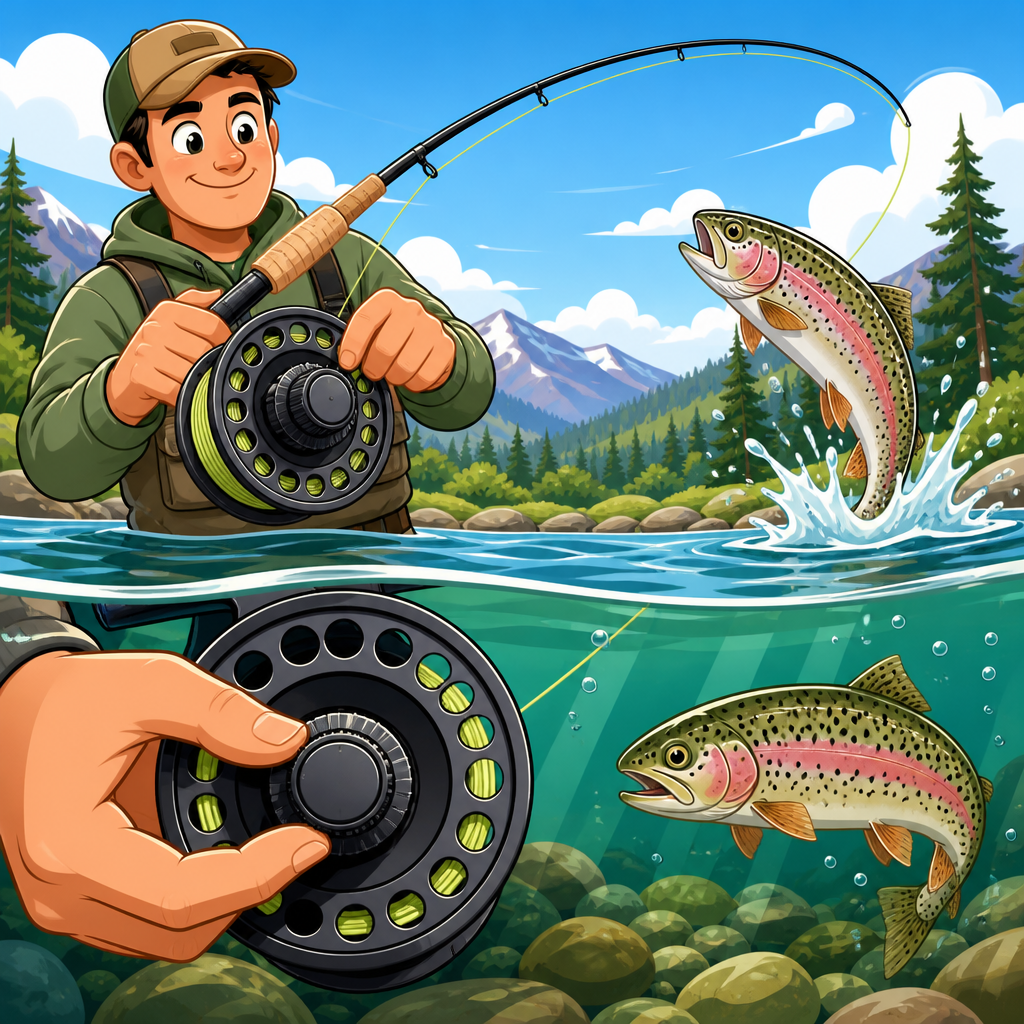
Fly reel drag for trout should be tight enough to prevent overruns and protect light tippet, yet loose enough to let a strong fish run without sudden breakoffs. That simple rule sits at the center of fly fishing gear and equipment choices, because drag setting affects hook penetration, line control, leader protection, and how efficiently you land fish. In practice, most trout anglers need far less drag than they first assume. On streams, spring creeks, tailwaters, and stillwaters, I have found that a properly balanced setup matters more than maximum stopping power. Trout are not tarpon, and a trout reel is usually a line storage tool with a braking system that should work smoothly rather than brutally. Understanding how tight fly reel drag should be for trout starts with defining three linked pieces of tackle: the reel drag itself, the rod’s cushioning effect, and the tippet’s breaking strength. The drag is the resistance the reel applies when line leaves the spool. The rod acts as a spring that absorbs shock. The tippet is the weak link by design, often ranging from 7X at about 2 to 3 pounds to 3X around 8 pounds, depending on material and brand. Set drag too high and a headshake or sudden run can snap tippet instantly. Set it too low and fish may take line too freely, forcing sloppy pressure and longer fights. This guide covers the full gear and equipment picture around trout reels: drag types, practical settings, tippet matching, rod balance, reel sizing, line management, and common mistakes. If you are building your Fly Fishing Basics knowledge, this is the hub page for Gear and Equipment, connecting the reel question to the larger system every trout angler depends on.
What is the right drag setting for trout?
The best drag setting for trout is usually about one quarter to one third of the tippet’s actual breaking strength, then adjusted by hand during the fight if needed. That guideline comes from the same logic used across angling disciplines: you want enough resistance to tire the fish while leaving a margin for shock loads. For example, if you are fishing 5X nylon tippet with a real-world break strength around 4 to 5 pounds, an initial drag near 1 to 1.5 pounds is sensible. With 3X fluorocarbon testing closer to 7 or 8 pounds, a setting around 2 pounds is often plenty. Most trout anglers never measure drag with a scale, but doing it once at home teaches you how light an effective setting really feels. Pull line from the reel through the rod guides at a fighting angle, not straight off the spool, because rod bend and guide friction influence actual resistance. On small streams, where fish are controlled more by rod angle and line hand than by the reel, I often keep the drag just above free-spool to prevent accidental overruns. On larger rivers or lakes, where a twenty-inch rainbow can run deep into backing, I set more deliberate resistance before the first cast. The key is smooth startup inertia. A trout reel with modest maximum drag but low startup resistance is better than a powerful reel that jerks at the beginning of a run. Trout commonly surge in short bursts, and those bursts expose poor drag performance fast.
How drag changes with trout water, fish size, and tippet
Drag is never one-size-fits-all because trout fishing methods vary widely. A brook trout angler using a 3-weight rod and 6X tippet in a mountain creek needs a different setup than a stillwater angler throwing streamers on a 6-weight with 2X fluorocarbon. Current speed matters too. In heavy flow, the river adds pressure to the fish and to your line, effectively increasing total load even if the reel drag knob stays unchanged. Long drifts and downstream hook sets also change the equation. The more line you have outside the rod tip, the more stretch and friction enter the system. Fly line material, leader length, and knot quality all matter. Nylon usually stretches more and protects better against shock; fluorocarbon is denser, more abrasion resistant, and often slightly less forgiving on sudden impact. Fish behavior matters as much as tackle. Brown trout in woody cover often need firmer side pressure to keep them out of root wads. Large lake rainbows may make sustained runs that require a smoother reel than a tiny freestone stream ever will. Anglers should think in terms of total fish-fighting system rather than a single knob setting.
| Scenario | Typical Tippet | Practical Starting Drag | Main Goal |
|---|---|---|---|
| Small stream dry flies | 6X to 4X nylon | Very light, near minimum | Protect fine tippet and manage by hand |
| Medium river nymphing | 5X to 3X fluorocarbon or nylon | Light to moderate | Balance drift control and fish pressure |
| Streamer fishing for larger trout | 2X to 0X fluorocarbon | Moderate | Turn fish quickly away from structure |
| Stillwater or big tailwater trout | 4X to 2X | Moderate, carefully tested | Handle longer runs on the reel |
Understanding drag systems in trout reels
Most trout reels use either click-and-pawl or disc drag systems. A click-and-pawl reel creates resistance through a spring and gear mechanism. It is simple, light, durable, and prized by traditional anglers fishing smaller trout. Its limitation is fine adjustment and absolute stopping power, though for many trout situations that limitation barely matters. Disc drag reels use stacked friction surfaces, often cork, Rulon, carbon fiber, or sealed composite materials. A good disc drag provides broader adjustment, smoother startup, and stronger sustained resistance. Sealed drags also keep out grit, water, and fine silt, which is valuable on sandy banks, drift boats, and stillwater shoals. In my experience, the biggest difference trout anglers notice is not raw drag strength but consistency. A quality sealed disc drag from brands such as Lamson, Ross, Hatch, Nautilus, Abel, or Orvis starts smoothly and remains predictable after repeated runs. Budget reels can fish well, but some show stick-slip behavior: no movement, then too much movement. That sudden jump breaks tippet more often than a low maximum drag ever would. Arbor size also affects feel. Large-arbor reels retrieve faster and reduce line memory, while standard arbor reels may feel smoother with lighter outgoing tension when nearly full. Reel diameter changes effective drag because resistance varies with spool radius; as line leaves the spool and the arbor gets smaller, felt pressure can increase.
How to set drag correctly before you fish
The most reliable way to set fly reel drag for trout is to test it before stepping into the water. Thread the line through the guides, attach a leader, and pull with the rod bent as it would be under fighting load. Better yet, use a small luggage scale or spring scale clipped to the leader. Increase pressure until line leaves the reel steadily, then note the reading. You do not need laboratory precision. You need repeatability and feel. Start with the one-quarter to one-third rule, then account for tippet age, knots, and conditions. Old nylon weakened by UV exposure or heat deserves extra margin. Wind knots, abrasion from rocks, and blood knots tied hastily in cold weather all lower true breaking strength. If you fish barbless hooks, as many trout anglers do, steady pressure matters more than brute pressure. Too-tight drag can momentarily open slack when a fish bolts and then stops. Set the reel to support your stripping hand, not replace it. Many experienced anglers palm the spool or feather the rim during a run, especially on trout reels with lighter click systems. That manual control is effective only if the base drag is conservative. Make a habit of resetting the knob after changing techniques. Anglers often forget they tightened drag for streamers and then switch to tiny dry flies on 6X.
Rod weight, reel balance, and line management as gear priorities
Gear and equipment decisions around trout reels extend beyond drag. Rod weight should match the flies, fish size, and water type you actually fish. A 3-weight excels with small dries and light tippet on intimate streams. A 5-weight is the all-around trout standard because it handles dry flies, indicator rigs, small streamers, and wind reasonably well. A 6-weight becomes useful for heavy nymph rigs, large streamers, and stillwater. Reel size must match line weight and backing capacity, but balance also matters. A reel that is too heavy deadens a light rod; too light and the outfit feels tip-heavy, especially during long nymphing sessions. Modern large-arbor reels in the correct line class usually solve both issues. Fly line selection influences when the drag comes into play. Weight-forward floating lines dominate trout fishing, but sink-tip and full-sinking lines are common in lakes and streamer work. Slick coatings and cold-water stiffness affect line shoot and retrieval. Backing capacity matters more than many assume on big western rivers and lakes, where twenty-plus-inch trout can make long runs. A trout setup with 75 to 150 yards of 20-pound backing is typical on 4- to 6-weight reels. Keep the spool filled correctly. Underfilling slows retrieval and changes drag feel; overfilling invites line spill and tangles. Good line management baskets are rare in trout fishing, but stripping mats in boats and clean decks prevent stepped-on coils and lost fish.
Common mistakes trout anglers make with reel drag
The most common mistake is assuming the reel should fight the fish by itself. In trout fishing, the rod and angler apply most of the control. Another mistake is testing drag by pulling line straight off the reel with bare hands, which ignores rod bend and gives a false sense of security. Many anglers also leave drag unchanged all season. Temperature, moisture, dirt, and line diameter all affect feel. A third mistake is buying a trout reel based only on maximum drag numbers, which are largely irrelevant for ordinary trout. Smooth startup, dependable tolerances, and easy adjustment matter more. I also see anglers clamp down after the hook set because the fish feels large. That reaction breaks more trout off than calm pressure ever does. Instead, raise the rod, let the fish turn, and tighten only if it is heading toward weeds, wood, or fast downstream current. Poor maintenance causes hidden drag issues too. Rinse reels after sandy or silty trips, dry them before storage, and inspect backing and fly line connections. Check that the drag knob has not been backed off completely in storage if the manufacturer advises otherwise. Finally, anglers often mismatch reel quality to intended use. A simple click reel is excellent on small creeks, but if you fish lakes, tailwaters, or streamer-heavy big water often, a sealed disc drag is a practical upgrade.
Choosing the right trout reel for your gear and equipment hub
If this page serves as your Fly Fishing Basics hub for Gear and Equipment, the reel should be viewed as one component in a chain that includes rod, line, leader, tippet, flies, net, and accessories. For most trout anglers, the smartest purchase is a reliable 4/5 or 5/6 large-arbor reel with a smooth drag, easy spool change, and solid warranty support. Pair it with a quality floating line before spending heavily on specialty spools. If you fish tiny streams almost exclusively, prioritize low weight and simplicity. If you fish western rivers, drift boats, or stillwaters, prioritize sealed drag performance and backing capacity. Proven models from Orvis, Redington, Lamson, Galvan, Hardy, and Ross cover most budgets and styles. The right drag setting for trout remains modest, but the value of a good reel is consistency under pressure. You will notice it when a fish runs under the boat, when cold fingers need a drag knob that moves predictably, or when a reel still performs after seasons of grit and rain. Remember the central answer: set trout drag light to moderate, roughly one quarter to one third of tippet strength, then fight fish with the rod, your angle, and measured hand pressure. That approach protects fine leaders, shortens fights, and lands more trout cleanly. Review your current setup, test your drag at home, and tune the whole system before your next day on the water.
Frequently Asked Questions
How tight should fly reel drag be for trout in most situations?
In most trout fishing situations, fly reel drag should be set lighter than many anglers expect. A good rule is to make it tight enough to prevent the spool from overrunning and creating slack or tangles, but loose enough that a strong trout can pull line without a violent surge that breaks light tippet. For typical trout setups using fine leaders and tippets, the drag is usually not meant to stop the fish outright. Its job is to apply smooth, controlled resistance while protecting the weakest part of the system.
For average trout fishing on rivers, creeks, and stillwaters, many anglers do best with a modest drag setting combined with hand pressure from the reel palm or fingers when needed. That gives you flexibility. If a fish surges, the reel can give line. If the fish slows or turns, you can increase pressure carefully. This is especially important when fishing 4X, 5X, or 6X tippet, where too much drag can cause instant breakoffs on the strike or during a sudden downstream run. In practical terms, if you pull line from the reel by hand, it should come off smoothly with steady resistance, not feel locked down.
The right setting also depends on fish size, current speed, and how much room a trout has to run. In small streams with tight quarters, you may fish with very little drag because you can control the fish quickly by stripping line and using the rod. In larger rivers or lakes where trout can make longer runs, a slightly firmer setting helps maintain control. Still, the main principle stays the same: start lighter than you think, then fine-tune until the drag protects your tippet while helping you manage the fish cleanly.
Is there a simple way to test whether my trout drag is set correctly?
Yes. The simplest and most useful test is to pull line off the reel with the rod rigged the way you plan to fish. The line should come off smoothly and consistently, with no jerky startup resistance. That smooth startup matters because many trout are lost not during a steady run, but in the first sudden shock when the fish turns or bolts. If the drag sticks and then releases abruptly, it can snap light tippet even if the overall drag setting does not seem very high.
Another helpful field test is to pull against the system while thinking about your tippet strength. You do not need laboratory precision, but your drag should clearly be well below the point where a firm pull threatens the leader. If you are using light tippet, you should be able to imagine a strong fish running and feel confident that the reel will give line before the tippet parts. If it feels like the spool resists too much at startup, back it off. If it spins too freely and risks overrun or poor control, tighten it slightly.
You can also test drag performance by simulating pressure with the rod bent. Raise the rod as if fighting a fish and pull line from the reel at different angles. This reveals whether the system stays smooth when the rod is loaded. The best trout drag setting is not simply a number or a click position. It is a balance of smoothness, protection, and control. A quick pre-fishing check takes only seconds and can prevent lost fish, snapped tippet, and frustrating tangles once a trout is on.
Should fly reel drag be adjusted based on tippet size and trout size?
Absolutely. Tippet size is one of the most important factors in setting trout drag because the tippet usually determines the maximum pressure your system can handle. If you are fishing fine tippet for selective trout, your drag needs to be lighter to protect against breakoffs. With heavier tippet, you can increase drag somewhat, but even then, trout fishing usually calls for restraint rather than brute force. A reel that is too tight can still cost you fish by pulling hooks, especially on short lines or close-range takes.
Trout size matters too, but not always in the way anglers assume. Bigger trout do not necessarily mean you should clamp down the drag. In fact, larger fish often expose the problems caused by too much resistance. A heavy fish can surge harder and faster, and if your drag is overly tight, that first run can break the tippet immediately. Instead of trying to stop a large trout, it is better to let the reel do its job and rely on the rod angle, side pressure, and good line management to wear the fish down safely.
Conditions also shape the ideal adjustment. In heavy current, fish gain extra leverage, so the drag should still remain smooth and forgiving, even if it is slightly firmer for control. In lakes or slow water, long runs are more common, and a consistent drag becomes especially valuable. The best approach is to match the drag to the weakest part of your setup first, then consider fish size and environment. That keeps your tackle balanced and makes it easier to land trout efficiently without unnecessary breakoffs.
Can too much drag hurt hook penetration or cause trout to come unbuttoned?
Yes, too much drag can create multiple problems beyond simply breaking tippet. During the initial strike and first seconds of the fight, excessive resistance can interfere with smooth line transfer and turn a clean hookup into a chaotic one. If the fish takes off and the drag does not yield properly, the force can spike instantly through the leader system. That can either snap the tippet, enlarge the hook hole, or create erratic tension that allows the hook to work loose. With trout, especially on lighter wire hooks and softer mouths, controlled pressure is usually more effective than maximum pressure.
There is also an important difference between firm contact and locked-down resistance. Good hook penetration comes from a proper hook set and steady line tension, not from an overly aggressive drag setting. Once the hook is in, the goal shifts to maintaining constant pressure without sudden shocks. A drag that is too tight makes those shocks more likely, especially when a trout jumps, changes direction, or uses current to surge away. This is one reason many experienced trout anglers prefer a relatively light reel setting and then add pressure manually only when conditions allow.
Another overlooked issue is fish behavior at close range. Many trout are lost near the net when anglers tighten down too much late in the fight. A final burst beside the boat or bank can be powerful, and if the drag is rigid, the fish has no cushion. A smoother, more forgiving setup helps absorb those last-second runs. In that sense, proper drag is not just about strength. It is about protecting the entire chain of connection from hook to leader to rod tip so the trout stays pinned throughout the fight.
What is the best way to fight trout if my reel drag is set on the lighter side?
If your drag is set lightly, the key is to think of the reel, rod, and your hands as one coordinated fish-fighting system. The drag provides baseline resistance and protects the tippet, while the rod absorbs shock and your hand can add temporary pressure when needed. This is often the most effective method for trout because it gives you fine control without forcing the fish against a rigid drag. You can let a trout run when it needs to run, then regain line steadily as soon as it slows.
Use the rod to maintain a deep, consistent bend and avoid raising it excessively high, which reduces leverage and can stress the tip. Side pressure is especially useful because it turns the fish and disrupts its balance more effectively than simply lifting straight up. When the fish changes direction or heads into stronger current, adjust your rod angle to guide it rather than overpower it. If extra resistance is needed, apply a little palm pressure to the reel spool only when you can do so smoothly and release it instantly if the trout surges.
Line management matters just as much as drag setting. Keep slack to a minimum, clear loose line early, and make sure the line gets onto the reel cleanly once a fish starts running. A light drag works best when tension stays constant and the fish is allowed to take line in a controlled way. Rushing the fight, clamping down suddenly, or grabbing the spool too aggressively defeats the purpose of a protective drag setting. When done well, a lighter drag helps you land trout efficiently, reduces breakoffs on light tippet, and gives you much better control over unpredictable runs.