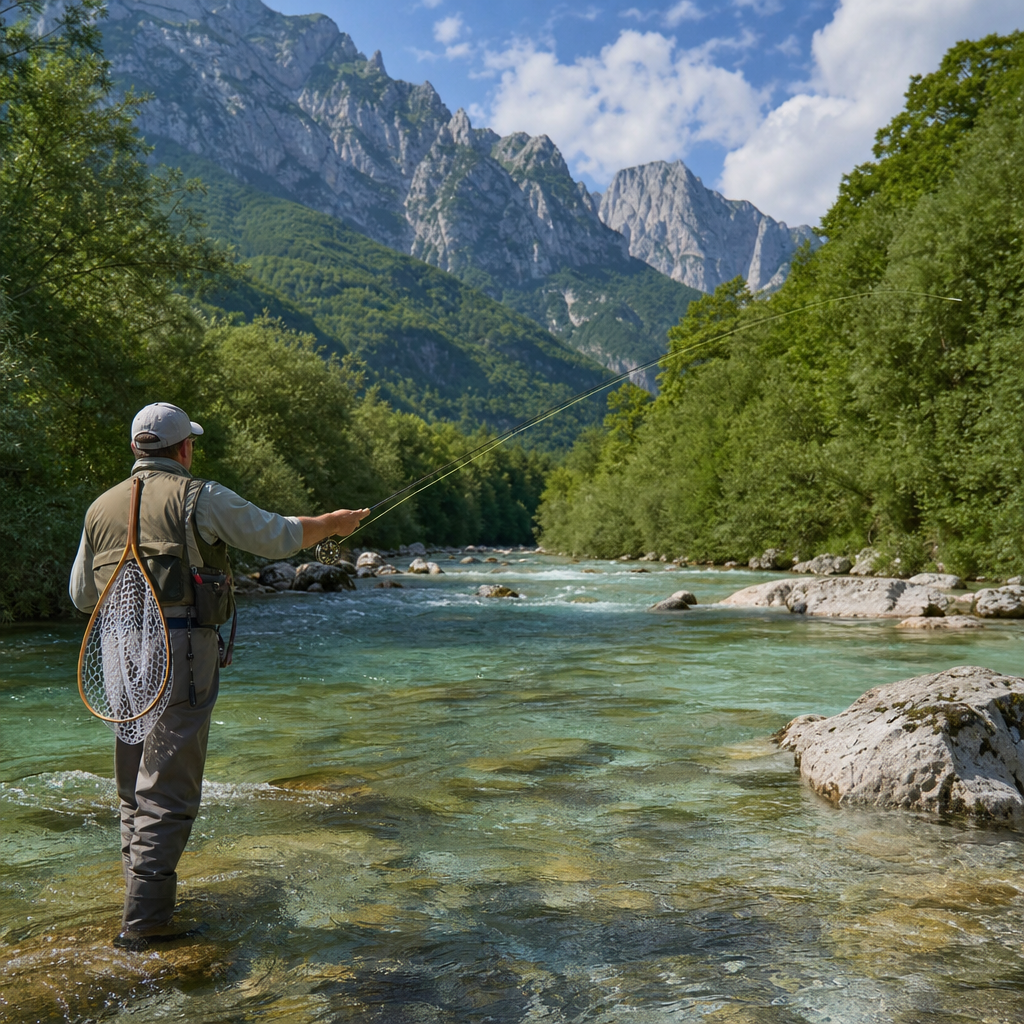
Italy offers one of Europe’s most varied fly fishing landscapes, combining alpine rivers, spring creeks, glacial lakes, and Mediterranean-fed streams within a single country. For anglers planning a European fly fishing trip, Italy deserves attention not only for scenery and food, but also for technical trout water, strong regional traditions, and a growing culture of catch-and-release management. In practical terms, Italy’s fly fishing destinations stretch from the Dolomites and South Tyrol to Friuli, Lombardy, Trentino, Piedmont, Abruzzo, and parts of central Apennine country, each with distinct hatches, regulations, and target species.
When anglers talk about fly fishing in Italy, they usually mean fishing for brown trout, marble trout, grayling, and stocked rainbow trout in rivers managed by local clubs, associations, or private beats. Some areas also offer lake fishing, tenkara-style mountain stream access, and selective spring-creek opportunities that reward precise presentation. Because Italy sits at the crossroads of alpine and Mediterranean climates, conditions can change quickly with snowmelt, summer heat, and autumn rain. That variability matters. The best destination for a June trip is not always the best destination in September, and a river that is perfect for dry flies one week may demand nymphing or streamer tactics the next.
I have found that visiting anglers often underestimate how regional the experience is. Licenses, day permits, no-kill zones, and beat reservations can differ sharply from one province to another. Local fisheries management also shapes quality. In well-run no-kill stretches, fish density, average size, and insect life can be excellent. In heavily stocked or pressured water, the experience may feel less wild, though it can still suit beginners or families. This hub article covers Italy as part of the broader Europe fly fishing destinations landscape, helping you understand where to go, what each area is known for, and how to match your trip to season, skill level, and fishing style.
Why Italy stands out among Europe fly fishing destinations
Italy is not always the first country named in conversations about Europe fly fishing destinations. Slovenia, Austria, and Iceland often come up sooner. Yet Italy competes strongly because it combines accessibility, diversity, and cultural depth. Within a relatively compact geography, you can fish freestone alpine torrents, clear meadow rivers, tailwaters, and managed trophy stretches. You can spend the morning casting size 18 mayfly imitations on a spring creek and the evening eating regional trout dishes in a mountain village. That combination is difficult to match.
Another advantage is range. Northern Italy provides the classic high-quality trout and grayling fishing most fly anglers seek, especially in Trentino-Alto Adige, Veneto, Friuli-Venezia Giulia, and parts of Lombardy and Piedmont. Central Italy adds less-publicized opportunities in the Apennines, where limestone influence and cooler headwaters can produce rewarding dry-fly fishing. For travelers building a multi-country itinerary, Italy also connects naturally with neighboring Slovenia, Switzerland, Austria, and France, making it a practical anchor for a longer European fishing journey.
Italy also rewards anglers who value technique. Many waters are clear and heavily observed by fish, so long leaders, careful wading, and drag-free drifts matter. Local anglers have developed refined approaches to Czech nymphing, European nymphing, and modern dry-dropper systems, often adapted to pocket water and compact channels. On selective rivers, terrestrial patterns, CDC emergers, and slim perdigons all have a place. The result is a destination that can challenge experienced anglers while still offering easier managed stretches for newcomers.
Top regions for fly fishing in Italy
The best fly fishing destinations in Italy are concentrated in the north, where alpine watersheds create cold, oxygen-rich habitat. South Tyrol is a flagship region, with rivers such as the Passer, Rienza, and upper Adige system drawing anglers for trout and grayling. The combination of mountain scenery, clear water, and organized fishing associations makes it one of the easiest places for international visitors to start. Trentino is equally important, with the Sarca, Avisio, Noce, and many tributaries offering everything from pocket water to larger valley rivers.
Friuli-Venezia Giulia is especially significant for anglers interested in marble trout, one of Europe’s most iconic salmonids. Rivers like the Tagliamento basin and tributaries in the region can provide a more wild, less manicured feel than some heavily managed beats. Lombardy contributes well-known fisheries around the Adda, Oglio, and mountain tributaries, plus access to large lakes and tailwater systems. Piedmont, bordering France and Switzerland, includes alpine valleys where small-stream enthusiasts can find beautiful trout water away from the busiest tourist corridors.
Veneto matters because of the Piave and Brenta systems, while Abruzzo and Umbria deserve mention for anglers who want to combine cultural travel with lighter-pressured fishing. Although central and southern Italy are not as dominant in the European fly fishing map as the northern Alps, selected rivers still offer memorable sessions, particularly in cooler months or high-elevation areas. For a hub page, the key idea is simple: northern alpine Italy is the core, but specialized opportunities exist beyond it for anglers willing to research local access and regulations.
| Region | Best Known For | Primary Species | Typical Strength |
|---|---|---|---|
| South Tyrol | Clear alpine rivers and organized beats | Brown trout, grayling, rainbow trout | Accessible quality fishing |
| Trentino | Diverse river types and strong guides | Brown trout, marble trout, grayling | Technical variety |
| Friuli-Venezia Giulia | Wild-feeling rivers and marble trout potential | Marble trout, brown trout | Authentic alpine fishing |
| Lombardy | River systems, lakes, tailwaters | Brown trout, grayling, pike in some waters | Mixed-format trips |
| Piedmont | Quiet alpine valleys and smaller streams | Brown trout, rainbow trout | Lower crowds |
Species, hatches, and river styles
Brown trout are the backbone of fly fishing in Italy, but they are not the whole story. Marble trout, native to parts of northern Italy and the Adriatic basin, are highly prized because of their size potential, predatory behavior, and distinct mottled patterning. Grayling add another layer, especially in larger, cooler rivers where smooth glides and seam lines reward delicate dry-fly presentations. Stocked rainbow trout are common in certain managed waters and can provide consistent action, although purists often prefer beats emphasizing wild fish and native genetics.
River style largely determines the fishing approach. Freestone alpine streams call for short drifts, quick line control, and pocket-water reading. Meadow rivers and spring creeks demand stealth, accurate casts, and exact fly choice. Tailwaters can fish well outside peak summer periods, especially when natural flows remain stable. Insects vary by drainage, but Italian trout waters commonly see mayflies, caddis, stoneflies, and terrestrials. Blue-winged olives, pale watery types, and caddis events can all produce strong dry-fly windows, while summer hopper and ant fishing becomes useful on grassy banks.
One recurring mistake among traveling anglers is assuming hatch charts from Austria or Slovenia transfer directly across nearby borders. Sometimes they do, but local water chemistry, temperature, and management alter timing. On many Italian rivers, the dependable strategy is to begin with Euro nymphs in the morning, switch to dries or emergers during visible activity, and keep a small streamer ready for larger trout in deeper slots. Guides in Trentino and South Tyrol frequently build days this way because it matches how fish behavior changes with light, flow, and angling pressure.
When to go and how seasonality shapes success
The prime fly fishing season in Italy generally runs from spring through autumn, but the best window depends on elevation and river type. In alpine areas, early spring can be affected by snowmelt, cold water, and unstable flows. Late May through July is often excellent, especially when runoff drops and major insect activity begins. August can still fish well in higher elevations, though warm temperatures, tourism, and lower water in valley sections may reduce daytime activity. September and early October are often outstanding, with cooler nights, fewer crowds, and aggressive pre-spawn feeding from larger trout.
Winter opportunities exist on some tailwaters, lakes, and specially regulated stretches, but they are not the core reason most international anglers visit. If your goal is classic dry-fly fishing, plan around late spring and early autumn. If your goal is nymphing productive pocket water, a broader range of months can work. I have seen visitors schedule expensive Italian fishing trips in peak heat based solely on vacation convenience, then struggle with low flows and bright, inactive fish. Better timing usually matters more than bringing more gear.
Rainfall patterns also deserve attention. Thunderstorms can color mountain rivers quickly, and glacial influence can make afternoon flows less favorable than mornings. In some valleys, fishing the first half of the day is simply smarter. Monitoring regional hydrology, not just weather apps, improves decisions. Local outfitters often provide the most accurate read on whether a beat will fish well after rain, whether a spring creek remains clear, or whether a higher tributary is the better option for the week you are traveling.
Planning permits, guides, and access
Italy is not a destination where anglers should assume a single national process covers everything. You may need a government fishing license, a regional endorsement, and a local day ticket or no-kill permit depending on the water. Some fisheries are controlled by associations, while others are private or semi-private beats sold through lodges, tackle shops, tourism offices, or online reservation systems. The practical takeaway is to plan access before arrival, especially in famous zones where daily rod numbers are capped.
Hiring a guide is often worthwhile, even for experienced anglers. A good local guide does more than row or point out pools. They translate regulations, manage permits, explain beat rotation, identify productive hatches, and adjust technique to local conditions. In marble trout water, that local knowledge can save an entire trip. So can understanding fish handling rules, hook restrictions, and section boundaries, all of which may be enforced more strictly than some visitors expect.
Access quality varies. Some beats have easy bankside paths and suit anglers of mixed fitness levels. Others require steep descents, slippery boulders, and confident wading in fast current. Felt-soled boots may be restricted in certain contexts, and wading staffs are genuinely useful on many alpine rivers. If you are building a Europe fly fishing destinations itinerary around Italy, treat logistics as part of success, not an afterthought. The best water on paper is only valuable if you can legally reach it, fish it safely, and match it to your skill set.
How Italy compares with other European fly fishing hubs
Compared with Slovenia, Italy often offers more regional breadth but less international branding around a few signature rivers. Compared with Austria, Italy can feel less standardized and more varied in management quality, though the best Italian beats are every bit as memorable. Compared with Iceland, it is more affordable for most trout-focused trips and offers far greater non-fishing variety for families. Compared with Spain’s Pyrenees, Italy generally presents a stronger mix of alpine river culture and broad tourism infrastructure.
Its main limitation is inconsistency from one water to another. Some fisheries are world class; others are average, stocked, or pressured. That is not a flaw if you plan carefully. It simply means Italy works best for anglers who research regions rather than relying on the country name alone. As a Europe fly fishing destinations hub, Italy belongs near the top because it serves multiple traveler types: the technical dry-fly angler, the Euro nymph specialist, the scenic first-time visitor, and the multi-activity traveler who wants excellent fishing alongside wine, hiking, and historic towns.
The strongest strategy is to use Italy as both a destination and a gateway. Start with a high-confidence base such as South Tyrol or Trentino, then branch into more specialized waters as your schedule allows. That approach balances reliability and discovery, which is exactly what makes Italy so compelling for fly anglers exploring Europe.
Italy rewards anglers who plan by river type, season, and regulation rather than by postcard imagery alone. The country’s best fly fishing destinations combine alpine ecology, disciplined local management, and a deep regional culture that extends well beyond the water. Brown trout, marble trout, and grayling opportunities are real, but success depends on choosing the right area at the right time and understanding how permits, access, and technique differ across provinces.
For a Europe-focused fly fishing hub, Italy deserves comprehensive coverage because it offers both breadth and quality. You can target selective trout on clear northern rivers, explore quieter mountain valleys, or build a broader itinerary that connects Italy with neighboring fisheries in Slovenia, Austria, Switzerland, or France. Few countries allow that level of variety without sacrificing comfort, food, and travel convenience.
If you are mapping future European fly fishing trips, start by narrowing Italy to one priority region, then research its licenses, seasonal flows, and signature species in detail. That simple step turns Italy from a broad idea into a practical, high-reward destination.
Frequently Asked Questions
What makes Italy such a unique fly fishing destination compared with other countries in Europe?
Italy stands out because it compresses an unusual range of fishable water into one country. An angler can move from cold alpine freestone rivers in the Dolomites to clear spring creeks, glacial lakes, and lower-elevation streams influenced by Mediterranean weather patterns, often within a relatively manageable travel distance. That variety creates an experience that feels broader than many first-time visitors expect. Instead of a single dominant fly fishing style, Italy offers technical dry-fly fishing, nymphing in pocket water, stillwater opportunities, and highly visual presentations in crystal-clear currents.
Another major part of Italy’s appeal is how fishing quality intersects with regional identity. Fly fishing here is not just about the water; it is connected to mountain culture, local food, family-run lodges, and a long tradition of river stewardship in many areas. Regions such as South Tyrol, Trentino, and parts of the northeastern Alps have developed strong reputations for well-managed trout fisheries, including beat systems, regulated access, and an increasing emphasis on catch-and-release. For traveling anglers, that often translates into cleaner water, healthier fish populations, and a more structured fishing experience than they may find elsewhere.
Italy also rewards anglers who enjoy technical fishing. Many rivers run exceptionally clear, which means fish can be selective and presentations matter. Light leaders, drag-free drifts, careful wading, and accurate casts are often more important than simply covering water quickly. At the same time, the scenery is a serious bonus: dramatic limestone peaks, forest valleys, and historic villages make even a slow day feel worthwhile. In short, Italy is unique because it combines diversity, challenge, culture, and scenery in a way few European fly fishing destinations can match.
Which regions in Italy are best known for fly fishing, and what types of water do they offer?
The best-known fly fishing regions in Italy are generally in the north, where mountain systems create cold, oxygen-rich habitat ideal for trout and grayling. South Tyrol is one of the top names for international anglers. It is known for beautifully managed alpine rivers, smaller tributaries, and streams flowing through dramatic mountain terrain. Waters here are often clear and highly technical, with healthy populations of trout and, in some systems, grayling. It is one of the strongest choices for anglers who want organized access, quality infrastructure, and classic alpine fly fishing.
Trentino is another standout, offering a blend of freestone rivers, tributaries, and stillwaters. It appeals to anglers who want options, because a trip can include fast pocket water one day and calmer, more technical runs the next. The Dolomites more broadly are famous not just for scenery but for fishable rivers that suit dry flies, nymphs, and euro-style approaches. These mountain fisheries are often at their best when snowmelt settles and flows become more stable.
Friuli-Venezia Giulia, especially in the far northeast, is also important and sometimes slightly overlooked by anglers focused only on the Dolomites. This region includes spring-fed and karst-influenced waters that can be exceptionally clear and biologically productive. Depending on the river, anglers may encounter challenging sight fishing and selective trout that demand precise technique. Lombardy and parts of Veneto also contribute notable fisheries, including rivers, tailwaters, and lakeside systems that broaden the range of available angling. Overall, northern Italy is the core of the country’s fly fishing scene, but the exact character of the fishing changes significantly by region, which is part of what makes planning an Italian trip so interesting.
What species can fly anglers expect to target in Italy, and what techniques work best?
Trout are the primary focus for most fly anglers visiting Italy, with brown trout being the most common and widely sought species. In many high-quality waters, brown trout are the fish that define the experience, especially in clear mountain rivers where they respond to subtle presentations and well-matched flies. Rainbow trout may also be present in some managed stretches, and grayling are an important target in certain rivers, particularly for anglers who enjoy elegant dry-fly fishing and fine tippet work. In lakes and select systems, additional opportunities may exist depending on local management and stocking practices.
Because Italy’s waters are so varied, no single technique works everywhere. On freestone rivers in alpine terrain, nymphing is often highly effective, especially when flows are moderate and fish hold in seams, plunge pools, and deeper runs. Euro nymphing and other contact-heavy methods can be productive in these environments because they help maintain drift control in turbulent water. On calmer rivers and spring creeks, however, dry-fly fishing can become the main event. Clear water and steady insect activity often create situations where fish inspect a fly carefully, so natural patterns and precise presentation matter.
Terrestrials can be useful in warmer months, and small emergers or soft hackles may shine during subtle hatches. Streamers can produce larger fish in some rivers and lakes, especially during lower-light periods or when trout are feeding aggressively. The key is to adapt to water type and season rather than relying on one rigid approach. Anglers who come prepared to fish both above and below the surface usually do best in Italy, particularly when conditions change from one valley to another.
When is the best time to go fly fishing in Italy, and how do seasonal conditions affect the trip?
The best time to fly fish in Italy generally falls between late spring and early autumn, but the ideal window depends heavily on elevation, snowpack, and the specific type of water you plan to fish. In many alpine areas, early spring can be cold and inconsistent, with runoff affecting clarity and flow. As a result, late May through July is often a strong period in northern mountain regions, especially once snowmelt begins to stabilize. Summer then opens access to higher-elevation waters that may be inaccessible or less productive earlier in the season.
Late summer and early autumn are often excellent for anglers who prefer more technical fishing. Water levels can drop, making fish easier to locate but also easier to spook. This is a great time for experienced fly anglers who enjoy stealth, dry flies, and deliberate presentations. September, in particular, can be outstanding in some regions because temperatures moderate, insect activity can remain good, and mountain scenery becomes even more dramatic. That said, local regulations and seasonal closures vary, so anglers should always confirm the legal season for each river or beat before traveling.
Weather patterns matter a great deal in Italy. A river that fishes beautifully one week can become difficult after rain, heat, or upstream melt. Lower-elevation waters may fish differently than high alpine streams during the same trip, which is why many visiting anglers appreciate having a flexible itinerary. If possible, plan around a region rather than a single river so you can adjust to conditions. That flexibility is one of the smartest ways to get the most from an Italian fly fishing vacation.
Do you need permits, guides, or special planning to fly fish in Italy successfully?
Yes, planning is important, because fly fishing in Italy is often more structured than many visitors expect. In most cases, anglers will need more than a simple national fishing license. Depending on the region and the specific water, you may need a regional license, a daily permit, or access to a controlled beat managed by a local association or private fishery. Some of the best waters operate under strict rules covering bag limits, catch-and-release practices, fly-only sections, seasonal restrictions, and the number of anglers allowed each day. These regulations are part of what helps maintain quality fishing, but they do require advance research.
Hiring a guide is not mandatory, but it can make a major difference, especially for first-time visitors. A good local guide helps with permits, access logistics, and regional rules, while also saving time on river selection and fly choice. That is particularly valuable in Italy because conditions can vary dramatically from valley to valley. A guide can also help visiting anglers understand local etiquette, including beat rotation, wading limitations, and fish handling expectations in catch-and-release stretches. Even experienced anglers often benefit from at least one guided day at the start of a trip.
Beyond permits and guides, practical planning should include transportation, language considerations, and lodging proximity to target rivers. Mountain regions can involve winding roads and travel times that look short on a map but take longer in reality. It is also wise to pack for a range of conditions, since alpine mornings can be cold even in summer. In general, successful fly fishing in Italy comes from treating the trip as both an angling adventure and a regional travel experience. The more carefully you organize access, regulations, and mobility, the more time you will spend doing what you came for: fishing excellent water in one of Europe’s most memorable landscapes.