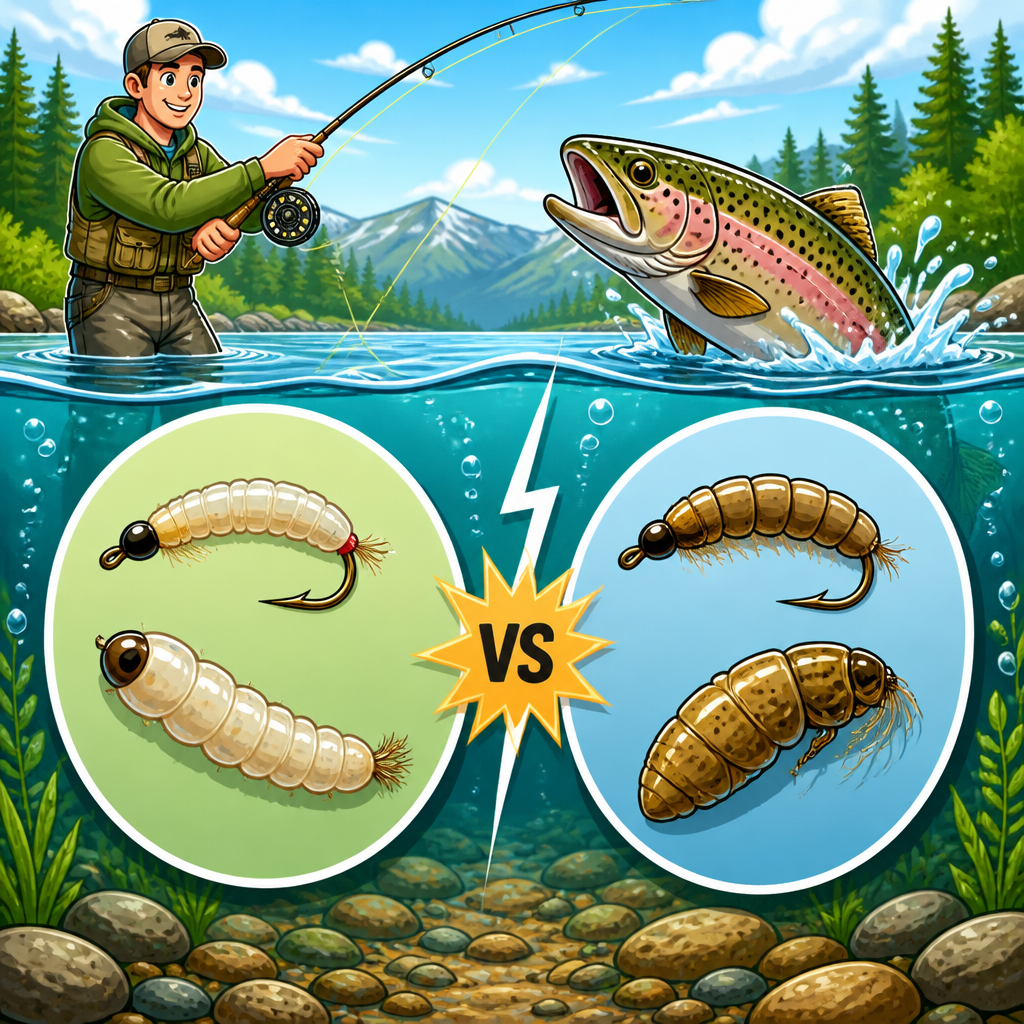
Midge larva and midge pupa catch trout everywhere, but they solve different problems on the water. If you want to know which fly you should fish, start with the insect itself. Midges are small two-winged insects in the order Diptera, and in most trout streams and stillwaters they are present every month of the year. Their life cycle matters because trout feed on each stage differently: larva live low and drift near the bottom, while pupae rise toward the surface as they prepare to emerge. Choosing between a larva pattern and a pupa pattern is really choosing a feeding lane, a depth, and a trout behavior.
I rely on midge patterns more than any other trout flies during winter, tailwater conditions, and difficult low-water days. On many rivers I have watched anglers fish only adult dries during visible midge activity and miss fish that were actually taking ascending pupae six inches under the film. I have also seen the opposite mistake: anglers suspend pupa imitations over trout that are grubbing on bloodworms in slow seams near the bottom. Understanding the difference saves time, reduces random fly changes, and turns a broad category called midge into a practical system.
This article serves as a hub for types of flies within fly patterns and tying, using midge larva and midge pupa as the clearest example of how insect stage drives fly selection. Along the way, it connects nymphs, emergers, wets, dries, and stillwater tactics under one decision-making framework. By the end, you should know when to fish larva, when to fish pupa, how to rig each, what materials matter in the vise, and how these choices relate to the broader world of trout flies.
What Is a Midge Larva, and What Is a Midge Pupa?
A midge larva is the wormlike juvenile stage that lives in the substrate, weed beds, silt, and soft current edges. Many anglers call red larva bloodworms because hemoglobin helps some species survive in low-oxygen environments. In practical fishing terms, larva are slim, segmented, and usually imitated with thread, wire, or ribbed bodies in red, black, olive, cream, or brown. They do not have the buoyant profile of an emerger and they are not trying to break free of the shuck. They are food drifting along the bottom or dislodged from cover.
A midge pupa is the transitional stage between larva and adult. It often appears more tapered, with a defined thorax, gas-trapping shuck, and a tendency to rise in the water column. This ascent is why pupa patterns are so deadly. Trout know pupae are vulnerable and concentrated, especially before and during an emergence. A classic Zebra Midge can imitate either stage depending on color and depth, but dedicated pupa patterns usually emphasize a darker thorax, a bit of flash, and a presentation that allows slow rise or suspension below the surface.
The fishing difference is straightforward. Fish larva when trout are feeding deep, the hatch is not imminent, flows are cold or stable, and stomach samples or seine checks show wormlike forms. Fish pupa when trout are tracking insects upward, you see occasional rises, shucks in the film, or birds working over a hatch. If you remember one rule, make it this: larva are the better search pattern for bottom-oriented feeding, while pupa are the better trigger pattern for active emergence windows.
When Trout Prefer Midge Larva
Trout prefer midge larva when food is scarce, water temperatures are low, and the easiest calories are near the bottom. Tailwaters below dams are famous for this because stable flows and consistent temperatures support dense midge populations. In January on rivers like the South Platte or the San Juan, trout often hold in moderate walking-speed current and pick off tiny drifting larvae with almost no lateral movement. In these situations, your fly needs to be slim, heavy enough to sink, and dead-drifted at the level of the fish.
Larva also excel after flow bumps, weed sloughs, and winter shelf ice events that dislodge bottom insects. In stillwaters, chironomid larva become important in soft sediment zones, especially before strong warming trends trigger pupation. If you seine the margins and find red, black, or olive wormlike insects but no obvious thoracic development, start with larva. I usually fish them under an indicator in deeper runs, as a point fly in a two-fly euro rig, or beneath a larger attractor nymph that helps me maintain depth and contact.
Color and size matter more with larva than many anglers admit. Size 18 to 24 covers most river situations, while stillwater chironomid larva can run larger. Red is famous, but black often outfishes it in clear water. Cream and olive are excellent in spring creeks where midge species vary. A sparse body is critical. Thick dubbed larva look wrong. I tie many with UTC thread, small Ultra Wire ribs, and a thin coat of UV resin only if I need durability. Too much resin kills the natural segmentation.
When Trout Prefer Midge Pupa
Midge pupa become the better choice when trout shift from maintenance feeding to selective interception. As the insect rises, trapped gases create sheen and buoyancy, and the thorax becomes a prominent trigger. Trout often suspend just below the main current seam or under the film and take pupae ascending at a slight angle. This is why anglers fishing the bottom all day can miss fish rising inches overhead. The hatch is happening, but not where they think.
The clearest signs are subtle. You may see dimples rather than splashy rises, adults gathering on eddies, shucks in the foam line, or swallows and midges hovering over slower slicks. During these windows, a pupa on a short dropper beneath a dry, in a duo rig, or under a very small indicator can be devastating. On stillwaters, suspended chironomid pupae under a balanced setup or slip indicator often dominate once water warms enough to initiate a steady ascent.
Pupa patterns usually benefit from a touch of flash or contrast because the natural insect reflects light during emergence. A silver- or copper-ribbed Zebra Midge, a thread pupa with a peacock or ice-dub thorax, or a glass-bead chironomid all suggest life without becoming gaudy. The key is not just the pattern but the trajectory. If your fly never leaves the bottom, it is not imitating the most vulnerable phase of the pupa. Controlled lift at the end of a drift, static suspension, or a very slow hand-twist retrieve often outperforms a standard dead drift.
How to Choose: Conditions, Depth, and Presentation
The best answer to midge larva versus midge pupa is not a fixed preference but a checklist. Start with depth. If trout are hugging the bottom and no riseforms are visible, fish larva first. If trout are suspended or you see any emergence clues, switch to pupa. Next, assess water type. Fast runs and deep buckets usually favor larva because getting down matters more than subtle ascent. Slicks, spring creeks, tailout glides, and stillwater flats often favor pupa because the fish have time to inspect upward-moving insects.
Time of day matters. Early mornings in winter commonly begin with bottom feeding on larva, then transition to pupae as light and temperature increase. Weather matters too. Bluebird stability often creates predictable late-morning midge emergence, while sudden cold fronts can delay ascent and keep trout on larvae longer. Pressure matters as well. On heavily fished rivers, trout learn to ignore oversized flashy chironomids; a plain thread larva in the correct size may outproduce every modern variant in the box.
| Condition | Fish Larva When | Fish Pupa When |
|---|---|---|
| Depth | Trout are tight to bottom | Trout are suspended or rising |
| Hatch signs | No shucks or riseforms visible | Dimples, shucks, adults, birds active |
| Water type | Deep runs, buckets, heavy current | Slicks, tailouts, spring creeks, stillwater flats |
| Presentation | Dead drift near substrate | Suspended, lifting, or slow ascending drift |
| Fly design | Slim segmented body, minimal flash | Thorax emphasis, slight flash, tapered profile |
If you are unsure, rig both. I often fish a size 20 black larva as the point fly and a size 20 silver-ribbed pupa 12 to 16 inches above it. That combination tells me quickly where trout are feeding. If the top fly gets eaten, I shorten the distance to improve pupa control. If the point fly produces, I add weight or lengthen tippet to keep both flies lower. This is the same decision process I use across other fly types: begin by identifying feeding level, then refine pattern style.
How Midge Patterns Fit the Bigger Categories of Flies
Because this is a hub for types of flies, it helps to place midge larva and pupa within the broader taxonomy anglers use. Larva belong with subsurface immature patterns, alongside mayfly nymphs, caddis larvae, scuds, sowbugs, and worms. Pupa overlap with emergers and soft-hackle style flies because they imitate transition and movement rather than a static bottom form. Adult midges fit the dry-fly category, while drowned adults can resemble spent or trapped patterns fished in the film.
This classification matters because anglers build fly boxes by function. Search nymphs like Pheasant Tails and Hare’s Ears cover general mayfly behavior. Attractor nymphs like Perdigons get down fast and provoke strikes. Exact-imitator midge larvae shine when trout focus on tiny subsurface food. Emergers and pupae become critical when insects move vertically. Dries close the deal only when fish are truly on top. Streamers sit outside this insect-stage framework because they suggest baitfish, leeches, or larger prey.
If you are organizing content or planning your tying bench, think in linked clusters rather than isolated patterns. A midge subcategory should connect naturally to chironomids, Zebra Midges, bloodworms, RS2-style emergers, Griffith’s Gnats, and stillwater indicator rigs. It should also link outward to mayfly nymphs, caddis pupa, scuds, soft hackles, and dry-fly matching. That is how anglers actually solve problems on the water: by comparing life stage, depth, silhouette, and drift, not by memorizing pattern names without context.
Tying and Rigging Details That Actually Change Results
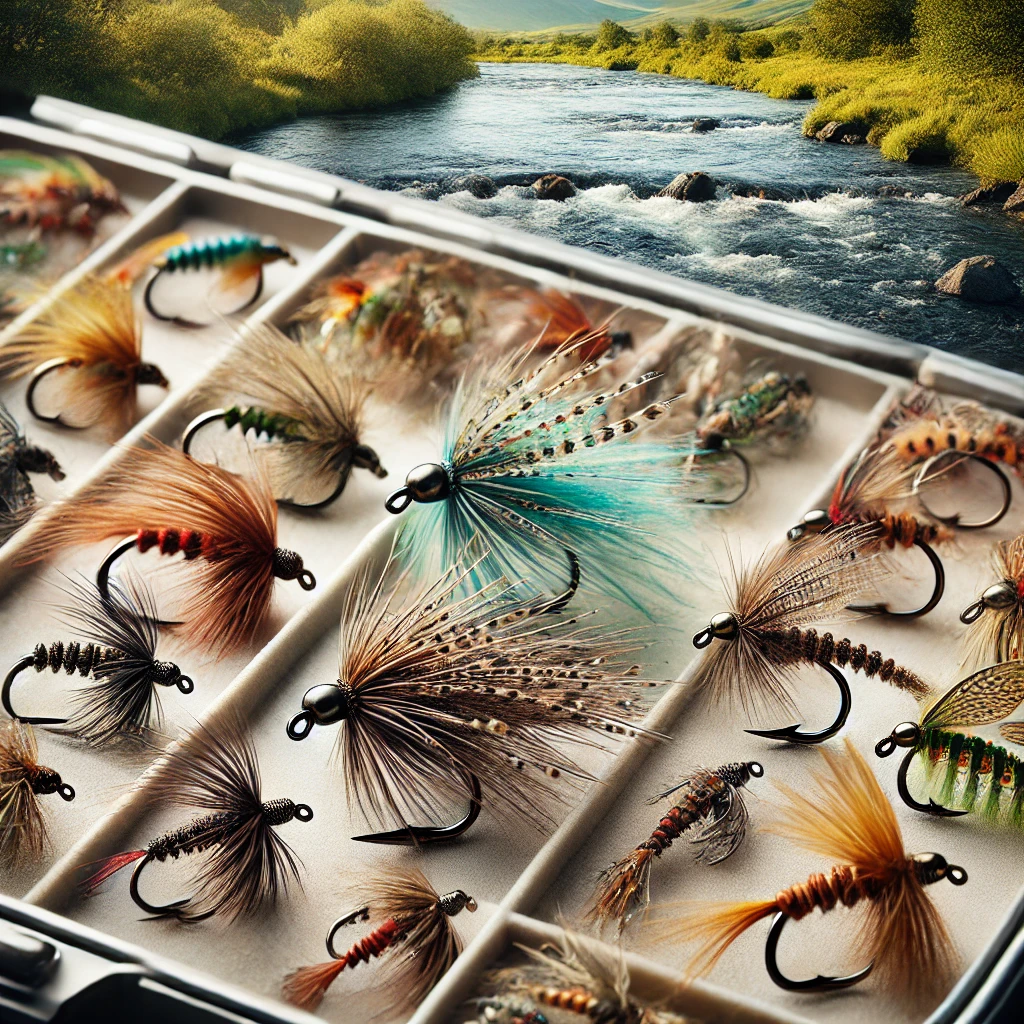
Small mistakes in tying and rigging matter more with midges than with big stoneflies or streamers. Hook choice comes first. A curved or straight nymph hook in sizes 18 to 24 is standard, but the gape must remain open after the body is built. Overdressed flies miss fish. Bead choice should match your goal. Tungsten beads help larva reach the substrate; glass beads, slim thread heads, or unweighted ties often suit pupae that need a slow sink or neutral hang. Daiichi, Tiemco, Firehole, and Hanak all make dependable hooks for these jobs.
Thread bodies produce the cleanest profile. For larva, I favor 70D or 8/0 thread, fine wire rib, and no more than a whisper of coating. For pupa, a slightly built thorax with peacock herl, superfine dubbing, or UV ice dub creates contrast where the natural insect has developing wing structures. White gill posts can help on chironomid pupae in lakes. Durability still matters, so I use sparse resin selectively, especially on guide days when one fly may catch a dozen fish.
Rigging should match the pattern’s role. Larva fish best below split shot, under an indicator with enough depth, or on a tight-line setup that keeps them in the lower third of the column. Pupae fish best on lighter terminal sections, shorter droppers beneath a dry, or suspended under subtle indicators that do not impede ascent. Fluorocarbon in 5X to 7X often helps because tiny flies sink better and maintain contact, but nylon can be superior under dries where you want a gentle drift in the film. Adjust based on current, not dogma.
Common Mistakes and the Smart Starting Point
The most common mistake is treating all midge fishing as tiny nymph fishing. That mindset ignores stage, movement, and where trout are looking. Another mistake is fishing oversized patterns because they are easier to tie on. If naturals are size 24 and your fly is a thick 18, refusals are predictable. Anglers also underweight larva, overweight pupae, and strike too aggressively on delicate takes. With midges, many eats feel like nothing or simply pause the indicator.
A smart starting point is simple. Carry black, red, olive, and cream in sizes 18 to 22, with both larva and pupa profiles. Start deep with larva if there is no visible hatch. Move shallower or add a pupa dropper as soon as you see dimples, shucks, or suspended marks on polarized glasses. On stillwaters, set one rod or one leader depth for bottom-oriented larva and another for suspended pupae if regulations allow. Let the fish tell you which lane matters.
Midge larva vs. midge pupa is not an argument about one fly being better. It is a question about timing, depth, and trout intent. Larva win when fish are feeding low on steady subsurface calories. Pupae win when fish key on the vulnerable rise to the surface. Learn those cues, tie sparse patterns in the right sizes, and rig them to match the insect’s position in the water column. If you are building your fly patterns and tying system, start with this pair. Few choices teach more about types of flies, and few choices catch more trout year-round. Tie both, fish both, and refine from there.
Frequently Asked Questions
What is the main difference between a midge larva and a midge pupa when you are choosing a fly?
The biggest difference is where each stage lives in the water column and how trout expect to see it move. A midge larva is the early, wormlike stage of the insect. It usually lives low in the system, close to the bottom, in soft sediment, weeds, or slower current seams, and it often drifts near the streambed when dislodged. A midge pupa is the transition stage before the adult emerges. At that point, the insect is no longer simply living on the bottom. It is rising through the water column toward the surface, and that upward movement makes it much more visible and vulnerable to feeding trout.
From a fishing standpoint, that means larva patterns are usually the better choice when trout are feeding deep, hugging the bottom, or showing subtle winter and early-season behavior. Pupa patterns become the better option when fish are suspended, when you see trout feeding just under the film, or when a hatch is beginning and insects are ascending. In simple terms, fish larva when trout are keying on subsurface food near the bottom, and fish pupa when trout are looking up and intercepting emerging insects.
This is why both patterns are essential rather than interchangeable. They may be tied small and both represent midges, but they solve different problems. One matches a bottom-oriented food source. The other matches an active, rising insect that often triggers more aggressive feeding.
When should you fish a midge larva instead of a midge pupa?
You should fish a midge larva when trout are feeding deep and there is little evidence of an active emergence. That often means cold water, winter conditions, early mornings, tailwaters, or pressured fisheries where fish are feeding selectively on tiny insects near the bottom. Because midge larva are present year-round, they are one of the most dependable subsurface food sources in both rivers and stillwaters. If you are not seeing rises, not seeing insects in the air, and not getting attention on more active patterns, a larva is often the smartest starting point.
Larva also shine when fish are eating naturally drifting food rather than chasing movement. Their profile is slender, simple, and subtle, which makes them deadly when trout are cautious. On many technical rivers, a small red, black, olive, cream, or brown midge larva drifted close to the bottom can outfish flashier patterns by a wide margin. The key is getting the fly down to the feeding lane and maintaining a natural drift.
Another good time to choose a larva is after flows increase, when bottom organisms get dislodged and swept into the current. In lakes, larva are especially important near the substrate, along drop-offs, and around weed beds where trout cruise and feed slowly. If the fish are not showing signs of intercepting ascending insects, the larval stage is often the more consistent producer.
When is a midge pupa the better fly to fish?
A midge pupa is the better fly when trout are feeding on insects that are actively emerging. This usually happens when pupae rise from the bottom or from vegetation toward the surface film to complete their transformation. During that ascent, they become highly vulnerable, and trout often target them with confidence. If you see fish rising softly, bulging just under the surface, or feeding in a way that suggests they are taking insects in or just below the film, a pupa is usually the better match than a larva.
Pupa patterns are also excellent when fish are suspended in the water column rather than pinned to the bottom. In rivers, that might mean dead-drifting a pupa under an indicator at a shallower depth or swinging it gently at the end of the drift to imitate the insect’s upward movement. In stillwaters, pupa patterns are often fished under an indicator, on a slow hand-twist retrieve, or on a very controlled lift that suggests a natural ascent.
What makes pupa patterns so effective is that they represent change and motion. Trout often respond strongly to emerging insects because they are concentrated, exposed, and easier to capture than many other food items. If there is any sign of an active hatch, especially on calm days when trout are feeding methodically near the surface, the pupa can be the fly that turns follows and refusals into committed takes.
How should you rig and present midge larva and midge pupa differently?
Midge larva usually need to be presented deeper and more slowly because they are associated with the lower part of the water column. In moving water, that often means fishing them under an indicator or as part of a euro-nymphing setup with enough weight to reach the bottom zone without constantly snagging. The goal is a natural, drag-free drift that keeps the fly near where trout expect to find larval midges. Because these insects are tiny, small mistakes in depth and drift matter a lot. Being six inches too high can mean missing the entire feeding lane.
Midge pupa are often fished higher in the water column and with a little more attention to lift, suspension, or rise. Under an indicator, many anglers place the pupa above a heavier point fly or fish it alone at a depth that matches suspended fish. In rivers, a pupa can be deadly during the final portion of the drift, when it starts to lift naturally in the current. In lakes, slow retrieves and occasional pauses can imitate the gradual ascent of the natural insect. The take is often soft, so strike detection matters.
The practical takeaway is simple: fish larva to the bottom, fish pupa in transition. Depth control is everything. If your larva is too high, it stops looking natural. If your pupa is pinned unnaturally to the bottom during an emergence, it no longer matches what trout are focused on. Presentation should always reflect the insect’s actual behavior, not just its name on the fly box label.
If you could only start with one, should you fish a midge larva or a midge pupa?
If you have no clear hatch activity and need a reliable starting point, begin with a midge larva. It is the more universal searching option because midge larva are available to trout virtually all year and are constantly part of the subsurface food chain. In tough conditions, especially cold weather or heavily pressured water, a properly presented larva often gets the first honest look from fish. It is a confidence fly because it matches a food source trout see all the time.
However, if you notice even subtle signs that trout are feeding upward, such as dimples, bulges, suspended marks on electronics in stillwater, or insects beginning to emerge, switch quickly to a pupa or add one to your rig. When trout focus on emerging midges, they can ignore bottom-drifting food and key tightly on the ascending stage. In those moments, a pupa is not just slightly better; it can be dramatically better.
The best answer for most anglers is not to think of larva versus pupa as a permanent choice. Think of it as a decision based on trout position and insect behavior. Start with larva when conditions are quiet and fish seem deep. Move to pupa when fish begin feeding in the middle or upper water column. The more closely you match the stage trout are eating at that exact moment, the more consistent your midge fishing will become.