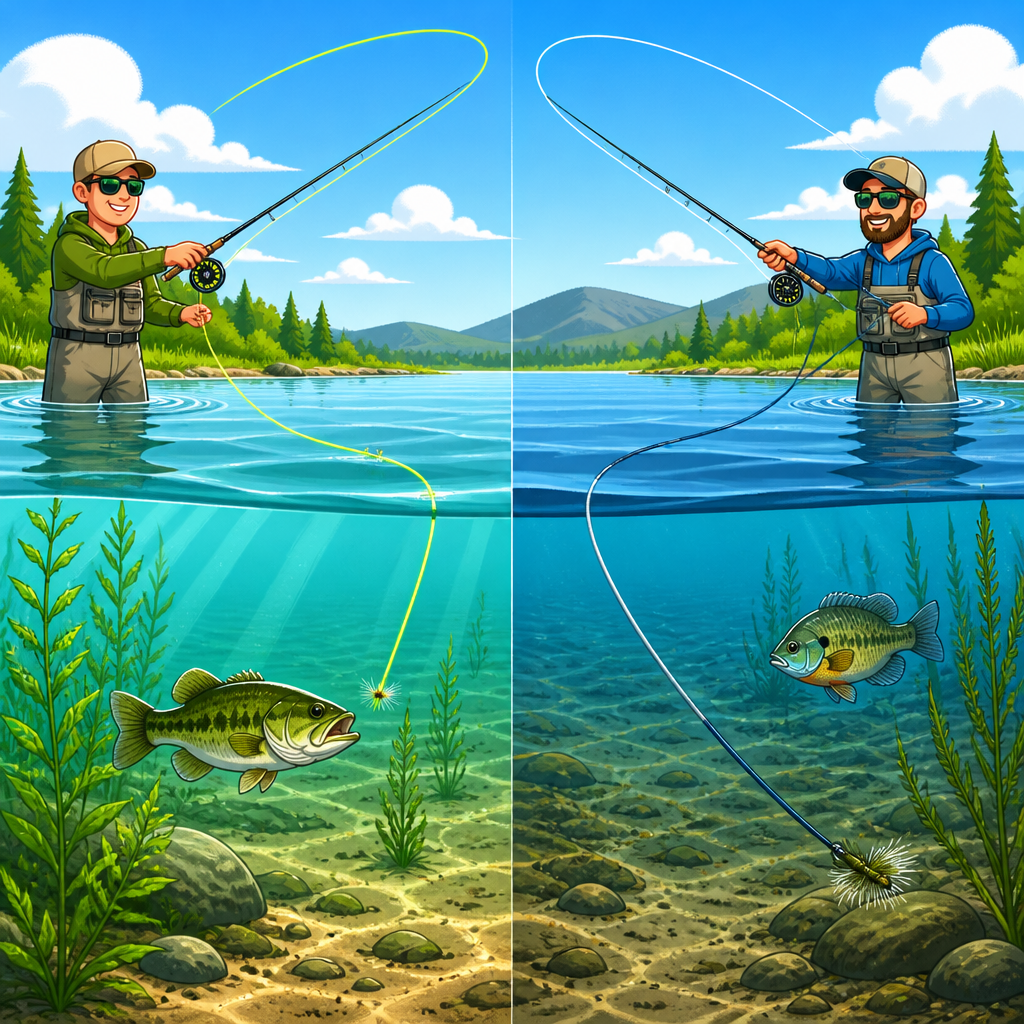
Choosing between floating and intermediate fly lines for shallow-lake fishing shapes how effectively you cover water, control depth, and present flies to trout, bass, panfish, and pike. In practical terms, a floating line stays on the surface, while an intermediate line sinks slowly, usually around 1 to 2 inches per second, though exact sink rates vary by manufacturer. That difference sounds small until you spend a day dealing with weed tops, wind lanes, cruising fish, and changing light. I have fished both line types across natural lakes, reservoirs, and stillwater ponds, and the pattern is consistent: success depends less on brand loyalty and more on matching line behavior to depth, retrieve speed, and the way fish are feeding.
Shallow-lake fishing usually means water from one to perhaps twelve feet deep, with much of the productive zone concentrated over flats, shoals, weed edges, marl bottoms, and drop-offs near shore. In this environment, anglers often fish chironomids, damsel nymphs, leeches, baitfish, dragonfly nymphs, scuds, and small topwater patterns. The line you choose determines whether those flies track above weeds, hang naturally in the strike zone, or plow into bottom debris. This is why floating versus intermediate fly lines is not a minor equipment detail. It is the central decision that governs presentation, depth control, leader design, and even how tired you feel after repeated casts in wind.
As a hub within Fly Fishing Basics and the broader Gear and Equipment category, this guide explains what each line does, when each works best, and how to build a practical stillwater setup without buying unnecessary specialty lines. It also connects the choice to rod action, reel balance, leader length, retrieve style, and seasonal fish behavior. If you want one answer up front, here it is: use a floating line when fish are feeding on or near the surface, when weeds are thick, or when you need versatile indicator, dry-fly, and suspender presentations; use an intermediate line when fish are subsurface in the top few feet and you need straighter contact, better wind penetration, and more consistent fly depth during the retrieve.
What a Floating Fly Line Does Best in Shallow Lakes
A floating fly line excels whenever precision near the surface matters more than cutting under chop. Because the line remains on top, it supports dry flies, poppers, hoppers, emergers, suspended nymphs beneath indicators, and unweighted or lightly weighted streamers retrieved over weed beds. In shallow lakes, this matters because many food sources rise or swim upward in the water column. Damsel nymphs migrate toward reeds, chironomid pupae ascend vertically, and trout often cruise just under the film during low light. A floater lets you suspend these patterns at exact depths with long leaders. When I fish a weedy flat in four to six feet of water, a floating line and a 12- to 18-foot leader often outperform any sinking setup simply because the fly rides cleanly above the vegetation.
Floating lines also mend easily. That is useful not only in rivers but on lakes where crosswinds, wave drift, and boat movement can drag a fly unnaturally. A floater gives you the ability to reposition slack, straighten an indicator rig, and recast quickly. It is also more forgiving for beginners. Surface visibility helps with line management, and pickups for repeat casts are generally easier. If your gear-and-equipment goal is a first stillwater outfit, a weight-forward floating line is the default recommendation for good reason: it covers the widest range of techniques at the lowest learning cost.
There are limitations. In chop, a floating line can bow on the surface, reducing contact with subsurface flies. That creates delayed hooksets and inconsistent depth. Long leaders partly solve the problem, but not completely. Surface tension can also make a floater “stick” during slow hand-twist retrieves, causing subtle flies to rise and fall unnaturally. In bright conditions, fish feeding just two to four feet down sometimes reject patterns pulled by a visible surface line directly overhead. Those are the situations where intermediate lines start to separate themselves.
Where Intermediate Fly Lines Gain a Real Advantage
An intermediate fly line is designed to sink slowly and level out beneath the surface. In shallow-lake fishing, that modest sink rate is often ideal because it gets the line under surface chop without dropping so fast that the fly snags bottom. The immediate benefit is direct contact. Once submerged, the line develops less wind drag, less surface belly, and a straighter path to the fly. That improves strike detection and gives streamers, leeches, scuds, and nymphs a smoother, more horizontal retrieve. On calm days this can seem subtle; on windy lakes it is decisive.
I rely on an intermediate when fish are cruising drop-offs in three to eight feet of water or when they are feeding on baitfish over clean flats. A balanced setup might be a clear intermediate line, a 7.5- to 10-foot leader, and a small olive leech or size 12 damsel nymph. After the cast, I count down briefly, then retrieve with slow strips or a hand twist. The line stays subsurface, the fly tracks consistently, and I maintain contact through the entire swing. This is one reason many experienced stillwater anglers consider an intermediate the most efficient searching line in lakes shallower than about ten feet.
Intermediate lines are especially effective from a boat or float tube because they maintain depth while drifting. They also present less line shadow than bright floating lines, particularly clear-camouflage or translucent versions. However, they are less versatile than floaters. They are poor for indicator fishing, awkward for repeated short pickups, and less suitable when fish are actively taking in the top few inches. In heavy weeds, even a slow-sinking line can foul if your retrieve angle is too low or your fly is weighted.
How Depth, Weeds, Wind, and Fish Behavior Decide the Best Line
The cleanest way to choose between floating and intermediate fly lines for shallow-lake fishing is to evaluate four factors: actual feeding depth, bottom composition, weed height, and wind exposure. Anglers often focus on overall lake depth, but fish rarely use every inch of that water column equally. A six-foot flat with weeds rising to within one foot of the surface effectively gives you only a narrow fishable lane for subsurface presentations. In that case, a floating line with a long leader keeps the fly above the weeds. The same six-foot flat with sparse weeds and cruising trout two feet down strongly favors an intermediate because you can hold a level path through the zone.
| Condition | Best Line | Why It Works |
|---|---|---|
| Fish rising, emergers in top 12 inches | Floating | Keeps presentations high and allows precise suspending or dry-fly control |
| Weed beds close to surface | Floating | Long leader keeps fly above vegetation and reduces fouling |
| Wind chop and subsurface cruising fish | Intermediate | Sinks under surface drag for better contact and straighter retrieves |
| Clean flats in 3 to 8 feet | Intermediate | Maintains a level path through prime feeding depth |
| Indicator chironomid fishing | Floating | Supports suspension and easy strike detection |
| Searching with leeches or baitfish | Intermediate | Covers water efficiently with consistent fly depth |
Season matters too. In spring, cold water often keeps trout near shorelines and dark-bottomed shallows where a floating line can be excellent for chironomids and slow leech presentations. As temperatures stabilize and aquatic insects become active, fish may cruise just below the surface at dawn and then slide slightly deeper by midday, making the intermediate more efficient. During summer, low-light windows can favor floaters near weed edges, while bright afternoons often push fish to the deeper edge of the shallow zone. In fall, baitfish movement frequently makes intermediate lines shine, especially for trout and bass hunting along shelves and points.
Building a Shallow-Lake Gear System Around Each Line
Gear and Equipment decisions make more sense when treated as a system rather than separate purchases. For most shallow-lake anglers, the core rod is a 9-foot 5- or 6-weight for trout and panfish, or a 6- to 8-weight for bass and light pike work. Match that with a large-arbor reel carrying at least 75 to 150 yards of backing and a smooth drag. While long runs are less common than in saltwater, balanced reels matter in stillwater because repeated casting and retrieving magnify fatigue. I prefer a moderate-fast to fast-action rod with enough tip recovery to handle wind and enough feel to protect light tippets on long leaders.
Line taper matters as much as line density. A weight-forward taper helps turn over longer leaders and larger flies, while many lake-specific intermediate lines use subtle front tapers for clean, controlled turnover. Popular stillwater options from Scientific Anglers, Rio, Airflo, and Cortland differ in coating stiffness, core design, and temperature range. Airflo polyurethane coatings resist sunscreen and DEET damage better than some PVC coatings. Clear intermediate lines can be excellent in very clear lakes, but they are sometimes harder to see and manage in low light. Opaque hover or slow-intermediate lines are often easier for learning and only marginally more visible to fish.
Leader design should follow the line choice. With a floating line, leaders from 9 to 18 feet are common, depending on whether you are fishing indicators, dries, or shallow nymphs. With an intermediate, shorter leaders from 6 to 10 feet maintain better turnover and preserve the line’s ability to carry the fly to depth. Fluorocarbon sinks slightly faster than nylon and is abrasion resistant around weeds, shells, and structure, though nylon remains useful for topwater and suspender presentations because it floats better. Tippet sizes typically range from 3X to 6X for trout flies, heavier for bass bugs and pike streamers.
Accessories matter more than many beginners realize. A stripping basket helps when fishing from shore through reeds or rocks. Polarized glasses reveal weed lanes, cruising fish, and bottom transitions. A thermometer is not optional if you fish warm months seriously; trout activity changes quickly as surface temperatures rise, and dissolved oxygen declines in shallow basins. A depth finder on a small craft saves time by confirming whether “shallow” is four feet over marl or eight feet over cabbage, which directly influences whether your floating or intermediate line will fish cleaner.
Common Mistakes, Practical Setups, and the Best First Purchase
The most common mistake is choosing based on convenience instead of presentation depth. Many anglers keep a floating line on the reel because it casts easily, then try to force it into every subsurface situation with split shot or heavily weighted flies. That often produces hinge problems, poor turnover, and erratic retrieves. The opposite mistake is fishing an intermediate all day because it feels more connected, even when fish are clearly feeding in the top foot or over tall weeds. In both cases, the problem is not line quality. It is refusing to match the line to the feeding lane.
A second mistake is ignoring retrieve speed relative to sink rate. A slow intermediate fished too slowly in very shallow water can still collect weeds. A floating line stripped too quickly with an unweighted fly may skate it upward out of the strike zone. Countdowns, retrieve cadence, and fly weight must be adjusted together. For example, on a five-foot flat with trout cruising three feet down, I might fish a clear intermediate with a sparse size 10 leech, count to five, then use a slow hand-twist retrieve. On the same flat with weeds reaching four feet up, I would switch to a floating line, a 14-foot leader, and an unweighted damsel nymph.
If you are buying only one line for shallow-lake fishing, start with a weight-forward floating line because it supports the broadest range of techniques and teaches foundational stillwater skills. If you already own a good floater and want the most useful second line, buy a slow intermediate before a full-sink line. That two-line system covers the vast majority of shallow-lake situations. Add specialized lines later only when your fishing clearly demands them. Review your local waters, note average depth, weed growth, common food sources, and wind exposure, then rig accordingly and fish both line types with intention.
Floating versus intermediate fly lines for shallow-lake fishing is ultimately a depth-control decision wrapped inside a broader gear-and-equipment system. Floating lines give you maximum versatility, easy line management, and the best platform for dry flies, indicators, emergers, and weed-top presentations. Intermediate lines give you cleaner contact, more stable subsurface retrieves, and better performance in chop when fish are feeding below the surface but still within the upper few feet. Neither line is universally better. Each is better at a specific job.
For most anglers building a Fly Fishing Basics foundation, the smartest approach is simple. Learn your lake’s productive depths, observe weed height and wind, then let those conditions determine the line. Start with a floating line if you need one all-around choice. Add a slow intermediate as your next upgrade if you fish lakes regularly. That pair will handle most shallow stillwater scenarios with far more precision than changing flies alone ever will. If you want better catch rates this season, audit your current line setup before your next trip and make your first cast with depth in mind.
Frequently Asked Questions
What is the main difference between a floating fly line and an intermediate fly line for shallow-lake fishing?
The core difference is where the line rides in the water column and how that affects presentation. A floating fly line stays on the surface, which makes it ideal when you want to fish very shallow, suspend flies under an indicator, or keep your fly above weed tops and other submerged cover. It also gives you excellent visual control because you can see the line on the surface, mend it easily, and make quick adjustments to direction and speed. In shallow lakes, that can be a major advantage when trout, bass, panfish, or pike are feeding high in the column or cruising close to shore.
An intermediate fly line, by contrast, sinks slowly rather than staying on top. Most intermediate lines sink at roughly 1 to 2 inches per second, although actual sink rates vary by manufacturer and by line taper. That gradual sink allows your fly to track below the surface film without dropping too deep too quickly. In practical lake fishing, that often means better contact with flies in the top few feet of water, less influence from surface chop, and a more direct retrieve. Even a modest sink rate can make a meaningful difference over the course of a cast, especially when fish are feeding just under the surface rather than on it.
In other words, a floating line is usually best when depth control means keeping your fly up, while an intermediate line is often better when depth control means getting just below the surface and staying there consistently. The “better” option depends less on theory and more on fish behavior, weed growth, wind conditions, and how you need the fly to move through the strike zone.
When should I choose a floating line over an intermediate line in a shallow lake?
A floating line is the better choice whenever the lake’s conditions reward a higher presentation or demand more surface-level control. If the lake has abundant weed beds, emerging vegetation, marl flats, or shallow shoals where fish are feeding above the cover, a floating line helps you keep the fly from hanging up. That is especially useful for fishing poppers, dry flies, nymphs under indicators, unweighted streamers, and lightly weighted leeches or baitfish patterns that you want to hover or move just over the tops of submerged weeds.
Floating lines also shine when fish are visibly cruising in skinny water. In clear shallows during calm mornings or evenings, trout and panfish may move through water so shallow that a slowly sinking line can put the fly lower than necessary or drag it into vegetation. A floater allows soft presentations, easy recasts, and controlled retrieves with pauses that keep the fly from dropping out of view. For bass and pike in warm-water shallows, it is often the best line for fishing over cabbage beds, lily edges, reeds, and flooded shoreline cover.
Another reason to pick a floating line is versatility. If you are covering a mixed day that could include stripping streamers, suspending chironomids, fishing indicators, or making quick changes to tactics, a floating line adapts easily. It is also generally easier to manage for anglers who need to mend line around waves, reposition after a cast, or lift quickly for another shot at a moving fish. In shallow-lake fishing, a floating line becomes the go-to tool when “too deep” is a bigger risk than “not deep enough.”
What advantages does an intermediate line offer in shallow lakes, especially for trout and other cruising fish?
An intermediate line offers one major advantage that matters constantly in lakes: it keeps your fly under the surface film and in more consistent contact with the fish. In many shallow-lake situations, trout, bass, and even larger panfish are not truly on top, but they are also not deep. They may be feeding a foot or two down over flats, along drop-offs, or through wind lanes where food gathers just beneath the surface. A floating line can pull the fly upward during the retrieve, especially in chop, while an intermediate line helps the fly travel on a flatter, more natural path.
That slow sink also improves line-to-fly connection. Because the line sits just under the surface instead of riding on top of it, it is less affected by surface tension, wave action, and wind drift. The result is often a smoother retrieve, better strike detection on moving flies, and more precise depth control once you learn how long to count the line down. For trout feeding on baitfish, damsel nymphs, scuds, or leeches, that subtle difference can dramatically improve how naturally the fly behaves.
Intermediate lines are also excellent for covering water methodically. In a shallow lake, they let you fan cast and probe the top few feet without constantly guessing whether the fly is being pushed too high by a floating line. For cruising fish, that consistency matters. If trout are moving through a lane in 3 to 6 feet of water and eating at 18 inches down, an intermediate line often keeps you in that feeding band longer on every retrieve. It is not about getting deep; it is about staying in the right shallow depth more efficiently.
How do weeds, wind, and changing light affect the choice between floating and intermediate lines?
These factors often determine line choice more than simple water depth does. Weeds are the first big variable. If submerged vegetation is tall and close to the surface, a floating line usually gives you a safer and cleaner presentation because it helps keep the fly riding higher. Even a slow-sinking intermediate can begin to draw your fly into weed tops during long pauses or slow retrieves. On the other hand, if the weeds are lower, patchier, or separated by open lanes, an intermediate line can be extremely effective because it keeps the fly below the surface glare while still above the heavy cover.
Wind is another major influence, and this is where intermediate lines often gain an edge. A floating line is more exposed to wind drift and surface chop, which can create a belly in the line and reduce direct contact with the fly. In windy conditions, that can make retrieves less consistent and strikes harder to feel. An intermediate line slips just below the roughest surface disturbance, which usually means straighter tracking and better control. That is especially helpful on shallow lakes where wind creates food concentration zones and pushes cruising fish into predictable lanes.
Changing light matters because it shifts where fish position in the column. Early and late in the day, or under cloud cover, fish may move higher and feed more aggressively near the surface, favoring a floating line. As the sun brightens and fish slide slightly deeper, an intermediate line often becomes the better option because it keeps the fly in front of them without requiring heavy weighting. In real-world shallow-lake fishing, line selection often changes with the day: a floater for low-light shallows and heavy weeds, an intermediate when wind builds or fish settle just below the surface.
If I can only bring one line for shallow-lake fishing, should it be floating or intermediate?
If you can only choose one, a floating line is usually the most versatile overall, especially if your fishing involves multiple species and a range of techniques. It handles the widest mix of presentations, from dry flies and poppers to indicators and lightly stripped subsurface flies. It also excels around shallow weeds, shoreline cover, and very skinny water where maintaining height in the water column is critical. For anglers targeting trout, bass, panfish, and pike in one day, a floating line gives the broadest tactical range with the fewest limitations.
That said, if your shallow-lake approach is heavily focused on retrieving subsurface flies for trout or cruising fish, and you rarely fish true surface patterns, an intermediate line may be the better single-line choice. Many experienced lake anglers prefer an intermediate when they know fish are feeding just under the surface for most of the day, because it offers more consistent depth and cleaner contact in wind. It is often the better “fish finder” line when you plan to cover water with streamers, leeches, nymphs, or baitfish patterns.
The best one-line answer depends on your style. If you value adaptability and fish a broad mix of shallow-water situations, choose floating. If your priority is subsurface efficiency and maintaining a steady track through the top few feet, choose intermediate. In a perfect world, shallow-lake anglers carry both, because the difference between surface and slow-sinking presentation is small on paper but often decisive on the water.