Romania is one of Europe’s most underrated fly fishing destinations, combining wild mountain rivers, broad lowland fisheries, and remarkable biodiversity within a country that still offers large stretches of fishable water with relatively light angling pressure. For anglers planning a European trip, Romania matters because it sits at the meeting point of Central, Eastern, and Balkan landscapes, creating an unusual range of fly fishing environments in a compact geography. In practical terms, that means a visitor can fish cold Carpathian streams for brown trout and grayling, move to larger foothill rivers for mixed-species days, and finish in the Danube Delta targeting pike, asp, perch, and carp on flies.
When anglers talk about fly fishing destinations, they usually mean more than scenic rivers. A true destination combines fishable habitat, healthy populations, seasonality, access, local guiding, regulations, and enough surrounding infrastructure to make a trip realistic. Romania checks those boxes better than many assume. I have found that what surprises most traveling anglers is not only the quality of the water, but the variety: freestone rivers tumbling through spruce forests, meadow streams with undercut banks, limestone-influenced reaches with clearer flows, and delta channels where saltwater-style fly tactics suddenly make sense on inland fish.
Several key terms help frame Romania’s appeal. Freestone rivers are systems whose flow depends mainly on rainfall and snowmelt, so water levels can change quickly but insect life can still be excellent. Tailwaters are rivers controlled by dams; Romania has fewer world-famous tailwater fisheries than some Western European countries, but selected regulated waters can fish consistently. Grayling water refers to stretches with clean, cool, oxygen-rich current and gravel runs. The Danube Delta, meanwhile, is a vast wetland network at the Black Sea where stillwater and moving-water techniques overlap. Understanding these categories helps anglers match expectations, flies, and timing to the right Romanian region.
Romania also deserves attention because it broadens any Europe-focused fly fishing plan. Travelers often default to Iceland, Slovenia, Norway, or Austria. Those are excellent choices, but Romania offers a different value proposition: more affordable guiding and lodging than much of Western Europe, more room to explore uncrowded water, and a stronger sense of discovery. The country should not be viewed as a backup option. It is a serious destination in its own right, especially for anglers who appreciate wild fish, technical dry-fly sessions, and destination diversity within one trip. As a hub for fly fishing in Europe, Romania stands out by delivering range, authenticity, and genuine exploratory potential.
Why Romania stands out within Europe’s fly fishing landscape
Romania’s strongest advantage is geographic concentration. The Carpathian Mountains form an arc across the country, creating headwaters and tributaries that support trout and grayling, while the Danube defines the south and culminates in one of Europe’s most important wetland ecosystems. Few European destinations let anglers combine classic mountain-stream trout fishing with warmwater predator fly fishing so efficiently. In one itinerary, you can spend days high in the Apuseni or Eastern Carpathians casting small attractor dries under overhanging alder, then change to 8-weight tackle and large streamers for pike in delta backwaters.
Compared with better-publicized European fisheries, Romania often feels less curated and more natural. That carries both benefits and tradeoffs. On the positive side, many rivers retain a wild character, with less bank engineering and lower tourist traffic. Fish can be less educated than those in heavily marketed waters. On the other hand, access information is not always standardized, beat systems are less formal, and local knowledge matters more. This is why Romania rewards anglers who either research carefully or work with a local guide for at least part of the trip. The learning curve is manageable, but it is real.
Romania is also important in a broader European context because of species overlap. Brown trout are the headline in mountain regions, but grayling, rainbow trout in selected waters, huchen in parts of the Danube basin, pike, perch, asp, chub, barbel, and carp all expand the fly menu. For traveling anglers who want more than one target species, this diversity is a practical advantage. It also makes Romania a useful hub topic within Europe: the country reflects many of the continent’s key fly fishing themes in a single destination, from alpine-style trout water to lowland predator systems.
Top Romanian regions for trout, grayling, and mixed-species fly fishing
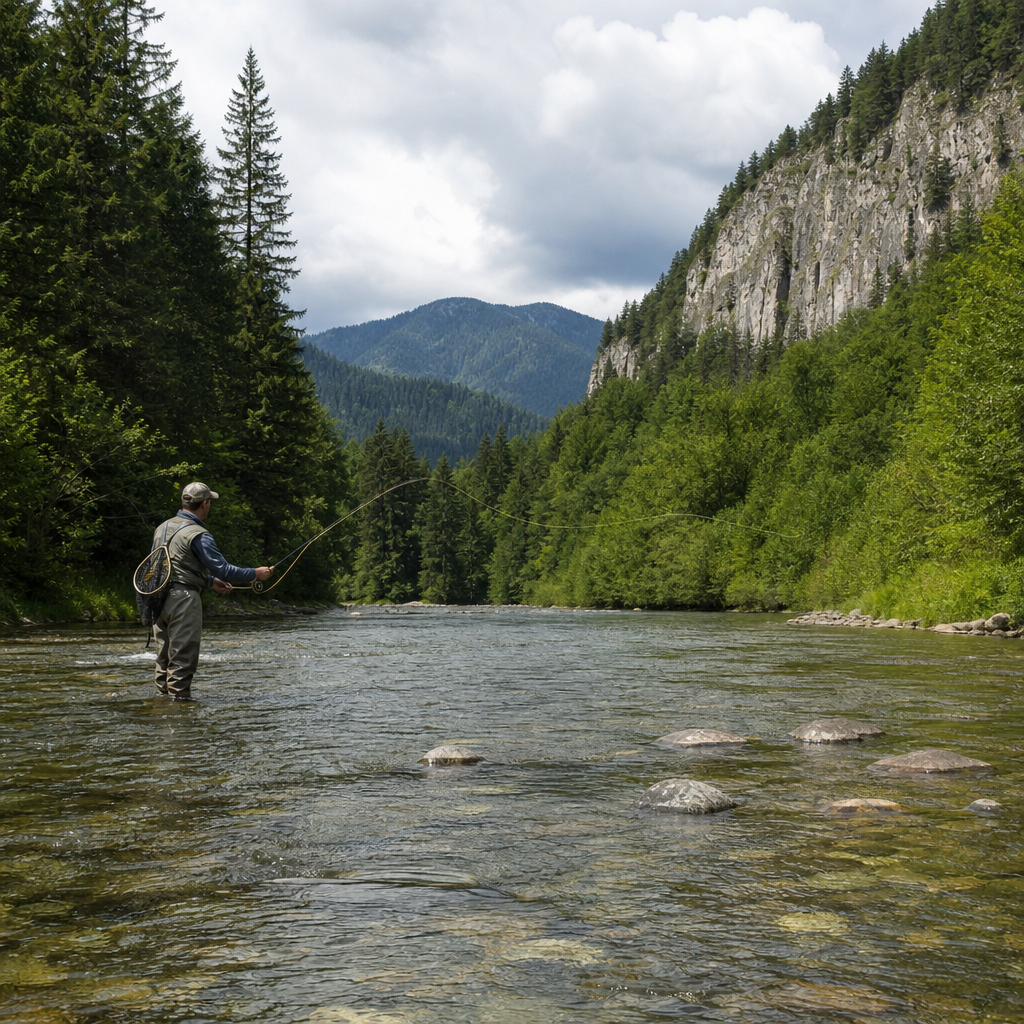
The Mureș, Someș, Bistrița, Olt, Criș, and Tisa basin tributaries all deserve attention, but the best way to think about Romania is by region rather than by chasing one famous river. In Transylvania, many anglers focus on Carpathian tributaries with classic pocket water, riffles, and plunge pools suited to short-line nymphing and dry-dropper rigs. These waters often hold wild brown trout, and in appropriate stretches, grayling. They are at their best when flows are stable and temperatures remain cool, especially from late spring through early autumn.
The Apuseni Mountains offer compact streams and intimate water where stealth matters. Expect tighter casting lanes, fast current transitions, and fish that sit close to structure. Small parachute Adams patterns, caddis imitations, and bead-head pheasant tails regularly produce. In contrast, larger rivers in central and northern Romania present longer runs and more varied holding water, making European nymphing, indicator nymphing, and downstream dry-fly presentations all relevant depending on flow and insect activity. If you enjoy reading water and adapting by the hour, these rivers are especially rewarding.
The Eastern Carpathians contain some of the country’s most scenic trout and grayling opportunities. Forested valleys and cold tributaries provide strong summer fishing when lowland rivers run warm. During mayfly and caddis periods, dry-fly windows can be excellent, though often brief and tied closely to light conditions. In many Romanian rivers, the most productive sessions are not all-day hatches but concentrated feeding periods. Anglers used to famous spring creeks may need to adjust: cover water, fish likely lies efficiently, and be ready to switch from dry to nymph or streamer tactics without hesitation.
Then there is the Danube Delta, which changes the conversation entirely. This UNESCO-recognized wetland is not a trout destination; it is one of Europe’s most compelling fly fisheries for pike and other predators. Shallow lagoons, reed edges, channels, and flooded vegetation create ideal ambush habitat. A floating line, wire or heavy fluorocarbon leader depending on target, and large synthetic streamers or deer-hair poppers are standard tools. In warmer months, early and late sessions can be explosive. The Delta also offers sight-driven, visual fishing that feels completely different from mountain river tactics, giving Romania rare destination breadth.
Best seasons, hatches, access, and practical trip planning
Romania’s fly fishing calendar depends heavily on elevation and recent weather. For mountain trout rivers, late April through June is often excellent when flows settle after snowmelt and insect activity builds. Summer can be highly productive at altitude, especially mornings and evenings, but lower rivers may warm and fish more inconsistently during heat. September and early October can be outstanding for aggressive trout before spawning closures or cold snaps reduce opportunity. For the Danube Delta, late spring through autumn is the main window, with pike and perch activity influenced by water levels, weed growth, and baitfish movement.
Because many Romanian rivers are freestone systems, water clarity and level matter as much as calendar date. A perfect week on paper can fish poorly after heavy rain, while an overlooked period can become exceptional under stable conditions. This is one reason local guides add real value. They know which tributaries clear first, which reaches remain fishable after storms, and where temperature refuges hold trout in summer. I strongly recommend building flexibility into any Romania itinerary rather than locking every day to a single river.
| Region | Main Species | Best Window | Typical Tactics |
|---|---|---|---|
| Apuseni and western mountain streams | Brown trout | May to September | Dry-dropper, short-line nymphing, small streamers |
| Eastern Carpathian rivers | Brown trout, grayling | June to October | Euro nymphing, dry flies during evening hatches |
| Central larger rivers | Trout, grayling, chub | May to October | Nymphs, emergers, technical dry-fly presentations |
| Danube Delta | Pike, perch, asp, carp | May to October | Large streamers, poppers, baitfish patterns |
Travel logistics are manageable. Bucharest, Cluj-Napoca, Sibiu, Târgu Mureș, and Iași can all serve as entry points depending on region. A rental car is usually the most efficient way to reach mountain water, while Delta trips often combine road transfer with boat access. Anglers should check current permits, local association rules, protected sections, and seasonal closures before fishing. Romania has waters managed under different local arrangements, so assumptions based on another European country can create problems. Catch-and-release policies vary. Barbless hooks are a smart default, and proper fish handling is essential on smaller trout streams during warm weather.
Tactics, gear selection, and what visiting anglers often overlook
For mountain trout and grayling, a 3-weight to 5-weight rod covers most situations, with a 9-foot 4-weight being the most versatile single setup. Add a longer nymphing rod if you favor tight-line methods. Romanian streams often reward compact, efficient rigs rather than elaborate setups. Dry flies in sizes 12 to 18, caddis patterns, stimulators, pheasant tails, hare’s ears, perdigons, and small streamers should form the core box. Wading staff and sticky rubber soles help on slick rock, and layered clothing matters because Carpathian weather shifts quickly.
In the Danube Delta, think more like a predator angler than a trout specialist. An 8-weight rod is ideal for pike and large streamers, with a 6-weight or 7-weight useful for perch and asp depending on conditions. Floating lines handle most work in shallow zones, though intermediate lines can help in channels or wind. Weed guards, durable synthetic materials, and strong hooks matter. Polarized glasses are essential because weed beds, drop-offs, and follower behavior often determine where and how fish eat.
The biggest mistake visitors make is assuming Romania fishes like a simplified version of Austria or Slovenia. It does not. The water can be wilder, access can be less signposted, insect timing can be more localized, and productive stretches may require more walking and observation. Another common mistake is bringing too much gear and too little flexibility. A small, disciplined fly selection and a willingness to switch methods outperform heavy boxes of niche patterns. Finally, many anglers underestimate how useful a local guide can be for one or two orientation days. That initial investment often unlocks the rest of the trip.
How Romania fits into a broader Europe fly fishing itinerary
As a Europe hub destination, Romania works especially well for anglers who want contrast within one continent-wide plan. Pairing Romania with Slovenia highlights the difference between highly polished fly tourism and more exploratory fishing. Pairing it with Norway or Sweden underscores the shift from salmonid-centric northern fisheries to a mixed trout-and-predator program. Pairing it with Hungary or Croatia opens useful Danube basin comparisons. In every case, Romania contributes a dimension many European itineraries lack: breadth without extreme cost.
It also serves different traveler profiles. Dedicated trout anglers can spend a full trip in the Carpathians and never touch the Delta. Multi-species anglers can split time between rivers and wetlands. Photographers and conservation-minded travelers will appreciate the country’s landscape diversity and still-wild watersheds. Families or mixed-interest groups can combine fishing with medieval towns in Transylvania, mountain hiking, birding, and Delta ecotourism. That versatility is rare, and it strengthens Romania’s place within any serious discussion of Europe’s best fly fishing destinations.
Romania rewards anglers who value wild water, species diversity, and a more exploratory style of travel. Its mountain rivers offer authentic trout and grayling fishing, its larger systems create technical variety, and the Danube Delta adds one of Europe’s best predator fly opportunities. Just as important, the country remains comparatively affordable and less crowded than many headline destinations. That combination gives Romania real substance, not just novelty.
The main lesson is simple: do not judge Romania by how often it appears in mainstream fly fishing marketing. Judge it by the range of water, quality of habitat, and practical trip value it delivers. Plan around region, season, and target species. Use local knowledge where it matters. Pack versatile gear, stay flexible on conditions, and treat regulations and fish handling seriously. If you do, Romania can become not merely a stop on a Europe itinerary, but one of the most memorable fly fishing destinations on the continent.
If you are building a Europe fly fishing shortlist, put Romania near the top and start mapping the rivers and Delta sectors that match your style. The country offers enough diversity for a first trip and enough depth to justify a return. Explore it deliberately, and you will understand why experienced traveling anglers keep coming back.
Frequently Asked Questions
What makes Romania such a distinctive fly fishing destination in Europe?
Romania stands out because it compresses an exceptional range of fishable environments into one country, from cold, fast mountain streams in the Carpathians to broader foothill rivers, meadow flows, lowland systems, and the unique wetlands associated with the Danube basin. For traveling anglers, that diversity means you are not committing to just one style of fishing. In a single trip, it is possible to fish intimate pocket water for wild trout and grayling, then shift to larger rivers where presentation, drift control, and reading complex current seams become more important. This geographic variety is one of the country’s greatest strengths.
Another major advantage is that Romania still feels comparatively underfished relative to many better-known European destinations. While famous stretches certainly attract attention, large areas remain lightly pressured, especially when compared with heavily promoted fisheries in Western Europe. That lighter pressure can translate into more natural fish behavior, less competition for water, and a more exploratory experience overall. Anglers who enjoy discovery, local knowledge, and water that feels genuinely wild often find Romania especially rewarding.
Romania’s location also matters. Sitting at the crossroads of Central Europe, Eastern Europe, and the Balkans, it combines ecological influences from several regions. The result is notable biodiversity and a landscape that changes quickly over relatively short distances. For fly fishers, this creates unusual trip-planning flexibility. You can base a trip around classic salmonid rivers in the mountains, add sessions on lower-gradient rivers with different hatches and fish behavior, and explore fisheries framed by forests, high valleys, farmland, and wetlands without needing to cross multiple borders.
Just as important, Romania appeals to anglers looking for authenticity. Many of its best waters are tied closely to rural communities, traditional landscapes, and protected natural areas rather than purely tourism-driven fishing infrastructure. That gives a trip here a different rhythm: more local context, more emphasis on understanding each river system, and often a stronger sense of being in a functioning natural landscape rather than a manicured destination fishery.
What kinds of rivers and fish can fly anglers expect to find in Romania?
Romania offers a broad spectrum of water types, which is one of the key reasons it deserves serious attention from traveling fly fishers. In the mountain regions, particularly within and around the Carpathians, anglers can expect classic freestone streams and small to medium rivers with cold, oxygen-rich water, boulder structure, plunge pools, riffles, and undercut banks. These waters are especially attractive to those who enjoy technical dry-fly fishing, short-line nymphing, and careful presentation in broken pocket water. Depending on the exact watershed, these rivers may hold wild brown trout and grayling, with some sections offering particularly scenic and productive salmonid habitat.
Moving out of the higher elevations, foothill and valley rivers broaden and change character. Flows often become more varied, with longer runs, gravel bars, deeper slots, slower glides, and more complex insect activity. These sections can reward anglers who are comfortable adapting tactics over the course of the day, from nymphing in the morning to dry flies during hatch windows and streamers when fish are holding deeper or hunting in colored water. In many destinations, this middle ground between small mountain streams and lowland fisheries produces some of the most balanced fishing of the trip because it combines access, diversity, and fishable structure.
Romania’s lower-elevation waters add yet another dimension. Broad rivers, side channels, backwaters, and floodplain-influenced systems can create opportunities for species beyond the classic trout-and-grayling focus. Depending on where you fish, the local regulations, and the season, anglers may encounter more mixed fisheries that call for a broader fly selection and different retrieve styles. These lower systems can be especially appealing to anglers who like covering water, fishing streamers, and experimenting with different setups rather than staying within a strictly traditional trout framework.
The exact species available will vary by basin and elevation, so detailed local guidance is essential, but the central point remains the same: Romania is not a one-note fishery. It offers wild trout streams, productive grayling water in some areas, and broader river systems where biodiversity becomes part of the attraction. For anglers who value environmental variety as much as the fish themselves, Romania delivers a remarkably complete fly fishing landscape.
When is the best time to plan a fly fishing trip to Romania?
The best timing depends on the type of water you want to fish and the style of fly fishing you enjoy most. In general, late spring through early autumn is the core season for many of Romania’s fly fishing destinations, but conditions can shift significantly with snowmelt, rainfall, summer heat, and local river character. Mountain streams may fish very differently in early season than they do later in summer, while larger rivers can remain productive across longer periods if flows are stable.
Late spring is often appealing because rivers are coming to life biologically, aquatic insect activity improves, and fish begin feeding more confidently after colder months. That said, runoff and high water can be a real factor, especially in snow-fed or rainfall-sensitive mountain catchments. If you are targeting smaller upland waters, flexible planning is valuable because river clarity and wading conditions can change quickly. Anglers who are comfortable nymphing in stronger current may do well during this period, but those hoping for steady dry-fly fishing may prefer to watch conditions closely.
Summer is attractive for travel logistics and access, particularly in higher elevations where roads, trails, and riverbanks are easier to manage. In many mountain areas, summer can bring excellent opportunities for dry-dropper rigs, terrestrial patterns, and sight-oriented fishing in clear water. However, midday heat can affect lower rivers, and water levels may fall in some systems, making early morning and evening the most productive windows. Summer is also when Romania’s scenic value becomes part of the trip in a major way, with long fishing days and beautiful alpine and rural landscapes.
Early autumn is often considered one of the most rewarding periods for experienced anglers. Water temperatures can moderate, fish may feed more aggressively, and lower tourist traffic can make the overall experience calmer. Streamer fishing may improve in some places, and crisp conditions often suit anglers who like covering water methodically. The tradeoff is that weather becomes less predictable and some waters may be affected by seasonal rainfall. The best approach is to choose a travel window based on your priority: hatches, scenery, stable access, dry-fly opportunities, or broader tactical flexibility. In all cases, checking regional regulations and current river conditions before traveling is essential.
Do you need a guide to fly fish in Romania, or can independent anglers manage on their own?
Independent anglers can absolutely enjoy Romania, especially if they are comfortable researching access, understanding regional regulations, and adapting to unfamiliar rivers. The country’s diversity is part of its appeal, but that same diversity also makes advance planning more important than in a destination built around a single famous fishery. River ownership structures, permit requirements, protected areas, and local angling rules can vary, so self-guided travelers need to be organized and precise. If you enjoy map study, local inquiry, and exploratory travel, Romania can be very rewarding on your own terms.
That said, using a guide is often the fastest way to unlock the real value of a Romanian fly fishing trip. A good local guide does much more than lead you to fish. They help interpret regulations, identify productive sectors under current conditions, match techniques to seasonal insect activity, and save you from wasting time on water that looks promising but is not fishing well. They also provide insight into access points, wading safety, river etiquette, and local conservation realities. On rivers that change character quickly with rain or elevation, this knowledge can make the difference between an average day and an excellent one.
Guides are especially useful for anglers visiting Romania for the first time, those with limited travel days, and anyone trying to sample multiple river types in a single trip. They can help build an itinerary that connects mountain trout water with larger valley systems or lower-elevation options, giving you a more complete view of what the country offers. For anglers interested in photography, hatch timing, or refining technical presentations on unfamiliar currents, guided days are also highly efficient.
A practical middle ground works well for many travelers: start with one or two guided days to learn the local waters, then continue independently with better context and confidence. That approach preserves the adventure of self-guided fishing while reducing the risk of avoidable mistakes. In a destination as varied and still relatively undiscovered as Romania, local knowledge is not mandatory, but it is often one of the smartest investments you can make.
What should anglers know about access, regulations, and trip planning before fishing in Romania?
The most important thing to understand is that Romania rewards preparation. Because the country includes different watersheds, habitat types, and local management arrangements, anglers should not assume that one permit, one rule set, or one access model applies everywhere. Before traveling, it is wise to identify your target region first, then verify what licenses, day permits, or association permissions may be required for the specific rivers you intend to fish. Regulations can include seasonal closures, protected stretches, tackle restrictions, catch-and-release rules, and species-specific protections, so current local information matters far more than generic assumptions.
Access conditions also vary widely