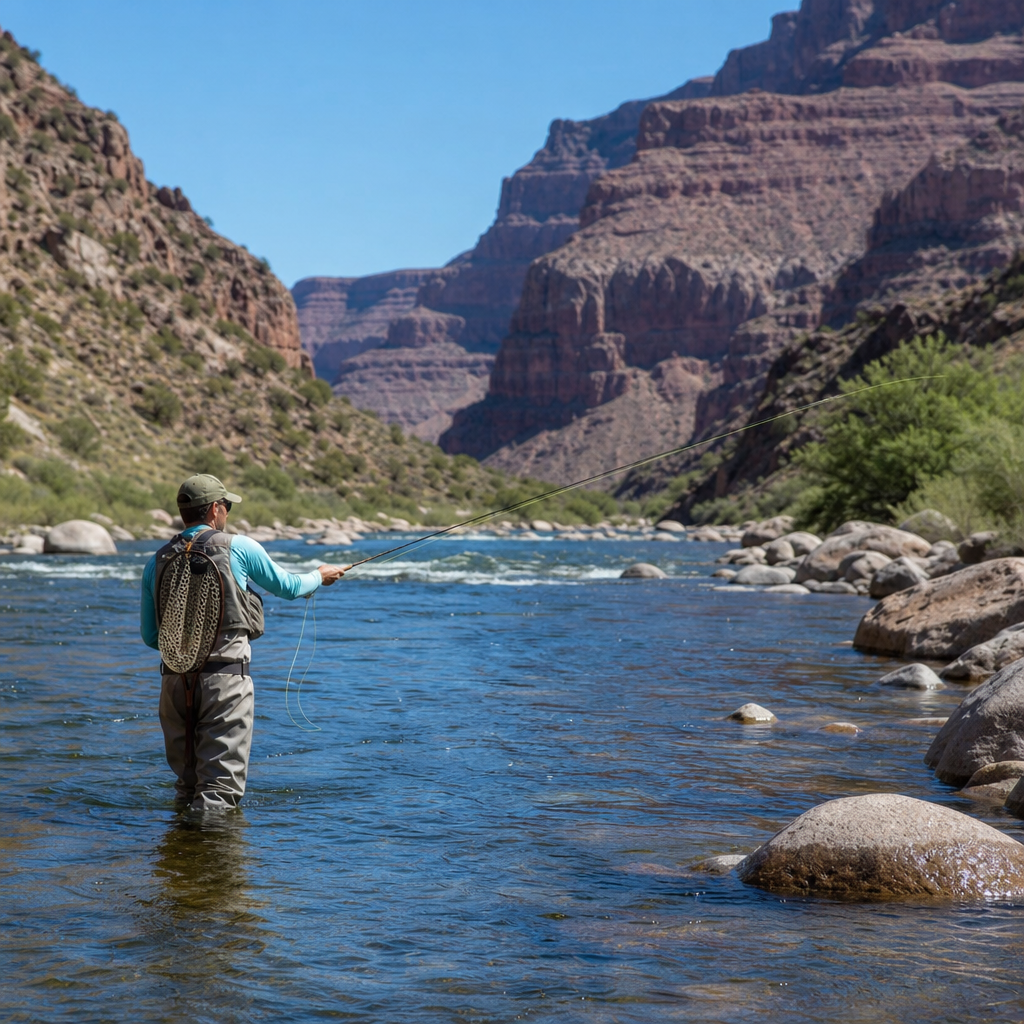
The Colorado River is one of the defining trout fisheries in North America, and for anglers planning western travel, understanding its best fly fishing spots starts with understanding the river itself. Stretching from the Rocky Mountains of Colorado through canyons, tailwaters, reservoirs, and desert corridors before reaching Mexico, the Colorado is not a single fishery but a chain of distinct environments. In fly fishing terms, that means water temperature, flow regime, insect life, access, and species can change dramatically from one reach to the next. A productive day on the upper river near Pumphouse looks nothing like a technical midge session below Glenwood Springs or a drift for large browns through the canyons near Moab.
When anglers search for the best Colorado River fly fishing spots, they usually want clear answers to practical questions: where are the most reliable trout sections, what species live there, when should they go, and what tactics consistently work. I have fished many of these reaches in different seasons, and the key lesson is simple: the river rewards anglers who match the section to the conditions. Snowmelt can blow out freestone water in late spring, while tailwaters remain stable. Summer crowds can pressure easy-access stretches, while float-only canyons still offer room. Some reaches are ideal for wade fishing; others are best approached with a raft or drift boat and a guide who knows private-land boundaries, launch logistics, and daily flow changes.
That variation is exactly why this article serves as an iconic waters hub within fly fishing destinations. Instead of treating the Colorado River as one generic location, it maps the major sections anglers should know, explains what makes each one special, and helps you decide where to focus your time. The term iconic waters fits here because these stretches have shaped western fly fishing culture: the upper river’s classic riffles and banks, the Gold Medal reach near Kremmling, the Roaring Fork confluence influence around Glenwood Springs, the powerful tailwater below Glen Canyon Dam known as Lees Ferry, and the canyon water flowing through Utah. Each section carries its own reputation for trout size, scenery, hatches, or adventure.
For a hub page, comprehensiveness matters. You need enough detail to compare sections quickly, but also enough context to plan realistically. River miles, elevation, dam control, boating access, and insect timing all affect success more than marketing language ever will. The best spot for a beginner family trip is not necessarily the best spot for a seasoned angler hunting twenty-inch browns on streamers. Likewise, the “best” month depends on whether you prefer dry flies, nymphing, or low-light streamer fishing. With that framework in mind, the sections below cover the Colorado River’s flagship fly fishing destinations, including what each reach is known for, who it suits best, and how to approach it efficiently.
Upper Colorado River: Kremmling, Pumphouse, and State Bridge
If you want the classic image of Colorado River fly fishing, start on the upper river between Kremmling and State Bridge. This is broad, float-friendly trout water lined with riffles, shelves, undercut banks, and long runs that produce healthy populations of brown trout and rainbow trout. The stretch around Pumphouse Recreation Area is especially well known because access is straightforward, the scenery is outstanding, and both wading and floating are possible. In practical terms, this section is often the best choice for visiting anglers who want a true western river experience without the technical constraints of small water.
Fish numbers here are good, but what matters more is variety. You can fish dry-dropper rigs through summer, nymph deep seams during higher flows, and strip streamers along cutbanks in spring and fall. Important hatches include blue-winged olives, caddis, pale morning duns, and stoneflies, with terrestrials becoming crucial in midsummer. During runoff, flows rise sharply from snowmelt, and that can limit visibility and wade access; in those weeks, side channels and softer edges become far more important than the obvious center runs. By late summer and early fall, the river often settles into highly fishable conditions.
For many anglers, floating is the most efficient way to cover the Pumphouse to Radium or State Bridge corridor. A guide can help position the boat for bank shots and keep you moving through productive holding water rather than spending all day in crowded pullouts. Wade anglers still have options, especially around public access points, but should expect company during weekends. The major benefit of this reach is balance: it is scenic but not remote, productive but not overly technical, and flexible enough for beginners while still offering enough structure to interest experienced fly fishers.
Middle Colorado River: Glenwood Springs to Rifle
Downstream from Glenwood Springs, the Colorado changes character. The confluence with the Roaring Fork adds nutrient input and seasonal insect activity, and the river broadens into a productive corridor that can hold substantial trout. This reach often gets less romantic attention than the upper river, yet it regularly fishes better than visitors expect, especially for anglers willing to nymph thoroughly or fish streamers around low light. In my experience, this section rewards disciplined presentation more than constant fly changes.
The water from Glenwood Springs through New Castle, Silt, and toward Rifle is known for strong trout biomass, with browns, rainbows, and the occasional larger fish using softer shelves, drop-offs, and midriver buckets. This is not tiny, intimate dry-fly water. It is a bigger river that often asks for split shot, tight line control, and confidence in subsurface tactics. Midges, caddis larvae, mayfly nymphs, and worms can all be relevant depending on flow and season. During caddis events and blue-winged olive windows, however, surface action can be excellent.
Access is decent through public parks and boat ramps, but floating opens much more fishable water. This is also a section where changing flows, irrigation influence, and water temperatures deserve attention. By mid to late summer, lower reaches can warm enough to affect trout behavior and ethical fishing windows, so early mornings become the smart play. In spring and fall, streamer anglers often find their best opportunities, particularly near structure where bigger browns ambush baitfish. If your goal is a realistic shot at a heavier fish rather than sheer visual charm, this middle section deserves serious consideration.
Best Colorado River fly fishing spots at a glance
The river’s major sections fish so differently that a side-by-side comparison is the fastest way to choose well. The table below summarizes the iconic waters most anglers research first.
| Section | Primary Species | Best Seasons | Best Access Style | What It Is Known For |
|---|---|---|---|---|
| Upper Colorado: Kremmling to State Bridge | Brown trout, rainbow trout | Summer, early fall, some spring windows | Float and wade | Classic western trout water, caddis, stoneflies, dry-dropper fishing |
| Glenwood Springs to Rifle | Brown trout, rainbow trout | Spring, fall, early summer mornings | Primarily float | Large-river nymphing, streamer fishing, strong biomass |
| Lees Ferry, Arizona | Rainbow trout, some brown trout | Year-round | Drift boat and walk-in near access points | Cold tailwater, stable flows, midge and scud fishing, technical sight fishing |
| Moab and canyon reaches, Utah | Smallmouth bass, carp, catfish, limited trout in colder windows | Spring and fall | Float | Warmwater adventure fishing, canyon scenery, mixed-species opportunity |
Lees Ferry: the Colorado River tailwater benchmark
Although many anglers associate the Colorado River most strongly with Colorado itself, any comprehensive hub on iconic waters must include Lees Ferry below Glen Canyon Dam in Arizona. This reach is one of the West’s most famous tailwaters and behaves nothing like the freestone sections upstream. Cold, dam-regulated releases create unusually stable conditions, clear water, and a trout fishery dominated by rainbow trout with occasional browns. Because the water emerges from deep in Lake Powell, temperature remains far cooler than the desert setting suggests, and that consistency supports year-round fishing.
Lees Ferry is often described as technical, and that is accurate. Fish see pressure, drifts must be clean, and small flies matter. Productive patterns frequently include midges, scuds, sowbugs, tiny mayfly imitations, and balanced leeches under indicators. When flows and light align, streamer fishing can also move larger fish. Walk-and-wade access exists near the dam and at the Lees Ferry area, but a guided float reveals much more water and helps anglers adapt to fluctuating release schedules from Glen Canyon Dam. Those schedules influence current speed, anchoring options, and the way fish set up along gravel bars and drop-offs.
The reason Lees Ferry belongs on a best-spots list is reliability. If runoff has colored the upper Colorado in late spring, Lees Ferry may still offer clean, consistent trout fishing. It is also one of the best places on the river system for anglers who enjoy indicators, fine tippet, and precise presentations over visible fish. The tradeoff is that it does not provide the same “big meadow river” feel as Colorado’s upper reaches. It is a technical tailwater first, a scenic canyon fishery second, and a destination where preparation and boat logistics materially improve results.
Moab and the canyon water: a different Colorado River experience
By the time the Colorado River reaches Utah’s canyon country near Moab, it has largely transitioned away from being a trout destination in the way most fly anglers use the term. That does not make it less worthy. It makes it different, and for a hub article on iconic waters, that distinction matters. Here, warmer water and desert conditions create opportunities for smallmouth bass, carp, catfish, and other warmwater species, especially in spring and fall when temperatures are moderate. Anglers who arrive expecting upper-river trout fishing will be disappointed; anglers who arrive ready for adventurous mixed-species fly fishing can have an outstanding trip.
Near Moab, the appeal is part fishing, part landscape. Sheer canyon walls, long floats, and remote-feeling camps create a river experience that is bigger than catch rates alone. Smallmouth bass often hold around rocky structure, seams, and eddies, taking crayfish patterns, baitfish streamers, and poppers during warmer periods. Carp can be targeted in slower side channels and backwaters with careful stalking, accurate casts, and drab nymph or small crayfish imitations. These fish are powerful, selective, and very rewarding on fly gear.
This section is best for anglers who value scenery, solitude, and species variety over trout purity. It is less about matching a PMD hatch and more about reading warmwater habitat in a dynamic river corridor. Spring often provides the most comfortable conditions before peak summer heat, while fall can bring stable weather and aggressive bass. If your fly fishing destinations plan includes a road trip through the Southwest, Moab deserves inclusion as an iconic, nontraditional Colorado River stop.
How to choose the right section, season, and tactics
The best Colorado River fly fishing spot depends on your target fish, preferred method, and tolerance for variable conditions. If you want the broadest all-around trout experience, choose the upper river near Kremmling, Pumphouse, or State Bridge from midsummer into early fall. If you are comfortable nymphing big water and want a realistic shot at larger trout, focus on the middle river below Glenwood Springs in spring or fall. If you need year-round consistency and do not mind technical rigging, Lees Ferry is the clear choice. If you want scenic exploration with bass and carp potential, head for the canyon water near Moab.
Seasonally, runoff is the biggest planning factor on the freestone sections. In most years, peak snowmelt from late May into June can reduce clarity and increase flows enough to change where and how you fish. Tailwaters are less affected. Summer brings hatches and terrestrial fishing but also more recreational traffic. Fall is often the most balanced season: water levels stabilize, streamer fishing improves, and trout feed hard before winter. Winter fishing is possible on selected reaches, especially tailwaters, but it requires realistic expectations, midge-heavy boxes, and attention to weather.
Tackle should match the section. A 9-foot 5-weight handles most upper-river dry-dropper and nymph fishing, while a 6-weight is often better for streamers, wind, or larger indicator rigs on the middle river. For Lees Ferry, longer leaders, lighter tippet, and small flies are standard. For Moab bass and carp, bring a 6- to 8-weight with crayfish, clousers, and carp-specific patterns. Before any trip, check current streamflows through USGS gauges, release schedules where dams are involved, local regulations from state wildlife agencies, and temperature trends. Good planning turns this huge river from overwhelming into highly fishable.
The Colorado River offers some of the most varied fly fishing in the American West, but its real strength is not that every mile fishes the same. Its strength is choice. Within one river system, you can fish classic freestone trout water near Kremmling, deep and powerful runs below Glenwood Springs, a technical blue-ribbon tailwater at Lees Ferry, and dramatic warmwater canyon stretches near Moab. That range is what makes the Colorado River such an important hub within fly fishing destinations and why anglers return to it repeatedly instead of treating it as a one-time stop.
The key takeaways are straightforward. First, match your expectations to the section. Upper-river trout water, middle-river subsurface fishing, tailwater precision, and canyon warmwater angling are different games requiring different flies, tackle, and timing. Second, plan around conditions rather than calendar alone. Runoff, dam releases, summer temperatures, and access style all shape success more than the name of the river on the map. Third, use each iconic stretch for what it does best. That is how experienced anglers consistently turn a famous destination into a productive trip.
If you are building a western fly fishing itinerary, start with the Colorado River and narrow your plan by season, species, and access preference. Then explore the individual destination guides connected to this hub to choose the exact reach, hatch window, and trip style that fits you best.
Frequently Asked Questions
What makes the Colorado River such a unique fly fishing destination compared with other western trout rivers?
The Colorado River stands apart because it is not one uniform trout stream; it is a long, complex system made up of very different fisheries linked by the same name. In its upper reaches in Colorado, anglers encounter cold freestone water, classic riffle-run-pocket structure, and strong seasonal hatches. Farther downstream, the river transitions through tailwaters, dam-influenced sections, canyon stretches, broad reservoirs, and warmer desert corridors, each with its own trout behavior, water conditions, and fly fishing strategy. That variety means the “best” spot depends on whether an angler wants dry-fly fishing during a hatch, nymphing in controlled flows, streamer fishing for larger fish, or a more technical sight-fishing experience.
Another reason the Colorado is so important is scale. Few rivers in North America offer this much geographic and ecological range while still supporting memorable trout fishing in multiple states. Water temperature, elevation, seasonal runoff, insect populations, and public access can change dramatically from one reach to the next. A productive stretch in one month may fish very differently the next because of snowmelt, dam releases, or summer heat. For traveling anglers, that means planning on the Colorado River requires more than simply picking a famous name on a map. It requires understanding how specific sections function as fisheries, which is exactly why certain spots consistently rise to the top for fly fishers.
Which sections of the Colorado River are generally considered the best fly fishing spots?
Several sections are widely regarded as standout fisheries, and each earns that reputation for different reasons. In Colorado, the Upper Colorado near Kremmling, Parshall, and State Bridge is a favorite for anglers who want classic drift boat water, healthy trout numbers, and a blend of dry-fly, nymph, and streamer opportunities. This reach offers long riffles, productive seams, undercut banks, and good insect activity, making it one of the most versatile places on the river. It is especially popular during caddis, mayfly, and stonefly periods, and it gives anglers a chance to fish substantial water without losing the feel of a true trout river.
Another well-known area is the tailwater section below Glen Canyon Dam in Arizona, commonly referred to as the Lees Ferry fishery. While very different from the upper river in Colorado, it is one of the most famous trout sections in the broader Colorado River system. Its cold, clear, regulated flows support strong trout populations and highly technical fishing. Midges, small mayflies, and precise presentations often matter more there than covering water aggressively. Elsewhere, anglers also pay close attention to productive reaches near Pumphouse, Radium, and downstream drift sections that combine accessibility with trout habitat. The best choice depends on the experience you want: upper-river diversity, tailwater consistency, float-friendly structure, or more specialized technical water.
When is the best time of year to fly fish the Colorado River?
The best time depends heavily on the section of river being targeted. On upper freestone stretches in Colorado, late spring and early summer can be affected by runoff, which often raises flows, reduces visibility, and changes where trout hold. Once runoff drops and the river begins to clear, summer can provide outstanding fishing with active fish, strong terrestrial patterns, and dependable morning and evening windows. Late summer into early fall is often considered one of the best overall periods because flows are typically more manageable, insect and hopper activity can be excellent, and trout feed aggressively before colder weather arrives.
Tailwater sections and dam-regulated reaches often provide a longer, more stable season. Because their temperatures and flows are less dependent on immediate weather, they can fish well even when freestone stretches are inconsistent. In winter, some reaches remain productive, especially for anglers willing to slow down and fish nymphs or midges carefully. The key point is that there is no single universal “best month” for the entire Colorado River. Anglers planning a trip should match the season to the type of water they want to fish, while also monitoring runoff timing, reservoir releases, and local conditions. On this river, timing is often just as important as location.
What flies and techniques work best on the Colorado River’s top trout sections?
Successful fly selection on the Colorado River starts with reading the specific section rather than relying on a generic western trout box. In upper freestone water, anglers often do well with attractor dries, caddis patterns, mayfly imitations, stonefly nymphs, and streamers, depending on season and flow. During hatch periods, matching size and profile becomes more important, but many productive days still come from covering likely holding water with well-presented nymph rigs. Dropper setups, indicator nymphing through deeper runs, and short-line presentations in pocket water can all be highly effective. When fish are aggressive or larger trout are hunting, streamers around banks, woody structure, and softer edges can move better fish.
In tailwaters and clearer, more regulated reaches, the game often gets more technical. Smaller nymphs, midge patterns, sowbug-style flies where applicable, and subtle dry flies can become essential. Longer leaders, finer tippet, and careful drifts matter far more in these areas, especially when fish have ample time to inspect a fly. Presentation usually outranks pattern once you are in the right size and general insect category. Anglers who adapt their tactics to current speed, clarity, and fish position consistently do better than those who simply fish the same setup from one section to the next. On the Colorado River, versatility is a major advantage, because the most effective flies and techniques can change dramatically with geography and season.
How should anglers plan access, regulations, and trip logistics when fishing the Colorado River?
Planning matters on the Colorado River because access and regulations can vary widely by section, state, and water type. Some reaches offer excellent public entry through state wildlife areas, BLM land, and designated boat ramps, while others are best approached with a drift boat, raft, or guide. Float fishing is especially popular on well-known upper sections because it allows anglers to cover productive banks, seams, and riffles efficiently. However, wade anglers can still find very good water where public easements, access sites, and roadside pull-offs exist. Before traveling, it is smart to identify exactly which stretch you intend to fish, how you will enter and exit, and whether flows make wading safe and effective.
Regulations are equally important. License requirements, special trout regulations, seasonal closures, bag limits, and tackle restrictions may differ from one section to another. Some stretches may emphasize catch-and-release management or have specific rules about hooks, bait, or harvest. Flow conditions should also be checked immediately before the trip, not just weeks in advance, because snowmelt, irrigation demand, and dam operations can quickly alter fishing quality and safety. If you are unfamiliar with a high-profile section, hiring a local guide can shorten the learning curve substantially and provide current insight on hatches, access, and fish behavior. For a river this large and varied, good logistics are not a minor detail; they are a major part of fishing the best spots successfully.