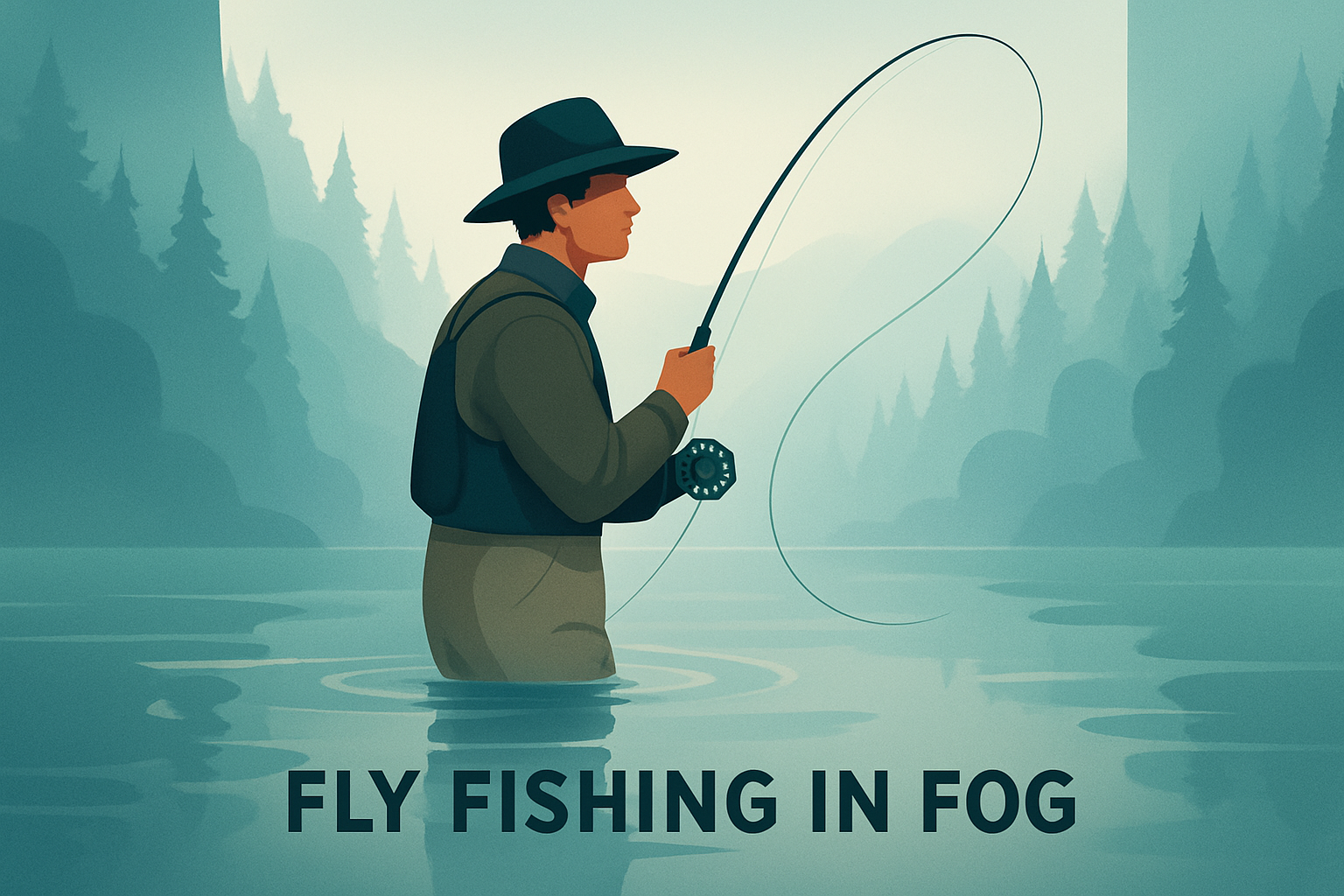
Fly fishing is an art that requires patience, precision, and a deep connection with nature. When fog rolls in, it transforms the fishing experience into an ethereal adventure. For the uninitiated, fog might seem like an insurmountable obstacle. However, for seasoned anglers, it presents a unique challenge that, when handled correctly, can yield impressive results. Fly fishing in fog requires adapting one’s techniques to accommodate low visibility conditions. This involves understanding the behavior of fish in such weather, interpreting subtle clues from the environment, and utilizing specialized equipment and strategies to ensure success.
In this article, we will explore the nuances of fly fishing in fog, define essential terms, and emphasize the importance of adapting to low-visibility conditions. Fly fishing is not just about casting lines and waiting; it’s about mastering the environment. Foggy conditions demand an even closer relationship with the elements and an adept use of auditory and tactile senses. Understanding how fog affects both anglers and fish can turn a potentially disappointing day into a rewarding one. With the increased difficulty come greater challenges, making successful catches all the more satisfying.
The Science Behind Fog and Its Impact on Fly Fishing
Fog forms when air temperature decreases to its dew point, causing water vapor to condense into tiny droplets suspended in the air. While this might make for picturesque scenery, fog’s impact on fly fishing is profound. Visibility reduces significantly, and atmospheric pressure changes can influence fish behavior. Fish might become more active or prefer to stay in deeper waters where conditions are more stable. Fog also dampens sounds, meaning anglers must rely on their instincts and understanding of their surroundings to detect fish.
For example, on the Misty River in the Pacific Northwest, fog is a common occurrence, especially during early mornings and late evenings. Anglers there have adapted by using brighter flies and focusing on areas with slower-moving water where fish congregate. By taking advantage of the fog’s ability to scatter light, they cast the line slightly upstream, allowing the current to drift it naturally through active zones.
Adapting Your Equipment for Low Visibility
The right equipment can make a significant difference when fly fishing in foggy conditions. Anglers commonly adjust their gear to improve visibility and performance.
- Bright or High Contrast Flies: Using brightly colored or contrasting-pattern flies can help fish spot them in low light.
- Shorter Leaders: Shorter leaders provide better control and accuracy in casting, essential for foggy environments.
- Polarized Glasses: These help reduce glare and penetrate the water’s surface slightly, offering some visual access despite the fog.
In a recent tournament on Lake Avalon, competitors were required to fish in dense fog. Those who had equipped themselves with high-contrast flies reported more success. The combination of visibility-enhancing gear proved beneficial for long casts across the lake’s obscured expanse.
Reading Water and Weather Clues
To be successful at fly fishing in fog, understanding how to read water and weather cues becomes even more crucial. Water disturbances, changes in current, and subtle sounds can guide anglers to where fish are likely to be. Listening for splashes or slight ripples can reveal fish activity.
A group of anglers fishing in the Great Smoky Mountains found that by tuning into the sounds of the river, they could identify deeper pools where fish were gathered during foggy mornings. Observing tiny waves or ‘nervous water’ helped them predict when a fish was near, letting them cast their lines with more precision.
Embracing Sensory Awareness
When visibility is compromised, enhancing other senses is crucial. Many fly fishers harness their heightened auditory and tactile senses to better perceive fish presence and water dynamics.
Empirical studies conducted along Oregon’s fog-laden coast reveal that anglers who practice increased sensory awareness, such as feeling the subtle pulse of their fishing lines and tuning in to auditory cues — like the splash of a small fish or the rush of the current — generally have more success in catching fish. Anglers there frequently comment on how their sense of touch allowed them to detect the gentlest of bites, invisible in the mist.
Strategizing Casting Techniques
Proper casting techniques are paramount in fog to avoid interference from unseen obstacles and to ensure the fly lands where fish are most active. The double haul cast, for example, enables longer casts that are crucial when visual judgment is impaired.
| Technique | Benefit | Application |
|---|---|---|
| Single Haul | Increases control | Useful in tighter spaces or when precision is needed |
| Double Haul | Maximizes distance | Ideal in large open areas with minimal surface landmarks |
At Crystal Lake, which is frequently shrouded in dense fog during the fall, anglers have found that mastering the single and double haul casts aids in navigating the lake’s concealments. Those proficient in these techniques often land flies precisely in the feeding zones of lake trout.
Handling Challenges with Psychological Preparedness
Dealing with the psychological aspects of fishing under low visibility is as important as any physical technique. Confidence and patience are key, and a prepared mind can better cope with the frustration fog might bring.
A psychological study conducted on anglers facing foggy conditions pointed out the importance of maintaining morale through anticipation and knowledge of fish behavior. Strategies like predetermined waypoint setting for favorite spots and constant mental vigilance can help an angler stay focused and disciplined when the fog threatens to diminish both spirit and visibility.
Post-Fog Analysis and Experience Sharing
Reflecting on and analyzing one’s experiences during foggy fly fishing outings are crucial for continuous improvement. Keeping detailed records about the techniques used, the behavior of fish, and environmental conditions faced during such scenarios can provide valuable insights.
In communities like the High Sierra Anglers’ Guild, members regularly hold meetings to share stories of foggy fishing trips, exchanging tips and recommendations for future expeditions. These discussions foster a sense of camaraderie and learning, as members build a collective knowledge that benefits each participant.
Conclusion: Mastering the Art of Fly Fishing in Fog
Mastering the art of fly fishing in fog is a deeply rewarding endeavor. It requires not only technical skills but also an insightful understanding of nature’s hidden dynamics. Throughout this article, we have delved into the intricacies brought about by fog: its formation, the necessary adjustments in equipment, the enhanced dependence on sensory perceptions, and the strategic execution of casting techniques.
For any angler, adapting and thriving in low-visibility environments like fog not only enriches their fishing skills but also deepens their connection to nature. The challenges encourage them to hone their patience, creativity, and intuition, ultimately transforming every fog-shrouded outing into an unforgettable adventure.
If you’re new to fly fishing in fog, or looking to polish your skills, start with integrating some of the described techniques and observe how they enhance your fishing experience. The next time you see fog roll in, embrace it as an opportunity to test your skills and grow as an angler. Happy fishing!
Frequently Asked Questions
1. Why is fly fishing in fog considered a unique experience compared to clear conditions?
Fog changes the way we interact with our environment by reducing visibility and muting sounds, creating an intimate and almost otherworldly fishing experience. For fly fishermen, this transformation demands a deeper reliance on one’s intuition and senses, beyond just sight. Fog not only challenges the angler to detect fish in more creative ways, but also cloaks their presence, allowing them to approach fish more stealthily. In these moments, there’s a heightened sense of connection with nature as the physical world retreats into the periphery, and the focus shifts to subtle cues like changes in water surface tension or the sway of vegetation. These aspects elevate the sport into an adventure, shaping moments of profound solitude and reflection, against the backdrop of quiet anticipation. The mysterious ambiance can illuminate the beauty of simplicity and focus, making every catch feel more rewarding.
2. What techniques should I use to locate fish in foggy conditions?
When visibility is reduced, traditional methods like sight-fishing become less effective. Instead, anglers must rely on other strategies. First, understanding fish behavior in such conditions is crucial. Fish tend to stick closer to the surface, using shallower waters for warmth and hunting. Pay attention to the patterns and rhythms of the water — disturbances might indicate feeding spots. Moreover, listening becomes as critical as seeing. The tell-tale signs of fish activity, such as the slight splash of a rising trout or the faint ripple of a cruising fish, can guide you. Enhancing your use of sense-based techniques, such as feeling for the subtle tug on the line to detect bites, is crucial. Additionally, leveraging technology like fish finders or apps that track water temperature and conditions can provide an edge. Equip yourself with a strong sense of your environment and the respective fish species’ tendencies, allowing these sensory clues to guide your approaches and decisions.
3. How should I adjust my casting technique to accommodate for low visibility?
Adjusting your casting technique for foggy conditions is essential to maintain accuracy and minimize disturbance. Start by shortening your casting distance; focusing on stealth rather than distance is key. Utilize a sidearm cast to keep the line low and avoid spooking fish with broad overhead movements. Work on improving precision over long-range power, focusing on delivering the fly gently onto the water surface. Pay attention to the atmospheric conditions — moisture in the air can affect the weight and handling of your line. Regular practice with your preferred rods and adjusting the weight of the fly can enhance casting efficiency under such weather. Moreover, casting close to the banks or along the edges of known fish habitat increases your chance of success as fish tend to hug structures for protection in fog. Emphasizing deliberate, controlled movements will ensure each cast counts.
4. What fly patterns are recommended for fishing in fog?
In foggy conditions, visibility is low both above and below the water, requiring fly patterns that appeal to a fish’s other senses. Opt for larger, bulkier flies that create more motion and vibration when they hit the water, such as streamers or muddler minnows, which are easier for fish to find via lateral line detection. Additionally, flies with dark or contrasting colors against the water’s surface can improve visibility for fish below. Patterns like the Woolly Bugger can mimic a range of aquatic life and are particularly effective due to their size and movement. Also, consider flies that add scent or have a subtle rattling component incorporated, providing an additional attractant for the fish to hone in on. Experimenting with different retrieves – slow, steady pulls contrasted with sudden twitches – can also entice strikes as fish may rely on detecting motion in the water. Remember, adapting your lure arsenal to the fog’s conditions increases your chances of allure in these mystical fishing environments.
5. How can I ensure my safety while fly fishing in fog?
Safety should always be a priority, especially when the threat of disorientation in a foggy environment looms. Always carry a reliable GPS device or a smartphone with a pre-installed mapping app to maintain a clear sense of location relative to your starting point or vehicle. Entering waypoints while fishing can help track progress and guide you back if needed. Dress appropriately for the cold and dampness that often accompany fog, wearing layers to regulate body heat and materials that repel water. Additionally, it’s wise to avoid secluded areas if alone; inform someone of your planned fishing location and expected return time. Consider using brightly colored gear or wearing neon clothing so you remain visible to others in the area. Coupled with a good headlamp or flashlight to navigate as light fades quickly in fog, these precautions can mitigate risks while enhancing the enchanting pleasure of fog-bound fishing.