Fly fishing conservation sits at the center of modern angling because healthy rivers, resilient fish populations, and ethical access are the foundation of every good day on the water. In practical terms, fly fishing conservation means the policies, habitat work, scientific monitoring, and angler behavior that protect fisheries over time instead of treating them as limitless. I have seen this firsthand on trout streams that rebounded after barrier removal and riparian planting, and on others that declined when warm water, sediment, and careless handling were ignored. For anglers, guides, outfitters, and local communities, conservation is not an abstract cause. It determines whether wild trout reproduce, whether salmon and steelhead complete migration, whether aquatic insects hatch in abundance, and whether public trust in fishing remains strong.
The topic matters because fly fishing depends on ecological detail. Coldwater species such as trout and char need stable temperatures, dissolved oxygen, clean spawning gravel, connected habitat, and predictable seasonal flows. Warmwater fisheries also require functioning floodplains, vegetated banks, and balanced forage systems. When any of those pieces fail, the effects show up quickly: lower recruitment, fish kills during heat waves, invasive species expansion, and fewer quality angling days. Conservation efforts respond to those pressures through stream restoration, water policy reform, hatchery oversight, harvest regulation, native species recovery, and angler education. This hub article explains the full landscape so readers can understand how the pieces connect and where deeper subtopics fit.
Several key terms shape the discussion. Habitat restoration means physical improvement of rivers, lakes, estuaries, and bankside corridors to support fish and insect life. Watershed management refers to coordinated action across an entire drainage, recognizing that upstream land use affects downstream water quality and flow. Stock assessment is the science of estimating population size, age structure, and survival. Catch-and-release, often central to fly fishing ethics, is a management tool and a handling practice, not a guarantee of zero impact. Native fish conservation focuses on preserving locally adapted wild populations, which often outperform stocked fish in long-term resilience. Access stewardship covers trail design, wading pressure, invasive species prevention, and relationships with landowners. Together, these concepts form the operating language of conservation in fly fishing.
This page serves as a hub because conservation efforts are inherently interconnected. A restored spawning reach can fail if upstream withdrawals reduce summer flow. Strict regulations can underperform if anglers mishandle fish in hot water. A watershed may show improved chemistry yet still lose biodiversity if culverts block migration. Effective fly fishing conservation therefore combines science, policy, and behavior. The goal is simple to state and difficult to achieve: protect fisheries so angling remains viable without undermining the ecosystems that make it possible. Understanding that balance is the first step toward responsible participation and informed advocacy.
Habitat Restoration and Watershed Protection
Habitat restoration is the most visible part of fly fishing conservation because anglers can literally stand in the results. On many rivers, restoration begins with the riparian corridor. Planting willows, cottonwoods, and native grasses shades water, lowers peak temperatures, stabilizes banks, and feeds aquatic food webs through leaf input and terrestrial insects. Livestock exclusion fencing can dramatically reduce bank trampling and fine sediment. In mountain systems, adding large woody debris helps create pools, refuge cover, and hydraulic complexity. In low-gradient rivers, reconnecting side channels and floodplains spreads high flows, improves juvenile rearing habitat, and reduces erosion concentrated in a single channel.
Watershed protection broadens the lens beyond the visible fishing reach. Forestry practices, road density, culvert design, irrigation withdrawals, urban stormwater, and mining legacies all affect fish habitat. I have watched a stream look pristine at the access point while temperature loggers upstream revealed chronic thermal stress every afternoon in July. That is why serious conservation work relies on watershed-scale diagnostics: continuous temperature monitoring, macroinvertebrate surveys, pebble counts, electrofishing data, discharge records, and GIS mapping. Agencies and nonprofits frequently use these datasets to prioritize projects where a modest intervention unlocks outsized ecological gains, such as replacing a perched culvert that reconnects miles of spawning habitat.
Water quantity is just as important as water quality. Instream flow protections, irrigation modernization, and voluntary water leasing can preserve summer baseflows in heavily allocated basins. In the western United States, conservation groups often work with ranchers to improve diversion structures and reduce conveyance losses, creating benefits for both agriculture and fish. Similar principles apply elsewhere: if streams are dewatered, no amount of bank planting will compensate. For hub-level understanding, the essential point is that habitat restoration succeeds best when paired with basin-wide water management and long-term maintenance rather than one-time construction projects.
Fish Population Management and Science
Conservation efforts are strongest when they are guided by population science instead of assumptions. Fisheries biologists assess abundance, age classes, growth rates, spawning success, and mortality to determine whether a fishery is stable, declining, or recovering. Common methods include mark-recapture studies, redd counts for spawning fish, snorkel surveys, creel surveys, radio telemetry, PIT tagging, and genetic sampling. Each method answers a different question. A creel survey estimates angling pressure and harvest. PIT tags reveal movement patterns and survival through barriers. Genetics can distinguish wild native stocks from introgressed or hatchery-influenced populations.
Stocking is one of the most debated topics in fly fishing conservation. Hatcheries can support put-and-take fisheries, restore specific runs under strict protocols, or buffer lost natural production in altered systems. But indiscriminate stocking can harm conservation goals by spreading disease, increasing competition, diluting local genetics, or masking habitat decline that should be fixed directly. In my experience, the best management plans are explicit about purpose. If a stocked fishery is intended for harvest opportunity near urban centers, managers should say so. If a river’s priority is wild trout integrity, stocking should be limited or eliminated. Clarity prevents conflict and aligns angler expectations with biological reality.
Regulations matter because fish populations respond to mortality patterns, not intentions. Slot limits, seasonal closures, gear restrictions, and reduced daily limits are tools for protecting vulnerable life stages and preserving age structure. For example, spawning closures on trout rivers reduce disturbance when fish are concentrated and energetically stressed. Single-hook or artificial-only rules can reduce deep hooking and simplify enforcement. The right rule set depends on species, water temperature, angling pressure, and local objectives. Effective regulation is adaptive, meaning managers adjust it when monitoring data show a need. Conservation is not static; it is a continuous feedback loop between field evidence and policy.
Threats Facing Fly Fishing Waters
The main threats to fly fishing waters are warming temperatures, altered flows, habitat fragmentation, invasive species, pollution, and cumulative recreational pressure. Climate change is amplifying many of them at once. Coldwater fisheries are especially exposed because trout and salmonids live close to thermal limits during summer. As water warms, dissolved oxygen drops and post-release mortality rises. Heat also shifts insect emergence timing, changes disease dynamics, and compresses fish into shrinking pockets of suitable habitat. Anglers now increasingly encounter afternoon closures, hoot owl restrictions, or voluntary no-fish periods when water temperatures exceed safe thresholds.
Fragmentation remains a stubborn problem. Dams, undersized culverts, tide gates, and diversion structures can block spawning migrations and isolate resident populations. A stream may contain excellent gravel and cover, but if fish cannot reach it, the habitat does not function. Barrier removal is one of the highest-return conservation actions because it restores ecological processes, not just isolated reaches. Pollution can be equally limiting. Fine sediment from roads and construction smothers eggs in gravel. Nutrient loading triggers algal blooms and oxygen crashes. Heavy metals from abandoned mines impair invertebrates and fish health for decades. These are not hypothetical concerns; many iconic fisheries have required expensive remediation to recover from exactly these impacts.
Invasive species add another layer of complexity. New Zealand mudsnails, didymo, whirling disease, zebra mussels, and nonnative fish can alter food webs, compete with natives, or spread quickly between waters via boats, boots, and gear. Prevention is cheaper than control, which is why cleaning, draining, drying, and gear decontamination are now baseline practices in many regions. Recreational pressure also deserves honest attention. Social media can rapidly increase use on fragile small streams, leading to bank erosion, crowding, fish stress, and conflict with landowners. Conservation requires acknowledging that even low-impact recreation has cumulative effects when participation rises faster than management capacity.
Angler Ethics, Handling, and On-the-Water Stewardship
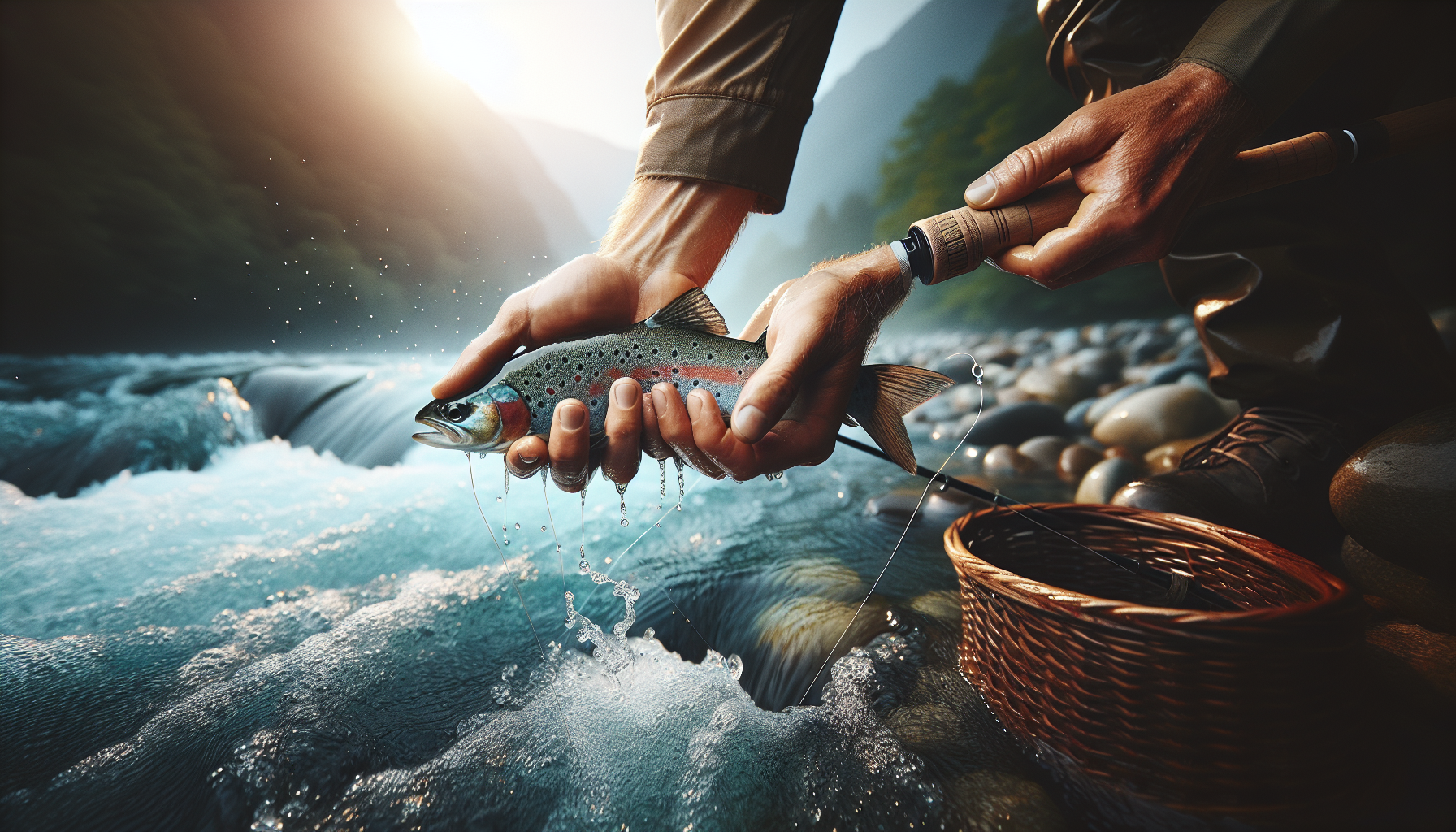
Angler behavior is the part of conservation every fly fisher controls immediately. Ethical handling begins before the cast. If water temperatures are dangerously high, the responsible choice is not to fish, even if regulations still allow it. Once a fish is hooked, fight time should be minimized by using adequate tackle rather than prolonging exhaustion for sport. Rubberized nets reduce scale and slime loss. Wet hands protect the mucus layer. Keeping fish in the water during release supports gill function and lowers stress. Photographs should be fast and selective, not routine. These are small actions individually, but across thousands of fish they materially affect survival.
Wading and access habits also shape conservation outcomes. Walking through spawning redds can crush eggs and displace adults. Repeated bank entry at the same fragile point can accelerate erosion. On spring creeks and tailwaters, anglers who rotate water instead of camping on a single pod of fish reduce concentrated pressure. Ethical stewardship includes pack-in pack-out discipline, monofilament retrieval, respect for seasonal closures, and direct communication with new anglers about local norms. I have found that fisheries with strong peer culture often protect themselves better than those relying on signs alone.
| Conservation practice | Why it matters | Best-use example |
|---|---|---|
| Check water temperature | Prevents fishing during lethal stress periods | Stop targeting trout when temperatures approach local agency thresholds |
| Use barbless hooks | Speeds release and reduces tissue damage | High-pressure catch-and-release rivers |
| Disinfect gear | Limits spread of invasive organisms and pathogens | Fishing multiple watersheds in one trip |
| Avoid redds and spawning fish | Protects reproduction and future year classes | Autumn trout streams and salmon rivers |
| Report habitat problems | Helps agencies respond faster to spills, barriers, or poaching | Calling in fish kills, illegal dumping, or damaged culverts |
Stewardship extends beyond personal technique into advocacy. Joining river cleanups, commenting on management plans, supporting land trusts, and volunteering with monitoring programs all strengthen fisheries. Many conservation gains come from ordinary anglers doing unglamorous work: planting trees, counting redds, attending water board meetings, and explaining to local officials why a side channel matters. Fly fishing culture often celebrates the moment of the take, but conservation rewards patience, consistency, and a willingness to care for waters you may never fish at peak conditions yourself.
Organizations, Policy, and Community Action
Fly fishing conservation is carried by a network of public agencies, tribal governments, nonprofits, watershed councils, landowners, universities, and local clubs. State and provincial fish and wildlife agencies set regulations, conduct assessments, and enforce rules. Federal agencies may oversee endangered species recovery, hydropower licensing, public lands, and water quality standards. Tribal nations play a critical role through treaty rights, habitat leadership, hatchery management, and long-term stewardship rooted in place. Nonprofits often bridge gaps by raising funds, managing volunteers, and moving restoration projects faster than agencies can alone.
Policy decisions shape fishing outcomes more than most anglers realize. Clean water enforcement, dam relicensing conditions, minimum flow requirements, floodplain zoning, road crossing standards, and wetland protection all influence fish abundance. The most effective community action is therefore informed action. Rather than using broad slogans, successful advocates learn the specific decision point: a county permit, a state water plan, a hydropower mitigation schedule, or a federal habitat grant cycle. Concrete participation at those moments can change outcomes. A public comment that references temperature targets, fish passage criteria, or sediment control plans carries more weight than a generic statement of support.
This hub article should orient readers toward the major branches of conservation efforts: restoration, science, threats, ethics, and policy. Each branch deserves deeper coverage, but the unifying lesson is clear. Fisheries endure when management is evidence-based, habitat remains connected, water stays cold and clean, and anglers accept responsibility as participants in the ecosystem, not just users of it.
Fly fishing conservation is ultimately about continuity: keeping rivers fishable, species abundant, and angling traditions credible in a time of rising pressure. The biggest takeaway is that no single fix secures a fishery. Habitat projects fail without water. Regulations fail without compliance. Catch-and-release falls short without proper handling. Stocking cannot substitute indefinitely for wild reproduction. Lasting conservation comes from combining science, policy, restoration, and everyday ethics in the same watershed over many years.
For readers using this page as a hub under Conservation and Ethics, the practical value is direction. When you see a struggling fishery, ask structured questions. Is the limiting factor temperature, flow, passage, water quality, harvest, invasive species, or behavior on the water? Which institutions control those levers? What data already exist? That framework turns concern into useful action. It also helps anglers evaluate claims critically, because not every popular solution addresses the real bottleneck.
The benefit of engaging with conservation efforts is straightforward: better fisheries now and a far better chance that future anglers will inherit wild, functioning waters instead of memories and hatchery dependence. Start locally. Learn your river’s main stressors, follow seasonal best practices, support credible restoration groups, and participate in one management process this year. Conservation succeeds when informed anglers move from appreciation to stewardship.
Frequently Asked Questions
What does fly fishing conservation actually mean?
Fly fishing conservation is the long-term protection and improvement of fish populations, aquatic habitat, and public access so fisheries remain healthy for future generations. It goes well beyond the idea of simply catching and releasing fish. In practice, it includes habitat restoration, streamflow protection, water quality standards, fish passage projects, invasive species control, scientific monitoring, and responsible angler behavior. The central idea is simple: good fishing depends on healthy ecosystems, and healthy ecosystems do not sustain themselves when they are stressed by pollution, warming water, habitat fragmentation, overuse, or poor management.
For anglers, conservation shows up in very practical ways. A river with intact banks, cold clean water, stable insect life, and connected spawning habitat will usually fish better and recover more reliably from floods, drought, and seasonal pressure. When culverts are replaced, barriers removed, and riparian vegetation restored, trout and other native fish often regain access to spawning and refuge water they had been cut off from for decades. That is why fly fishing conservation is often described as the foundation of the sport rather than a side issue. Without it, the quality of the angling experience declines over time, no matter how good the gear, technique, or access appears in the short term.
Why is conservation so important to the future of fly fishing?
Conservation matters because fisheries are not limitless. Rivers, lakes, and coastal systems are dynamic, but they are also vulnerable. Fish need suitable water temperatures, adequate streamflow, clean spawning gravel, insect-rich food webs, migration routes, and refuge during extreme weather. When any of those pieces break down, fishing quality usually declines quickly. What anglers often notice first may be fewer rises, smaller fish, or shorter seasonal windows, but those surface-level changes are usually tied to deeper ecological problems such as sedimentation, nutrient pollution, warming summer water, channelization, or reduced snowpack and drought.
The future of fly fishing will increasingly depend on how well anglers, agencies, landowners, and conservation groups respond to these pressures. Climate change, development, water withdrawals, and fragmented habitat are reshaping fisheries across many regions. Conservation helps fisheries adapt by improving resilience. For example, reconnecting side channels can create thermal refuge during hot periods, planting streamside vegetation can shade and cool water, and protecting wetlands can improve water storage and seasonal flow stability. From an angler’s perspective, that means conservation is not just about preserving what exists today. It is about giving fisheries a realistic chance to remain fishable, diverse, and biologically productive in a changing environment.
What are the biggest threats facing fly fishing waters today?
The biggest threats vary by region, but several appear again and again across trout streams, warmwater rivers, stillwaters, and saltwater flats. Habitat fragmentation is a major one. Dams, perched culverts, and other barriers can block fish from reaching spawning, feeding, or refuge habitat. Water quality degradation is another persistent problem, whether it comes from agricultural runoff, urban stormwater, mining impacts, excess sediment, or failing infrastructure. In many watersheds, reduced streamflow from drought, groundwater depletion, or water diversion compounds every other stressor by concentrating heat, lowering oxygen, and shrinking available habitat.
Rising water temperatures are especially important for coldwater fisheries. Trout, salmon, and many aquatic insects depend on temperature ranges that are becoming harder to maintain in some systems. Add in invasive species, disease pressures, bank erosion, poorly managed recreation, and the loss of riparian cover, and even once-productive fisheries can become fragile. Overpressure can also affect fish behavior and survival, particularly during low-water and high-temperature periods. None of these threats exists in isolation. They interact. A river with diminished flows, warm water, damaged banks, and blocked tributaries is far less capable of supporting wild fish than a river facing only one of those challenges. That is why effective conservation usually focuses on entire watersheds rather than single symptoms.
How can individual fly anglers contribute to conservation in meaningful ways?
Individual anglers can make a real difference, especially when they combine good personal habits with support for broader conservation work. The first step is ethical time on the water. That means handling fish carefully, keeping them in the water as much as possible, using appropriate tackle to reduce fight time, and avoiding angling during extreme heat or low-flow conditions when fish are already stressed. It also means respecting seasonal closures, spawning areas, private property, and local regulations that are designed to protect fisheries rather than inconvenience anglers. Responsible anglers pay attention to water temperature, avoid trampling redds, clean gear to prevent the spread of invasive species, and leave riparian areas better than they found them.
Beyond personal conduct, anglers can support conservation by volunteering for stream cleanups, habitat projects, fish counts, and citizen science efforts. Joining local watershed groups, conservation nonprofits, or chapter-based organizations often provides direct ways to help with restoration and advocacy. Financial support matters too, whether through memberships, donations, stamps, or license purchases that fund fisheries work. Perhaps most importantly, anglers can become informed advocates. Public comment periods, local planning meetings, access discussions, and water policy debates often shape fisheries more than people realize. When anglers speak up for streamflow, habitat connectivity, public access, and science-based management, they help protect the waters they care about in lasting, measurable ways.
What does successful fly fishing conservation look like on the ground?
Successful conservation is visible both ecologically and socially. On the ecological side, it often looks like cooler and cleaner water, stable streambanks, healthier riparian vegetation, improved insect life, more connected habitat, and stronger wild fish recruitment. You might see a removed migration barrier opening miles of upstream habitat, a replanted river corridor reducing erosion and shading summer water, or a restored floodplain spreading high flows and creating nursery habitat for juvenile fish. In some places, success is measured by the return of native fish to historical range. In others, it shows up as more consistent year classes, improved overwinter survival, or a fishery that no longer relies so heavily on stocking to remain viable.
On the social side, successful conservation also means durable stewardship. Anglers, agencies, scientists, guides, landowners, and local communities are often aligned around the idea that a fishery is a renewable resource only when it is actively cared for. That can include better access paired with better education, local support for science-based regulations, and a culture where anglers understand that restraint is sometimes part of protecting opportunity. The strongest conservation outcomes usually come from sustained effort rather than one-time fixes. A river does not recover because of a single project; it improves because habitat work, policy decisions, monitoring, enforcement, and angler ethics reinforce one another over time. When that happens, the result is not just better fishing today, but a fishery with the resilience to remain productive well into the future.