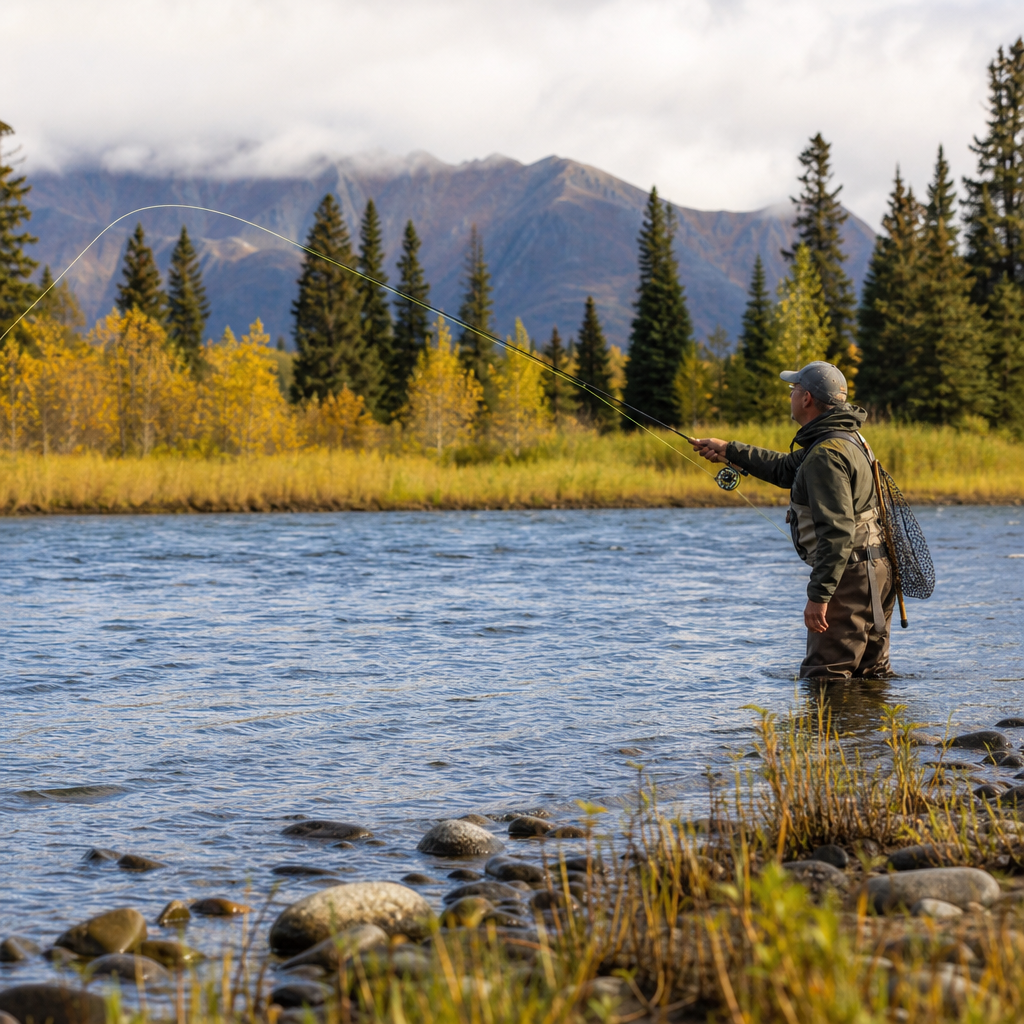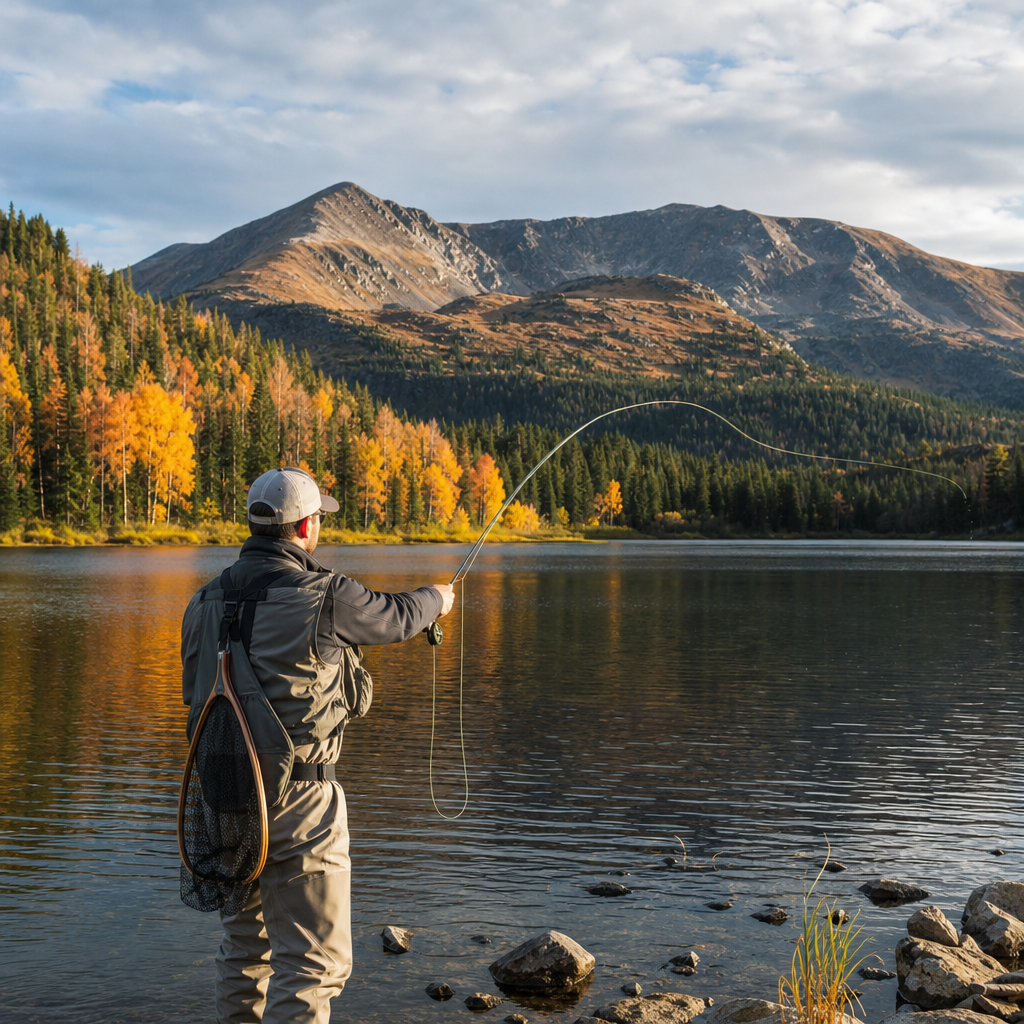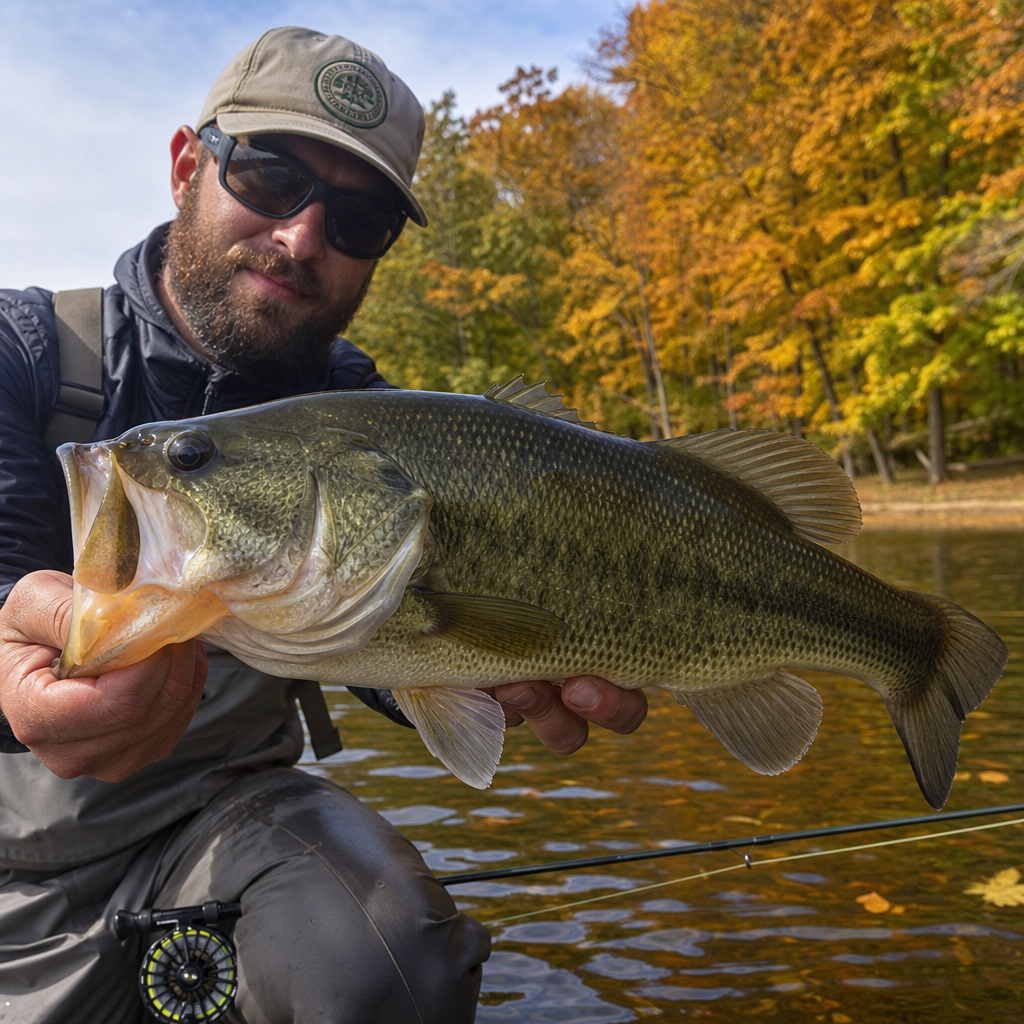
Fly fishing for bass in fall is one of the most consistent and rewarding windows of the year because cooling water, migrating baitfish, and shorter days push largemouth and smallmouth into predictable feeding patterns. Fall fly fishing refers to the period when summer heat breaks, water temperatures trend downward, and fish shift from warm-season holding areas toward forage-rich transition zones. For bass anglers, that means opportunities to intercept active fish with streamers, poppers, baitfish imitations, craw patterns, and sinking lines in places that often look obvious once you know what to watch. I have planned entire autumn calendars around this season because the fish are rarely random; they follow temperature, oxygen, forage, and light. When those variables line up, bass can feed aggressively for weeks.
The reason this season matters is simple: bass are preparing for winter, and their need to feed creates a wider margin for angler error than many summer or post-front periods. Yet fall is not easy if you treat every lake and river the same. Reservoir largemouth may stack on creek-channel swings and windblown banks, while river smallmouth often slide between shallow feeding shelves and nearby depth. Turnover can muddy the picture. Bluebird skies after a hard cold front can stall surface action. Baitfish size can change quickly, forcing you to rethink fly profile and retrieve speed. A strong fall plan therefore starts with definitions. Structure is the permanent shape of the water, such as points, ledges, shelves, and channel bends. Cover is what sits on that structure, including weed edges, timber, docks, rock, and current seams. Transition zones are places where bass move between deep security and shallow feeding. Most successful fall fly fishing happens on those transitions.
Another reason to approach fall systematically is that it condenses several distinct phases into a short season. Early fall often behaves like late summer in the first hour, especially on larger lakes that retain heat. Mid-fall usually brings the best combination of active fish and stable patterns. Late fall can become a game of precision, slower retrieves, and exact depth control. If this article serves as your hub for fall fly fishing, think of it as the map that connects those phases. You need to know where bass position, how weather changes their mood, which flies match their forage, and how to present those flies at the right speed and depth. Once you can read those signals, the season becomes less about luck and more about repeatable decisions that work on ponds, natural lakes, reservoirs, and rivers.
How Bass Behavior Changes During Fall
The first principle of fly fishing for bass in fall is that cooling water reorganizes the food web. Baitfish such as shad, alewives, perch fry, and young bluegill begin to move into creeks, coves, flats, and shoreline zones with favorable temperature and oxygen. Crawfish remain important, especially for smallmouth in rocky rivers and lakes, but many of the most dramatic autumn bites are bait-driven. Bass are not simply “moving shallow.” They are moving to intercept food efficiently while retaining quick access to depth. On lakes, that often means secondary points, bluff ends, channel intersections, tapering flats, and weedlines adjacent to basins. On rivers, it means current breaks near deeper runs, rocky shelves, and slow buckets below riffles where food funnels naturally.
In practical terms, largemouth and smallmouth behave differently enough that your approach should change. Largemouth usually use cover more tightly, especially around grass edges, wood, dock corners, and backwater ambush lanes. Smallmouth roam more, especially in clear water, where they track schools of bait across flats, around points, and through shoals. During calm, bright afternoons, largemouth may bury in shade or sparse vegetation until a feeding window opens. Smallmouth may still chase if bait is present, but they often respond better to faster strips with a pause, imitating a stunned minnow. I have found that anglers who struggle in fall often fish yesterday’s pattern too long. Bass may spend one morning on windblown chunk rock and the next on the first break just outside it if a front drops surface temperatures overnight.
Water temperature gives the clearest framework. Around the upper 60s to low 70s Fahrenheit, bass can be highly aggressive and willing to rise for poppers, gurglers, and deer-hair sliders early and late. In the low 60s, streamers often dominate because baitfish become central and bass stay just a little deeper for longer stretches. In the 50s, fish are still catchable, but they reward clean line control, slower strips, and flies kept in the strike zone. This is also when many anglers fish too shallow for too long. If you see bait dimpling a pocket, bass may still be stationed on the drop immediately outside it, sliding up only briefly. Understanding that vertical movement is the key to staying on fish through the full fall cycle.
Where to Find Fall Bass on Lakes, Reservoirs, and Rivers
Location strategy in fall should start with the relationship between forage and escape depth. On ponds and natural lakes, begin at the healthiest outside weed edge, especially where it meets a point, inside turn, or hard-bottom patch. Bluegill often gather there, and perch fry move along the same lanes. On reservoirs, the most productive water is often not the very back of the creek but the middle third, where bait collects on secondary points, channel bends, and flats near drains. Many fly anglers race too far back because they hear “bait moves shallow.” In reality, the best concentration often forms where the creek arm narrows, wind pushes plankton, and bass can trap forage against contour changes.
Wind matters more than many anglers admit. A sustained breeze can position bait and create enough surface disturbance to hide your leader and mute the boat’s presence. On clear lakes, a windblown bank with rock and scattered grass can outproduce a calm protected cove by a wide margin. The key is not random wind but productive wind: banks with forage, contour, and nearby depth. I look first for points at the mouth of coves, then for banks where waves push into a channel swing or riprap stretch. If the water is stained, fish may push shallower. If it is clear, they may sit one cast length off the bank, especially by midday.
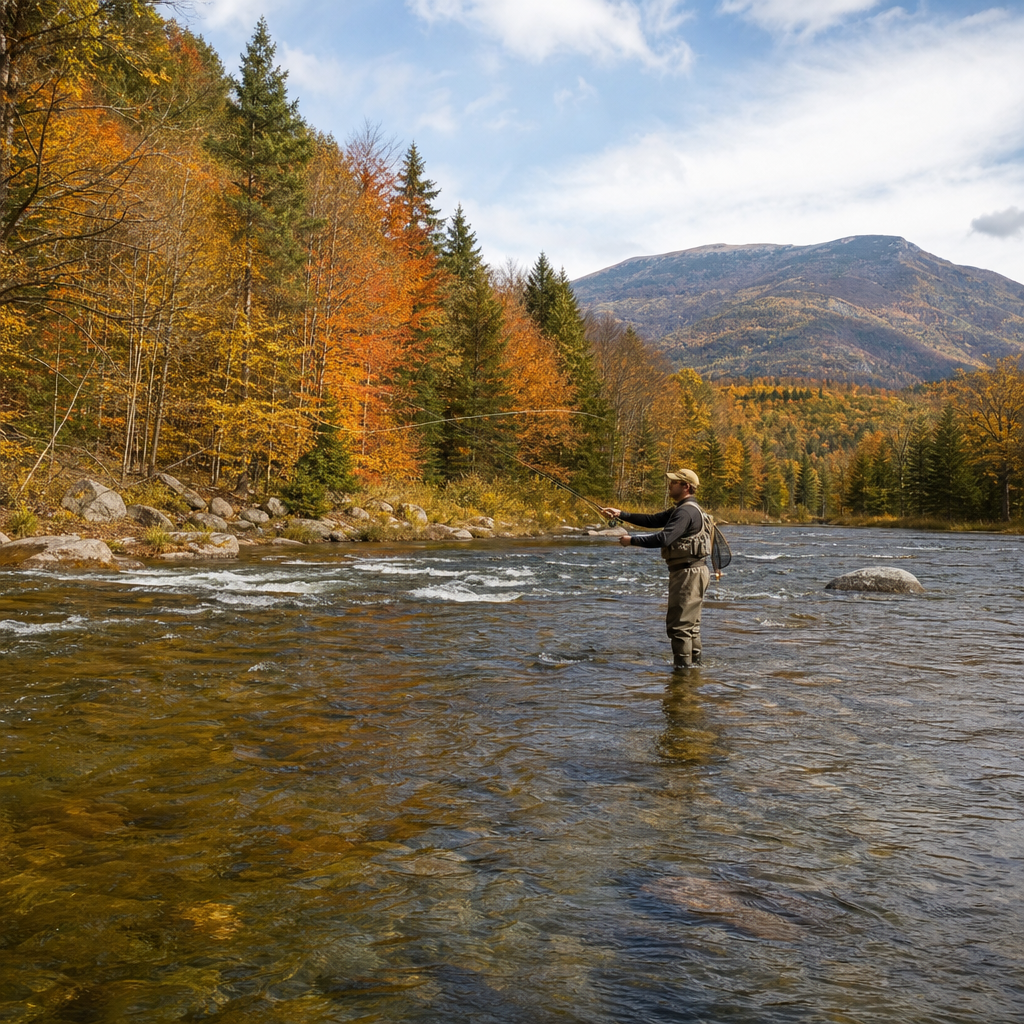
Rivers call for a more current-oriented map. In autumn, smallmouth often feed on shallow gravel or boulder flats when light is low, then settle into moderate-depth pools, eddies, and current seams as the sun rises. The best water usually combines a feeding shelf with a defined drop and at least one current break. Tailouts can be excellent when baitfish are present, but many larger fish prefer the first soft water below a chute or the edge where fast current meets walking-speed flow. In rivers with falling autumn levels, stealth becomes critical. Wading angles matter, false casts matter, and long leaders become more useful than they are on many summer bass days.
| Water Type | Best Fall Starting Areas | Primary Forage | Key Presentation |
|---|---|---|---|
| Pond/Natural Lake | Outside weed edge, points, hard-bottom patches | Bluegill, perch fry, minnows | Intermediate line with short baitfish strips |
| Reservoir | Secondary points, creek channels, windblown flats | Shad, young panfish | Depth-counted streamer retrieves |
| River | Rocky shelves, seams, pools below riffles | Minnows, crawfish | Swing-pause strips near current breaks |
Best Fall Fly Fishing Gear and Fly Selection
The most versatile setup for fly fishing for bass in fall is a 7-weight or 8-weight rod with a large-arbor reel and a line system that lets you change depth quickly. On smaller rivers, a 6-weight can be enough, especially for modest smallmouth and lighter flies, but the moment wind increases or weighted streamers enter the picture, heavier rods save energy and improve turnover. I carry a floating line, a clear intermediate, and either a sink-tip or full-sinking line rated to the depth and current I expect. Many missed fall opportunities come from using only a floater when bass are holding four to eight feet down over bait. An intermediate line alone can transform the day because it keeps the fly tracking horizontally instead of rising after every strip.
Leader design should be practical, not precious. For floating-line surface work, a 7.5- to 9-foot leader tapering to 12- or 16-pound tippet is standard. For streamers on intermediate or sinking lines, shorter leaders around 4 to 6 feet turn over better and keep the fly connected to the line’s sink rate. Fluorocarbon helps when fishing subsurface because it sinks faster and resists abrasion around rock and wood. In rivers with especially clear water, I may lengthen the leader slightly, but I rarely sacrifice turnover to chase invisibility. Bass are structure-oriented predators; putting the fly at the correct depth and angle is almost always more important than fishing ultra-fine tippet.
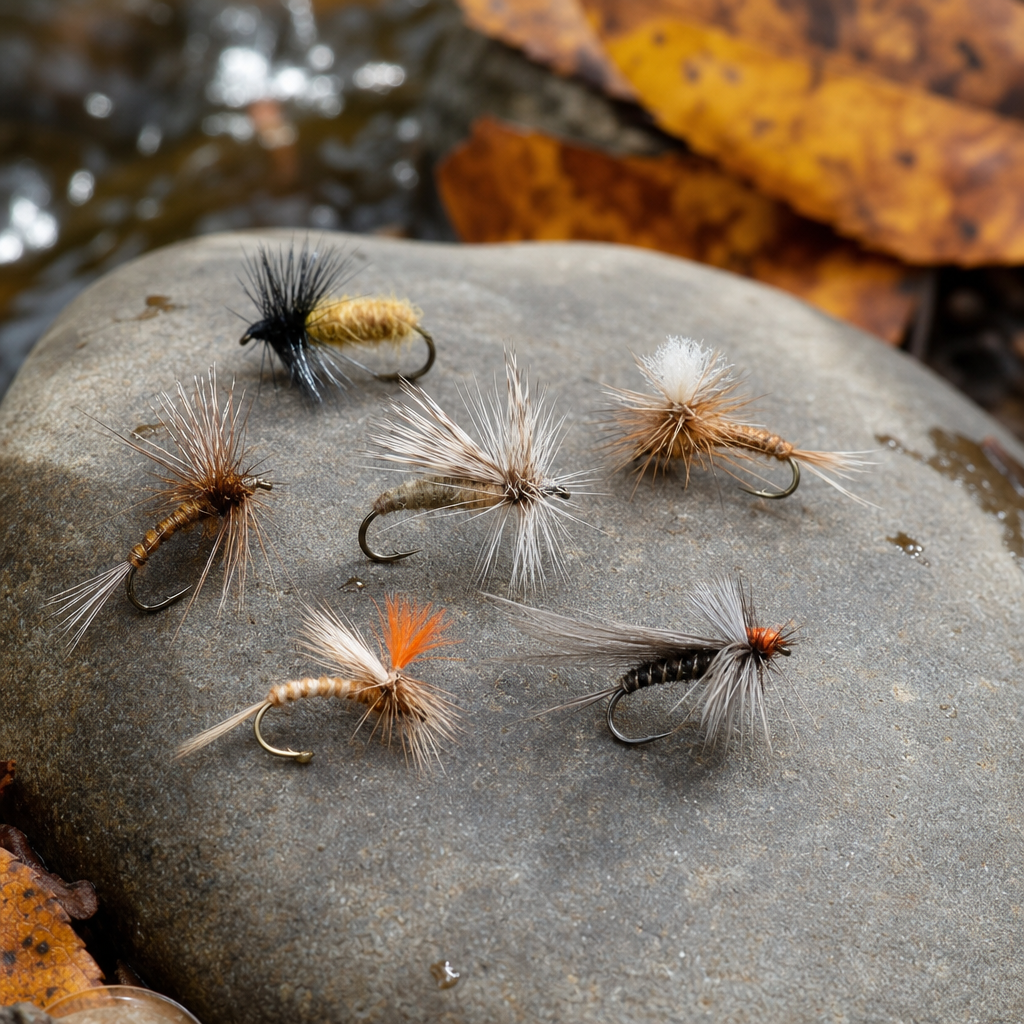
Fly selection should mirror the dominant forage rather than the fly you most enjoy casting. In shad-based reservoirs, white, gray, olive-white, and pearl streamers consistently produce. Patterns like Clouser Minnows, Hollow Fleyes, Game Changers, Deceivers, and Sculpzilla-style baitfish flies cover most needs. Around bluegill and perch, olive, yellow, barred, and copper tones often outfish pure white. For craw-oriented smallmouth water, rusty, brown, olive, and black flies with jigging motion excel. Surface flies still matter in early and mid-fall. Poppers, crease flies, and sliders can be exceptional during low light, over shallow grass, or whenever bait is visibly pinned to the surface. The common mistake is staying on top too long after the sun clears the trees. Fall rewards surface opportunism, but subsurface discipline catches more bass overall.
Presentation, Retrieve, and Seasonal Adjustments
Presentation is the bridge between finding bass and actually hooking them. In fall, the best retrieve is usually the one that matches the energy of the forage while keeping the fly in front of fish long enough to trigger a commitment. With baitfish patterns, start with two or three firm strips followed by a pause. That sequence suggests an injured minnow losing direction, and it gives following bass a moment to eat. If fish are slashing but missing, reduce fly size or shorten the pause. If they are following without accelerating, increase retrieve speed briefly, then kill the fly. Smallmouth often react to that sudden change better than to steady stripping.
Depth control deserves special emphasis because fall bass commonly suspend just off structure. Counting down a sinking or intermediate line is the simplest reliable method. Make the cast, let the fly sink for three to ten seconds depending on line density and water depth, then begin a retrieve that keeps occasional contact with the tops of rock, grass, or wood. If you never touch anything, you may be too high. If you hang constantly, either shorten the countdown or speed the retrieve slightly. I treat the first ten casts on any fall spot as a calibration exercise. Once I know the depth and speed where the fly tracks cleanly, I repeat it until the fish tell me otherwise.
Weather shifts often demand immediate changes. Ahead of a front, bass may chase aggressively and compress bait against banks, making faster retrieves and larger profiles effective. After the front, especially under high pressure and bright sun, bass often pull to the first drop, dock shade, timber edge, or deeper seam. That is when a smaller streamer, craw pattern, or hover-style presentation saves the day. Water clarity also reshapes the retrieve. In stained water, a stronger push from the fly and a slightly slower pace help fish locate it. In clear water, more natural movement and longer pauses usually outperform hard ripping. The best fall anglers are not loyal to one cadence; they cycle through speeds, pauses, and depths until the fish reveal a pattern, then they exploit it methodically.
Common Fall Mistakes and a Repeatable Game Plan
The biggest mistake in fall fly fishing is confusing activity with accessibility. Seeing bait flicker in the back of a pocket does not mean bass are within easy casting range. Often they are positioned on the nearest break, waiting to ambush. Another common error is ignoring midday. While dawn and dusk can be excellent, autumn afternoons frequently fish well because the water stabilizes, wind develops, and bait gathers on productive banks. I have had many of my best reservoir days begin slowly, then turn excellent from noon to four once shad stacked on secondary points. Anglers who leave after the early topwater window miss that shift entirely.
A second cluster of mistakes involves tackle and efficiency. Using one line all day, carrying too few fly sizes, and failing to note water temperature cost fish. So does poor boat positioning. On lakes, keep the casting angle aligned with the structure so the fly travels across the holding zone rather than away from it. On rivers, avoid standing directly below the seam you want to fish. Approach from downstream and across when possible, and make the current carry the fly naturally into the lane. Hook-setting is another issue. Many bass take on the pause, so a strip-set is more reliable than a trout-style lift. Keep the rod low, drive the line back with your line hand, then raise only after you feel solid weight.
A repeatable game plan is straightforward. Start by checking water temperature, wind direction, clarity, and visible forage. Choose one shallow feeding area and one adjacent depth-oriented area. Fish the low-light window on top if conditions support it, then transition quickly to subsurface streamers on intermediate or sinking lines. Probe windblown points, weed edges, channel swings, and rocky shelves before running to new water. If you contact bait but no bass, adjust depth before changing locations. If fronts or turnover scatter fish, simplify and target the cleanest water with the best combination of forage and structure. Fall fly fishing for bass rewards observation more than constant motion. Put the fly where food, cover, and depth intersect, and the season will give you some of the most dependable bass action of the year. Use this hub to plan your next fall outing, then refine one variable at a time on the water.
Frequently Asked Questions
When is the best time in fall to fly fish for bass?
The best time to fly fish for bass in fall usually begins when summer’s prolonged heat starts to fade and water temperatures begin a steady decline. In many regions, that early fall transition can be excellent, but the most reliable fishing often happens from the first consistent cool nights through the period before water temperatures become truly cold. During this window, largemouth and smallmouth bass feed aggressively because shortening days and cooling water push baitfish into predictable areas and trigger bass to bulk up before winter.
Rather than focusing only on the calendar, pay attention to conditions. Stable cooling trends are usually better than sudden temperature crashes. A gradual drop in water temperature often positions bass along flats near deeper water, creek mouths, channel swings, rocky banks, weed edges, and other transition zones where forage gathers. Smallmouth frequently become especially active around current seams, gravel bars, shoals, and rocky structure, while largemouth often relate to remaining vegetation, wood, and the edges of coves where bait collects. Low-light periods such as early morning, evening, and overcast afternoons can still be productive, but unlike the peak heat of summer, fall often opens up much more of the day for good fishing because bass are willing to chase and feed longer.
Where should I look for bass in the fall when fly fishing?
In fall, bass are rarely random. They tend to follow food, and that makes location far more predictable if you think in terms of baitfish movement and seasonal transition routes. Start by identifying areas where shallow feeding water is close to deeper security water. These include creek-channel edges, secondary points, flats near drop-offs, pockets with bait activity, submerged grass lines, riprap banks, bluff ends, and river pools with nearby current. These spots allow bass to move up and down easily as light, weather, and water temperature shift.
For largemouth bass, key fall areas often include remaining green weeds, wood cover adjacent to channels, shallow coves that collect shad, and tapering banks where schools of bait can get pinned. Largemouth often use ambush cover, so even when they are feeding heavily, they still prefer structure that gives them a tactical advantage. For smallmouth bass, think more about hard-bottom areas, chunk rock, boulder fields, current breaks, midriver ledges, and the heads or tails of pools. In rivers especially, smallmouth in fall often position where they can intercept drifting or migrating forage without spending too much energy.
One of the biggest keys is to look for signs of life. Surface flickers from baitfish, nervous water, diving birds, occasional bass busting bait, and concentrations of minnows around shorelines can all reveal productive zones quickly. If a spot has the right mix of forage, access to depth, and seasonal cover, it deserves careful coverage from multiple casting angles. Fall bass often school more than they do in other seasons, so once you contact one fish, it pays to stay put and work the area thoroughly.
What are the most effective fly patterns for bass in the fall?
In fall, the most effective fly patterns usually imitate the forage bass are keying on most heavily, and in many waters that means baitfish first. Streamers are the foundation of successful fall bass fly fishing because bass are often chasing shad, shiners, minnows, juvenile sunfish, and other small fish. Patterns such as Clouser Minnows, Deceivers, Game Changers, hollow-tied baitfish patterns, Zonkers, and other articulated streamers are all strong choices. White, olive, gray, chartreuse, black, and combinations that match local forage are especially dependable. If your lake or river has a heavy shad population, white and pearl patterns with a little flash can be outstanding.
Poppers and other topwater flies still have a place early in fall, especially during warm stretches, on cloudy days, or around dawn and dusk when bass push bait toward the surface. Gurglers, divers, and foam poppers can all draw explosive strikes, particularly around weed edges, shallow flats, and shoreline cover. As the season progresses and water cools further, subsurface presentations often become more consistent than surface flies, but topwater should never be abandoned entirely until fish clearly stop responding.
Crawfish patterns can also be excellent, particularly for smallmouth in rivers and rocky lakes where crayfish remain an important food source. If fish are not committing to suspended baitfish flies, switching to a jigging or crawling presentation on the bottom can save the day. In practical terms, a well-rounded fall fly box should include baitfish streamers in multiple sizes, a few topwater bugs, and some crayfish imitations. Matching both the dominant forage and the bass mood is more important than relying on one style of fly all season.
How should I retrieve flies for fall bass to get more strikes?
Retrieve style is critical in fall because bass are often active, but they are not always feeding with the same intensity from day to day. A common mistake is using only one retrieve speed. In early fall, when water is still relatively warm, an aggressive strip-strip-pause retrieve can be excellent for streamers because it mimics fleeing baitfish and triggers reaction strikes. Long pulls mixed with sudden pauses often work well when bass are corralling schools of bait. If fish are visibly chasing forage, do not be afraid to speed up and cover water.
As temperatures continue dropping, many bass still feed hard, but they may prefer a more controlled presentation. That is when medium-length strips, short twitches, and occasional dead pauses become especially effective. The pause is often where the strike happens, particularly with flies that suspend, flutter, or breathe in place. If bass are following but not committing, changing the cadence rather than the fly itself can make the difference. A slower hand-twist retrieve or a series of short strips can suggest an injured baitfish and turn lookers into biters.
For topwater flies, vary the action based on conditions. On calm mornings, subtle pops, slides, and long pauses can be deadly. In stained water or wind, louder strips and more commotion help bass locate the fly. With crayfish patterns, keep the fly near bottom and use short hops or dragging motions rather than fast strips. Overall, the best fall retrieve is the one that matches how bass are feeding that day, so experiment deliberately. Start with a baitfish-like cadence, watch how fish respond, and then adjust speed, pause length, and depth until the pattern becomes clear.
What tackle and line setup works best for fall bass fly fishing?
A versatile fall bass setup should let you cast a range of flies efficiently and control fish around cover, current, and changing depths. For most situations, a 7-weight or 8-weight fly rod is the sweet spot. These rods handle bulky streamers, bass bugs, and windy conditions much better than lighter trout tackle, while still being pleasant enough to cast all day. A floating line is essential because it covers poppers, gurglers, shallow streamers, and many bank-oriented presentations extremely well. If you fish lakes, reservoirs, or deeper river runs in late fall, an intermediate or sink-tip line becomes a major advantage because it keeps streamers in the strike zone longer.
Leader setup does not need to be overly complicated. Many bass anglers do best with short, stout leaders in the 7.5- to 9-foot range, typically tapering to 10- to 16-pound tippet depending on water clarity, fly size, and cover. Heavier material helps turn over wind-resistant flies and gives you better control around weeds, wood, and rocks. Bass are generally not leader-shy like trout, so presentation and depth matter more than ultra-fine tippet. In rivers with clear water and pressured smallmouth, scaling down slightly can help, but strength still matters.
Other practical gear considerations are just as important. Polarized glasses help you read water, spot bait, and identify structure. A stripping basket can be helpful from a boat or in windy conditions. Good footwear matters for river smallmouth fishing around slick rocks. Most importantly, carry multiple fly lines or at least fish a setup that allows quick depth adjustment, because fall bass can move from surface feeding to mid-depth holding zones in the same day. The more efficiently you can adapt to changing conditions, the more consistently successful your fall bass fly fishing will be.